Link Copied!
John Maxson Stillman Quotes (1852-1923)
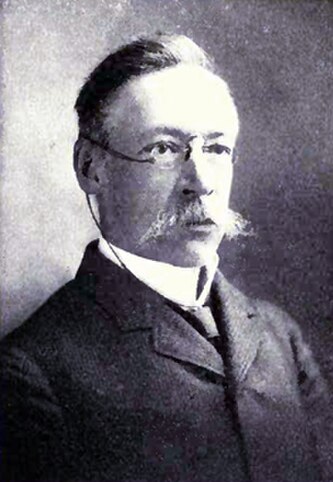


About John Maxson Stillman
John Maxson Stillman (1852-1923) was a pioneer of the history of science in the United States. He was also the first head of the chemistry department at Stanford University, as well as its first Chemistry Professor. His most enduring work was the posthumously published book The Story of Early Chemistry, decades later republished as The Story of Alchemy and Early Chemistry.
John Maxson Stillman Quotes
Shortest
Earliest
Explore our curated collection of the most famous and impactful John Maxson Stillman quotes.
“Boyle entertains the hypothesis of a universal matter, the concept of atoms of different shapes and sizes, and the possibility of existence of substances that might properly be called elements... The atomic theory as originally conceived by Democritus and Epicurus, developed by Lucretius, and resurrected by Gassendi from about 1647 on, was doubtless the source from which Boyle derived his ideas, ...as he cites both Epicurus and Gassendi. Boyle, however... avoids any dogmatic assertion of these hypotheses. It is plain, however, that these atoms or "corpuscles" as he calls them are a constant element of his thought.”
John Maxson Stillman Quotes by Topic
Find exactly what you are looking for by browsing this categorized list of John Maxson Stillman quotes by topic.
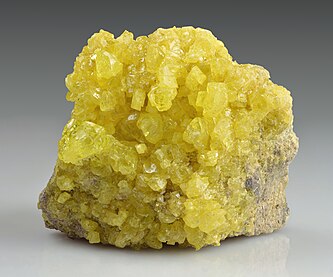
John Maxson Stillman on Sulfur 2 quotes
“On November first, 1772, Lavoisier had deposited a sealed note with the Secretary of the Academy of Sciences, in which he states that he has discovered the sulphur and phosphorus when burned gained weight. "This increase of weight is due to a great quantity of air which becomes fixed during the combustion and which combines with the vapours." He expresses his conviction that the same is true of all combustions and calcinations.”
John Maxson Stillman on Atomic theory
“Boyle entertains the hypothesis of a universal matter, the concept of atoms of different shapes and sizes, and the possibility of existence of substances that might properly be called elements... The atomic theory as originally conceived by Democritus and Epicurus, developed by Lucretius, and resurrected by Gassendi from about 1647 on, was doubtless the source from which Boyle derived his ideas, ...as he cites both Epicurus and Gassendi. Boyle, however... avoids any dogmatic assertion of these hypotheses. It is plain, however, that these atoms or "corpuscles" as he calls them are a constant element of his thought.”

What John Maxson Stillman Said About Others
Discover personal opinions John Maxson Stillman shared regarding contemporaries.
John Maxson Stillman on Pierre Gassendi
“Boyle entertains the hypothesis of a universal matter, the concept of atoms of different shapes and sizes, and the possibility of existence of substances that might properly be called elements... The atomic theory as originally conceived by Democritus and Epicurus, developed by Lucretius, and resurrected by Gassendi from about 1647 on, was doubtless the source from which Boyle derived his ideas, ...as he cites both Epicurus and Gassendi. Boyle, however... avoids any dogmatic assertion of these hypotheses. It is plain, however, that these atoms or "corpuscles" as he calls them are a constant element of his thought.”

About John Maxson Stillman
John Maxson Stillman (1852-1923) was a pioneer of the history of science in the United States. He was also the first head of the chemistry department at Stanford University, as well as its first Chemistry Professor. His most enduring work was the posthumously published book The Story of Early Chemistry, decades later republished as The Story of Alchemy and Early Chemistry.