John Maxson Stillman, The Story of Early Chemistry (1924) reprinted as The Story of Alchemy and Early Chemistry (1960) p. 491.
“
On November first, 1772, Lavoisier had deposited a sealed note with the Secretary of the Academy of Sciences, in which he states that he has discovered the sulphur and phosphorus when burned gained weight. "This increase of weight is due to a great quantity of air which becomes fixed during the combustion and which combines with the vapours." He expresses his conviction that the same is true of all combustions and calcinations.
— John Maxson Stillman on Sulfur
What It Means
This is a placeholder explanation generated by the low-overhead model. It interprets "On November first, 1772, Lavoisier had deposited a sealed note with the Secretary of the Academy of Sciences, in which he states that he has discovered the sulphur and phosphorus when burned gained weight. "This increase of weight is due to a great quantity of air which becomes fixed during the combustion and which combines with the vapours." He expresses his conviction that the same is true of all combustions and calcinations." in the context of "John Maxson Stillman, The Story of Early Chemistry (1924) reprinted as The Story of Alchemy and Early Chemistry (1960) p. 491." to mean that wisdom is timeless.

Source: Wikiquote: "Sulfur"
The 'What it means' explanation text was generated by Google Gemini Flash (accessed January 18, 2026). https://gemini.google.com/app
Tags
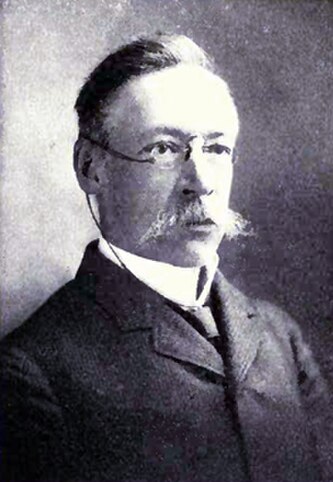
About John Maxson Stillman
John Maxson Stillman (1852-1923) was a pioneer of the history of science in the United States. He was also the first head of the chemistry department at Stanford University, as well as its first Chemistry Professor. His most enduring work was the posthumously published book The Story of Early Chemistry, decades later republished as The Story of Alchemy and Early Chemistry.
View all quotes →