Link Copied!
Democritus Quotes (-460--370)
Philosopher, Writer



About Democritus
Democritus (c. 460 BC – c. 370 BC) was a pre-Socratic Greek philosopher. He is popularly known as "the laughing philosopher" for advocating a cheerful outlook, and for his rhetorical use of irony and ridicule. A pupil of Leucippus, he was an influential pre-Socratic philosopher who formulated an atomic theory of the universe. Of his voluminous writings, only a few fragments of his ethical theory remain, with descriptions by other writers of his atomic theory.
Best Democritus Quotes
Shortest
Earliest
Explore our curated collection of the most famous and impactful Democritus quotes.

“Fools learn wisdom through misfortune.”


“Fame and wealth without wisdom are unsafe possessions.”


“Repentance for one's evil deeds is the safeguard of life.”



“Those who have a well-ordered character lead also a well-ordered life.”

“Education is an ornament for the prosperous, a refuge for the unfortunate.”


“The hopes of the right-minded may be realized, those of fools are impossible.”
“The friendship of one wise man is better than the friendship of a host of fools.”

“No one deserves to live who has not at least one good-man-and-true for a friend.”

Democritus Quotes by Topic
Find exactly what you are looking for by browsing this categorized list of Democritus quotes by topic.
Democritus on Moderation 2 quotes
“Immoderate desire is the mark of a child, not a man.”
Democritus on Atomic theory 2 quotes
“Sweet exists by convention, bitter by convention, colour by convention; atoms and Void (alone) exist in reality.”

Democritus on Truth
Democritus on Education
“Education is an ornament for the prosperous, a refuge for the unfortunate.”
Democritus on History of mathematics
“I would rather discover a single [geometrical] demonstration than become king of the Persians.”

Democritus on Effort
“Beautiful objects are wrought by study through effort, but ugly things are reaped automatically without toil.”
Democritus on Studying
“Beautiful objects are wrought by study through effort, but ugly things are reaped automatically without toil.”

Democritus on Beauty
“Beautiful objects are wrought by study through effort, but ugly things are reaped automatically without toil.”

Democritus on Ugliness
“Beautiful objects are wrought by study through effort, but ugly things are reaped automatically without toil.”
Democritus on Envy
“The laws would not prevent each man from living according to his inclination, unless individuals harmed each other; for envy creates the beginning of strife.”

Democritus on History of calculus
“If a cone is cut by surfaces parallel to the base, then how are the sections, equal or unequal? If they are unequal then the cone would have the shape of a staircase; but if they were equal, then all sections will be equal, and the cone will look like a cylinder, made up of equal circles; but this is entirely nonsensical.”

Democritus on History of chemistry
“By convention (νόμῳ) sweet is sweet, by convention bitter is bitter, by convention hot is hot, by convention cold is cold, by convention color is color. But in reality there are atoms and the void. That is, the objects of sense are supposed to be real and it is customary to regard them as such, but in truth they are not. Only the atoms and the void are real.”

Democritus on Intemperance
“If the body brought a suit against the soul for all the sufferings and ills it had endured throughout its whole life, and one had to judge the case oneself, one would readily condemn the soul for having ruined certain features of the body through carelessness and made it soft through drink and brought it to rack and ruin through love of pleasure, just as if a tool or a utensil were in a bad state one would blame the person who used it carelessly.”

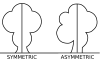
Democritus on Symmetry
“Men achieve tranquillity through moderation in pleasure and through the symmetry of life. Want and superfluity are apt to upset them and to cause great perturbations in the soul. The souls that are rent by violent conflicts are neither stable nor tranquil. ...one ought not to desire other men's blessings, and one ought not to envy those who have more, but rather, comparing his life with that of those who fare worse, and laying to heart their sufferings, deem himself blest of fortune in that he lives and fares so much better than they. Holding fast to this saying you will pass your life in greater tranquillity and will avert not a few of the plagues of life—envy and jealousy and bitterness of mind.”
Quotes About Democritus
Gain deeper perspective through quotes about Democritus from others.
Florian Cajori on Democritus
“The Greeks elaborated several theories of vision. According to the Pythagoreans, Democritus, and others vision is caused by the projection of particles from the object seen, into the pupil of the eye. On the other hand Empedocles, the Platonists, and Euclid held the strange doctrine of ocular beams, according to which the eye itself sends out something which causes sight as soon as it meets something else emanated by the object.”
John Freely on Democritus
“The atomic theory was not generally accepted in the time of Democritus, largely because of its deterministic character, for it allows no chance, choice, or free will.”
W. K. C. Guthrie on Democritus
“One thing of course was a fundamental necessity to the atomic world-view. There must be empty space for the atoms to move about in. The hallmark of Democritus’s thought, as Aristotle noted approvingly, was a determination to account for apparent fact and not be led astray by abstract argument. Hence he said that Parmenides’s denial of the existence of void could not be upheld. It was contrary to common sense. Aware however that he was flying in the face of that great authority, he made his denial with a kind of schoolboy daring, for according to Aristotle he put it in the form: ‘What is not does exist, no less than what is.’ If material atoms were the only real substance, then empty space was not real in the same sense. Dimly aware that there must be some way out, the atomists did not yet command a language capable of such a phrase as ‘not in the same sense’, and paradox was their only resource.”
Sir Thomas Little Heath on Democritus
“Eudoxes... not only based the method [of exhaustion] on rigorous demonstration... but he actually applied the method to find the volumes (1) of any pyramid, (2) of the cone, proving (1) that any pyramid is one third part of the prism which has the same base and equal height, and (2) that any cone is one third part of the cylinder which has the same base and equal height. Archimedes, however, tells us the remarkable fact that these two theorems were first discovered by Democritus, though he was not able to prove them (which no doubt means, not that he gave no sort of proof, but that he was not able to establish the propositions by the rigorous methods of Eudoxes. Archimedes adds that we must give no small share of the credit for these theorems to Democritus... another testimony to the marvellous powers, in mathematics as well as in other subjects, of the great man who, in the words of Aristotle, "seems to have thought of everything". ...Democritus wrote on irrationals; he is also said to have discussed the question of two parallel sections of a cone (which were evidently supposed to be indefinitely close together), asking whether we are to regard them as equal or unequal... Democritus was already close on the track of infinitesimals.”
About Democritus
Democritus (c. 460 BC – c. 370 BC) was a pre-Socratic Greek philosopher. He is popularly known as "the laughing philosopher" for advocating a cheerful outlook, and for his rhetorical use of irony and ridicule. A pupil of Leucippus, he was an influential pre-Socratic philosopher who formulated an atomic theory of the universe. Of his voluminous writings, only a few fragments of his ethical theory remain, with descriptions by other writers of his atomic theory.