Link Copied!
Democritus Quotes (-460--370)
Philosopher, Writer







About Democritus
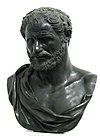
Democritus (c. 460 BC – c. 370 BC) was a pre-Socratic Greek philosopher. He is popularly known as "the laughing philosopher" for advocating a cheerful outlook, and for his rhetorical use of irony and ridicule. A pupil of Leucippus, he was an influential pre-Socratic philosopher who formulated an atomic theory of the universe. Of his voluminous writings, only a few fragments of his ethical theory remain, with descriptions by other writers of his atomic theory.
Best Democritus Quotes
Shortest
Earliest
Explore our curated collection of the most famous and impactful Democritus quotes.
“In a shared fish, there are no bones.”

Unsourced — Primary work/page citation not yet verified in the QuotesCosmos archive. Per our Unnamed Sources & Verification Policy, quotes without confirmed primary editions are explicitly marked Unsourced while under editorial review.
“Fools learn wisdom through misfortune.”

Unsourced — Primary work/page citation not yet verified in the QuotesCosmos archive. Per our Unnamed Sources & Verification Policy, quotes without confirmed primary editions are explicitly marked Unsourced while under editorial review.
“False men and shams talk big and do nothing.”
Unsourced — Primary work/page citation not yet verified in the QuotesCosmos archive. Per our Unnamed Sources & Verification Policy, quotes without confirmed primary editions are explicitly marked Unsourced while under editorial review.
“Man is a universe in little [Microcosm].”

Unsourced — Primary work/page citation not yet verified in the QuotesCosmos archive. Per our Unnamed Sources & Verification Policy, quotes without confirmed primary editions are explicitly marked Unsourced while under editorial review.
“'Tis a grievous thing to be subject to an inferior.”
Unsourced — Primary work/page citation not yet verified in the QuotesCosmos archive. Per our Unnamed Sources & Verification Policy, quotes without confirmed primary editions are explicitly marked Unsourced while under editorial review.
“Fame and wealth without wisdom are unsafe possessions.”

Unsourced — Primary work/page citation not yet verified in the QuotesCosmos archive. Per our Unnamed Sources & Verification Policy, quotes without confirmed primary editions are explicitly marked Unsourced while under editorial review.
“Neither art nor wisdom may be attained without learning.”

Unsourced — Primary work/page citation not yet verified in the QuotesCosmos archive. Per our Unnamed Sources & Verification Policy, quotes without confirmed primary editions are explicitly marked Unsourced while under editorial review.
“Repentance for one's evil deeds is the safeguard of life.”

Unsourced — Primary work/page citation not yet verified in the QuotesCosmos archive. Per our Unnamed Sources & Verification Policy, quotes without confirmed primary editions are explicitly marked Unsourced while under editorial review.
“He who does wrong is more unhappy than he who suffers wrong.”
Unsourced — Primary work/page citation not yet verified in the QuotesCosmos archive. Per our Unnamed Sources & Verification Policy, quotes without confirmed primary editions are explicitly marked Unsourced while under editorial review.
“Man should know from this rule that he is cut off from truth.”

Unsourced — Primary work/page citation not yet verified in the QuotesCosmos archive. Per our Unnamed Sources & Verification Policy, quotes without confirmed primary editions are explicitly marked Unsourced while under editorial review.
“Not from fear but from a sense of duty refrain from your sins.”

Unsourced — Primary work/page citation not yet verified in the QuotesCosmos archive. Per our Unnamed Sources & Verification Policy, quotes without confirmed primary editions are explicitly marked Unsourced while under editorial review.
“It is better to correct your own faults than those of another.”
Unsourced — Primary work/page citation not yet verified in the QuotesCosmos archive. Per our Unnamed Sources & Verification Policy, quotes without confirmed primary editions are explicitly marked Unsourced while under editorial review.
“There are many who know many things, yet are lacking in wisdom.”
Unsourced — Primary work/page citation not yet verified in the QuotesCosmos archive. Per our Unnamed Sources & Verification Policy, quotes without confirmed primary editions are explicitly marked Unsourced while under editorial review.
“The pleasures that give most joy are the ones that most rarely come.”
Unsourced — Primary work/page citation not yet verified in the QuotesCosmos archive. Per our Unnamed Sources & Verification Policy, quotes without confirmed primary editions are explicitly marked Unsourced while under editorial review.
“No power and no treasure can outweigh the extension of our knowledge.”

Unsourced — Primary work/page citation not yet verified in the QuotesCosmos archive. Per our Unnamed Sources & Verification Policy, quotes without confirmed primary editions are explicitly marked Unsourced while under editorial review.
“Those who have a well-ordered character lead also a well-ordered life.”
Unsourced — Primary work/page citation not yet verified in the QuotesCosmos archive. Per our Unnamed Sources & Verification Policy, quotes without confirmed primary editions are explicitly marked Unsourced while under editorial review.
“My enemy is not the man who wrongs me, but the man who means to wrong me.”

Unsourced — Primary work/page citation not yet verified in the QuotesCosmos archive. Per our Unnamed Sources & Verification Policy, quotes without confirmed primary editions are explicitly marked Unsourced while under editorial review.
“Education is an ornament for the prosperous, a refuge for the unfortunate.”

Unsourced — Primary work/page citation not yet verified in the QuotesCosmos archive. Per our Unnamed Sources & Verification Policy, quotes without confirmed primary editions are explicitly marked Unsourced while under editorial review.
“A life without a holiday is like a long journey without an inn to rest at.”
Unsourced — Primary work/page citation not yet verified in the QuotesCosmos archive. Per our Unnamed Sources & Verification Policy, quotes without confirmed primary editions are explicitly marked Unsourced while under editorial review.
“The enmity of one's kindred is far more bitter than the enmity of strangers.”

Unsourced — Primary work/page citation not yet verified in the QuotesCosmos archive. Per our Unnamed Sources & Verification Policy, quotes without confirmed primary editions are explicitly marked Unsourced while under editorial review.
“The hopes of the right-minded may be realized, those of fools are impossible.”
Unsourced — Primary work/page citation not yet verified in the QuotesCosmos archive. Per our Unnamed Sources & Verification Policy, quotes without confirmed primary editions are explicitly marked Unsourced while under editorial review.
“Good means not [merely] not to do wrong, but rather not to desire to do wrong.”
Unsourced — Primary work/page citation not yet verified in the QuotesCosmos archive. Per our Unnamed Sources & Verification Policy, quotes without confirmed primary editions are explicitly marked Unsourced while under editorial review.
“The friendship of one wise man is better than the friendship of a host of fools.”

Unsourced — Primary work/page citation not yet verified in the QuotesCosmos archive. Per our Unnamed Sources & Verification Policy, quotes without confirmed primary editions are explicitly marked Unsourced while under editorial review.
“No one deserves to live who has not at least one good-man-and-true for a friend.”
Unsourced — Primary work/page citation not yet verified in the QuotesCosmos archive. Per our Unnamed Sources & Verification Policy, quotes without confirmed primary editions are explicitly marked Unsourced while under editorial review.
“A sensible man takes pleasure in what he has instead of pining for what he has not.”

Unsourced — Primary work/page citation not yet verified in the QuotesCosmos archive. Per our Unnamed Sources & Verification Policy, quotes without confirmed primary editions are explicitly marked Unsourced while under editorial review.
“Throw moderation to the winds, and the greatest pleasures bring the greatest pains.”
Unsourced — Primary work/page citation not yet verified in the QuotesCosmos archive. Per our Unnamed Sources & Verification Policy, quotes without confirmed primary editions are explicitly marked Unsourced while under editorial review.
“'Tis well to restrain the wicked, and in any case not to join him in his wrong-doing.”
Unsourced — Primary work/page citation not yet verified in the QuotesCosmos archive. Per our Unnamed Sources & Verification Policy, quotes without confirmed primary editions are explicitly marked Unsourced while under editorial review.
“And yet it will be obvious that it is difficult to really know of what sort each thing is.”
Unsourced — Primary work/page citation not yet verified in the QuotesCosmos archive. Per our Unnamed Sources & Verification Policy, quotes without confirmed primary editions are explicitly marked Unsourced while under editorial review.
“Strength of body is nobility in beasts of burden, strength of character is nobility in men.”
Unsourced — Primary work/page citation not yet verified in the QuotesCosmos archive. Per our Unnamed Sources & Verification Policy, quotes without confirmed primary editions are explicitly marked Unsourced while under editorial review.
“Making money is not without its value, but nothing is baser than to make it by wrong-doing.”
Unsourced — Primary work/page citation not yet verified in the QuotesCosmos archive. Per our Unnamed Sources & Verification Policy, quotes without confirmed primary editions are explicitly marked Unsourced while under editorial review.
“Now, that we do not really know of what sort each thing is, or is not, has often been shown.”

Unsourced — Primary work/page citation not yet verified in the QuotesCosmos archive. Per our Unnamed Sources & Verification Policy, quotes without confirmed primary editions are explicitly marked Unsourced while under editorial review.
“Strength and beauty are the blessings of youth; temperance, however, is the flower of old age.”
Unsourced — Primary work/page citation not yet verified in the QuotesCosmos archive. Per our Unnamed Sources & Verification Policy, quotes without confirmed primary editions are explicitly marked Unsourced while under editorial review.
“(Democritus said he would rather discover a single demonstration than win the throne of Persia.)”

Unsourced — Primary work/page citation not yet verified in the QuotesCosmos archive. Per our Unnamed Sources & Verification Policy, quotes without confirmed primary editions are explicitly marked Unsourced while under editorial review.
“Many who have not learned wisdom live wisely, and many who do the basest deeds can make most learned speeches.”
Unsourced — Primary work/page citation not yet verified in the QuotesCosmos archive. Per our Unnamed Sources & Verification Policy, quotes without confirmed primary editions are explicitly marked Unsourced while under editorial review.
“Seek after the good, and with much toil shall ye find it; the evil turns up of itself without your seeking it.”
Unsourced — Primary work/page citation not yet verified in the QuotesCosmos archive. Per our Unnamed Sources & Verification Policy, quotes without confirmed primary editions are explicitly marked Unsourced while under editorial review.
“Of practical wisdom these are the three fruits: to deliberate well, to speak to the point, to do what is right.”
Unsourced — Primary work/page citation not yet verified in the QuotesCosmos archive. Per our Unnamed Sources & Verification Policy, quotes without confirmed primary editions are explicitly marked Unsourced while under editorial review.
“You can tell the man who rings true from the man who rings false, not by his deeds alone, but also by his desires.”
Unsourced — Primary work/page citation not yet verified in the QuotesCosmos archive. Per our Unnamed Sources & Verification Policy, quotes without confirmed primary editions are explicitly marked Unsourced while under editorial review.
“If one choose the goods of the soul, he chooses the diviner [portion]; if the goods of the body, the merely mortal.”
Unsourced — Primary work/page citation not yet verified in the QuotesCosmos archive. Per our Unnamed Sources & Verification Policy, quotes without confirmed primary editions are explicitly marked Unsourced while under editorial review.
“'Tis not in strength of body nor in gold that men find happiness, but in uprightness and in fulness of understanding.”

Unsourced — Primary work/page citation not yet verified in the QuotesCosmos archive. Per our Unnamed Sources & Verification Policy, quotes without confirmed primary editions are explicitly marked Unsourced while under editorial review.
“An evil and foolish and intemperate and irreligious life should not be called a bad life, but rather, dying long drawn out.”

Unsourced — Primary work/page citation not yet verified in the QuotesCosmos archive. Per our Unnamed Sources & Verification Policy, quotes without confirmed primary editions are explicitly marked Unsourced while under editorial review.
“The man who is fortunate in his choice of son-in-law gains a son; the man unfortunate in his choice loses his daughter also.”

Unsourced — Primary work/page citation not yet verified in the QuotesCosmos archive. Per our Unnamed Sources & Verification Policy, quotes without confirmed primary editions are explicitly marked Unsourced while under editorial review.
“This argument too shows that in truth we know nothing about anything, but every man shares the generally prevailing opinion.”
Unsourced — Primary work/page citation not yet verified in the QuotesCosmos archive. Per our Unnamed Sources & Verification Policy, quotes without confirmed primary editions are explicitly marked Unsourced while under editorial review.
“Coition is a slight attack of apoplexy. For man gushes forth from man, and is separated by being torn apart with a kind of blow.”
Unsourced — Primary work/page citation not yet verified in the QuotesCosmos archive. Per our Unnamed Sources & Verification Policy, quotes without confirmed primary editions are explicitly marked Unsourced while under editorial review.
“Immoderate desire is the mark of a child, not a man.
• Variant: It is childish, not manly, to have immoderate desires.”
• Variant: It is childish, not manly, to have immoderate desires.”
Unsourced — Primary work/page citation not yet verified in the QuotesCosmos archive. Per our Unnamed Sources & Verification Policy, quotes without confirmed primary editions are explicitly marked Unsourced while under editorial review.
Unsourced — Primary work/page citation not yet verified in the QuotesCosmos archive. Per our Unnamed Sources & Verification Policy, quotes without confirmed primary editions are explicitly marked Unsourced while under editorial review.
“If any one hearken with understanding to these sayings of mine many a deed worthy of a good man shall he perform and many a foolish deed be spared.”

Unsourced — Primary work/page citation not yet verified in the QuotesCosmos archive. Per our Unnamed Sources & Verification Policy, quotes without confirmed primary editions are explicitly marked Unsourced while under editorial review.
“Moderation multiplies pleasures, and increases pleasure.
• Variant: Moderation increases enjoyment, and makes pleasure even greater.”
• Variant: Moderation increases enjoyment, and makes pleasure even greater.”
Unsourced — Primary work/page citation not yet verified in the QuotesCosmos archive. Per our Unnamed Sources & Verification Policy, quotes without confirmed primary editions are explicitly marked Unsourced while under editorial review.
“In fact we do not know anything infallibly, but only that which changes according to the condition of our body and of the [influences] that reach and impinge upon it.”
Unsourced — Primary work/page citation not yet verified in the QuotesCosmos archive. Per our Unnamed Sources & Verification Policy, quotes without confirmed primary editions are explicitly marked Unsourced while under editorial review.
“The animal needing something knows how much it needs, the man does not.
• Variant: The needy animal knows how much it needs, but the needy man does not.”
• Variant: The needy animal knows how much it needs, but the needy man does not.”
Unsourced — Primary work/page citation not yet verified in the QuotesCosmos archive. Per our Unnamed Sources & Verification Policy, quotes without confirmed primary editions are explicitly marked Unsourced while under editorial review.
“Men have made an idol of luck as an excuse for their own thoughtlessness. Luck seldom measures swords with wisdom. Most things in life quick wit and sharp vision can set right.”

Unsourced — Primary work/page citation not yet verified in the QuotesCosmos archive. Per our Unnamed Sources & Verification Policy, quotes without confirmed primary editions are explicitly marked Unsourced while under editorial review.
“To a wise man, the whole earth is open; for the native land of a good soul is the whole earth.
• Variant: To a wise and good man the whole earth is his fatherland.”
• Variant: To a wise and good man the whole earth is his fatherland.”
Unsourced — Primary work/page citation not yet verified in the QuotesCosmos archive. Per our Unnamed Sources & Verification Policy, quotes without confirmed primary editions are explicitly marked Unsourced while under editorial review.
“We know nothing accurately in reality, but [only] as it changes according to the bodily condition, and the constitution of those things that flow upon [the body] and impinge upon it.”
Unsourced — Primary work/page citation not yet verified in the QuotesCosmos archive. Per our Unnamed Sources & Verification Policy, quotes without confirmed primary editions are explicitly marked Unsourced while under editorial review.
“Disease of the home and of the life comes about in the same way as that of the body.
• Variant: Disease occurs in a household, or in a life, just as it does in a body.”
• Variant: Disease occurs in a household, or in a life, just as it does in a body.”

Unsourced — Primary work/page citation not yet verified in the QuotesCosmos archive. Per our Unnamed Sources & Verification Policy, quotes without confirmed primary editions are explicitly marked Unsourced while under editorial review.
“It is hard to fight desire; but to control it is the sign of a reasonable man.
• Variant: It is hard to fight with desire; but to overcome it is the mark of a rational man.”
• Variant: It is hard to fight with desire; but to overcome it is the mark of a rational man.”

Unsourced — Primary work/page citation not yet verified in the QuotesCosmos archive. Per our Unnamed Sources & Verification Policy, quotes without confirmed primary editions are explicitly marked Unsourced while under editorial review.
“[I would] rather discover one cause than gain the kingdom of Persia.
• Variant: I would rather discover a single demonstration [in geometry] than become king of the Persians.”
• Variant: I would rather discover a single demonstration [in geometry] than become king of the Persians.”
Unsourced — Primary work/page citation not yet verified in the QuotesCosmos archive. Per our Unnamed Sources & Verification Policy, quotes without confirmed primary editions are explicitly marked Unsourced while under editorial review.
“If your desires are not great, a little will seem much to you; for small appetite makes poverty equivalent to wealth.
• Variant: By desiring little, a poor man makes himself rich.”
• Variant: By desiring little, a poor man makes himself rich.”
Unsourced — Primary work/page citation not yet verified in the QuotesCosmos archive. Per our Unnamed Sources & Verification Policy, quotes without confirmed primary editions are explicitly marked Unsourced while under editorial review.
“Men have fashioned an image of Chance as an excuse for their own stupidity. For Chance rarely conflicts with intelligence, and most things in life can be set in order by an intelligent sharpsightedness.”
Unsourced — Primary work/page citation not yet verified in the QuotesCosmos archive. Per our Unnamed Sources & Verification Policy, quotes without confirmed primary editions are explicitly marked Unsourced while under editorial review.
“Medicine heals diseases of the body, wisdom frees the soul from passions.
• Variant: Medicine cures the diseases of the body; wisdom, on the other hand, relieves the soul of its sufferings.”
• Variant: Medicine cures the diseases of the body; wisdom, on the other hand, relieves the soul of its sufferings.”

Unsourced — Primary work/page citation not yet verified in the QuotesCosmos archive. Per our Unnamed Sources & Verification Policy, quotes without confirmed primary editions are explicitly marked Unsourced while under editorial review.

Unsourced — Primary work/page citation not yet verified in the QuotesCosmos archive. Per our Unnamed Sources & Verification Policy, quotes without confirmed primary editions are explicitly marked Unsourced while under editorial review.
“Of all things the worst to teach the young is dalliance, for it is this that is the parent of those pleasures from which wickedness springs.”
Unsourced — Primary work/page citation not yet verified in the QuotesCosmos archive. Per our Unnamed Sources & Verification Policy, quotes without confirmed primary editions are explicitly marked Unsourced while under editorial review.
“Πολλοὶ πολυμαθέες νοῦν οὐκ ἔχουσιν.
• Many much-learned men have no intelligence.
• Variant: There are many who know many things, yet are lacking in wisdom.”
• Many much-learned men have no intelligence.
• Variant: There are many who know many things, yet are lacking in wisdom.”
Unsourced — Primary work/page citation not yet verified in the QuotesCosmos archive. Per our Unnamed Sources & Verification Policy, quotes without confirmed primary editions are explicitly marked Unsourced while under editorial review.
“In the weightiest matters we must go to school to the animals, and learn spinning and weaving from the spider, building from the swallow, singing from the birds,—from the swan and the nightingale, imitating their art.”
Unsourced — Primary work/page citation not yet verified in the QuotesCosmos archive. Per our Unnamed Sources & Verification Policy, quotes without confirmed primary editions are explicitly marked Unsourced while under editorial review.
“The laws would not prevent each man from living according to his inclination, unless individuals harmed each other; for envy creates the beginning of strife.
• Variant: Envy is the cause of political division.”
• Variant: Envy is the cause of political division.”
Unsourced — Primary work/page citation not yet verified in the QuotesCosmos archive. Per our Unnamed Sources & Verification Policy, quotes without confirmed primary editions are explicitly marked Unsourced while under editorial review.
“Now as of old the gods give men all good things, excepting only those that are baneful and injurious and useless. These, now as of old, are not gifts of the gods: men stumble into them themselves because of their own blindness and folly.”
Unsourced — Primary work/page citation not yet verified in the QuotesCosmos archive. Per our Unnamed Sources & Verification Policy, quotes without confirmed primary editions are explicitly marked Unsourced while under editorial review.
“Beautiful objects are wrought by study through effort, but ugly things are reaped automatically without toil.
• Variant: The good things of life are produced by learning with hard work; the bad are reaped of their own accord, without hard work.”
• Variant: The good things of life are produced by learning with hard work; the bad are reaped of their own accord, without hard work.”
Unsourced — Primary work/page citation not yet verified in the QuotesCosmos archive. Per our Unnamed Sources & Verification Policy, quotes without confirmed primary editions are explicitly marked Unsourced while under editorial review.
“Verily we know nothing. Truth is buried deep. (Another translation: "Of truth we know nothing, for truth is in a well." Diogenes Laertius, Lives of Eminent Philosophers R.D. Hicks, Ed.)”
Unsourced — Primary work/page citation not yet verified in the QuotesCosmos archive. Per our Unnamed Sources & Verification Policy, quotes without confirmed primary editions are explicitly marked Unsourced while under editorial review.
“Fortune is lavish with her favors, but not to be depended on. Nature on the other hand is self-sufficing, and therefore with her feebler but trustworthy [resources] she wins the greater [ meed] of hope.”
Unsourced — Primary work/page citation not yet verified in the QuotesCosmos archive. Per our Unnamed Sources & Verification Policy, quotes without confirmed primary editions are explicitly marked Unsourced while under editorial review.
“Men in their prayers beg the gods for health, not knowing that this is a thing they have in their own power. Through their incontinence undermining it, they themselves become, because of their passions, the betrayers of their own health.”

Unsourced — Primary work/page citation not yet verified in the QuotesCosmos archive. Per our Unnamed Sources & Verification Policy, quotes without confirmed primary editions are explicitly marked Unsourced while under editorial review.
“The brave man is not only he who overcomes the enemy, but he who is stronger than pleasures. Some men are masters of cities, but are enslaved to women.
• Variant: The brave man is he who overcomes not only his enemies but his pleasures. There are some men who are masters of cities but slaves to women.”
• Variant: The brave man is he who overcomes not only his enemies but his pleasures. There are some men who are masters of cities but slaves to women.”
Unsourced — Primary work/page citation not yet verified in the QuotesCosmos archive. Per our Unnamed Sources & Verification Policy, quotes without confirmed primary editions are explicitly marked Unsourced while under editorial review.
“The right-minded man, ever inclined to righteous and lawful deeds, is joyous day and night, and strong, and free from care. But if a man take no heed of the right, and leave undone the things he ought to do, then will the recollection of no one of all his transgressions bring him any joy, but only anxiety and self-reproaching.”
Unsourced — Primary work/page citation not yet verified in the QuotesCosmos archive. Per our Unnamed Sources & Verification Policy, quotes without confirmed primary editions are explicitly marked Unsourced while under editorial review.
“νόμωι (γάρ φησι) γλυκὺ καὶ νόμωι πικρόν, νόμωι θερμόν, νόμωι ψυχρόν, νόμωι χροιή, ἐτεῆι δὲ ἄτομα καὶ κενόν (Tetralogies of Thrasyllus, 9; Sext. Emp. adv. math. VII 135)”
Unsourced — Primary work/page citation not yet verified in the QuotesCosmos archive. Per our Unnamed Sources & Verification Policy, quotes without confirmed primary editions are explicitly marked Unsourced while under editorial review.
“Good breeding in cattle depends on physical health, but in men on a well-formed character.
• Variant: Strength of body is nobility only in beasts of burden, strength of character is nobility in man.
• Variant: In cattle excellence is displayed in strength of body; but in men it lies in strength of character.”
• Variant: Strength of body is nobility only in beasts of burden, strength of character is nobility in man.
• Variant: In cattle excellence is displayed in strength of body; but in men it lies in strength of character.”
Unsourced — Primary work/page citation not yet verified in the QuotesCosmos archive. Per our Unnamed Sources & Verification Policy, quotes without confirmed primary editions are explicitly marked Unsourced while under editorial review.
“[Democritus says:] By convention sweet is sweet, by convention bitter is bitter, by convention hot is hot, by convention cold is cold, by convention color is color. But in reality there are atoms and the void. That is, the objects of sense are supposed to be real and it is customary to regard them as such, but in truth they are not. Only the atoms and the void are real.”
Unsourced — Primary work/page citation not yet verified in the QuotesCosmos archive. Per our Unnamed Sources & Verification Policy, quotes without confirmed primary editions are explicitly marked Unsourced while under editorial review.
“He who intends to enjoy life should not be busy about many things, and in what he does should not undertake what exceeds his natural capacity. On the contrary, he should have himself so in hand that even when fortune comes his way, and is apparently ready to lead him on to higher things, he should put her aside and not o'erreach his powers. For a being of moderate size is safer than one that bulks too big.”
Unsourced — Primary work/page citation not yet verified in the QuotesCosmos archive. Per our Unnamed Sources & Verification Policy, quotes without confirmed primary editions are explicitly marked Unsourced while under editorial review.
“δοκεῖ δὲ αὐτῶι τάδε· ἀρχὰς εἶναι τῶν ὅλων ἀτόμους καὶ κενόν, τὰ δ'ἀλλα πάντα νενομίσθαι [δοξάζεσθαι]. (Diogenes Laërtius, Democritus, Vol. IX, 44)
• Now his principal doctrines were these. That atoms and the vacuum were the beginning of the universe; and that everything else existed only in opinion. (trans. Yonge 1853)”
• Now his principal doctrines were these. That atoms and the vacuum were the beginning of the universe; and that everything else existed only in opinion. (trans. Yonge 1853)”
Unsourced — Primary work/page citation not yet verified in the QuotesCosmos archive. Per our Unnamed Sources & Verification Policy, quotes without confirmed primary editions are explicitly marked Unsourced while under editorial review.
“All who delight in the pleasures of the belly, exceeding all measure in eating and drinking and love, find that the pleasures are brief and last but a short while—only so long as they are eating and drinking—but the pains that come after are many and endure. The longing for the same things keeps ever returning, and whenever the objects of one's desire are realized forthwith the pleasure vanishes, and one has no further use for them. The pleasure is brief, and once more the need for the same things returns.”
Unsourced — Primary work/page citation not yet verified in the QuotesCosmos archive. Per our Unnamed Sources & Verification Policy, quotes without confirmed primary editions are explicitly marked Unsourced while under editorial review.
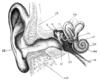
“There are two forms of knowledge, one genuine, one obscure. To the obscure belong all of the following: sight, hearing, smell, taste, feeling. The other form is the genuine, and is quite distinct from this. [And then distinguishing the genuine from the obscure, he continues:] Whenever the obscure [way of knowing] has reached the minimum sensibile of hearing, smell, taste, and touch, and when the investigation must be carried farther into that which is still finer, then arises the genuine way of knowing, which has a finer organ of thought.”
Unsourced — Primary work/page citation not yet verified in the QuotesCosmos archive. Per our Unnamed Sources & Verification Policy, quotes without confirmed primary editions are explicitly marked Unsourced while under editorial review.
“We ought to regard the interests of the state as of far greater moment than all else, in order that they may be administered well; and we ought not to engage in eager rivalry in despite of equity, nor arrogate to ourselves any power contrary to the common welfare. For a state well administered is our greatest safeguard. In this all is summed up: When the state is in a healthy condition all things prosper; when it is corrupt, all things go to ruin.”

Unsourced — Primary work/page citation not yet verified in the QuotesCosmos archive. Per our Unnamed Sources & Verification Policy, quotes without confirmed primary editions are explicitly marked Unsourced while under editorial review.
“Men achieve tranquillity through moderation in pleasure and through the symmetry of life. Want and superfluity are apt to upset them and to cause great perturbations in the soul. The souls that are rent by violent conflicts are neither stable nor tranquil. One should therefore set his mind upon the things that are within his power, and be content with his opportunities, nor let his memory dwell very long on the envied and admired of men, nor idly sit and dream of them. Rather, he should contemplate the lives of those who suffer hardship, and vividly bring to mind their sufferings, so that your own present situation may appear to you important and to be envied, and so that it may no longer be your portion to suffer torture in your soul by your longing for more. For he who admires those who have, and whom other men deem blest of fortune, and who spends all his time idly dreaming of them, will be forced to be always contriving some new device because of his [insatiable] desire, until he ends by doing some desperate deed forbidden by the laws. And therefore one ought not to desire other men's blessings, and one ought not to envy those who have more, but rather, comparing his life with that of those who fare worse, and laying to heart their sufferings, deem himself blest of fortune in that he lives and fares so much better than they. Holding fast to this saying you will pass your life in greater tranquillity and will avert not a few of the plagues of life—envy and jealousy and bitterness of mind.”
Unsourced — Primary work/page citation not yet verified in the QuotesCosmos archive. Per our Unnamed Sources & Verification Policy, quotes without confirmed primary editions are explicitly marked Unsourced while under editorial review.
Democritus Quotes by Topic
Find exactly what you are looking for by browsing this categorized list of Democritus quotes by topic.
Democritus on Moderation 2 quotes
“Immoderate desire is the mark of a child, not a man.”
Unsourced — Primary work/page citation not yet verified in the QuotesCosmos archive. Per our Unnamed Sources & Verification Policy, quotes without confirmed primary editions are explicitly marked Unsourced while under editorial review.
Democritus on Atomic theory 2 quotes
“Sweet exists by convention, bitter by convention, colour by convention; atoms and Void (alone) exist in reality.”

Unsourced — Primary work/page citation not yet verified in the QuotesCosmos archive. Per our Unnamed Sources & Verification Policy, quotes without confirmed primary editions are explicitly marked Unsourced while under editorial review.
Democritus on Sharing
“In a shared fish, there are no bones.”

Unsourced — Primary work/page citation not yet verified in the QuotesCosmos archive. Per our Unnamed Sources & Verification Policy, quotes without confirmed primary editions are explicitly marked Unsourced while under editorial review.
Democritus on Truth
“Nature * * * has buried truth deep in the bottom of the sea.”
Unsourced — Primary work/page citation not yet verified in the QuotesCosmos archive. Per our Unnamed Sources & Verification Policy, quotes without confirmed primary editions are explicitly marked Unsourced while under editorial review.
Democritus on Education
“Education is an ornament for the prosperous, a refuge for the unfortunate.”
Unsourced — Primary work/page citation not yet verified in the QuotesCosmos archive. Per our Unnamed Sources & Verification Policy, quotes without confirmed primary editions are explicitly marked Unsourced while under editorial review.
Quotes About Democritus
Gain deeper perspective through quotes about Democritus from others.
Florian Cajori on Democritus
“The Greeks elaborated several theories of vision. According to the Pythagoreans, Democritus, and others vision is caused by the projection of particles from the object seen, into the pupil of the eye. On the other hand Empedocles, the Platonists, and Euclid held the strange doctrine of ocular beams, according to which the eye itself sends out something which causes sight as soon as it meets something else emanated by the object.”
Unsourced — Primary work/page citation not yet verified in the QuotesCosmos archive. Per our Unnamed Sources & Verification Policy, quotes without confirmed primary editions are explicitly marked Unsourced while under editorial review.
John Freely on Democritus
“The atomic theory was not generally accepted in the time of Democritus, largely because of its deterministic character, for it allows no chance, choice, or free will.”
Unsourced — Primary work/page citation not yet verified in the QuotesCosmos archive. Per our Unnamed Sources & Verification Policy, quotes without confirmed primary editions are explicitly marked Unsourced while under editorial review.
W. K. C. Guthrie on Democritus
“One thing of course was a fundamental necessity to the atomic world-view. There must be empty space for the atoms to move about in. The hallmark of Democritus’s thought, as Aristotle noted approvingly, was a determination to account for apparent fact and not be led astray by abstract argument. Hence he said that Parmenides’s denial of the existence of void could not be upheld. It was contrary to common sense. Aware however that he was flying in the face of that great authority, he made his denial with a kind of schoolboy daring, for according to Aristotle he put it in the form: ‘What is not does exist, no less than what is.’ If material atoms were the only real substance, then empty space was not real in the same sense. Dimly aware that there must be some way out, the atomists did not yet command a language capable of such a phrase as ‘not in the same sense’, and paradox was their only resource.”
Unsourced — Primary work/page citation not yet verified in the QuotesCosmos archive. Per our Unnamed Sources & Verification Policy, quotes without confirmed primary editions are explicitly marked Unsourced while under editorial review.
Sir Thomas Little Heath on Democritus
“Eudoxes... not only based the method [of exhaustion] on rigorous demonstration... but he actually applied the method to find the volumes (1) of any pyramid, (2) of the cone, proving (1) that any pyramid is one third part of the prism which has the same base and equal height, and (2) that any cone is one third part of the cylinder which has the same base and equal height. Archimedes, however, tells us the remarkable fact that these two theorems were first discovered by Democritus, though he was not able to prove them (which no doubt means, not that he gave no sort of proof, but that he was not able to establish the propositions by the rigorous methods of Eudoxes. Archimedes adds that we must give no small share of the credit for these theorems to Democritus... another testimony to the marvellous powers, in mathematics as well as in other subjects, of the great man who, in the words of Aristotle, "seems to have thought of everything". ...Democritus wrote on irrationals; he is also said to have discussed the question of two parallel sections of a cone (which were evidently supposed to be indefinitely close together), asking whether we are to regard them as equal or unequal... Democritus was already close on the track of infinitesimals.”
Unsourced — Primary work/page citation not yet verified in the QuotesCosmos archive. Per our Unnamed Sources & Verification Policy, quotes without confirmed primary editions are explicitly marked Unsourced while under editorial review.
About Democritus
Democritus (c. 460 BC – c. 370 BC) was a pre-Socratic Greek philosopher. He is popularly known as "the laughing philosopher" for advocating a cheerful outlook, and for his rhetorical use of irony and ridicule. A pupil of Leucippus, he was an influential pre-Socratic philosopher who formulated an atomic theory of the universe. Of his voluminous writings, only a few fragments of his ethical theory remain, with descriptions by other writers of his atomic theory.