Link Copied!
Dara Horn Quotes (1977-)
Novelist


About Dara Horn
Dara Horn (born 1977) is an American novelist, essayist, and professor of literature. She has written five novels and in 2021, released a nonfiction essay collection titled People Love Dead Jews, which was a finalist for the 2021 Kirkus Prize in nonfiction. She won the Edward Lewis Wallant Award in 2002, the National Jewish Book Award in 2003 and 2006, and the Harold U. Ribalow Prize in 2007.
Best Dara Horn Quotes
Shortest
Earliest
Explore our curated collection of the most famous and impactful Dara Horn quotes.

“"Censorship" is beside the point, the insane extremes of "cancel culture" extravagantly irrelevant, because this double helix of hate and art is built into our world. ("Commuting with Shylock")”
“[M]y question is, what are the ways that we might be erasing ourselves to make other people comfortable?... [W]e are so often asked to erase ourselves too, and to devote ourselves to making other people comfortable. Is there a way that making people uncomfortable could make all of us be more able to flourish?”
“Our world may be a waiting room, but it is a crowded one, filled with people shouting, singing and whispering words that those sitting right beside them only rarely understand. Perhaps the World to Come is best understood not as an afterlife, but as the future — an unexpected place where possibilities will travel on rafts of language, ready for someone to draw them up onto dry land.”

“The only real difference between Webster’s project and YIVO’s is that, for six million devastating reasons, YIVO’s failed and Webster’s succeeded. Its success can be measured by the millions of viewers who watched this year’s national spelling bee — and by the bee’s many gifted contestants, who are too young to appreciate the pain and loss that hides behind so many of the words they get “right.””
“[W]hen a young employee at the Anne Frank House in 2017 tried to wear his yarmulke to work, his employers told him to hide it under a baseball cap. The museum's managing director told newspapers that a live Jew in a yarmulke might "interfere"” with the museum's "independent position." The museum finally relented after deliberating for six months, which seems like a rather long time for the Anne Frank House to ponder whether it was a good idea to force a Jew into hiding.”
“The righteous fight for justice therefore does not require protecting Jews as a vulnerable minority. Instead it requires taking Jews down.
This idea is tacitly endorsed by Jews' bizarre exclusion from discussion in many DEI trainings and even policies, despite their high ranking in American hate-crime statistics. The premise, for instance, that Jews don't experience bigotry because they are "white," itself a fraught idea, would suggest that white LGBTQ people don't experience bigotry either—a premise that no DEI policy would endorse (not to mention the fact that many Jews are not white).”
This idea is tacitly endorsed by Jews' bizarre exclusion from discussion in many DEI trainings and even policies, despite their high ranking in American hate-crime statistics. The premise, for instance, that Jews don't experience bigotry because they are "white," itself a fraught idea, would suggest that white LGBTQ people don't experience bigotry either—a premise that no DEI policy would endorse (not to mention the fact that many Jews are not white).”

“I had mistaken the enormous public interest in past Jewish suffering for a sign of respect for living Jews. I was very wrong. This fact should have been obvious to me from the beginning of my writing career, when my most acclaimed early published piece, the one nominated for a major award, wasn't the one about Jewish historical sites in Spain but rather the one about death camps. I made a point of resisting this reality, asking people at my public talks if they could name three death camps, and then asking the same people if they could name three Yiddish authors-the language spoken by over 80 percent of death-camp victims. What, I asked, was the point of caring so much about how people died, if one cared so little about how they lived? (Introduction)”
“Since ancient times, in every place they have ever lived, Jews have represented the frightening prospect of freedom. As long as Jews existed in any society, there was evidence that it in fact wasn’t necessary to believe what everyone else believed, that those who disagreed with their neighbors could survive and even flourish against all odds. The Jews’ continued distinctiveness, despite overwhelming pressure to become like everyone else, demonstrated their enormous effort to cultivate that freedom: devotion to law and story, deep literacy, and an absolute obsessiveness about transmitting those values between generations. The existence of Jews in any society is a reminder that freedom is possible, but only with responsibility — and that freedom without responsibility is no freedom at all. People who hate us know this. You don’t need to read the latest screed by a hater to know that unhinged killers feel entitled to freedom without any obligations to others. The insane conspiracy theories that motivate people who commit anti-Semitic violence reflect a fear of real freedom: a fondness for tyrants, an aversion to ideas unlike their own and most of all, a casting-off of responsibility for complicated problems. None of this is a coincidence. Societies that accept Jews have flourished. Societies that reject us have withered, fading into history’s night. I don’t know what to tell my children about this horror, but I do know what to tell you. The freedoms that we cherish are meaningless without our commitments to each other: to civil discourse, to actively educating the next generation, to welcoming strangers, to loving our neighbors. The beginning of freedom is the beginning of responsibility. Our night of vigil has already begun.”

Dara Horn Quotes by Topic
Find exactly what you are looking for by browsing this categorized list of Dara Horn quotes by topic.
Dara Horn on The Forward 3 quotes
“The Forward had been conceived as a newspaper for the future. But by dint of its language, the successful assimilation of its earliest readers, and the mass murder of the majority of the world's Yiddish speakers, within fifty years it had become a newspaper of the past.”

Dara Horn on Antisemitism
“[J. E.] Wolfson told the teachers that it was important that "anti-Semitism should not be your students' first introduction to Jews and Judaism." He said this almost as an aside, just before presenting the pig-excrement image. "If you're teaching about anti-Semitism before you teach about the content of Jewish identity, you're doing it wrong."”

Dara Horn on Persecution of Jews
“Here's how much some people dislike living Jews: they murdered 6 million of them. This fact bears repeating, as it does not come up at all in Anne Frank's writing. Readers of her diary are aware that the author was murdered in a genocide, but this does not mean that her diary is a work about genocide. If it were, it is unlikely that it would have been anywhere near as universally embraced.”

Dara Horn on Venice
“Venice's government, eager to maintain its Jewish tax base, officially discouraged the blood libel, but the population was more inspired by the renowned Venetian poet laureate Raffaele Zovenzoni-whose hymn describing the sainted child's murder, which begged authorities to protect the people from bloodthirsty Jews, went viral. Within a few generations, Venice's brilliant idea of imprisoning Jews in ghettos went viral too.”

Dara Horn on The Merchant of Venice
“I reviewed the other moments scholars cite to prove Shylock's "humanity." There were two lines of Shylock treasuring his dead wife's ring, unlike the play's Christian men who give their wives' rings away. But unlike the other men, Shylock never gets his ring back—because his daughter steals it, and becomes a Christian, and inherits what remains of his estate at the play's triumphant end. Then there was the trial scene, where modern actors often make Shylock seem tragic rather than horrific. But that was performance, not text. Finally, scholars point to the many times Shylock explains why he is so revolting: Christians treat him poorly, so he returns the favor. But for this to satisfy, one must accept that Jews are revolting to begin with, and that their repulsiveness simply needs to be explained. None of it worked. And then I saw just how deep the gaslighting went: I felt obligated to make it work, to contort this revolting material into something that excused it. I have a doctorate in literature. I am aware that Shakespeare's plays contain many layers and mean many things. But the degrading hideousness of this character is obvious even to a ten-year-old, and no matter how many more layers the play contains, that is unambiguously one of them.”

What Dara Horn Said About Others
Discover personal opinions Dara Horn shared regarding contemporaries.
Dara Horn on Kadia Molodowsky
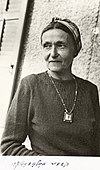
“the eminent poet Kadya Molodowsky”
Dara Horn on Sholem Aleichem
Dara Horn on Cynthia Ozick
“Cynthia Ozick is one of America’s greatest living writers. What makes her work breathtaking is its unvarying subject, a single idea that encompasses all that marks American life, Jewish tradition and every other challenge to the world as it is: ambition.”
Dara Horn on Anne Frank
“Here's how much people love dead Jews: Anne Frank's diary, first published in Dutch in 1947 via her surviving father, Otto Frank, has been translated into seventy languages and has sold more than 30 million copies worldwide, and the Anne Frank House now hosts well over a million visitors each year”

Dara Horn on Yiddish
“YIVO’s founding emboldened a highbrow Yiddish intellectual life that flourished between the world wars and soon used the new spelling as its hallmark. Of course, it was already too late. By 1945 the Nazis had killed the majority of the world’s Yiddish speakers. YIVO itself survived only through the efforts of Jewish prisoners, including celebrated poets who were forced by the Germans to loot YIVO’s archives for a Nazi-created “Institute for the Study of the Jewish Question.” Members of this “paper brigade” risked their lives to smuggle out cultural treasures, including documents that scholars had painstakingly collected to record and standardize Yiddish spelling.”
Dara Horn on Philip Roth
“Roth’s three favorite topics — Jews, women and New Jersey — all remain socially acceptable targets of irrational public mockery, and Roth was a virtuoso at mocking the combination of all three...His strength lay in those brilliantly rendered characters and voices like his. His weakness was that those voices denigrated just about everyone else. His caricatured women are merely a symptom of this lack of curiosity: It shows up again in Roth’s religious characters, his Israeli characters, his non-Jewish characters, his anyone-who-isn’t-him characters. That’s why Brenda and the many other Jewish New Jersey women in his books, ostensibly so close to home, struck me as so unfamiliar. I didn’t know these women at all, because neither did he...What endures, sadly, is Roth’s lack of imagination, the unempathetic and incurious caricaturing of others that he turned into a virtue — and which now defines much of American public life.”

Dara Horn on Irena Klepfisz
“At age 2, Klepfisz escaped with her mother from the Warsaw Ghetto and then lived in hiding until the end of World War II. Arriving in America via Sweden, Klepfisz struggled to master English in public school while attending Yiddish supplementary school and speaking Polish at home. For Klepfisz, poetry — in English — was also a hiding place, a “private language” where no teacher could criticize her hesitant use of new words. But the linguistic shifts remained daunting. “Words attach themselves to our most intimate experiences,” she told the Forward. “When you move into a new language, you lose that intimacy, and it’s a tremendous trauma.” Klepfisz treats that trauma through her own poetry, which braids Yiddish into English, and by translating the works of Yiddish women writers. To Klepfisz, who grew up with a deep awareness of the lost life of Jewish Warsaw, the supposed parallel between Yiddish and Irish is not so strange. “We each have a goldene keyt,” she said, using the expression “golden chain” that signifies the Yiddish literary tradition.”
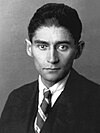
Dara Horn on Franz Kafka
“It is mainly Jewish readers who think of Kafka as a Jewish writer. This isn’t a matter of possessiveness, the way one claims a sports hero for an ethnic group — after all, if one wanted to claim a writer to carry the Jews into world literature, would it be asking too much to pick someone, well, happier? — but rather a matter of Kafka’s work itself. Jewish readers cannot help but hear the echoes of the Dreyfus Affair in “In the Penal Colony,” or those of the blood libel in “The Trial”; such readers see in Kafka’s famous cockroach a horrifying caricature of the way others have so often seen them — and worse, the way they sometimes see themselves. Nor is this awareness mere suspicion. Though none of his published works mention it explicitly, Kafka’s private letters and diaries reveal an interest in Jewish identity verging on obsession. But Kafka’s broader fame comes from the point where this obsession merges with more ordinary fears, making non-Jewish readers see his work as expressing an abstract “existential” dread, rather than the very real dread that defined European Jewish existence.”
Dara Horn on Chava Rosenfarb
“The idea of uplift is truly obscene when applied to fiction about the Holocaust, yet it is the main type of Holocaust literature English readers encounter: stories about brave fighters, altruistic rescuers, and sweet girls who insist that people are good at heart—or worse, easy bromides about the absence of God instead of accusatory truths about the evils of man...Does that mean imagination ought to have no place in writing about atrocity? Not at all. But a work about the Holocaust should necessarily be painful, not inspiring, and should honor the fullness of the loss, not only of individuals but of entire communities. Fortunately for English readers drowning in uplifting Holocaust stories, there exists a work in translation that accomplishes all this. It is Chava Rosenfarb’s The Tree of Life, a panoramic Yiddish-language trilogy about the Lodz Ghetto. To call it a masterpiece would be an understatement. It is the sort of work—long, immersive, engrossing, exquisite—that feels less like reading a book than living a life...The extreme level of detail that Rosenfarb gives to her portrait of Jewish Lodz, its people, and its passions, is itself an enormous achievement, a monument and a memorial to a destroyed community, written in the great (and alas, very long) tradition of Jewish literary lament. Yet The Tree of Life is not a work of testimony, but a work of art, and its power lies in Rosenfarb’s artistic invention. One character, the aspiring teenage poet Rachel Eibushitz, most closely resembles Rosenfarb herself, but this character is simply one of many and hardly the most important. Instead of memoir, Rosenfarb offers true imagination, bringing us into the minds of many different people and rendering even the most despicable figures with the utmost imaginative empathy...we as readers cannot expect the book to uplift us, the way we obscenely expect of every other book about atrocity. Reading this monumental work requires an active commitment. It provides a real service to mankind: It broadens your life beyond your own imagining, allowing your life to include many other lives within it. It brings you down to the deepest level of existence.”

Quotes About Dara Horn
Gain deeper perspective through quotes about Dara Horn from others.
Source on Dara Horn 3 quotes
“The desire for immortality usually comes from a desire to fulfill one’s ambitions, but women’s lives have traditionally been focused not on ambition, but on obligation. So while immortality might be attractive to a man who sees it as a way to fulfill endless ambitions, an immortal woman in most historical periods would more likely be thinking, “Seriously? I have to do all that AGAIN?””
About Dara Horn
Dara Horn (born 1977) is an American novelist, essayist, and professor of literature. She has written five novels and in 2021, released a nonfiction essay collection titled People Love Dead Jews, which was a finalist for the 2021 Kirkus Prize in nonfiction. She won the Edward Lewis Wallant Award in 2002, the National Jewish Book Award in 2003 and 2006, and the Harold U. Ribalow Prize in 2007.