Link Copied!
Bettina Aptheker Quotes (1944-)
Author, Activist, King











About Bettina Aptheker
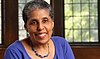
Bettina Fay Aptheker (born September 2, 1944) is an American political activist, radical feminist, professor and author. Aptheker was active in civil rights and anti-war movements of the 1960s and 1970s, and has since worked in developing feminist studies.
Best Bettina Aptheker Quotes
Shortest
Earliest
Explore our curated collection of the most famous and impactful Bettina Aptheker quotes.

“The desert is a metaphor. For how long women have endured. Like creosote. Waiting for the rains. We are the rains. (p 254)”
“It was my experience in the Angela Davis trial that propelled me into a study of Afro-American women's history and, ultimately, into women's studies.”

“We have to stop thinking in oppositional categories. We have to stop thinking that one line is "correct" and that others must be "won over" to it, while those who disagree are "defeated." (p 252)”
“I think many girls and women experience this split of appearing totally together and on top of things but are internally a total mess. I’m an incest survivor, I’m dealing with sexual harassment, I have huge issues with low self-esteem, worthlessness, [and] suicidal tendencies.”
“History does not repeat itself, but our reading of history shapes our perception of the world and our vision of how to change it. With the collective rendering of woman's legacy still to come, we will reckon a course that transforms our reading of the human experience and allows us to navigate through hitherto unknown waters. (p 151)”

“(What do you wish you could tell yourself at the time? Girls your age now?) BA: I wish that I could have taken a class like what I teach. I wish feminist studies and women’s studies classes were offered [when I was in college]. [At my age,] You knew how you felt but you didn’t know what to do about it. I knew I was a lesbian [but] I didn’t have the language for it. There were lesbians in the Communist party, [but] the party was very homophobic. Some of [the lesbians] were living together openly but never talking about it. It was don’t ask, don’t tell.”
“I was very young, just 20, in 1964. A lot of people were speaking on top of the car, [including] Mario Savio and Art Goldberg, who later became an attorney. They were almost all men, and I thought I might have something to say and that a woman ought to get up there and say something. Later on, the other person who spoke on top of the car was Jackie Goldberg, who is wonderful and later became one of the most important state legislators. Later, when we were surrounded by the police and it looked like they were going to break us up, a woman lawyer spoke on the top of the car. I didn’t have any feminist consciousness, it was just a feeling. I had a great time speaking on top of the car. The crowd was marvelous, it was at night, the lights of the cameras were blinding me, so I couldn’t see, but I could hear them and feel them. I quoted Frederick Douglass, “Power concedes nothing without a demand.” The crowd roared back.”

“(What are your thoughts on American Jewish engagement in politics now?) BA: We are a very small minority in the population. We have had over decades of very significant influence and [engagement] in progressive politics. A very disproportionate number of white students that went south are Jewish. Michael Schwerner [a Congress of Racial Equality social worker], and Andrew Goodman [a civil rights activist killed by the Ku Klux Klan] were Jewish, from New York. That was not unusual. [These numbers] are very disproportionate in relation to our numbers in the population. The Reform Rabbis that I have encountered were very much involved in the Civil Rights Movement. There is this historic connection between black and Jewish activists in the 30s and 40s. What I see happening today, [Jews] are still very progressive on domestic issues. [Jews] still generally vote Democratic. [There was an] overwhelming vote for Obama and for Hillary from the Jews. Some of the students that come to me who are pro-Palestine – I say… don’t demonize Israelis and don’t demonize the Jewish people.”
“I find myself again cut off, babbling "buts." I find myself then, also, drawn to Catharine MacKinnon's eloquent "discourses on life and law," in which she argues that viewing gender as a matter of sameness and difference covers up the reality of gender as a system of power, hierarchy, and privilege, of imposed inequality. The point is that more than one thing is true for us at the same time. A masculinist process, however, at least as it has been institutionalized in Western society, accentuates the combative, the oppositional, the either/or dichotomies, the "right" and the "wrong." What I have been about throughout this book is showing that the dailiness of women's lives structures a different way of knowing and a different way of thinking. The process that comes from this way of knowing has to be at the center of a women's politics, and it has to be at the center of a women's scholarship. This is why I have been drawn to the poetry and to the stories: because they are layered, because more than one truth is represented, because there is ambiguity and paradox. When we work together in coalitions, or on the job, or in academic settings, or in the community, we have to allow for this ambiguity and paradox, respect each other, our cultures, our integrity, our dignity. As we have pressured against racial and sex discrimination, institutional doors have been opened, however tenuously and with whatever reluctance. Some of us have been allowed in, but nothing about the values of those institutions or their rules of success has changed, whether they be academic, corporate, ecclesiastic, political, medical, or juridical. The point is to change the values and the rules and to change the process by which they are established and enforced. The point is to integrate ideas about love and healing, about balance and connection, about beauty and growing, into our everyday ways of being. We have to believe in the value of our own experiences and in the value of our ways of knowing, our ways of doing things. We have to wrap ourselves in these ways of knowing, to enact daily ceremonies of life. (p 253-4)”
Bettina Aptheker Quotes by Topic
Find exactly what you are looking for by browsing this categorized list of Bettina Aptheker quotes by topic.
Bettina Aptheker on Israel
“Some of the students that come to me who are pro-Palestine – I say… don’t demonize Israelis and don’t demonize the Jewish people.”

Bettina Aptheker on Judaism
“Some of the students that come to me who are pro-Palestine – I say… don’t demonize Israelis and don’t demonize the Jewish people.”

What Bettina Aptheker Said About Others
Discover personal opinions Bettina Aptheker shared regarding contemporaries.
Bettina Aptheker on Sarah Grimké 3 quotes
“"Thine in the bonds of Womanhood," the abolitionist and woman's rights advocate Sarah Grimké signed her letters.”
Bettina Aptheker on Sigmund Freud 2 quotes
“The formation of a lesbian (and gay) identity, divested of Freudian origin, is in process. (p 119)”

Bettina Aptheker on Audre Lorde 2 quotes
“Lorde sees mortality as both weapon and power: "I am talking here about the need for every woman to live a considered life."”
Bettina Aptheker on Angela Davis 2 quotes
“It was my experience in the Angela Davis trial that propelled me into a study of Afro-American women's history and, ultimately, into women's studies.”

Bettina Aptheker on Ida B. Wells 2 quotes
“Ida B. Wells and Mary Church Terrell, two women who helped shape the main contours of the civil-rights movement in the United States in the twentieth century.”

Bettina Aptheker on Mary Church Terrell 2 quotes
“Ida B. Wells and Mary Church Terrell, two women who helped shape the main contours of the civil-rights movement in the United States in the twentieth century.”
Bettina Aptheker on John Brown (abolitionist) 2 quotes
“Susan B. Anthony organized a memorial meeting in honor of John Brown in Rochester, New York, on the day of his hanging. Parker Pillsbury, then editor of the Liberator, agreed to deliver the main address.”

Bettina Aptheker on Judy Grahn 2 quotes
“Judy Grahn traced the probable origin of the word "dyke" in the English language to Boudica, the warrior queen of the Celtic tribes who led a fierce uprising against the Roman conquest of the British Isles in 61 C.E.”
Bettina Aptheker on Harriet Beecher Stowe 2 quotes
“Abolitionist writer Thomas Wentworth Higginson said of its author: "To have written at once the most powerful and contemporaneous fiction, and the most efficient antislavery tract is a double triumph in literature and philosophy to which this country has heretofore seen no parallel."”
Bettina Aptheker on Melanie Kaye/Kantrowitz 2 quotes
“"I need the stories of our resistance," wrote Melanie Kaye in Nice Jewish Girls, "laced through the horror as an amulet, inspiration and warning." She told stories of the Jewish women in the anti-Nazi resistance: in Auschwitz, in Ravensbruck (where I had stood stricken and silent when I was fifteen), in the Warsaw ghetto uprising. "Those were Jewish women," she wrote. "I come from Jewish women who fought like that."”
Bettina Aptheker on Lucretia Mott 2 quotes
“The first such effort resulted in the organization of the Philadelphia Female Anti-Slavery Society, founded only a few months after the AASS. One of its main organizers was Lucretia Mott, who recalled later that, at the time of the founding, she had no idea of how to conduct a meeting. She said she had "no idea of the meaning of preambles and resolutions and votings." Women were seldom in assemblies of any kind and she had attended only one other convention before, "of colored people in this State."”

Bettina Aptheker on Dorothy Ray Healey 2 quotes
“One of the things I'd say about Dorothy is that she has a great capacity to listen sympathetically and to be able to see the other person's point of view. She might have disagreed with ideas that people were articulating (not just these young Black people; it was true of many people that she would encounter), but she could see from the point of view of their culture and who they were personally why they were saying the things they were. At the same time she would be able to articulate alternative ways of thinking. That's a great gift. It's very helpful to people. It allows them to see things in a different way than if you come at people with your line and bash them over the head with your pickax and say, "You're wrong, you're counter-revolutionary, you're petit bourgeois." You do that with people and they say, "Bye."”
Bettina Aptheker on Carrie Chapman Catt 2 quotes
“However badgered by political winds, the suffrage women in NAWSA were committed to winning a federal amendment. Under the presiding genius of Carrie Chapman Catt, an extraordinary campaign to secure congressional approval of the Nineteenth Amendment and its state-by-state ratification was started in 1913 with the presidency of Woodrow Wilson. Catt's "winning plan," as it was called, was a precise strategy with specific goals and dates, legislative details on individual men and their voting patterns in Congress and in every state. Catt and NAWSA also launched a drive to build an extensive network of state and local suffrage organizations. Coincident with Wilson's inauguration, thousands of women massed in Washington, D.C., for an impressive march up Pennsylvania Avenue. Although attacked by a mob of white men, the women proceeded undaunted.”

Bettina Aptheker on Alice Paul
Bettina Aptheker on Susan Griffin
“"From the body of the old woman," Susan Griffin wrote in a prose-poem called "The Anatomy Lesson," "We can tell you something of the life she lived."”
Bettina Aptheker on Merle Woo
“Merle Woo wrote a letter to her mother, stating her pride in being a Chinese-Korean-American woman: "We have such a proud heritage, such a courageous tradition."”
Bettina Aptheker on Norma Alarcón
“Poet and critic Norma Aiarcón tells us that "poetry has been the single most important genre employed by Chicanas in order to grasp and give shape to their experience and desire."”
Bettina Aptheker on Aurora Levins Morales
“An essay on Lebanon, written just after the invasion of that country by Israeli troops in 1982, by the Jewish-Puerto Rican writer Aurora Morales came closest to expressing my own rage and grief.”
Bettina Aptheker on Gloria E. Anzaldúa
“Her work is an exemplar of how to interpret from experience, and it also directs our attention to a process of connection between ourselves as women, and across the many boundaries of difference.”

Bettina Aptheker on Mary Daly
Bettina Aptheker on Susan B. Anthony
Bettina Aptheker on Moses
Quotes About Bettina Aptheker
Gain deeper perspective through quotes about Bettina Aptheker from others.
Dorothy Ray Healey on Bettina Aptheker
“One particularly poignant aspect of the debate within the American CP's National Committee was that it pitted Bettina Aptheker, who denounced the invasion, against her own father, Herbert Aptheker. Bettina was one of the liveliest of the young people who rose to prominence in the Party in the 1960s, and also one of the warmest human beings I've ever met. She adored her father, so it could not have been easy for her to oppose him that day.”
About Bettina Aptheker
Bettina Fay Aptheker (born September 2, 1944) is an American political activist, radical feminist, professor and author. Aptheker was active in civil rights and anti-war movements of the 1960s and 1970s, and has since worked in developing feminist studies.