Bettina Aptheker on Sarah Grimké
← Back to Bettina Aptheker Profile
“"Thine in the bonds of Womanhood," the abolitionist and woman's rights advocate Sarah Grimké signed her letters.”
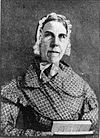
“Female anti-slavery networks, work on the Underground Railroad, club and church activities, and literary associations reflected a significant homosocial world. Some letters also reveal intimate, lifelong friendships that crossed racial lines. The Afro-American abolitionist, educator, and woman's rights advocate Sarah Mapps Douglass had such a relationship with Sarah Grimké; and Emma V. Brown, also an educator and an early graduate of Oberlin College, corresponded with Emily Howland, a white abolitionist and Quaker educator, for more than forty years. Given the taboo against interracial friendships, these personal alliances, and others like them, are notable…”
“the essay by the Southern-born abolitionist, Sarah Grimké, The Equality of the Sexes and the Condition of Women (1838), represented, in the opinion of historian Eleanor Flexner, the first serious discussion of woman's rights by an American woman. Sarah Grímké argued for social, political, economic, and legal equality between the sexes. She condemned the rape of Black women under slavery and observed the injurious effects of that system upon the white women of the South. Likewise, she pointed to the effects of inequality upon marital relations, portending the future content of the feminist claim: "That there is a root of bitterness continually springing up in families and troubling the repose of both men and women, must be manifest to even a superficial observer; and I believe it is the mistaken notion of the inequality of the sexes. As there is an assumption of superiority on the one part, which is not sanctioned by Jehovah, there is an incessant struggle on the other to rise to that degree of dignity, which God designed women to possess in common with men, and to maintain those rights and exercise those privileges which every woman's common sense, apart from prejudices of education, tells her are inalienable; they are a part of her moral nature, and can only cease when her immortal mind is extinguished.””