Link Copied!
Banda Singh Bahadur Quotes (1670-1716)
Author
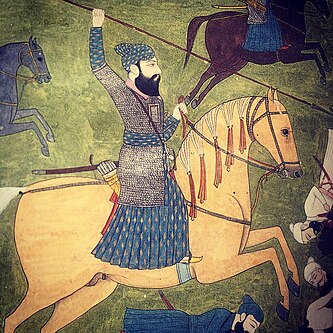
About Banda Singh Bahadur
Banda Singh Bahadur (27 October 1670 – 9 June 1716), born Lachman Dev and also popularly known as Veer Banda Bairagi, was a Sikh military commander who established a Sikh state with capital at Lohgarh (Haryana). At age 15 he left home to become an ascetic. He established a monastery at Nānded, on the bank of the river Godāvarī, where in September 1708 he was visited by, and became a disciple of, Guru Gobind Singh, who gave him the new name of Banda Bahadur after baptism as a Sikh. Armed with the blessing and authority of Guru Gobind Singh, he assembled a fighting force and led the struggle against the Mughal Empire. His first major action was the sack of the Mughal provincial capital, Samana, in November 1709. After establishing his authority in Punjab, Banda Singh Bahadur abolished the zamindari system, and granted property rights to the tillers of the land. He was captured by the Mughals and tortured to death in 1715-1716.
Best Banda Singh Bahadur Quotes
Shortest
Earliest
Explore our curated collection of the most famous and impactful Banda Singh Bahadur quotes.
“In the entire range of Sikh history, the account of Banda Singh Bahadur has remained almost an enigmatic phenomenon for the historians. Most scholars have not been able to perceive how an ascetic of some credibility, engaged in exercise of occult powers made an instant decision of joining the Khalsa-fold after a short but fateful meeting with Guru Gobind Singh in his own hermitage.”

“Banda Singh was impelled by the purest of motives in consecrating himself for the liberation and independence of his people and was an embodiment of selflessness. He always lived up to the principles: ‘Wishing the advancement of the Panth, walking in the path of dharma, fearing sin, living up to truth,’ as enjoined by Guru Govind Singh, who never considered lying, intrigue and treachery as part and parcel of politics .”

“On reaching the fort, Banda Singh, Baj Singh, Fateh Singh and other leaders were packed off to the Tripolia prison. Banda Singh’s wife, his four-year-old son Ajai Singh and the child’s nurse was handed over to the harem. The remaining 694 Sikhs were sent away for execution that began from 5 March 1716 in batches of hundred every day, going on for a week. Life was promised to anyone who chose to renounce his faith and embrace Islam, but not one among the 700 opted for it or sought pardon.26 As William Irvine states: ‘All observers, Indian and European, unite in remarking on the wonderful patience and resolution with which these men underwent their fate. Their attachment and devotion to their leader was wonderful to behold. They had no fear of death, they called the Executioner Mukt, or the Deliverer, they cried out to him joyfully, “O! Mukt! Kill me first.”’”
“Before he died, Guru Govind Singh had commissioned Banda Bairagi, a Rajput from Jammu to go to the Punjab and punish the wrong-doers. Banda more than fulfilled his mission. He was joined by fresh formations of the Khalsa and the Hindus at large gave him succour and support. He roamed all over the Punjab, defeating one Muslim army after another in frontal fights as well as in guerilla warfare. Sirhind, where Guru Govind Singh's younger sons had been walled up, was stormed and sacked. The bullies of Islam who had walked with immense swagger till only the other day had to run for cover. Large parts of the Punjab were liberated from Muslim despotism after a spell of nearly seven centuries. The Mughal empire, however, was still a mighty edifice which could mobilize a military force far beyond Banda's capacity to match. Gradually, he had to yield ground and accept defeat as his own following thinned down in battle after battle. He was captured, carried to Delhi in an iron cage and tortured to death in 1716 A.D. Many other members of the Khalsa met the same fate in Delhi and elsewhere. The Muslim governor of the Punjab had placed a prize on every Khalsa head. The ranks of the Khalsa had perforce to suffer a steep decline and go into hiding.”
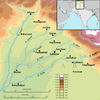
“The road from Agharabad to the Lahori gate was filled on both sides with troops and exultant crowds who mocked Banda Singh and his followers for their ludicrous appearance. Mirza Muhammada Harisi, one of the eyewitnesses, who went to see this ‘tamasha’ notes in his Ibrat Namah:
There was hardly anyone in the city who had not come out to see the tamasha or to enjoy the show of the extirpation of the accused ones. Such a crowd in the bazaars and lanes had been rarely seen. And the Mussalmans could not contain themselves for joy. But those unfortunate Sikhs, who had been reduced to this last extremity, were quite happy and contented with their fate; not the slightest sign of dejection or humility was to be seen on their faces. In fact, most of them, as they passed along on their camels, seemed happy and cheerful, joyfully singing the sacred hymns of their Scripture. And, if any one from amongst those in the lanes and bazaars called out to them that their own excesses had reduced them to that condition, they quickly retorted saying that it had been so willed by the Almighty and that their capture and misfortune was in accordance with His Will. And if anyone said: ‘Now you will be killed,’ they shouted: ‘Kill us, when were we afraid of death? Had we been afraid of it, how could we have fought so many battles with you? It was merely through starvation and want of food that we fell into your hands, otherwise you know already what deeds we are capable of.’”
There was hardly anyone in the city who had not come out to see the tamasha or to enjoy the show of the extirpation of the accused ones. Such a crowd in the bazaars and lanes had been rarely seen. And the Mussalmans could not contain themselves for joy. But those unfortunate Sikhs, who had been reduced to this last extremity, were quite happy and contented with their fate; not the slightest sign of dejection or humility was to be seen on their faces. In fact, most of them, as they passed along on their camels, seemed happy and cheerful, joyfully singing the sacred hymns of their Scripture. And, if any one from amongst those in the lanes and bazaars called out to them that their own excesses had reduced them to that condition, they quickly retorted saying that it had been so willed by the Almighty and that their capture and misfortune was in accordance with His Will. And if anyone said: ‘Now you will be killed,’ they shouted: ‘Kill us, when were we afraid of death? Had we been afraid of it, how could we have fought so many battles with you? It was merely through starvation and want of food that we fell into your hands, otherwise you know already what deeds we are capable of.’”
“The entry of Banda Bahadur and his Sikhs into Delhi is better articulated with greater detail by a number of eyewitnesses. One Muslim eyewitness had gone to see the procession of the Sikh prisoners and recorded what he saw: On this day I had gone to see the tamasha [spectacle] as far as the Mandavi-i- Namak [Salt Market] and had thence accompanied the procession to the Qilah-i-Mubarik [Imperial Fort]. There was hardly any one in the city who had not come out to see the tamasha or to enjoy the show of the extirpation of the accused ones [Sikhs]. Such a crowd in the bazaars and lanes had been rarely seen. And the Musalman could not contain themselves tor joy. But those unfor- tunate Sikhs, who had been reduced to this last extremity, were quite happy and contented with their tine; not the slightest sign of dejection or humility was seen on their faces. In tact, most of them, as they passed along on their camels, seemed happy and cheerful, joyfully singing the sacred hymns of their Scripture. And, if any one from amongst those in the lanes and bazaars called out to them that their own excesses had reduced them to that condition, they quicldy retorted saying that it had been so willed by the Almighty and that their capture and misfortune was in accordance with His Will. And, if any one said, "Now you will be killed," they shouted, "Kill us. When were we afraid of death? Had we been afraid of it, how could we have fought so many battles with you? It was merely through starvation and for want oftood that we fell into your hands, otherwise you know already what deeds we are capable of."”

About Banda Singh Bahadur
Banda Singh Bahadur (27 October 1670 – 9 June 1716), born Lachman Dev and also popularly known as Veer Banda Bairagi, was a Sikh military commander who established a Sikh state with capital at Lohgarh (Haryana). At age 15 he left home to become an ascetic. He established a monastery at Nānded, on the bank of the river Godāvarī, where in September 1708 he was visited by, and became a disciple of, Guru Gobind Singh, who gave him the new name of Banda Bahadur after baptism as a Sikh. Armed with the blessing and authority of Guru Gobind Singh, he assembled a fighting force and led the struggle against the Mughal Empire. His first major action was the sack of the Mughal provincial capital, Samana, in November 1709. After establishing his authority in Punjab, Banda Singh Bahadur abolished the zamindari system, and granted property rights to the tillers of the land. He was captured by the Mughals and tortured to death in 1715-1716.