Link Copied!
Allan Bloom Quotes (1930-1992)
Philosopher






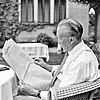





















About Allan Bloom
Allan David Bloom (14 September, 1930 in Indianapolis, Indiana – 7 October, 1992 in Chicago, Illinois) was an American philosopher, essayist and academic. Bloom championed education based on the study of 'Great Books', as did his mentor Leo Strauss. He criticised contemporary American higher education in his 1987 book, The Closing of the American Mind, which became a bestseller.
Best Allan Bloom Quotes
Shortest
Earliest
Explore our curated collection of the most famous and impactful Allan Bloom quotes.
“To recognize that some of the things our culture believes are not true imposes on us the duty of finding out which are true and which are not.”
“Did Romeo and Juliet have a … “relationship”? The term “relationship” … betokens a chaste egalitarianism leveling different ranks and degrees of attachment.”

“The distinction between the world of commerce and that of “culture” quickly became the distinction between infrastructure and superstructure, with the former clearly determining the latter.”
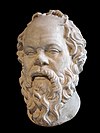
“Socrates’ way of life is the consequence of his recognition that we can know what it is that we do not know about the most important things and that we are by nature obliged to seek that knowledge.”




“Intellectuals … advertise their superiority to political practice but are absolutely in its thrall. … It is no accident that Marxist theory and practice use the intellectuals as tools and keep them in brutal subservience.”
“The first discipline modernity’s originators imposed upon themselves was that of self-restraint, learning to live with vulgarity. Their high expectations for effectiveness were made possible by low expectations of what was to be.”

“The distinction between private and public undermines the unity of spiritual strength, draining the public of the transcendent energies while trivializing them because the merely private life provides no proper stage for their action.”

“Life, liberty, and the pursuit of property were just what Aristotle did not talk about. They are the conditions of happiness; but the essence of happiness, according to Aristotle, is virtue. So the moderns decided to deal with the conditions and to let happiness take care of itself.”

“A good education would be devoted to encouraging and refining the love of the beautiful, but a pathologically misguided moralism instead turns such longing into a sin against the high goal of making everyone feel good, of overcoming nature in the name of equality. … Love of the beautiful may be the last and finest sacrifice to radical egalitarianism.”

“In the new order a Locke was free—with almost no danger of being interfered with—to think his sublime thoughts, to seek the first causes of all things, to understand the nature of things. He could talk with his friends and teach the young. And there was money enough. The academies and universities satisfied Socrates’ demand to be fed in the prytaneum.”

“The de-eroticization of the world, a companion to its disenchantment … seems to result from a combination of causes—our democratic regime and its tendencies toward leveling and self-protection, a reductionist-materialist science that inevitably interprets eros as sex, and the atmosphere generated by “the death of God” and of the subordinate god, Eros.”

“The old view was that delicacy of language was part of the nature, the sacred nature, of eros and that to speak about it in any other way would be to misunderstand it. What has disappeared is the risk and the hope of human connectedness embedded in eros. Ours is a language that reduces the longing for an other to the need for individual, private satisfaction and safety.”

“I am now even more persuaded of the urgent need to study why Socrates was accused. The dislike of philosophy is perennial, and the seeds of the condemnation of Socrates are present at all times, not in the bosoms of pleasure-seekers, who don’t give a damn, but in those of high-minded and idealistic persons who do not want to submit their aspirations to examination.”
“There are two kinds of openness, the openness of indifference—promoted with the twin purposes of humbling our intellectual pride and letting us be whatever we want to be, just as long as we don’t want to be knowers—and the openness that invites us to the quest for knowledge and certitude, for which history and the various cultures provide a brilliant array of examples for examination.”

“There are two threats to reason, the opinion that one knows the truth about the most important things and the opinion that there is no truth about them. Both of these opinions are fatal to philosophy; the first asserts that the quest for truth is unnecessary, while the second asserts that it is impossible. The Socratic knowledge of ignorance, which I take to be the beginning point of all philosophy, defines the sensible middle ground between two extremes.”

“As to the viciousness of the philosophers, the meaning of this complaint is succinctly expressed in the charge that the philosophers do not “hold the gods the city holds.” And this accusation is most true. The quest for wisdom begins in doubt of the conventional wisdom about the highest things. The most cherished beliefs of the community, the collective hopes and fears, are centered on its gods. The unpardonable thing is to be beyond these hopes and fears, beyond the awe and shame the gods impose.”

“Adeimantus, in what amounts to an accusation of Socrates, asserts that the philosophers appear to be either useless or vicious. Plato, as I have suggested, teaches that ultimately this is an appearance that cannot be reversed, and this insures the philosophers’ permanent marginality. They appear as useless because they are. They are neither artisans, nor statesmen, nor rhetoricians. They are idlers who contribute nothing to security or posterity. Their peculiar contemplative pleasures are not accessible to the majority of mankind, and they do not provide for the popular pleasures as do the poets.”
“The highest activities are always essentially lonely and private, and these men had a robust sense of their independence and the ultimate self-sufficiency of the mind. In this they were just like Socrates. The only change they operated was to bring philosophy out of the closet into the open, instead of seeking protection behind a little wall like men in a storm. Of course, in so doing they made philosophy, on the one hand, more vulnerable to the public if the hopes of controlling the public are not fulfilled, and, on the other, put at risk that inner intransigence which is the necessary condition of the quest for truth. Not only the rewards but the new responsibilities might prove irresistible temptations to compromise.”

“Only the search back to the origins of one’s ideas in order to see the real arguments for them, before people became so certain of them that they ceased thinking about them at all, can liberate us. Our study of history has taught us to laugh at the follies of the whole past, the monarchies, oligarchies, theocracies, and aristocracies with the fanaticism for empire or salvation, once taken so seriously. But we have very few tools for seeing ourselves in the same way, as others will see us. Each age always conspires to make its own way of thinking appear to be the only possible or just way, and our age has the least resistance to the triumph of its own way. There is less real presence of respectable alternatives and less knowledge of the titanic intellectual figures who founded our way.”
“The moderns contended that the concentration on virtue contradicts the concern for well-being. Aristotle admitted that “equipment” as well as virtue is necessary for happiness, but he said nothing about how that equipment is acquired. A careful examination of the acquisition of equipment reveals that virtue impedes that acquisition. Liberality, for example, presupposes money and not caring for it overmuch. But one must care for it to get it. Moreover, spending money exhausts it, so that liberality makes the need for acquisitiveness greater than it would have been without the virtue. Liberality both discourages and encourages acquisitiveness, putting man in contradiction with himself. … The miser is not likely to need to steal. And his quest for profit can, properly channeled, produce benefits for others. In the old system he is given a bad conscience and a bad name. But it would seem that nature is not kind to man, if the two elements of happiness—virtue and equipment—are at tension with one another. Equipment is surely necessary, so why not experiment with doing without virtue? If a substitute for virtue can be found, the inner conflict that renders man’s life so hard could be resolved.”
Allan Bloom Quotes by Topic
Find exactly what you are looking for by browsing this categorized list of Allan Bloom quotes by topic.
Allan Bloom on Bourgeoisie 7 quotes
“[Rock and the intellectual Left] must both be interpreted as parts of the cultural fabric of late capitalism. Their success comes from the bourgeois’ need to feel that he is not bourgeois.”

Allan Bloom on Liberal education 5 quotes
“True liberal education requires that the student’s whole life be radically changed by it, that what he learns may affect his action, his tastes, his choices, that no previous attachment be immune to examination and hence re-evaluation. Liberal education puts everything at risk and requires students who are able to risk everything.”
Allan Bloom on Age of Enlightenment 4 quotes
“Self-interest is hostile to the common good, but enlightened self-interest is not. And this is the best key to the meaning of enlightenment.”
Allan Bloom on Conformity 3 quotes
“Tocqueville found that Americans talked very much about individual right but that there was a real monotony of thought and that vigorous independence of mind was rare. Even those who appear to be free-thinkers … are creatures of public opinion as much as are conformists—actors of nonconformism in the theater of the conformists who admire and applaud nonconformity of certain kinds, the kinds that radicalize the already dominant opinions.”

Allan Bloom on Education 2 quotes
“Education is not sermonizing to children against their instincts and pleasures, but providing a natural continuity between what they feel and what they can and should be.”

Allan Bloom on Historicism 2 quotes
“Historicism and cultural relativism actually are a means to avoid testing our own prejudices and asking, for example, whether men are really equal or whether that opinion is merely a democratic prejudice.”
Allan Bloom on Television 2 quotes
“First radio, then television, have assaulted and overturned the privacy of the home, the real American privacy, which permitted the development of a higher and more independent life within democratic society.”

Allan Bloom on Happiness 2 quotes
“Life, liberty, and the pursuit of property were just what Aristotle did not talk about. They are the conditions of happiness; but the essence of happiness, according to Aristotle, is virtue. So the moderns decided to deal with the conditions and to let happiness take care of itself.”
Allan Bloom on Democracy 2 quotes
“Sycophancy toward those who hold power is a fact in every regime, and especially in a democracy, where, unlike tyranny, there is an accepted principle of legitimacy that breaks the inner will to resist. … Flattery of the people and incapacity to resist public opinion are the democratic vices, particularly among writers, artists, journalists and anyone else who is dependent on an audience.”

Allan Bloom on Ambiguity 2 quotes
“That gray net of abstraction, used to cover the world in order to simplify and explain it in a way that is pleasing to us, has become the world in our eyes. The only way to see the phenomena, rather than sterile distillations of them, to experience them in their ambiguity again, would be to have available alternate visions, a diversity of profound opinions. … Souls artificially constituted by a new kind of education live in a world transformed by man’s artifice and believe that all values are relative and determined by the private economic or sexual drives of those who hold them. How are they to recover the primary natural experience?”
Allan Bloom on 1960s 2 quotes
“In the early sixties that what was wanted was a liberal education to give such students the wherewithal to examine their lives and survey their potential. This was the one thing the universities were unequipped and unwilling to offer them. The students’ wandering and way-ward energies finally found a political outlet. By the mid-sixties universities were offering them every concession other than education, but appeasement failed and soon the whole experiment in excellence was washed away, leaving not a trace. The various liberations wasted that marvelous energy and tension, leaving the students’ souls exhausted and flaccid, capable of calculating, but not of passionate insight.”

Allan Bloom on Higher education 2 quotes
“Most students will be content with what our present considers relevant; others will have a spirit of enthusiasm that subsides as family and ambition provide them with other objects of interest; a small number will spend their lives in an effort to be autonomous. It is for these last, especially, that liberal education exists. They become the models for the use of the noblest human faculties and hence are benefactors to all of us, more for what they are than for what they do. Without their presence (and, one should add, without their being respectable), no society—no matter how rich or comfortable, no matter how technically adept or full of tender sentiments—can be called civilized.”

What Allan Bloom Said About Others
Discover personal opinions Allan Bloom shared regarding contemporaries.
Allan Bloom on Economist
“Economists teach that the market is the fundamental social phenomenon, and its culmination is money. Anthropologists teach that culture is the fundamental social phenomenon, and its culmination is the sacred. Such is the confrontation—man the producer of consumption goods vs. man the producer of culture, the maximizing animal vs. the reverent one.”
Allan Bloom on Jean-Jacques Rousseau
“Hence Rousseau's novelistic works, Emile, La Nouvelle Héloïse, and Confessions―each of which is much longer than his primary political treatise, the two Discourses and the Social Contract, put together―constitute an attempt to establish what was missing in earlier democratic thinkers, a democratic art. He does for democracy what Socrates did for aristocracy in the Republic.”

Allan Bloom on John Locke
“Locke had illegitimately selected those parts of man he needed for his social contract and suppressed all the rest, a theoretically unsatisfactory procedure and a practically costly one. The bourgeois is the measure of the price paid, he who most of all cannot afford to look to his real self, who denies the existence of the thinly boarded-over basement in him, who is most made over for the purposes of a society that does not even promise him perfection or salvation but merely buys him off.”

Allan Bloom on Raymond Aron
“In short, Raymond Aron was a perfect bourgeois. I use the term invented by liberal democracy's critics and enemies to describe the kind of man typical of it. He was reasonable, immune to the great romantic longings in the light of which the present is denigrated and sensible calculation about the future is made to appear small-minded. Such a man is a reflective rather than a passionate patriot, a good husband and father whose attachment to the smaller community attaches him more securely to the larger one, and, above all, he believes in the liberating power of education.”

Allan Bloom on Jonathan Swift
“Gulliver's Travels is to early modern philosophy what Aristophanes’ The Clouds was to early ancient philosophy. … Swift objects to Enlightenment because it encourages a hypertrophic development of mathematics, physics and astronomy, thus returning to the pre-Socratic philosophy that Aristophanes had criticized for being unselfconscious or unable to understand man. But, unlike pre-Socratic philosophy, which had no interest in politics at all, this science wished to rule and could rule. The new science had indeed generated sufficient power to rule, but in order to do so had had to lose the human perspective. In other words, Swift denied that modern science had actually established a human or political science. All to the contrary, it had destroyed it.”

Allan Bloom on Friedrich Nietzsche
“It is Nietzsche's merit that he was aware that to philosophize is radically problematic in the cultural, historicist dispensation. He recognized the terrible intellectual and moral risks involved. At the center of his every thought was the question “How is it possible to do what I am doing?” He tried to apply to his own thought the teachings of cultural relativism. This practically nobody else does. For example, Freud says that men are motivated by desire for sex and power, but he did not apply those motives to explain his own science or his own scientific activity. But if he can be a true scientist, i.e., motivated by love of the truth, so can other men, and his description of their motives is thus mortally flawed. Or if he is motivated by sex or power, he is not a scientist, and his science is only one means among many possible to attain those ends. This contradiction runs throughout the natural and social sciences. They give an account of things that cannot possibly explain the conduct of their practitioners.”

Quotes About Allan Bloom
Gain deeper perspective through quotes about Allan Bloom from others.
Elizabeth Martinez on Allan Bloom 2 quotes
“All-out opposition to diversity mounted when Allan Bloom fired a major salvo with his 1987 bestseller, The Closing of the American Mind. That same year, the National Association of Scholars in Princeton, New Jersey, was founded to defend "excellence" from extinction with the help of intellectuals like D'Souza and magazines like the Atlantic. The Anglo generals in the war soon had a few lieutenants of color, like African-American professor Shelby Steele of California State University in San Jose (and later Ward Connerly, also of California). Steele attacked affirmative action, saying it represented over-reliance by minorities and women on "the power of being victims." In its place we should follow the Horatio Alger formula for attaining success through individual responsibility and hard work. Not long after came a few Chicano academics who also advised Raza students to forget affirmative action; just stop whining, study hard and help your mom sell more tamales, you too could be Hispanics.”

About Allan Bloom
Allan David Bloom (14 September, 1930 in Indianapolis, Indiana – 7 October, 1992 in Chicago, Illinois) was an American philosopher, essayist and academic. Bloom championed education based on the study of 'Great Books', as did his mentor Leo Strauss. He criticised contemporary American higher education in his 1987 book, The Closing of the American Mind, which became a bestseller.