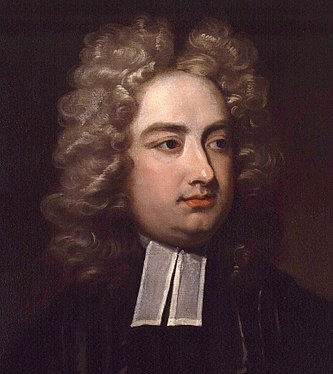
Gulliver's Travels is to early modern philosophy what Aristophanes’ The Clouds was to early ancient philosophy. … Swift objects to Enlightenment because it encourages a hypertrophic development of mathematics, physics and astronomy, thus returning to the pre-Socratic philosophy that Aristophanes had criticized for being unselfconscious or unable to understand man. But, unlike pre-Socratic philosophy, which had no interest in politics at all, this science wished to rule and could rule. The new science had indeed generated sufficient power to rule, but in order to do so had had to lose the human perspective. In other words, Swift denied that modern science had actually established a human or political science. All to the contrary, it had destroyed it.
What It Means
This is a placeholder explanation generated by the low-overhead model. It interprets "Gulliver's Travels is to early modern philosophy what Aristophanes’ The Clouds was to early ancient philosophy. … Swift objects to Enlightenment because it encourages a hypertrophic development of mathematics, physics and astronomy, thus returning to the pre-Socratic philosophy that Aristophanes had criticized for being unselfconscious or unable to understand man. But, unlike pre-Socratic philosophy, which had no interest in politics at all, this science wished to rule and could rule. The new science had indeed generated sufficient power to rule, but in order to do so had had to lose the human perspective. In other words, Swift denied that modern science had actually established a human or political science. All to the contrary, it had destroyed it." in the context of "Allan Bloom, The Closing of the American Mind (1988), pp. 293-295" to mean that wisdom is timeless.
Tags

About Allan Bloom