Link Copied!
Zhuangzi Quotes (-369--286)
Philosopher




About Zhuangzi
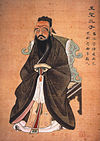
Zhūangzi (莊子; c. 369 BC – c. 286 BC), literally Master Zhuang, was a Chinese philosopher, who is supposed to have lived during the Warring States Period, corresponding to the Hundred Schools of Thought. His name is also transliterated as Zhuang Zi, Zhuang Zhou, Chuang Tzu, Chuang Tse. Chuang was his surname and Tse indicates master; so he would be referred to as Master Chuang. You will also see his name given as "Chuang Chou" or "Zhuang Zhu", this was his proper name, first and last, not an alternate spelling of "Chuang Tzu" or "Zhuangzi".
Best Zhuangzi Quotes
Shortest
Earliest
Explore our curated collection of the most famous and impactful Zhuangzi quotes.
“Rewards and punishments are the lowest form of education.”

“Perfect happiness is keeping yourself alive, and only actionless action can have this affect.”
“Forget the years, forget distinctions. Leap into the boundless and make it your home!”

“Those who seek to satisfy the mind of man by hampering it with ceremonies and music and affecting charity and devotion have lost their original nature.”
“We cling to our own point of view, as though everything depended on it. Yet our opinions have no permanence; like autumn and winter, they gradually pass away.”

“昔者庄周梦为蝴蝶,栩栩然蝴蝶也,自喻适志与,不知周也。俄然觉,则戚戚然周也。不知周之梦为蝴蝶与,蝴蝶之梦为周与?周与蝴蝶则必有分矣。此之谓物化。”
“Resolve your mental energy into abstraction, your physical energy into inaction. Allow yourself to fall in with the natural order of phenomena, without admitting the element of self,—and the empire will be governed.”

“知止乎其所不能知,至矣。若有不即是者,天鈞敗之。
• To know to stop where they cannot arrive by means of knowledge is the highest attainment. Those who cannot do this will be destroyed on the lathe of Heaven.”
• To know to stop where they cannot arrive by means of knowledge is the highest attainment. Those who cannot do this will be destroyed on the lathe of Heaven.”

“Those in positions of power spend day and night plotting and pondering about what to do. The body is treated in a very careless way. People live their lives, constantly surrounded by anxiety. If they live long before dying, they end up in senility, worn out by concerns: a terrible fate.”
“Great truths do not take hold of the hearts of the masses...And now, as all the world is in error, I, though I know the true path,—how shall I guide? If I know that I cannot succeed and yet try to force success, this would be but another source of error. Better, then, to desist and strive no more. But if I strive not, who will?”
“荃者所以在魚,得魚而忘荃;蹄者所以在兔,得兔而忘蹄;言者所以在意,得意而忘言。吾安得忘言之人而與之言哉!
• The fish trap exists because of the fish; when you've got the fish, you can forget the trap. The rabbit snare exists because of the rabbit; once you've got the rabbit, you can forget the snare. Words exist because of meaning; once you've got the meaning, you can forget the words. Where can I find a man who has forgotten words so I can have a word with him?”
• The fish trap exists because of the fish; when you've got the fish, you can forget the trap. The rabbit snare exists because of the rabbit; once you've got the rabbit, you can forget the snare. Words exist because of meaning; once you've got the meaning, you can forget the words. Where can I find a man who has forgotten words so I can have a word with him?”
“Chuang Tzŭ was fishing in the P'u when the prince of Ch'u sent two high officials to ask him to take charge of the administration of the Ch'u State. Chuang Tzŭ went on fishing, and without turning his head said, "I have heard that in Ch'u there is a sacred tortoise which has been dead now some three thousand years. And that the prince keeps this tortoise carefully enclosed in a chest on the altar of his ancestral temple. Now would this tortoise rather be dead and have its remains venerated, or be alive and wagging its tail in the mud?" "It would rather be alive," replied the two officials, "and wagging its tail in the mud." "Begone!" cried Chuang Tzŭ. "I too will wag my tail in the mud."”
“Whether you point to a little stalk or a great pillar, a leper or the beautiful Hsi-shih, things ribald and shady or things grotesque and strange, the Way makes them all into one. Their dividedness is their completeness; their completeness is their impairment. No thing is either complete or impaired, but all are made into one again. Only the man of far-reaching vision knows how to make them into one. So he has no use [for categories], but relegates all to the constant. The constant is the useful; the useful is the passable; the passable is the successful; and with success, all is accomplished. He relies upon this alone, relies upon it and does not know he is doing so. This is called the Way.”

“昔者莊周夢為蝴蝶,栩栩然蝴蝶也,自喻適志與,不知周也。俄然覺,則戚戚然周也。不知周之夢為蝴蝶與,蝴蝶之夢為周與?週與蝴蝶則必有分矣。此之謂物化。 (traditional)
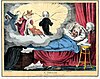
• Once upon a time, I, Chuang Chou, dreamt I was a butterfly, fluttering hither and thither, to all intents and purposes a butterfly. I was conscious only of my happiness as a butterfly, unaware that I was Chou. Soon I awaked, and there I was, veritably myself again. Now I do not know whether I was then a man dreaming I was a butterfly, or whether I am now a butterfly, dreaming I am a man. Between a man and a butterfly there is necessarily a distinction. The transition is called the transformation of material things.”
• Once upon a time, I, Chuang Chou, dreamt I was a butterfly, fluttering hither and thither, to all intents and purposes a butterfly. I was conscious only of my happiness as a butterfly, unaware that I was Chou. Soon I awaked, and there I was, veritably myself again. Now I do not know whether I was then a man dreaming I was a butterfly, or whether I am now a butterfly, dreaming I am a man. Between a man and a butterfly there is necessarily a distinction. The transition is called the transformation of material things.”

“Chuang Tzu's wife died and Hui Tzu came to console him, but Chuang Tzu was sitting, legs akimbo, bashing a battered tub and singing. Hui Tzu said, 'You lived as man and wife, she reared your children. At her death surely the least you should be doing is to be on the verge of weeping, rather than banging the tub and singing: this is not right!' Chuang Tzu said, 'Certainly not. When she first died, I certainly mourned just like everyone else! However, I then thought back to her birth and to the very roots of her being, before she was born. Indeed, not just before she was born but before the time when her body was created. Not just before her body was created but before the origin of life's breath. Her life's breath wrought a transformation and she had a body. Her body wrought a transformation and she was born. Now there is yet another transformation and she is dead. She is like the four seasons in the way that spring, summer, autumn and winter follow each other. She is now at peace, lying in her chamber, but if I were to sob and cry it would certainly appear that I could not comprehend the ways of destiny. This is why I stopped.'”
Zhuangzi Quotes by Topic
Find exactly what you are looking for by browsing this categorized list of Zhuangzi quotes by topic.
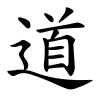
Zhuangzi on Tao 3 quotes
“The sage roams freely in the realm in which nothing can escape and all endures. Those who regard dying a premature death, getting old, and the beginning and the end of life as equally good are followed by others. How much more is that to which all things belong and on which the whole process of transformation depends (that is, Tao)?”
Zhuangzi on Knowledge 2 quotes
“I cannot look at something through someone else's eyes. I can only truly know something which I know.”
Zhuangzi on Refusal of work 2 quotes
“The sage finds his place as a quail settles. ... If the whole world has the Tao, he is part of that well-being. When the whole world has lost the Tao, he develops virtue and avoids involvement.”

Zhuangzi on Confusion
Zhuangzi on Fame
Zhuangzi on Honesty
“From the Three Dynasties down to the present day it has been like this. The good and honest people are ignored, while spineless flatterers are advanced.”
Zhuangzi on Success
“From the Three Dynasties down to the present day it has been like this. The good and honest people are ignored, while spineless flatterers are advanced.”
Zhuangzi on Understanding
Zhuangzi on Equanimity
“Water, when it is still, reflects back even your eyebrows and beard. It is perfectly level and from this the carpenter takes his level. If water stilled offers such clarity, imagine what pure spirit offers! The sage's heart is stilled! Heaven and Earth are reflected in it, the mirror of all life. Empty, still, calm, plain, quiet, silent, non-active, this is the centeredness of Heaven and Earth and of the Tao and Virtue.”
Zhuangzi on Automation
“Where you have machines, then you get certain kinds of problems; where you get certain kinds of problems, then you find a heart warped by these problems. Where you get a heart warped, its purity and simplicity are disturbed. When purity and simplicity are disturbed, then the spirit is alarmed and an alarmed spirit is no place for the Tao to dwell. It isn't that I don't know of these machines, but I would be ashamed to use one.”

Quotes About Zhuangzi
Gain deeper perspective through quotes about Zhuangzi from others.
Lin Yutang on Zhuangzi
“Chuangtse said that he once dreamed of being a butterfly, and while he was in the dream, he felt he could flutter his wings and everything was real, but that on waking up, he realized that he was Chuangtse and Chuangtse was real. Then he thought and wondered which was really real, whether he was really Chuangtse dreaming of being a butterfly, or really a butterfly dreaming of being Chuangtse. Life, then, is really a dream, and we human beings are like travelers floating down the eternal river of time, embarking at a certain point and disembarking again at another point in order to make room for others waiting below the river to come aboard. Half of the poetry of life would be gone, if we did not feel that life was either a dream, or a voyage with transient travelers, or merely a stage in which the actors seldom realized that they were playing their parts.”

Zhang Heng on Zhuangzi
“I saw a man's bones lying in the squelchy earth, Black rime-frost over him; and I in sorrow spoke And asked him, saying, "Dead man, how was it? Fled you with your friend from famine and for the last grains Gambled and lost? Was this earth your tomb, Or did floods carry you from afar? Were you mighty, were you wise, Were you foolish and poor? A warrior, or a girl?" Then a wonder came; for out of the silence a voice— Thin echo only, in no substance was the Spirit seen— Mysteriously answered, saying, "I was a man of Sung, Of the clan of Chuang! Chou was my name. Beyond the climes of common thought My reason soared, yet could I not save myself; For at the last, when the long charter of my years was told, I too, for all my magic, by age was brought To the Black Hill of Death. Wherefore, O Master, do you question me?" Then I answered: "Let me plead for you upon the Five Hill-tops, Let me pray for you to the Gods of Heaven and the Gods of Earth, That your white bones may arise, And your limbs be joined anew. ... Would you not have it so?" The dead man answered me: "O Friend, how strange and unacceptable your words! In death I rest and am at peace; in life I toiled and strove. Is the hardness of the winter stream Better than the melting of spring? All pride that the body knew Was it not lighter than dust? What Ch'ao and Hsu despised, What Po-ch'eng fled, Shall I desire, whom death Already has hidden in the Eternal Way— Where Li Chu cannot see me Nor Tzu Yeh hear me, Where neither Yao nor Shun can praise me Nor the tyrants Chieh and Hsin condemn me, Nor wolf nor tiger harm me, Lance prick me nor sword wound me? Of the Primal Spirit is my substance; I am a wave In the river of Darkness and Light. The Maker of All Things is my Father and Mother, Heaven is my bed and earth my cushion, The thunder and lightning are my drum and fan, The sun and moon my candle and my torch, The Milky Way my moat, the stars my jewels. With Nature am I conjoined; I have no passion, no desire, Wash me and I shall be no whiter, Foul me and I shall yet be clean. I come not, yet am here; Hasten not, yet am swift." The voice stopped, there was silence. A ghostly light Faded and expired. I gazed upon the dead, stared in sorrow and compassion. Then I called upon my servant that was with me To tie his silken scarf about those bones And wrap them in a cloak of sombre dust; While I, as offering to the soul of this dead man, Poured my hot tears upon the margin of the road.”
About Zhuangzi
Zhūangzi (莊子; c. 369 BC – c. 286 BC), literally Master Zhuang, was a Chinese philosopher, who is supposed to have lived during the Warring States Period, corresponding to the Hundred Schools of Thought. His name is also transliterated as Zhuang Zi, Zhuang Zhou, Chuang Tzu, Chuang Tse. Chuang was his surname and Tse indicates master; so he would be referred to as Master Chuang. You will also see his name given as "Chuang Chou" or "Zhuang Zhu", this was his proper name, first and last, not an alternate spelling of "Chuang Tzu" or "Zhuangzi".