Link Copied!
Zakir Hussain (politician) Quotes (0-)
President, Politician
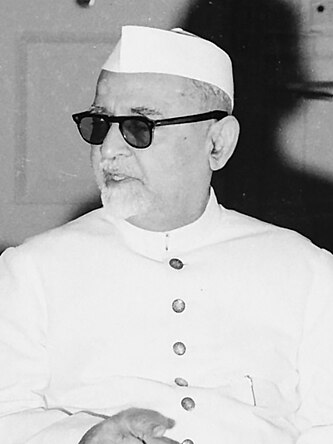
About Zakir Hussain (politician)
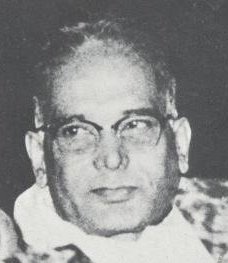
Zakir Hussain (Urdu: ذاکِر حسین, Telugu: జాకీర్ హుస్సైన్), ; February 8, 1897 – May 3, 1969) was the 3rd President of India, from 13 May 1967 until his death. An educationist and intellectual, Hussain was the country's first Muslim president.
Best Zakir Hussain (politician) Quotes
Shortest
Earliest
Explore our curated collection of the most famous and impactful Zakir Hussain (politician) quotes.
“Had your mother not been so well-organized, so simple, so virtuous and so resourceful, I would not have been what I am today.”
“Education is the master and politics is its servant. It is necessary to combine power with morality as well as with science and technology”

“I maintain that education is a prime instrument of national purpose and that the quality of its education is inseparably involved in the quality of the nation.”

“Education should be able to distinguish between the heritage that helps and that heritage hampers the tradition that undermines and the tradition that fortifies.”

“I may be forgiven the assumption that my choice to the highest office is mainly, if not entirely, made on account of my long association with the education of my people.”
“I have after years of thinking on the subject come to the conviction that work is the only instrument of effective education. It may sometimes be manual work, at others, non-manual work.”
“Feeble beliefs must be replaced by healthier habits and irrelevant institutions by progressive institutions. Our will should get guidance not form the twilight of the intellect but from the broad daylight of true beliefs.”
“Life is immense, comprehensive and dynamic. It includes spirit and matter and idealism and pragmatism and rotates round the axis of the noble and the ignoble. Life strives for higher ends. It is a mission, a service, and finally worship.”

“Placed under the sway of conflicting urges of the Indian masses we are yet given the poetic quality of composing a harmonious life. There are thousand stands of culture that make of the cultural life of our people a variegated pattern of exquisite beauty and richness.”
“If you ask me to continue as the Chairman of Rajya Sabha, I am not so weak as to refuse this challenge...If you ask me to go to the Rashtrapathi Bhavan, I am not so strong as to refuse this offer.”
“To seek to exclude any of these because of age or association with some particular elements of our national being would almost be an act of treason. In the rich history of our country nothing is good or bad because it is new or old...Hindu, Muslim, Sikh, Christian or Parsi.”
“It seems that institution has a great role to play in the development of India’s national life. Were I not convinced of this I would not have come to Aligarh leaving the Jamia work, to which intellectually and emotionally I am so deeply committed.”
“I have after years of thinking on the subject come to the conviction that work is the only instrument of effective education. It may sometimes be manual work and sometimes non-manual work. Although it is work alone that can educate, I have also come to the conviction by long observation and experience that all work does not educate.”
“The scientists and technologists must keep in mind social welfare. Education thus should develop the totality of the child. Indian education is lacking in the following major drawbacks.
(1) Indian education has been like stagnant water for quite some time.
(2)Indian education ignores new ideas and fresh thinking in educational matters.”
(1) Indian education has been like stagnant water for quite some time.
(2)Indian education ignores new ideas and fresh thinking in educational matters.”
“Streams of ideals that originated in the summit of our past, flowing underground in the depth of India’s soul, the ideals of simplicity of life, clarity of spiritual vision, purity of heart, harmony with the universe and consciousness of the infinite personality in all creation and the urge to bring these to the surface of our daily use and purification.”

“The edifice of my educational thought is almost entirely beholden to the views of Kerschensteiner. At later stages, however, Gandhiji’s influence and his elaboration of some of the finest points on the subject provided the much needed depth and expansion. Words turned into projects and a mere conceptual and transient framework became an insuperable part of my life.”
“The aim of a student’s life should be to overcome any illusions or prejudices he may have and to give up mean habits. He should, and it is his duty to, propagate education among his illiterate brothers and to consider the propagation of education as part of his own education. He ought to acquire knowledge for the sake of knowledge and he should not be unaware of the needs of life.”
“I have gained a lot from my German teachers and philosophers and I acknowledge this debt whole heartedly but it does not mean that others have not contributed to the growth of my ideas. I have been influenced in much the same way by thoughts of Indian, Swiss, English and American teachers and educational philosophers. I always treat truth and discretion as my lost property and pick it up wherever I find it.”
“Politics, especially in our country, is like a mountain stream which suddenly overflows and soon recedes, while educational work flows not only during monsoon but also in the summer by melting the hearts of mountains. Politics is concerned with the strengthening of national existence and is impatient by nature, education is dedicated to social ideals, it is inherently patent. Which is why education is the master and politics its servant.”

“Humanities and science are not something mutually contradictory but complimentary. One should realize the fact that science is devoid of values especially moral and ethical values. Science is a system of philosophy without ethics. Science devoid of ethical judgment becomes an ally of everyone – of the good as well as the bad and is of service in changing the world into a paradise or reducing it to a veritable hell.”

“Such an environment of love and affection (at school) had not as yet allowed my life to be exposed to hardships. Depending on others was my habit. You will be surprised to know that prior to my journey to the college I had never bought a train-ticket myself...the very first day I realized that moving out of the controlled school life and stepping into the free college life is no less than inviting all sorts of hassles to yourself. Nobody tells you how to read. Nobody tells you what to do, where to go, when to sleep, and when to wake up. The one who is used to restrictions gets perturbed by this freedom.”
“Something deep down in me seems to furnish me with the belief that Providence has destined India to be the laboratory in which the greatest experiment of cultural synthesis will be undertaken and successfully completed. India’s mission in the world history seems to be evolution of a distinct type of humanity, combining and harmonizing in itself lives of the diverse types which history has produced, all blended together to form a new type that might evolve a characteristic and, perhaps, more satisfactory patterns of civilized existence than those in vogue at present.”

“Our country does not need warm blood oozing out from our necks, but it needs the sweat of our brow that would flow twelve months in a year. The need is great for work, serious work. Our future would be made or marred by the broken hut of the farmer, by the dark roof of the artisan, and by the straw school of a village. It is possible to settle the disputes of a day or two in political strife, in conferences and congresses, but those places which I have indicated have been centuries the centers of our destiny. Work in these areas requires patience and perseverance. It tires you much and it is thankless too. It does not yield quick results; but yes, if someone holds on for long, it would give him sweet fruit.”
Quotes About Zakir Hussain (politician)
Gain deeper perspective through quotes about Zakir Hussain (politician) from others.
Noorani in on Zakir Hussain (politician)
“There is little evidence that he owed particular allegiance to any political organization or to any political leader. Evidence only there is of his nationalistic leanings, his hatred of foreign rule and a broad liberalism”
P.N.Chopra in on Zakir Hussain (politician)
“He was a much tested person whose patriotism was unquestioned , whose nationalism was unsullied and whose integrity was of a high order.”
Dr. Abid Hussain on Zakir Hussain (politician)
Khurshid Alam Khan on Zakir Hussain (politician) 3 quotes
“The history of India’s independence is replete with lives of many a great men and women who serve as beacons and role models for generations to come. He was one of them and his contribution was unique in its creativity. Using education as the instrument of his expression, he served the motherland with devotion and Gandhian faith.”
Jayaprakash Narayan on Zakir Hussain (politician)
“The story of a life so active and creative, so refined and dedicated, so fearless and fulfilled with national recognition, cannot but be a source of light and joy”
Atal Bihari Vajpayee in on Zakir Hussain (politician)
“It is extremely gratifying that you remained steadfast on the course charted by the Father of the Nation when the fury of tempest of chauvinism had either uprooted or shaken many a stalwart. We have established a secular polity in our country in which no distinction based on religion will have a place. By your words and actions you have fortified this secular ideal. Now in the form of Vice President and also as an incumbent of our Democratic Republic we will get your guidance.”
Z̤iāʼulḥasan Fārūq in on Zakir Hussain (politician)
“He was perfect Muslim as envisioned by Iqbal. He possessed the inherent passion for which the Arabs are known and the delicate temperament for which the Persians are acclaimed. He was soft in private audience and action-packed when involved in some task. He was like a drew drop which smoothens the fire in the heart of tulip and like a storm which terrifies the heart of the sea. He was like that hermit whose humbleness bears magic character. He knew how to keep the lamp glowing in the tempest. He was a model of culture and refinement.”
Abid Husain on Zakir Hussain (politician)
“The Muslims, whom I have seen in my time i.e., the 20th century, appearing on the scene of history, were of both kinds, truthful and hypocritical. We confess with grief that amongst the Muslims generally artificial materials were more popular than the genuine ones because it possessed outward, whose popularity is still limited to few, but the temporary glitter of gilded material has started fading out and the genuine gold is stable with its permanent radiance. Now perhaps the Indian Muslim will start appreciating him.”
In p. on Zakir Hussain (politician) 3 quotes
“His mental alertness and oratorical skills were at their best particularly [in his college days] in his rebuttal to the speeches of his opponents. In no time he would notice the fallacies of their arguments, which he would make a target of his satirical and sarcastic remarks in quite a dramatic way in his own repartee. He quipped and gibed so wittily that at times he held the audience spell bound and at times made it roar in laughter.”
In on Zakir Hussain (politician) 6 quotes
“He displayed this [summarization, translation, writing and editing of books] talent right from his school days. He got an ample opportunity to cultivate this habit when he joined college...he prepared a summarized Urdu translation of Professor Brown’s English article on the religion of Mohamad Ali Bab. He participated in essay-writing competition in 1917 and won the first prize on the topic Muslim Education in India. Around the same time he started translating Plato’s Republic.”
Dr. Mujeeb on Zakir Hussain (politician) 2 quotes
“He found him a tall figure, with a slightly flabby body, shining hair and well-trimmed beard. He appeared impressive, well-dressed and his eyes were exceptionally eloquent that drew everyone’s attention. There was deep note of mystery about his eyes...His style of conversation was always accompanied by his smile and too attractive which cast a spell on his addresses...He had a remarkable ability to assess others and immediately found out their mental level and their taste. Likewise, he had an enviable understanding of the context and situation in which he found himself placed.”
When he was offered a ministerial post on Zakir Hussain (politician)
“He differed with Pandit Nehru on some issues owing to his independent attitude. He was one of those who preferred unity and understanding, though it might delay the Partition or independence of the country.”
About Zakir Hussain (politician)
Zakir Hussain (Urdu: ذاکِر حسین, Telugu: జాకీర్ హుస్సైన్), ; February 8, 1897 – May 3, 1969) was the 3rd President of India, from 13 May 1967 until his death. An educationist and intellectual, Hussain was the country's first Muslim president.