Link Copied!
William Saroyan Quotes (1908-1981)
Author






About William Saroyan
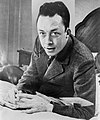
William Saroyan (31 August 1908 – 18 May 1981) was an Armenian American author, famous for his novel The Human Comedy (1943) and other works dealing with the comedies and tragedies of everyday existence.
Best William Saroyan Quotes
Shortest
Earliest
Explore our curated collection of the most famous and impactful William Saroyan quotes.


“Art is what is irresistible.”

“All things lie dark in possibility.”
“Illness must be considered to be as natural as health.”
“Everything begins with inhale and exhale, and never ends.”

“I do not believe in races. I do not believe in governments.”
“I am enormously wise and abysmally ignorant.”


“Nobody seemed to be interested in anything except making money.”
“If I have any desire at all, it is to show the brotherhood of man.”



“Each person belongs to the environment, in his own person, as himself.”
“My superficial manners stink and my profound manners are almost as bad.”
“I care so much about everything that I care about nothing.”
“A play is a world, with its own inhabitants and its own laws and its values.”
“I believe that time, with its infinite understanding, will one day forgive me.”


“The whole world and every human being in it is everybody's business.”



“Jim Dandy waves his stick over and around about the rock in a meaningless-meaningful way.”
“I don't think my writing is sentimental, although it is a very sentimental thing to be a human being.”

“I see life as one life at one time, so many millions simultaneously, all over the earth.”

“It is impossible not to notice that our world is tormented by failure, hate, guilt, and fear.”
“The greatest happiness you can have is knowing that you do not necessarily require happiness.”
“Cowards are the nicest people, the most interesting, the gentlest, the most refined, the least likely to commit crimes.”
“Armenag Saroyan was the failed poet, the failed Presbyterian preacher, the failed American, the failed theological student.”

“Many friendships are swift and accidental, the result of a chance meeting, followed by a permanent separation.”

“I couldn't understand the language, I couldn't understand a word in the whole book, but it was somehow too eloquent to use for a fire.”


“I have managed to conceal my madness fairly effectively, and as far as I know it hasn't hurt anybody badly, for which I am grateful.”
“My daughter, before she was sixteen, and especially before she was six, absolutely stunned me every day by the simple beauty and sweetness of her truth.”

“I sometimes think that rich men belong to another nationality entirely, no matter what their actual nationality happens to be. The nationality of the rich.”
“Illness is essentially discomfort, and it is not easy for anybody to be comfortable all the time... in his body, in his work, in his house, or in his soul.”
“There is much for a young writer to learn from our poorest writers. It is very destructive to burn bad books, almost more destructive than to burn good ones.”
“I love Armenian people — all of them. I love them because they are a part of the enormous human race, which of course I find simultaneously beautiful and vulnerable.”

“In the tradition of popular oratory, Trash [a nickname] started a talk at random, moved confidently ahead in no particular direction, and, although he spoke very clearly, said nothing.”


“Cowards are nice, they're interesting, they're gentle, they wouldn't think of shooting down people in a parade from a tower. They want to live, so they can see their kids. They're very brave.”
“Babies who have not yet been taught to speak any language are the only race of the earth, the race of man: all the rest is pretence, what we call civilization, hatred, fear, desire for strength.”

“In the most commonplace, tiresome, ridiculous, malicious, coarse, crude, or even crooked people or events I had to seek out rare things, good things, comic things, and I did so.”
“Neither love nor hate, nor any order of intense adherence to personal involvement in human experience, may be so apt to serve the soul as this freedom and this necessity to be kind.”

“Everything and everybody is sooner or later identified, defined, and put in perspective. The truth as always is simultaneously better and worse than what the popular myth-making has it.”
“I have read Schopenhauer at the age of twelve with no bewilderment and no contempt of his contempt for the world and its strange inhabitants, and no contempt for the strange inhabitant himself.”

“I began to write in the first place because I expected everything to change, and I wanted to have things in writing the way they had been. Just a little things, of course. A little of my little.”
“The child race is fresh, eager, interested, innocent, imaginative, healthy and full of faith, where the adult race, more often than not, is stale, spiritually debauched, unimaginative, unhealthy, and without faith.”

“I am deeply opposed to violence in all its forms, and yet I myself am violent in spirit, in my quarrel with the unbeatable: myself, my daemon, God, the human race, the world, time, pain, disorder, disgrace and death.”

“I took to writing at an early age to escape from meaninglessness, uselessness, unimportance, insignificance, poverty, enslavement, ill health, despair, madness, and all manner of other unattractive, natural and inevitable things.”
“Through the air on the flying trapeze, his mind hummed. Amusing it was, astoundingly funny. A trapeze to God, or to nothing, a flying trapeze to some sort of eternity; he prayed objectively for strength to make the flight with grace.”
“I have been to the place, Armenia. There is no nation there, but that is all the better. But I have been to that place, and I know this: that there is no nation in the world, no England and France and Italy, and no nation whatsoever.”
“This is a big statement and it sounds a little precious. Generally a man is ashamed to make such a statement. He is afraid sophisticated people will laugh at him. But I don't mind. I'm asking sophisticated people to laugh. That is what sophistication is for.”
“The real story can never be told. It is untellable. The real (as real) is inaccessible, being gone in time. There is no point in glancing at the past, in summoning it up, in re-examining it, except on behalf of art — that is, the meaningful-real.”
“He was just a young man who'd come to town on a donkey, bored to death or something, who'd taken advantage of the chance to be entertained by a small-town kid who was bored to death, too. That's the only way I could figure it out without accepting the general theory that he was crazy.”

“If the great one found out about my fight with Death, and came to be near me, what good things we might all expect from being in the world. and then around daybreak I knew I had come through, and now at last fell into real sleep — alone, and proud, and alive — now more alive than ever.”
“In order to write all a man needs is paper and a pencil. Furthermore, when a thing has been written, it is written forever. When it is printed, nothing can stop it from being printed again and again if the thing wants to be printed again and again. I must therefore be a writer.”
“The purpose of writing is both to keep up with life and to run ahead of it. I am little comfort to myself, although I am the only comfort I have, excepting perhaps streets, clouds, the sun, the faces and voices of kids and the aged, and similar accidents of beauty, innocence, truth and loneliness.”

“I saw rich beggars and poor beggars, proud beggars and humble beggars, fat beggars and thin beggars, healthy beggars and sick beggars, whole beggars and crippled beggars, wise beggars and stupid beggars. I saw amateur beggars and professional beggars. A professional beggar is a beggar who begs for a living.”

“I am an estranged man, said the liar: estranged from myself, from my family, my fellow man, my country, my world, my time, and my culture. I am not estranged from God, although I am a disbeliever in everything about God excepting God indefinable, inaccessible, inside all and careless of all.”
“In those days, there was something more to the world than there is now. Well, my kids were little, let's put it that way, and of course if you like your kids, if you love them from the moment they begin, you yourself begin all over again, in them, with them, and so there is something more to the world again.”

“I have always been a laugher, disturbing people who are not laughers, upsetting whole audiences at theatres… I laugh, that's all. I love to laugh. Laughter to me is being alive. I have had rotten times, and I have laughed through them. Even in the midst of the very worst times I have laughed.”

“The race was over. I was last, by ten yards. Without the slightest hesitation I protested and challenged the runners to another race, same distance, back. They refused to consider my proposal, which proved, I knew, that they were afraid to race me. I told them they knew very well I could beat them.”

“A neighborhood has a kind of mystical identity which one scarcely suspects let alone notices while one is living there, for living uses up all of a man's time and attention. But in retrospect sooner or later a man remembers an old neighborhood and suddenly notices that there was something fantastic about the place.”

“The bicycle is a city thing, virtually useless anywhere excepting on a pavement or hard surface of some kind. Without the road it would never have been invented. It is a little mad, both in design and purpose. Two wheels held together in a frame, with a simple mechanical system enabling a forward movement for one person.”
“There is a small area of land in Asia Minor that is called Armenia, but it is not so. It is not Armenia. It is a place. There are only Armenians, and they inhabit the earth, not Armenia, since there is no Armenia. There is no America and there is no England, and no France, and no Italy. There is only the earth.”

“Standing at the edge of our city, a man could feel that we had made this place of streets and dwellings in the stillness of the desert, and that we had done a brave thing... Or a man could feel that we had made this city in the desert and that it was a fake thing and that our lives were empty lives, and that we were the contemporaries of the jack rabbits.”

“I have been vitally aware of the Law of Opposites, and this awareness has kept me reasonably serene... the drama of life... the play of truth. the quarrel of fools and frauds, male and female, the classic and the romantic, the disciplined and the free... the comic and the tragic contrasting of the opposites in all areas of possibility and on and on and on.”
“The writer is a spiritual anarchist, as in the depth of his soul every man is. He is discontented with everything and everybody. The writer is everybody's best friend and only true enemy — the good and great enemy. He neither walks with the multitude nor cheers with them. The writer who is a writer is a rebel who never stops.”
“The most solid advice for a writer is this, I think: Try to learn to breathe deeply, really to taste food when you eat, and when you sleep really to sleep. Try as much as possible to be wholly alive with all your might, and when you laugh, laugh like hell. And when you get angry, get good and angry. Try to be alive. You will be dead soon enough.”
“Every man alive in the world is a beggar of one sort or another, every last one of them, great and small. The priest begs God for grace, and the king begs something for something. Sometimes he begs the people for loyalty, sometimes he begs God to forgive him. No man in the world can have endured ten years without having begged God to forgive him.”
“It's all over. We can begin to forget Armenia now. Andranik is dead. The nation is lost. I'm no Armenian. I'm an American. Well, the truth is I am both and neither. I love Armenia and I love America and I belong to both, but I am only this: an inhabitant of the earth, and so are you, whoever you are. I tried to forget Armenia but I couldn't do it.”
“Three times in my life I have been captured: by the orphanage, by school, and by the Army. I was four years in the orphanage, seven or eight in school, and three in the Army. Each seemed forever, though. But I'm mistaken. The fact is I was captured only once, when I was born, only that capture is also setting free, which is what this is actually all about. The free prisoner.”
“You act as if you know more than I'll ever know, but I've forgotten more than you'll ever know. You're snobs, too. Every man I've ever met has been a snob. You don't have to be a snob, too, do you? Please sign this piece of paper, so I can be a member of the public library and read books and find out about people. I don't want to hate you, I just can't help it.”

“I am interested in madness. I believe it is the biggest thing in the human race, and the most constant. How do you take away from a man his madness without also taking away his identity? Are we sure it is desirable for a man's spirit not to be at war with itself, or that it is better to be serene and ready to go to dinner than to be excited and unwilling to stop for a cup of coffee, even?”
“I had long known that there was something about me that was either violent or frightening for some reason. In certain three-sided clothing store images I had for some years come upon myself, with shock and disbelief, regret, and shame, disappointment and despair, for I am indeed clearly violent, mad, and ugly, all because of intensity of some kind, a tension, an obsession with getting everything that there was to be got, a passion, an insanity.”

“Then swiftly, neatly, with the grace of the young man on the trapeze, he was gone from his body.
For an eternal moment he was still all things at once: the bird, the fish, the rodent, the reptile, and man. An ocean of print undulated endlessly and darkly before him. The city burned. The herded crowd rioted. The earth circled away, and knowing that he did so, he turned his lost face to the empty sky and became dreamless, unalive, perfect.”
For an eternal moment he was still all things at once: the bird, the fish, the rodent, the reptile, and man. An ocean of print undulated endlessly and darkly before him. The city burned. The herded crowd rioted. The earth circled away, and knowing that he did so, he turned his lost face to the empty sky and became dreamless, unalive, perfect.”

“Jesus never said anything about absurdity, and he never indicated for one flash of time that he was aware of the preposterousness of his theory about himself. And he didn't even try to make the theory understandable in terms of the reality and experience of the rest of us. For if everybody else is also not what Jesus said he was, what good is what he said?”

“Now, if Mr. Shaw and Mr. Saroyan are poles apart, no comparison between the two, one great and the other nothing, one a genius and the other a charlatan, let me repeat that if you must know which writer has influenced my writing when influences are real and for all I know enduring, then that writer has been George Bernard Shaw. I shall in my own day influence a young writer or two somewhere or other, and no one need worry about that.
Young Shaw, hello out there.”
Young Shaw, hello out there.”
“'Aram Sevavor, I came for advice about a private matter. I came all the way from my house on L Street to your house on Van Ness Avenue, past the place where they have those red fire engines, all the way up Eye Street, where the police have their building, all the way up Forthcamp Avenue, I came, Aram Sevavor, one foot after the other, from my house to your house, I came, and now I go, I go all the way back, Aram Sevavor, because I can't remember the question I came to ask.'”

“I myself, as a person, have been influenced by many writers and many things, and my writing has felt the impact of the writing of many writers, some relatively unknown and unimportant, some downright bad. But probably the greatest influence of them all when an influence is most effective — when the man being influenced is nowhere near being solid in his own right — has been the influence of the great tall man with the white beard, the lively eyes, the swift wit and the impish chuckle.”
“I was never interested in the obvious, or in the details one takes for granted, and everybody seemed to be addicted to the obvious, being astonished by it, and forever harping about the details which I had long ago weighted, measured, and discarded as irrelevant and useless. If you can measure it, don't. If you can weigh it, it isn't worth the bother. It isn't what you're after. It isn't going to get it. My wisdom was visual and as swift as vision. I looked, I saw, I understood, I felt, "That's that, where do we go from here?" .”
“Whoever the kid had been, whoever had the grand attitude, has finally heeded the admonishment of parents, teachers, governments, religions, and the law: "You just change your attitude now please, young man." This transformation in kids — from flashing dragonflies, so to say, to sticky water-surface worms slowly slipping downstream — is noticed with pride by society and with mortification by God, which is a fantastic way of saying I don't like to see kids throw away their truth just because it isn't worth a dime in the open market.”
“My birthplace was California, but I couldn't forget Armenia, so what is one's country? Is it land of the earth, in a specific place? Rivers there? Lakes? The sky there? The way the moon comes up there? And the sun? Is one's country the trees, the vineyards, the grass, the birds, the rocks, the hills and summer and winter? Is it the animal rhythm of the living there? The huts and houses, the streets of cities, the tables and chairs, and the drinking of tea and talking? Is it the peach ripening in summer heat on the bough? Is it the dead in the earth there?”

“He paints for the blind, and we are the blind, and he lets us see for sure what we saw long ago but weren't sure we saw. He paints for the dead, to remind us that — great good God, think of it — we're alive, and on our way to weather, from the sea to the hot interior, to watermelon there, a bird at night chasing a child past flowering cactus, a building on fire, barking dogs, and guitar-players not playing at eight o'clock, every picture saying, "Did you live, man? Were you alive back there for a little while? Good for you, good for you, and wasn't it hot, though? Wasn't it great when it was hot, though?"”
“One day, back there in the good old days when I was nine and the world was full of every kind of magnificence, and life was still a delightful and mysterious dream, my cousin Mourad, who was considered crazy by everybody who knew him except me, came to my house at four in the morning and woke me up by tapping on the window of my room.
"Aram," he said.
I jumped out of bed and looked out the window.
I couldn't believe what I saw.
It wasn't morning yet, but it was summer and with daybreak not many minutes around the corner of the world it was light enough for me to know I wasn't dreaming.
My cousin Mourad was sitting on a beautiful white horse.”

“I have read books about the behavior of mobs — The Mob by Le Bon, if I remember rightly, was one — about the crime in children, and the genius in them, about the greatest bodies of things, and about the littlest of them. I have been fascinated by it all, grateful for it all, grateful for the sheer majesty of the existence of ideas, stories, fables, and paper and ink and print and books to hold them all together for a man to take aside and examine alone. But the man I liked most and the man who seemed to remind me of myself — of what I really was and would surely become — was George Bernard Shaw.”
“When I was fifteen and had quit school forever, I went to work in a vineyard near Sanger with a number of Mexicans, one of whom was only a year or two older than myself, an earnest boy named Felipe. One gray, dismal, cold, dreary day in January, while we were pruning muscat vines, I said to this boy, simply in order to be talking, "If you had your wish, Felipe, what would you want to be? A doctor, a farmer, a singer, a painter, a matador, or what?" Felipe thought a minute, and then he said, "Passenger." This was exciting to hear, and definitely something to talk about at some length, which we did. He wanted to be a passenger on anything that was going anywhere, but most of all on a ship.”
“I have long known of Mr. Shaw, read his plays and prefaces, and loved him. I admire heroic effort. Accomplishment I love. What I am about to say is no invention, and I am putting it down for whatever it may be worth to the historian of literature and for the student of influences of men on men, and because it is true and must therefore be made known. As a boy, charging pell-mell through literature, reading everything I could lay hands on in the Public Library of Fresno, I found many men to whom I felt deeply grateful — especially Guy de Maupassant, Jack London, and H. L. Mencken — but the first man to whom I felt definitely related was George Bernard Shaw. This is a presumptuous or fatuous thing to mention, perhaps, but even so it must be mentioned.”

“I liked Charentz straight off, but more important than this was the feeling that I had that he was a truly great man. Human greatness is a rather difficult thing to account for, and more often than not one is mistaken in one's hunches about somebody one has met. Charentz seemed great to me, I think, because he was made of a mixture of proud virtues and amusing flaws. On the one hand, his independence of spirit was balanced by a humorous worldliness, his acute intelligence by a curiosity that frequently made him seem naive, his profoundly gentle manners by a kind of mocking mischievousness which might easily be mistaken for rudeness. But he was never rude, he was witty, and the purpose of his wit was to keep himself from the terrible condition of pomposity.”
“When, at the age of eighteen, I was the manager of the Postal Telegraph office at 21 Taylor Street in San Francisco, I remember having been asked by the clerk there, a man named Clifford, who the hell I thought I was. And I remember replying very simply and earnestly somewhat as follows: If you have ever heard of George Bernard Shaw, if you have ever read his plays or prefaces, you will know what I mean when I tell you that I am that man by another name.
Who is he? I remember the clerk asking.
George Bernard Shaw, I replied, is the tonic of the Christian peoples of the world. He is health, wisdom, and comedy, and that's what I am too.
How do you figure? The clerk said.
Don't bother me, I said. I'm the night manager of this office and when I tell you something it's final.”

“I cannot see the war as historians see it. Those clever fellows study all the facts and they see the war as a large thing, one of the biggest events in the legend of the man, something general, involving multitudes. I see it as a large thing too, only I break it into small units of one man at a time, and see it as a large and monstrous thing for each man involved. I see the war as death in one form or another for men dressed as soldiers, and all the men who survived the war, including myself, I see as men who died with their brothers, dressed as soldiers. There is no such thing as a soldier. I see death as a private event, the destruction of the universe in the brain and in the senses of one man, and I cannot see any man's death as a contributing factor in the success or failure of a military campaign.”

“"I should like to see any power of the world destroy this race, this small tribe of unimportant people, whose history is ended, whose wars have all been fought and lost, whose structures have crumbled, whose literature is unread, whose music is unheard, whose prayers are no longer uttered. Go ahead, destroy this race. Let us say that it is again 1915. There is war in the world. Destroy Armenia. See if you can do it. Send them from their homes into the desert. Let them have neither bread nor water. Burn their houses and their churches. See if they will not live again. See if they will not laugh again. See if the race will not live again when two of them meet in a beer parlor, twenty years later, and laugh, and speak in their tongue. Go ahead, see if you can do anything about it. See if you can stop them from mocking the big ideas of the world, you sons of bitches, a couple of Armenians talking in the world, go ahead and try to destroy them."”
“I believed from the beginning of remembered experience that I was somebody with an incalculable potential for enlargement, somebody who both knew and could find out, upon whom demands could be made with the expectation of having them fulfilled.
I felt at the same time, and pretty much constantly, that I was nothing in relation to Enormity, the Unknown, and the Unknowable. I was too vulnerable, too lacking in power, a thing of subtle reality, liable to be blown away without a moment's warning, a migrant with no meaning, no guide, no counsel, an entity in continuous transition, a growing thing whose stages of growth always went unnoticed, a fluid and flawed thing. Thus, there could be no extreme vanity in my recognition of myself, if in fact there could be any at all. I did frequently rejoice in the recognition, but I may have gotten that from some of the Protestant hymns I had heard, and knew, and had sung, such as Joy to the World. The simple fact was that if the song wasn't about me, I couldn't see how it could possibly be about anybody else, including the one I knew it was supposed to be about, and good luck to him, too.”
I felt at the same time, and pretty much constantly, that I was nothing in relation to Enormity, the Unknown, and the Unknowable. I was too vulnerable, too lacking in power, a thing of subtle reality, liable to be blown away without a moment's warning, a migrant with no meaning, no guide, no counsel, an entity in continuous transition, a growing thing whose stages of growth always went unnoticed, a fluid and flawed thing. Thus, there could be no extreme vanity in my recognition of myself, if in fact there could be any at all. I did frequently rejoice in the recognition, but I may have gotten that from some of the Protestant hymns I had heard, and knew, and had sung, such as Joy to the World. The simple fact was that if the song wasn't about me, I couldn't see how it could possibly be about anybody else, including the one I knew it was supposed to be about, and good luck to him, too.”
“In the time of your life, live — so that in that good time there shall be no ugliness or death for yourself or for any life your life touches. Seek goodness everywhere, and when it is found, bring it out of its hiding-place and let it be free and unashamed. Place in matter and in flesh the least of the values, for these are things that hold death and must pass away. Discover in all things that which shines and is beyond corruption. Encourage virtue in whatever heart it may have been driven into secrecy and sorrow by the shame and terror of the world. Ignore the obvious, for it is unworthy of the clear eye and the kindly heart. Be the inferior of no man, nor of any man be the superior. Remember that every man is a variation of yourself. No man's guilt is not yours, nor is any man's innocence a thing apart. Despise evil and ungodliness, but not men of ungodliness or evil. These, understand. Have no shame in being kindly and gentle, but if the time comes in the time of your life to kill, kill and have no regret. In the time of your life, live — so that in the wondrous time you shall not add to the misery and sorrow of the world, but shall smile to the infinite delight and mystery of it.”
William Saroyan Quotes by Topic
Find exactly what you are looking for by browsing this categorized list of William Saroyan quotes by topic.
William Saroyan on Life 2 quotes
View all 2 quotes on Life →William Saroyan on Cycling 2 quotes
“Going around the world on a bicycle is no longer enough -- the daredevil has got to go around the moon on a Pogo stick with one arm tied behind him if he wants to get his picture in the paper.”

William Saroyan on Laughter 2 quotes
“Try to learn to breathe deeply, really to taste food when you eat, and when you sleep really to sleep. Try as much as possible to be wholly alive with all your might, and when you laugh, laugh like hell. And when you get angry, get good and angry. Try to be alive. You will be dead soon enough.”

What William Saroyan Said About Others
Discover personal opinions William Saroyan shared regarding contemporaries.
William Saroyan on Arthur Schopenhauer
“I have read Schopenhauer at the age of twelve with no bewilderment and no contempt of his contempt for the world and its strange inhabitants, and no contempt for the strange inhabitant himself.”

William Saroyan on Armenians
“There is a small area of land in Asia Minor that is called Armenia, but it is not so. It is not Armenia. It is a place. There are only Armenians, and they inhabit the earth, not Armenia, since there is no Armenia. There is no America and there is no England, and no France, and no Italy. There is only the earth.”

William Saroyan on George Bernard Shaw
“I found many men to whom I felt deeply grateful — especially Guy de Maupassant, Jack London, and H. L. Mencken — but the first man to whom I felt definitely related was George Bernard Shaw. This is a presumptuous or fatuous thing to mention, perhaps, but even so it must be mentioned. ... I myself, as a person, have been influenced by many writers and many things, and my writing has felt the impact of the writing of many writers, some relatively unknown and unimportant, some downright bad. But probably the greatest influence of them all when an influence is most effective — when the man being influenced is nowhere near being solid in his own right — has been the influence of the great tall man with the white beard, the lively eyes, the swift wit and the impish chuckle. ... I have been fascinated by it all, grateful for it all, grateful for the sheer majesty of the existence of ideas, stories, fables, and paper and ink and print and books to hold them all together for a man to take aside and examine alone. But the man I liked most and the man who seemed to remind me of myself — of what I really was and would surely become — was George Bernard Shaw.”

Quotes About William Saroyan
Gain deeper perspective through quotes about William Saroyan from others.
Source on William Saroyan 6 quotes
“Art can no longer afford to be contemptuous of politics, and it appears to be time politics took a little instruction from art.”
Anonymous editorial on William Saroyan
“I say the time is ripe for a William Saroyan revival... Bill Saroyan, that rollicking elf of an author who knew well of irony and compassion and laughter, wrote first-class original works for television, and the adaptations of his plays invariably hit the mark. I am thinking now in particular of the Playhouse 90 production of "The Time of Your Life." In it Jackie Gleason delivered a tremendous portrayal as Joe the philosopher who had this wistful greeting for everyone who entered the bar: "What's the dream?" ... In one of his last essays you may find a perceptive line that tells of the Saroyan working philosophy: "The purpose of writing is both to keep up with life and to run ahead of it." ... He looked, William Saroyan, exactly the way you would expect him to look. He had a huge mustache and a booming voice and a commanding presence. He was exuberant. He was mischievous. He was fun. … How he could make the English language soar! His words danced. This was writing that was never inhabited by wallflowers. This was Bill Saroyan.”
Stephen Fry on William Saroyan
“He is one of the most underrated writers of the century. He takes his place naturally alongside Hemingway, Steinbeck and Faulkner.”

John Hutchison on William Saroyan 2 quotes
“Saroyan's output from 1934 to 1940 established his reputation. What enthralled critics and readers was the brashness and certainty of his daring: Beginning with his first collection of linked short stories — written in 30 days, a story each day — and mailed off to Whit Burnett at Story Magazine. This was a new, fresh, exuberant kind of writing, intensely personal, prose poems which departed from customary narrative structures and sauntered elliptically with the awe of a young man fully realizing the most self-evident of truths: himself, alive upon the earth. … My recollection of those first Saroyan stories is typical: watching his language mesh the spiritual hunger and the actual physical hunger of the penniless main character was to be in the presence of a breathtaking act of creation. Hope and possibility were mandatory components to the human comedy as Saroyan viewed it. Accepting madness as the only constant in the universe never precluded joy and laughter. Cynicism had no place in the way one approached each day. Whimsy, compassion, a ready smile and the gift of interior and exterior motion were to be the tools.”
Peter H. King on William Saroyan
“One need not have been raised in Fresno to appreciate Saroyan, though I suppose it helps. Certainly he, better than anybody, captured the valley's strange texture: the mishmash landscape of farm, town and deserts; the jostling of so many different peoples, all a bit bewildered at finding themselves thrown together … Certainly Fresnans never forgave Saroyan for his harsher observations about the old hometown. The more political Armenians complained he wasted too many words on the human comedy, and not enough on the tragedy of a lost homeland. That he wrote so personally, and from the heart, gave literary critics their target: He was, they scolded, an undisciplined sentimentalist, mawkish. … For whatever reasons, Saroyan today is held under book-land quarantine. Few of his titles are in print. He's barely taught in schools. His own plans for literary legacy — a writers-in-residence program, posthumous publication of many works — have been scrapped or stalled. They did name a theater after him in Fresno, the one thing he expressly requested not be done. Those who remain under the Saroyan spell can only hope that the world will come around. His work simply seems too extraordinary, and universal, to be cleared from the shelves...”

About William Saroyan
William Saroyan (31 August 1908 – 18 May 1981) was an Armenian American author, famous for his novel The Human Comedy (1943) and other works dealing with the comedies and tragedies of everyday existence.