Link Copied!
William Ewart Gladstone Quotes (1809-1898)
Politician


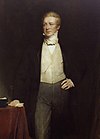












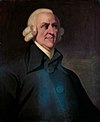


About William Ewart Gladstone
William Ewart Gladstone (29 December 1809 – 19 May 1898) was a British Liberal politician and Prime Minister (1868–1874, 1880–1885, 1886 and 1892–1894). He was a notable political reformer, known for his populist speeches, and was for many years the main political rival of Benjamin Disraeli.
Best William Ewart Gladstone Quotes
Shortest
Earliest
Explore our curated collection of the most famous and impactful William Ewart Gladstone quotes.
“To serve Armenia is to serve the Civilization.”

“I have said, and I say again, "Remember Mitchelstown".”
“[An] Established Clergy will always be a tory Corps d'Armée.”
“This is the negation of God erected into a system of Government.”

“Decision by majorities is as much an expedient, as lighting by gas.”
“I am fundamentally a dead man: one fundamentally a Peel–Cobden man.”

“As he lived, so he died — all display, without reality or genuineness.”

“At last, my friends, I am come amongst you. And I am come…unmuzzled.”
“The Government of India is the most arduous and perhaps the noblest trust ever undertaken by a nation.”
“Individual servitude, however abject, will not satisfy the Latin Church. The State must also be a slave.”

“The idea of abolishing Income Tax is to me highly attractive, both on other grounds & because it tends to public economy.”
“The disease of an evil conscience is beyond the practice of all the physicians of all the countries in the world.”

“[T]he idea that the colonies add to the strength of the mother country appears to me to be as dark a superstition as any that existed in the Middle Ages.”

“I would tell them of my own intention to keep my counsel...and I will venture to recommend them, as an old Parliamentary hand, to do the same.”
“I am a Free Trader on moral no less than on economic grounds: for I think human greed and selfishness are interwoven with every thread of the Protective system.”


“I am much oppressed with the idea that this transfer of human beings like chattels should go forward without any voice from collective Europe if it be disposed to speak.”
“In 1880, Midlothian leading the way, the nation nobly answered to the call of justice and [br]oadly recognised the brotherhood of man. It was the nation, not the classes.”

“In moral forces, and in their growing effect upon European politics, I have a great faith: possibly on that very account, I am free to confess, sometimes a misleading one.”
“You will find, I think, that the predominating idea of Conservatism is the Egyptian principle of repose; but in our Liberal Party we have got the Greek idea of life and motion.”


“As to his Goddess Reason, I understand by it simply an adoption of what are called on the continent the principles of the French Revolution. These we neither want nor warmly relish in England.”


“Economy is the first and great article (economy such as I understand it) in my financial creed. The controversy between direct and indirect taxation holds a minor, though important place.”
“I dislike the idea of its [vaccination] being compulsory. I don't like the notion of the State stepping in between parent and child when it is not absolutely necessary. The State is generally a very bad nurse.”

“What are the qualities which fit a man for the exercise of a privilege such as the franchise? Self-command, self-control, respect for order, patience under suffering, confidence in the law, regard for superiors.”

“From the ancient strife of territorial acquisition we are labouring, I trust and believe, to substitute another, a peaceful and a fraternal strife among nations, the honest and the noble race of industry and art.”
“I have even the hope that...the sense of justice which abides tenaciously in the masses will never knowingly join hands with the Fiend of Jingoism.”


“I am certain, from experience, of the immense advantage of strict account-keeping in early life. It is just like learning the grammar then, which when once learned need not be referred to afterwards.”

“I am not slow to claim the name of Scotchman, and undoubtedly, even if I were slow to claim it, there is the fact staring me in the face that not a drop of blood runs in my veins except what is derived from a Scottish ancestry.”
“All selfishness is the great curse of the human race, and when we have a real sympathy with other people less happy than ourselves that is a good sign of something like a beginning of deliverance from selfishness.”
“Protectionism and militarism are united in an unholy but yet a valid marriage: and the one and the other are in my firm conviction alike the foes of freedom.”
“In 1834 the Government...did themselves high honour by the new Poor Law Act, which rescued the English peasantry from the total loss of their independence.”

“I venture on assuring you that I regard the design formed by you and your friends with sincere interest, and in particular wish well to all the efforts you may make on behalf of individual freedom and independence as opposed to what is termed Collectivism.”
“We are not to judge individuals hastily on account of social mischiefs, that may be due to them as a body, through their holding of a position inherited from their forefathers, the whole nature of which they have not had strength and depth of wisdom to detect.”
“It is [America] alone who, at a coming time, can, and probably will, wrest from us that commercial primacy. We have no title, I have no inclination, to murmur at the prospect... We have no more title against her than Venice, or Genoa, or Holland, has had against us.”

“We must fall back upon the broad, the incorruptible power of national liberty; that we decline to recognise any class whatever, be they peers or be they gentry, be they what you like, as entitled to direct the destinies of this nation against the will of the nation.”
“But how is the spirit of expenditure to be exorcised? Not by preaching; I doubt if even by yours. I seriously doubt whether it will ever give place to the old spirit of economy, as long as we have the income-tax. There, or hard by, lie questions of deep practical moment.”

“As the British Constitution is the most subtile organism which has proceeded from the womb and the long gestation of progressive history, so the American Constitution is, so far as I can see, the most wonderful work ever struck off by the brain and purpose of man.”
“[T]he effect of that [Crimean] war was ... to substitute a European conscience, expressed by collective guarantee and the concerted and general action of the European Powers for the sole and individual action of one of them. It is impossible to exaggerate the importance of that principle.”

“I am inclined to say that the personal attendance and intervention of women in election proceedings, even apart from any suspicion of the wider objects of many of the promoters of the present movement, would be a practical evil not only of the gravest, but even of an intolerable character.”
“I deeply deplore the oblivion into which public economy has fallen; the prevailing disposition to make a luxury of panics, which multitudes seem to enjoy as they would a sensational novel or a highly seasoned cookery; and the leaning of both parties to socialism, which I radically disapprove.”
“A rational reaction against the irrational excesses and vagaries of scepticism may, I admit, readily degenerate into the rival folly of credulity. To be engaged in opposing wrong affords, under the conditions of our mental constitution, but a slender guarantee for being right.”
“What is meant by "Boycotting?" In the first place, it is combined intimidation. In the second place, it is combined intimidation made use of for the purpose of destroying the private liberty of choice by fear of ruin and starvation.”

“[T]he argument of unequal capacity does not tell so uniformly against the more numerous classes of the community as might be supposed. Whether from moral causes, or for whatever other reason, the popular judgment, on a certain number of important questions, is more just than that of the higher order.”

“Think, ladies and gentlemen, of your "Men of Harlech". In my judgment, for the purpose of a national air...and without disparagement of old "God save the Queen" or anything else, it is perhaps the finest national air in the world.”
“I think we certainly must recognise...how much ground has been lost by the doctrines of free trade within the last 25 years. It is a great and heavy disappointment. I have no doubt that the dreadful militarism which lies like an incubus, like a vampire upon Europe, is responsible for much of the mischief.”

“Hephaistos bears in Homer the double stamp of a Nature-Power, representing the element of fire, and of an anthropomorphic deity who is the god of art at a period when the only fine art known was in works of metal produced by the aid of fire.”

“There is a policy going a begging; the general policy that Sir Robert Peel in 1841 took office to support—the policy of peace abroad, of economy, of financial equilibrium, of steady resistance to abuses, and promotion of practical improvements at home, with a disinclination to questions of reform, gratuitously raised.”

“I am not by any means much pained, but I am much surprised at this rapid development of a national sentiment and party in Egypt. ... ‘Egypt for the Egyptians’ is the sentiment to which I should wish to give scope: and could it prevail it would I think be the best, the only good solution of the ‘Egyptian question’.”

“I am vexed to see portions of the labouring class beginning to be corrupted by the semblance of power as the other classes have been tainted & warped by its reality; and I am disgusted by finding a portion of them ready to thrust Ireland, which is so far ahead in claim, entirely into the background. Poor, poor, poor human nature.”
“[W]hat I call the ‘mad and drunk’ scheme of my colleagues on the naval estimates. ... [T]hat scheme (the most wanton contribution in my view to accursed militarism that has yet been made in any quarter, unless possibly by the Crispian Italy).”
“Ireland, Ireland! That cloud in the west! That coming storm! That minister of God's retribution upon cruel, inveterate, and but half-atoned injustice! Ireland forces upon us those great social and great religious questions—God grant that we may have courage to look them in the face, and to work through them.”

“I name next a word that it requires some courage to utter these days—the word of economy. It is like a echo from the distant period of my early life. The wealth of the country, and the vast comparative diffusion of comfort, has, I am afraid, put public economy, at least in its more rigid and severe forms, sadly out of countenance.”
“I wish to dissipate, if I can, the idle dreams of those who are always telling you that the strength of England depends, sometimes they say upon its prestige, sometimes they say upon its extending its Empire, or upon what it possesses beyond the seas. Rely upon it the strength of Great Britain and Ireland is within the United Kingdom.”

“I will venture to say that upon the one great class of subjects, the largest and the most weighty of them all, where the leading and determining considerations that ought to lead to a conclusion are truth, justice and humanity—upon these, gentlemen, all the world over, I will back the masses against the classes.”
“The history of nations is a melancholy chapter, that is, the history of their Governments. I am sorrowfully of opinion that, though virtue of splendid quality dwells in high regions with individuals, it is chiefly to be found on a large scale with the masses; and the history of nations is one of the most immoral parts of human history.”

“Ideal perfection is not the true basis of English legislation. We look at the attainable; we look at the practicable; and we have too much of English sense to be drawn away by those sanguine delineations of what might possibly be attained in Utopia, from a path which promises to enable us to effect great good for the people of England.”
“I feel with a peculiar sympathy all that relates to Scotland. The natives of Scotland, and all those who have Scotch blood in their veins—particularly if, like me, they only have Scotch blood in their veins—are not apt to forget the country from which they sprang. They know its great qualities. They know the solidity of its character.”

“In London it was not the interests of class which were specially concentrated. It was there that wealth was all-powerful; and wealth has taken desperate offence at their actions during the present year because the Government recommended to Parliament that power in the English army shall no longer be the prize of wealth, but the reward of merit.”

“Let us go forward in the good work we have in hand and let us put our trust, not in squires and peers, and not in titles or in acres; I will go further and say, not in man, as such, but in Almighty God, who is the God of justice, and who has ordained the principle of right, of equity, and of freedom to be the guides and the masters of our lives.”

“Socialism. Here I am at one with you. I have always been opposed to it. It is now taking hold of both parties, in a way I much dislike: & unhappily Lord Salisbury is one of its leaders, with no Lord Hartington (see his speech at Darwen) to oppose him.”

“I am convinced that upon every religious, as well as upon every political ground, the true and the wise course is not to deal out religious liberty by halves, by quarters, and by fractions; but to deal it out entire, and to leave no distinction between man and man on the ground of religious differences from one end of the land to the other.”
“I mean this, that together with the so-called increase of expenditure there grows up what may be termed a spirit which, insensibly and unconsciously perhaps, but really, affects the spirit of the people, the spirit of parliament, the spirit of the public departments, and perhaps even the spirit of those whose duty it is to submit the estimates to parliament.”

“Now is the time for the true friend of his country to remind the masses that their present political elevation is owing to no principles less broad and noble than these—the love of liberty, of liberty for all without distinction of class, creed, or country, and the resolute preference of the interests of the whole to any interest, be it what it may, of a narrower scope.”

“George III in his private character shows to advantage when compared with Charles II or George II. But, if George III had succeeded in repressing freedom and parliamentary government, we should have had a Revolution, not probably so bad as the French, but resembling it in kind. From such a catastrophe we were preserved by that unworthy representative of good principles, Wilkes.”
“What I hope for and desire, what I labour for and have at heart, is to decentralise authority in Ireland. We have disestablished the Church, we have relieved the tenant class of many grievances, and we are now going to produce a state of things which will make the humblest Irishman realise that he is a governing agency and that the government is to be carried on by him and for him.”
“The transfer of the allegiance and citizenship, of no small part of the heart and life, of human beings from one sovereignty to another, without any reference to their own consent, has been a great reproach to some former transactions in Europe; has led to many wars and disturbances; is hard to reconcile with considerations of equity; and is repulsive to the sense of modern civilization.”
“We are servants of the Crown as well as servants of the people... I am not ashamed to say that in my old age I rejoice in any opportunity which enables me to testify that, whatever may be thought of my opinions, whatever may be thought of my proposals in general politics, I do not forget the service which I have borne for so many years to the illustrious representative of the British Monarchy.”
“I have had the honour to receive the resolutions passed at the meeting recently held in Willis's Rooms, which your lordship has been good enough to forward to me. I can assure your lordship that the subject of those resolutions is engaging the earnest attention of Her Majesty's Government, who will avail themselves of every opportunity for securing the suppression of slavery and the slave trade.”
“Here is my first principle of foreign policy: good government at home. My second principle of foreign policy is this—that its aim ought to be to preserve to the nations of the world—and especially, were it but for shame, when we recollect the sacred name we bear as Christians, especially to the Christian nations of the world—the blessings of peace. That is my second principle.”
“The operations of commerce are not confined to the material ends; that there is no more powerful agent in consolidating and in knitting together the amity of nations; and that the great moral purpose of the repression of human passions, and those lusts and appetites which are the great cause of war, is in direct relation with the understanding and application of the science which you desire to propagate.”

“War taken at the best is a frightful scourge to the human race; but because it is so the wisdom of ages has surrounded it with strict laws and usages, and has required formalities to be observed which shall act as a curb upon the wild passions of man, to prevent that scourge from being let loose unless under circumstances of full deliberation and from absolute necessity. You have dispensed with all these precautions.”

“I affirm that Welsh nationality is as great a reality as English nationality. It may not be as big a reality in that it does not extend over so large a country, but with the traditions and history of Wales, with the language of Wales (hear, hear), with the religion of Wales (cheers), with the feelings of Wales, I maintain that the Welsh nationality is as true as the nationality of Scotland, to which by blood I exclusively belong.”

“The hopelessness of the Turkish Government should make me witness with delight its being swept out of the countries which it tortures. Next to the Ottoman Government nothing can be more deplorable and blameworthy than jealousies between Greek and Slav and plans by the States already existing for appropriating other territory. Why not Macedonia for the Macedonians as well as Bulgaria for the Bulgarians and Serbia for the Serbians?”
“Sir, there are three principles, greater than all others, on which, in my opinion, all good finance should be based. The first of them is that there should always be a certainty that whatever the charge may be it can be paid. That, I believe, is of vital importance. The second is that, in times of peace and prosperity, the people of the country should reduce their Debt; and the third point is that they should reduce their Expenditure.”
“[I]f it be true that, at periods now long past, England has had her full share of influence in stimulating by her example the martial struggles of the world, may she likewise be forward, now and hereafter, to show that she has profited by the heavy lessons of experience, and to be—if, indeed, in the designs of Providence, she is elected to that office—the standard-bearer of the nations upon the fruitful paths of peace, industry, and commerce.”
“[T]he finances of the country is intimately associated with the liberties of the country. It is a powerful leverage by which English liberty has been gradually acquired. Running back into the depths of antiquities for many centuries, it lies at the root of English liberty, and if the House of Commons can by any possibility lose the power of the control of the grants of public money, depend upon it your very liberty will be worth very little in comparison.”

“As regards to the sincerity of the Liberal party...I...refer with some confidence to the labours of that party for the last 50 years in setting free both capital and handicraft of all kinds, both from much undue taxation and from restraints devised for the benefit of special interests at the cost of the people at large—labours which have resulted not in a uniform, but in a very general and a very large improvement of the condition of the working community.”
“I have clung to the notion of a conscience, and a Catholic conscience, in the State, until that idea has become in the general mind so feeble, as to be absolutely inappreciable in the movement of public affairs. I do not know whether there is one man opposing the Maynooth Bill upon that principle. When I have found myself the last man in the ship, I think that I am free to leave it.”
“This Coercion Act professes to be in the main an Act directed against conspiracy, and conspiracy is a bad thing. But under the name of conspiracy we say that it is directed against combination. Combination is not always a very good thing, but combination is very often the sole means by which the weak can protect themselves against the strong, the poor against the wealthy.”
“Do not let us conceal from ourselves that this country is almost at the present time the solitary citadel of free trade. ... I confidently anticipate...that these doctrines of free trade will in the long run be found to mean nothing in the world except that each man and each country shall turn to the best account, without artificial interference or interruption, the powers and the gifts which God has given them. This is the sum and substance, the Alpha and the Omega, of our creed.”
“On the whole, it seems reasonable to hope that the practical character of our Teutonic cousins [Germany], together with their huge actual mass of domestic sorrows, will assist them to settle down into a mood of peace and goodwill. But whether they do or not, it is idle to apprehend that they have before them a career of universal conquest or absolute predominance, and that the European family is not strong enough to correct the eccentricities of its pecant and obstreperous members.”
“The reason why the foreign producer gets his produce to market cheaper, relatively, is this — that foreign produce is collected and brought in such large quantities and is sent in great masses to the market. That is the secret of cheap carriage... We must try to make our pounds of produce into tons — or must bring together a number of producers. If you small agriculturists can collectively offer a great bulk of merchandise to the railway companies, they will give you good terms.”
“The rule of our policy is that nothing should be done by the state which can be better or as well done by voluntary effort; and I am not aware that, either in its moral or even its literary aspects, the work of the state for education has as yet proved its superiority to the work of the religious bodies or of philanthropic individuals. Even the economical considerations of materially augmented cost do not appear to be wholly trivial.”
“The serious disintegration of the Liberal party did not begin in 1886. For a long time the wealthy and the powerful had been detaching themselves from the body of the Liberal party, and finding their most natural associations in Toryism, in stagnation, and in resistance. For many of them it was a perfect godsend when Home Rule turned up and supplied them with a plausible excuse for doing ostensibly or even ostentatiously that which in their hearts they had been longing for an excuse to do.”
“An enlightened impartial observer...will be disposed to think that in the common interests of humanity this remarkable strike and the results of this strike, which have tended somewhat to strengthen the condition of labour in the face of capital, is the record of what we ought to regard as satisfactory, as a real social advance; that it tends to a greater, a more uniform, and a more firm establishment of just relations; that it tends to a fair principle of division of the fruits of industry.”
“There is but one way of maintaining permanently what I may presume to call the great international policy and law of Europe—but one way of keeping within bounds any one of the Powers possessed of such strength as France, England, or Russia, if it be bent on an aggressive policy, and that is, by maintaining not so much great fleets, or other demonstrations of physical force, which I believe to be really an insignificant part of the case, but the moral union—the effective concord of Europe.”
“There is, in fact, a great deal of resemblance between the system which prevails in Turkey and the old system of negro slavery. In some respects it is less bad than negro slavery, and in other respects a great deal worse. It is worse in this respect, that in the case of negro slavery, at any rate, it was a race of higher capacities ruling over a race of lower capacities; but in the case of this system, it is unfortunately a race of lower capacities which rules over a race of higher capacities.”

“Sir, there was once a time when close relations of amity were established between the Governments of England and France. It was in the reign of the later Stuarts; and it marks a dark spot in our annals, because it was an union formed in a spirit of domineering ambition on the one side, and of base and vile subserviency on the other. But that, Sir, was not an union of the nations; it was an union of the Governments. This is not be an union of the Governments; it is to be an union of the nations.”

“[T]he great aim—the moral and political significance of the act, and its probable and desired fruit in binding the two countries together by interest and affection. Neither you nor I attach for the moment any superlative value to this Treaty for the sake of the extension of British trade. ... What I look to is the social good, the benefit to the relations of the two countries, and the effect on the peace of Europe.”

“The Welsh made a very good and a very hard fight against the English in self-defence, and what was the consequence? That the English were obliged to surround your territory with great castles; and the effect of this has been that, as far as I can reckon, more by far than one-half of the great remains of the castles in the whole island south of the Tweed are castles that surround Wales. That shows that Wales was inhabited by men, and by men who valued and were disposed to struggle for their liberties.”
“We may have our own opinions about slavery; we may be for or against the South; but there is no doubt that Jefferson Davis and other leaders of the South have made an army; they are making, it appears, a navy; and they have made what is more than either—they have made a Nation... We may anticipate with certainty the success of the Southern States so far as regards their separation from the North. I cannot but believe that that event is as certain as any event yet future and countingent can be.”

“The coercion which has been introduced has not been a coercion against crime...It has been a coercion against combination. And combination—it stands and glares upon us from every page in the history of Ireland—is the only arm by which a poor and destitute and feeble population are able to make good their ground, even in the slightest degree, against the domineering power of the State and of the wealthy with England at their back.”

“[My sixth principle is that] the foreign policy of England should always be inspired by the love of freedom. There should be a sympathy with freedom, a desire to give it scope, founded not upon visionary ideas, but upon the long experience of many generations within the shores of this happy isle, that in freedom you lay the firmest foundations both of loyalty and order; the firmest foundations for the development of individual character; and the best provision for the happiness of the nation at large.”

“To maintain a steady surplus of income over expenditure—to lower indirect taxes when excessive in amount for the relief of the people and bearing in mind the reproductive power inherent in such operations—to simplify our fiscal system by concentrating its pressure on a few well chosen articles of extended consumption—and to conciliate support to the income tax by marking its temporary character and by associating it with beneficial changes in the laws: these aims have been for fifteen years the labour of our life.”
“That reform of the land laws, that abolition of the present system of entail, together with just facilities for the transfer of land, is absolutely necessary in order to do anything like common justice to those who inhabit the rural parts of this country, and whom, instead of seeing them, as we now see them, dwindle from one census to another, I, for my part, and I believe you, along with me, would heartily desire to see maintained, not in their present number only, but in increasing numbers over the whole surface of the land.”

“[T]he establishment of freedom of trade and of a general disposition to remove from trade every possible restriction and every possible burden...has been the main agent in raising the commerce of the United Kingdom to that extraordinary position it has now attained. I apprehend that I am stating the matter very moderately if I put it thus, that in the course of the last 30 years our population has increased somewhere about 25 or 30 per cent., while our trade in the same period has increased in the ratio of certainly something not much under 400 per cent.”

“I am thankful to have borne a part in the emancipating labours of the last sixty years; but entirely uncertain how, had I now to begin my life, I could face the very different problems of the next sixty years. Of one thing I am, and always have been, convinced—it is not by the State that man can be regenerated, and the terrible woes of this darkened world effectually dealt with. In some, and some very important, respects, I yearn for the impossible revival of the men and the ideas of my first twenty years, which immediately followed the first Reform Act.”
“I agree with you that a grave calamity overhangs the Liberal party in connection with the plan which I described to you in two peculiar monosyllabic epithets [mad and drunk]... Liberalism cannot put on the garb of Jingoism without suffering for it... [For sixty years my life has been] a constant effort to do all I could for economy & for peace; not the peace of this country only but of the world... it is not now economy but peace which supplies the key note of the situation... If the thing is to be done at all let it be done by those who think it right.”

“This I must tell you, if we are compelled to go into it—your position against us, the resolute banding of the great, and the rich, and the noble, and I know not who against the true genuine sense of the people compels us to unveil the truth; and I tell you this—that, so far as I can judge, and so far as my knowledge goes, I grieve to say in the presence of distinguished Irishmen that I know of no blacker or fouler transaction in the history of man than the making of the Union.”
“[T]here appeared to me to have grown up under the present Government a system of what I called, in regard to the public expenditure, making things pleasant all round. That means going from town to town, granting what this community wants, granting what that community wants, granting what the other community wants, and leaving out of sight that huge public which unfortunately has not got the voices and the advocates ready always to defend it against these local and particular claims, but of which it is our highest boast that we seek to be the advocates and the champions.”
“Ireland stands at your bar expectant, hopeful, almost suppliant. Her words are the words of truth and soberness. She asks a blessed oblivion of the past, and in that oblivion our interest is deeper than even hers. ...She asks also a boon for the future; and that boon for the future, unless we are much mistaken, will be a boon to us in respect of honour, no less than a boon to her in respect of happiness, prosperity, and peace. Such, Sir, is her prayer. Think, I beseech you, think well, think wisely, think, not for the moment, but for the years that are to come, before you reject this Bill.”

“I have already expressed my opinion that the interference of the noble Lord should have been for the suppression of the trade in opium, and that the war was not justified by any excesses committed on the part of the Chinese. I have already stated, that although the Chinese were undoubtedly guilty of much absurd phraseology, of no little ostentatious pride, and of some excess, justice, in my opinion, is with them, and, that whilst they, the Pagans, and semi-civilized barbarians, have it, we, the enlightened and civilized Christians, are pursuing objects at variance both with justice, and with religion.”

“Of all the principles, gentlemen, of foreign policy which I attach the greatest value is the principle of the equality of nations; because, without recognising that principle, there is no such thing as public right, and without public international right there is no instrument available for settling the transactions of mankind except material force. Consequently, the principle of equality among nations lies, in my opinion, at the very basis and root of a Christian civilisation, and when that principle is compromised or abandoned, with it must depart our hopes of tranquillity and of progress for mankind.”

“The difference between giving with freedom and dignity on the one side, with acknowledgment and gratitude on the other, and giving under compulsion—giving with disgrace, giving with resentment dogging you at every step of your path—this difference is, in our eyes, fundamental, and this is the main reason not only why we have acted, but why we have acted now. This, if I understand it, is one of the golden moments of our history—one of those opportunities which may come and may go, but which rarely return, or, if they return, return at long intervals, and under circumstances which no man can forecast.”
“When we speak of general war, we don't mean real progress on the road of freedom, the real, moral, and social advancement of man, achieved by force. This may be the intention, but how rarely is it the result of general war! We mean this:—That the face of nature is stained with human gore—we mean that taxation is increased and industry diminished—we know that it means that burdens unreasonable and untold are entailed on late posterity—we know that it means that demoralization is let loose, that families are broken up, that lusts become unbridled in every country to which that war is extended.”
“Remember the rights of the savage, as we call him. Remember that the happiness of his humble home, remember that the sanctity of life in the hill villages of Afghanistan among the winter snows, are as sacred in the eye of Almighty God as are your own. Remember that He who has united you together as human beings in the same flesh and blood, has bound you by the law of mutual love, that that mutual love is not limited by the shores of this island, is not limited by the boundaries of Christian civilisation, that it passes over the whole surface of the earth, and embraces the meanest along with the greatest in its wide scope.”
“[T]he practice of thrift is not one of the most distinguishing characteristics of the people of this country. It exists more beyond the border, in Scotland, undoubtedly, than it does in England, but it is increasing, and increasing very much, happily, in England itself. I rejoice to say that it has been in the power of the State to effect this by judicious legislation—not by what is called "grandmotherly legislation", of which I for one have a great deal of suspicion—but by legislation thoroughly sound in principle—namely, that legislation which like your savings bank, helps the people by enabling the people to help themselves.”

“It is a lamentable fact if, in the midst of our civilization, and at the close of the nineteenth century, the workhouse is all that can be offered to the industrious labourer at the end of a long and honourable life. I do not enter into the question now in detail. I do not say it is an easy one; I do not say that it will be solved in a moment; but I do say this, that until society is able to offer to the industrious labourer at the end of a long and blameless life something better than the workhouse, society will not have discharged its duties to its poorer members.”
“I cannot help regretting that the hon. and gallant Gentleman has felt it his duty to put the question. It is put under circumstances that naturally belong to one of those fluctuations in the condition of trade which, however unfortunate and lamentable they may be, recur from time to time. Undoubtedly I think that questions of this kind, whatever be the intention of the questioner, have a tendency to produce in the minds of people, or to suggest to the people, that these fluctuations can be corrected by the action of the Executive Government. Anything that contributes to such an impression inflicts an injury upon the labouring population.”
“The right hon. Gentleman has argued, that the adoption of the plan proposed by the Government would confer advantage on the consumer, would increase the revenue, and would give increased scope to the industry of the manufacturer. We, Sir, argue, that with an amount of benefit to the revenue altogether inconsiderable, with a slight, nay an imperceptible relief to the consumer, and with detriment to the sure interests of the British manufacturer, you are asked to abandon what is nothing less than a great principle of humanity, that has received the most solemn sanction of the Legislature, the principle of hostility to the slave-trade and to slavery.”
“[W]e find and we know that this attempt in Ireland to make the power and influence of the State the means of supporting one creed against another has been the plague and the scourge of the country—has divided man from man, class from class, kingdom from kingdom, and in this great, and ancient, and noble empire has had the effect of now exhibiting us to the world as a divided country—three kingdoms, two of which we are indeed heartily united and associated, but the third of which offers to mankind a spectacle painful and full of schism and destruction within itself, and alienation and estrangement as regards the Throne and Constitution of this realm.”
“[T]he great duty of a Government, especially in foreign affairs, is to soothe and tranquillize the minds of the people, not to set up false phantoms of glory which are to delude them into calamity, not to flatter their infirmities by leading them to believe that they are better than the rest of the world, and so to encourage the baleful spirit of domination; but to proceed upon a principle that recognises the sisterhood and equality of nations, the absolute equality of public right among them; above all, to endeavour to produce and to maintain a temper so calm and so deliberate in the public opinion of the country, that none shall be able to disturb it.”
“If you want to be served you must draw the distinction between those who want to serve you and those who don't, and if the electors of South Lancashire and of the country generally are contented to allow this method of expenditure to go on, this Continental system of feeding the desires of classes and portions of the community at the expense of the whole—it is idle for you to satisfy yourselves with vague and general promises. ... If that is to be the system on which public finance is to be administered you must be prepared to resign all hopes of remission of taxation, even in good years, and in bad years you must look for a steady augmentation of the income-tax.”

“You are told that education, that enlightenment, that leisure, that high station, that political experience are arrayed in the opposing camp, and I am sorry to say that to a large extent I cannot deny it. But though I cannot deny it, I painfully reflect that in almost every one, if not in every one, of the great political controversies of the last 50 years, whether they affected the franchise, whether they affected commerce, whether they affected religion, whether they affected the bad and abominable institution of slavery, or whatever subject they touched, these leisured classes, these educated classes, these wealthy classes, these titled classes, have been in the wrong.”
“What has been the state of things since 1853? It is useless to blink the fact that not merely within the circle of the public departments and of Cabinets, but throughout the country at large, and within the precincts of this House—the guardians of the purse of the people—the spirit of public economy has been relaxed; charges upon the public funds of every kind have been admitted from time to time upon slight examination; every man's petition and prayer for this or that expenditure has been conceded with a facility which I do not hesitate to say you have only to continue for some five or ten years longer in order to bring the finances of the country into a state of absolute confusion.”
“My position then, Sir, in regard to the Liberal party is in all points the opposite of Earl Russell's. ... I have none of the claims he possesses. I came among you an outcast from those with whom I associated, driven from them, I admit, by no arbitrary act, but by the slow and resistless forces of conviction. I came among you, to make use of the legal phraseology, in pauperis forma. I had nothing to offer you but faithful and honourable service. ... You received me with kindness, indulgence, generosity, and I may even say with some measure of confidence. And the relation between us has assumed such a form that you never can be my debtors, but that I must for ever be in your debt.”
“For real dangers the people of England and Scotland form perhaps the bravest people in the world. At any rate, there is no people in the world to whom they are prepared to surrender or to whom one would ask them to surrender the palm of bravery. But I am sorry to say there is another aspect of the case, and for imaginary dangers there is no people in the world who in a degree is anything like the English in regard to being the victim of absurd and idle fancies. It is notorious all over the world. The French, we think, are an excitable people; but the French stand by in amazement at the passion of fear and fury into which an Englishman will get him when he is dealing with an imaginary danger.”

“[T]he right hon. Gentleman the Member for Stroud says of this Budget...[that] it is a mortal stab at the Constitution. I want to know to what Constitution does it give a mortal stab? In my opinion it gives no mortal stab, and no stab at all. But, on the contrary, so far as it alters anything in the most recent practice, it alters in the direction of restoring that good old Constitution which took its root in Saxon times, which grew under the Plantagenets, which endured the hard rule of the Tudors, and resisted the aggressions of the Stuarts, and which has now come to such perfect maturity under the rule of the House of Brunswick.”
“For my own part I am deeply convinced that all excess in the public expenditure beyond the legitimate wants of the country is not only a pecuniary waste—for that is a comparatively trifling matter—but a great political and a great moral evil. It is a characteristic of the mischief which arise from financial prodigality, that they creep onwards with a noiseless and surreptitious step; that they are unseen and unfelt until they have reached a magnitude absolutely overwhelming, and then at length, we see them, as perhaps they now exist in the case of one at least among the great European nations, so fearful and menacing in their aspect that they seem to threaten the very foundations of national existence.”
“The right hon. Gentleman quoted repeatedly this declaration...to keep [rebellion] out of Egypt it is necessary to put it down in the Soudan; and that is the task the right hon. Gentleman desires to saddle upon England. Now, I tell hon. Gentlemen this—that that task means the reconquest of the Soudan. I put aside for the moment all questions of climate, of distance, of difficulties, of the enormous charges, and all the frightful loss of life. There is something worse than that involved in the plan of the right hon. Gentleman. It would be a war of conquest against a people struggling to be free. ["No, no!"] Yes; these are people struggling to be free, and they are struggling rightly to be free.”
“The position of England, gentlemen, is a peculiar position in the world. England has inherited from bygone ages more, perhaps, of what was most august and venerable in those ages than any other European country, and at the same time that her traditions of the past are so rich and fruitful that all our minds and all our characters have both within our knowledge and beyond our knowledge been largely moulded by them. ... [G]eographically she stands with Europe on one side of her and America on the other, so she stands between those feudal institutions in which European society was formed, and which have given her hierarchy of class, and on the other side those principles of equality forming the basis of society in America.”

“My fourth principle is—that you should avoid needless and entangling engagements. You may boast about them, you may brag about them, you may say you are procuring consideration of the country. You may say that an Englishman may now hold up his head among the nations. But what does all this come to, gentlemen? It comes to this, that you are increasing your engagements without increasing your strength; and if you increase your engagements without increasing strength, you diminish strength, you abolish strength; you really reduce the empire and do not increase it. You render it less capable of performing its duties; you render it an inheritance less precious to hand on to future generations.”
“The only means which have been placed in my power of "raising the wages of colliers" has been by endeavouring to beat down all those restrictions upon trade which tend to reduce the price to be obtained for the product of their labour, & to lower as much as may be the taxes on the commodities which they may require for use or for consumption. Beyond this I look to the forethought not yet so widely diffused in this country as in Scotland, & in some foreign lands; & I need not remind you that in order to facilitate its exercise the Government have been empowered by Legislation to become through the Dept. of the P.O. the receivers & guardians of savings.”
“There ought to be a great effort of the Liberal party to extend the labour representation in Parliament. ... And we affirm that it is among the high and indispensable duties of the party...to proceed to provide for the establishment of district councils and parish councils, and thereby to bring self-government to the very doors of the labouring men throughout the country. Further, I will add boldly that it will be their duty to enact compulsory powers for the purpose of enabling suitable bodies to acquire land upon fair and suitable terms, in order to place the rural population in nearer relations to the land, to the use and profit of the land which they have so long tilled for the benefit of others, but for themselves almost in vain.”
“Our proposals involve a great reform in our tariff, they involve a large remission of taxation, and last of all, though not least, they include that Commercial Treaty with France... By pursuing such a course as this it will be in your power to scatter blessings among the people, and blessings which are among the soundest and most wholesome of all the blessings at your disposal, because in legislation of this kind you are not forging mechanical helps for men, nor endeavouring to do that for them which they ought to do for themselves; but you are enlarging their means without narrowing their freedom, you are giving value to their labour, you are appealing to their sense of responsibility, and you are not impairing their sense of honourable self-dependence.”

“[I was] a youth in his twenty third year, young of his age, who had seen little or nothing of the world, who resigned himself to politics, but whose desire had been for the ministry of God. The remains of this desire operated unfortunately. They made me tend to glorify in an extravagant manner and degree not only the religious character of the State, which in reality stood low, but also the religious mission of the Conservative party. There was, to my eyes, a certain element of AntiChrist in the Reform Act and that Act was cordially hated. ... It was only under the (second) Government of Sir Robert Peel that I learned how impotent [and] barren was the conservative office for the Church.”
“[I]f these islands were to be annexed they would present to us, in the most aggravated form, the difficulty arising from marked differences of race, which occurred already in some of our colonial possessions. Where the superior race was very large in numbers, and the less developed and less civilized race were small, the difficulty was little felt. In Porto Rico, for example, although there was a very large number of negroes—now, happily, no longer slaves—yet the number of Whites was extremely large in comparison, and the slave emancipation had been effected without difficulty. Jamaica was not like Porto Rico. The Whites were very small in number in Jamaica compared with the less developed race.”
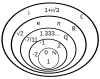
“The English people are not believers in equality; they do not, with the famous Declaration of July 4, 1776, think it to be a self-evident truth that all men are born equal. They hold rather the reverse of that proposition. At any rate, in practice they are what I may call determined inequalitarians; nay, in some cases, even without knowing it. Their natural tendency, from the very base of British society, and through all its strongly-built gradations, is to look upward... The sovereign is the highest height of the system; is, in that system, like Jupiter among the Roman gods, first without a second... It is the wisdom of the British Constitution to lodge the personality of its chief so high that none shall under any circumstances be tempted to vie, or to dream of vying, with it.”
“I have been a learner all my life, and I am a learner still. ... I have some ideas that may not be thought to furnish good materials for a liberal politician. I do not like changes for their own sake, I only like a change when it is needful to alter something bad into something good, or something which is good into something better. ... [T]he basis of my liberalism is this. It is the lesson which I have been learning ever since I was young. I am a lover of liberty; and that liberty which I value for myself, I value for every human being in proportion to his means and opportunities. That is a basis on which I find it perfectly practicable to work in conjunction with a dislike to unreasoned change and a profound reverence for everything ancient, provided that reverence is deserved.”

“Sir, there were other days, when England was the hope of freedom. Wherever in the world a high aspiration was entertained, or a noble blow was struck, it was to England that the eyes of the oppressed were always turned—to this favourite, this darling home of so much privilege and so much happiness, where the people that had built up a noble edifice for themselves would, it was well known, be ready to do what in them lay to secure the benefit of the same inestimable boon for others. You talk to me of the established tradition and policy in regard to Turkey. I appeal to an established tradition, older, wider, nobler far—a tradition not which disregards British interests, but which teaches you to seek the promotion of those interests in obeying the dictates of honour and of justice.”
“It is sometimes said that the measure we propose is a democratic measure. The word “democracy” has very different senses, if by democracy be meant liberty—if by democracy be meant the extension to each man in his own sphere of every privilege and of every franchise that he can exercise with advantage to himself and with safety to the State,—then I must confess I don't see much to alarm us in the word democracy. (Cheers.) But if by democracy be meant the enthroning of ignorance against knowledge, the setting up of vice in opposition to virtue, the disregard of rank, the forgetfulness of what our fathers have done for us, indifference or coldness with regard to the inheritance we enjoy, then, Gentlemen, I for one—and I believe for all I have the honour to address—am in that sense the enemy of democracy.”

“The Chancellor of the Exchequer should boldly uphold economy in detail; and it is the mark of a chicken-hearted Chancellor when he shrinks from upholding economy in detail, when because it is a question of only two or three thousand pounds, he says it is no matter. He is ridiculed, no doubt, for what is called candle-ends and cheese-parings, but he is not worth his salt if he is not ready to save what are meant by candle-ends and cheese-parings in the cause of the country. No Chancellor of the Exchequer is worth his salt who makes his own popularity either his consideration, or any consideration at all, in administering the public purse. In my opinion, the Chancellor of the Exchequer is the trusted and confidential steward of the public. He is under a sacred obligation with regard to all that he consents to spend.”
“The peculiarity of this strike...has been that a great number of separate trades, which have nothing to do with one another...have shown that they intend to make common cause. You may depend upon it that this is a social fact of the highest importance and of very general importance of the future. I believe that the lesson has been learnt from Ireland, and that it is due to the present Government and to its coercive laws in Ireland, and to the necessity which they have laid upon the people of Ireland in different parts of the country which have no connexion with one another to associate together for an object which they believe to be vital to all. I am much inclined to think that the working men of London have learnt this lesson from Ireland.”
“I venture to say that every man who is not presumably incapacitated by some consideration of personal unfitness or of political danger is morally entitled to come within the pale of the Constitution. ...fitness for the franchise, when it is shown to exist—as I say it is shown to exist in the case of a select portion of the working class—is not repelled on sufficient grounds from the portals of the Constitution by the allegation that things are well as they are. I contend, moreover, that persons who have prompted the expression of such sentiments as those to which I have referred, and whom I know to have been Members of the working class, are to be presumed worthy and fit to discharge the duties of citizenship, and that to admission to the discharge of those duties they are well and justly entitled.”
“In my opinion the third sound principle is this—to strive to cultivate and maintain, ay, to the very uttermost, what is called the concert of Europe; to keep the Powers of Europe in union together. And why? Because by keeping all in union together you neutralize and fetter and bind up the selfish aims of each. I am not here to flatter either England or any of them. They have selfish aims, as, unfortunately, we in late years have too sadly shown that we too have had selfish aims; but then common action is fatal to selfish aims. Common action means common objects; and the only objects for which you can unite together the Powers of Europe are objects connected with the common good of them all. That, gentlemen, is my third principle of foreign policy.”
“[T]hat Chancellor of the Exchequer is the very man who comes down to corrupt whatever there is of financial virtue in us, and to instil into our minds those seductive and poisonous ideas that it does not, after all, matter very much if there is a deficit, and that it is extremely disagreeable when commerce is not in the most flourishing state to call upon the people to pay. Was that the practice of Sir Robert Peel? ... he came to Parliament and stood at his place in the House of Commons, pointed out the figures as they stood, and said to them—I ask you, will you resort to the "miserable expedient" of tolerating deficit, and of making provision by loans from year to year? That which he denounced as the "miserable expedient" has become the standing law, has become almost the financial gospel of the Government that is now in power.”
“...the principle of nationality and the principle of reverence for antiquity—the principle of what I may call local patriotism—is not only an ennobling thing in itself, but has a great economic value. ... The attachment to your country, the attachment among British subjects to Britain, but also the attachment among Welsh-born people to Wales, has in it, in some degrees, the nature both of an appeal to energy and an incentive to its development, and likewise, no few elements of a moral standard; for the Welshman, go where he may, will be unwilling to disgrace the name. It is a matter of familiar observation that even in the extremest east of Europe, wherever free institutions have supplanted a state of despotic government, the invariable effect has been to administer an enormous stimulus to the industrious activity of the country.”
“Whether Protection is a universal poison, or whether it may be conceived to operate as food in cases where it is granted for a few years in order to shelter the first investments in a new industry, I do not now inquire. We at least have never seen or known it in that mitigated form. With us it has sheltered nothing but the most selfish instincts of class against the just demands of the public welfare. These it has supplied with strongholds, from whose portals our producers have too generally marched forth in the day of need, armed from head to foot with power and influence largely gotten at the expense of the community, to do battle with a perverted prowess, against nature, liberty, and justice.”
“The county election was raging. ... I was circulating in the mob as a volunteer (like all the other undergraduates) on the side of Norreys. I held forth to a working man, possibly a forty shilling freeholder, on the established text, reform was revolution. To corroborate my doctrine I said, “Why, look at the revolutions in foreign countries”, meaning of course France and Belgium. The man looked hard at me and said these very words: “Damn all foreign countries: what has old England to do with foreign countries?” This is not the only time when I have received an important lesson from a humble source.”
“What is a public meeting? It is not an anarchical combination—it is not a mob—it is an assemblage of rational beings to which, if the invitation be general, every man has a right to go, and the Government reporter has a right to go, but only like others and subject to the ordinary law. But if instead of appealing to the promoters of the meeting...to afford the Government reporter facilities, if instead of that the method of violence is resorted to, then I say the law was broken by the agents of the law. It is idle to speak to the Irish people of the duty of obeying the law, or to bring in Coercion Bills to make them obey the law, if the very Government that so speaks and that brings in these Bills has agents who violate the law by violently breaking up orderly public meetings, and who are sustained by the Ministers of the Crown in this illegal action.”

“There is an undoubted and smart rally on behalf of Turkey in the metropolitan press. It is in the main representative of the ideas and opinions of what are called the upper ten thousand. From this body there has never on any occasion within my memory proceeded the impulse that has prompted, and finally achieved, any of the great measures which in the last half century have contributed so much to the fame and happiness of England. They did not emancipate the dissenters, Roman catholics, and Jews. They did not reform the parliament. They did not liberate the negro slave. They did not abolish the corn law. They did not take the taxes off the press. They did not abolish the Irish established church. They did not cheer on the work of Italian freedom and reconstitution. Yet all these things have been done; and done by other agencies than theirs, and despite their opposition.”

“The principle that I am laying down I am not laying down exceptionally for Ireland. It is the very principle upon which, within my recollection, to the immense advantage of the country, we have not only altered, but revolutionized our method of governing the Colonies. ... England tried to pass good laws for the Colonies at that period; but the Colonies said—"We do not want your good laws; we want our own." We admitted the reasonableness of that principle, and it is now coming home to us from across the seas. We have to consider whether it is applicable to the case of Ireland. ... I ask that in our own case we should practise, with firm and fearless hand, what we have so often preached—the doctrine which we have so often inculcated upon others—namely, that the concession of local self-government is not the way to sap or impair, but the way to strengthen and consolidate unity.”
“There is a process of slow modification and development mainly in directions which I view with misgiving. "Tory democracy," the favourite idea on that side, is no more like the Conservative party in which I was bred, than it is like Liberalism. In fact less. It is demagogism … applied in the worst way, to put down the pacific, law-respecting, economic elements which ennobled the old Conservatism, living upon the fomentation of angry passions, and still in secret as obstinately attached as ever to the evil principle of class interests. The Liberalism of to-day is better … yet far from being good. Its pet idea is what they called construction, — that is to say, taking into the hands of the State the business of the individual man. Both the one and the other have much to estrange me, and have had for many, many years.”
“[W]hile we have sought to do justice to the great labouring community of England by further extending their relief from indirect taxation, we have not been guided by any desire to put one class against another; we have felt we should best maintain our own honour, that we should best meet the views of Parliament, and best promote the interests of the country, by declining to draw any invidious distinction between class and class, by adopting it to ourselves as a sacred aim, to diffuse and distribute—burden if we must; benefit if we may—with equal and impartial hand; and we have the consolation of believing that by proposals such as these we contribute, as far as in us lies, not only to develop the material resources of the country, but to knit the hearts of the various classes of this great nation yet more closely than heretofore to that Throne and to those institutions under which it is their happiness to live.”
“[T]he dispositions which led us to become parties to the arbitration on the Alabama case are still with us the same as ever; that we are not discouraged; that we are not damped in the exercise of these feelings by the fact that we were amerced, and severely amerced, by the sentence of the International Tribunal; and that, although we may think the sentence was harsh in its extent, and unjust in its basis, we regard the fine imposed on this country as dust in the balance compared with the moral value of the example set when these two great nations of England and America—which are among the most fiery and the most jealous in the world with regard to anything that touches national honour—went in peace and concord before a judicial tribunal to dispose of these painful differences, rather than to resort to the arbitrament of the sword.”
“They [opponents of Home Rule] say what a dreadful case it will be that after all they predict has come to pass—it never will come to pass—but still, after all that has come to pass, there will be no remedy against Ireland except that of armed force. These gentlemen are extremely shocked at the idea of holding Ireland by armed force. (Laughter.) I want to know how you hold it now? (Prolonged cheering.) I want to know how you held it for these six and eighty years? (A voice. — "Coercison.") You have held it by armed force. Do not conceal from yourselves the fact, do not blind yourselves to the essential features of the cause upon which you have to judge. By force you have held it; by force you are holding it; by love we ask you to hold it. (Loud and prolonged cheering, during which the audience rose and waved their handkerchiefs, and three cheers were asked for and given "for the Grand Old Man.")”

“All the terms that we demanded have, since the war began, been substantially conceded...My hon. Friend...[said] that we must obtain a success in order that we may secure better terms; but that is not the public and popular sentiment; the popular feeling is, that as to terms there is no great matter at issue, but that what you want is more military success...It is not only indefensible—it is hideous, it is anti-Christian, it is immoral, it is inhuman; and you have no right to make war simply for what you call success. If, when you have obtained the objects of the war, you continue it in order to obtain military glory...I say you tempt the justice of Him in whose hands the fates of armies are as absolutely lodged as the fate of the infant slumbering in its cradle; you tempt Him to launch upon you His wrath; and if this be courage, I, for one, have no courage to enter upon such a course. I believe it to be alike guilty and unwise.”
“You are opposed...in your division of Nottingham, on the ground of your having declined to support the Compulsory Eight Hours Bill for all miners, by many miners in your county who desire it. ... The question...is whether the Nottinghamshire miners or a part of them will, for the sake of their eight hours question, elect in preference to you an enemy of the Liberals and of the Irish cause, with which throughout the country the people sympathize. I have long known it as characteristic of the English working class that it knew how to sacrifice its views and apparent interests to some wider and weightier cause. So it was during the American civil war the population of Lancashire cheerfully encountered the cotton famine because they hated slavery and because America was the home of labour.”
“I am a member of a Liberal Government. I am in association with the Liberal party. I have never swerved from what I conceived to be those truly Conservative objects and desires with which I entered life. I am, if possible, more fondly attached to the institutions of my country than I was when as a boy I wandered among the sand-hills of Seaforth or the streets of Liverpool. But experience has brought with it its lessons. I have learnt that there is wisdom in a policy of trust, and folly in a policy of mistrust. I have not refused to receive the signs of the times. I have observed the effect that has been produced by Liberal legislation, and if we are told...that all the feelings of the country are in the best and broadest sense Conservative,—that is to say, that the people value the country and the laws and institutions of the country; if we are told that, I say honesty compels us to admit that result has been brought about by Liberal legislation.”
“I must painfully record my opinion that grave injury has been done to religion in many minds — not in instructed minds, but in those which are ill-instructed or partially instructed, which have a large claim on our consideration — in consequence of steps which have, unhappily, been taken. Great mischief has been done in many minds through the resistance offered to the man elected by the constituency of Northampton, which a portion of the community believe to be unjust. When they see the profession of religion and the interests of religion ostensibly associated with what they are deeply convinced is injustice, they are led to questions about religion itself, which they see to be associated with injustice. Unbelief attracts a sympathy which it would not otherwise enjoy; and the upshot is to impair those convictions and that religious faith, the loss of which I believe to be the most inexpressible calamity which can fall either upon a man or upon a nation.”

“My fifth principle is...to acknowledge the equal rights of all nations. You may sympathize with one nation more than another. Nay, you must sympathize in certain circumstances with one nation more than another. You sympathize most with those nations, as a rule, with which you have the closest connection in language, in blood, and in religion, or whose circumstances at the time seem to give the strongest claim to sympathy. But in point of right all are equal, and you have no right to set up a system under which one of them is to be placed under moral suspicion or espionage, or to be made the constant subject of invective. If you do that, but especially if you claim for yourself a superiority, a pharisaical superiority over the whole of them, then I say you may talk about your patriotism if you please, but you are a misjudging friend of your country, and in undermining the basis of the esteem and respect of other people for your country you are in reality inflicting the severest injury upon it.”
“[W]e do not prosecute the cause we have in hand upon the ground that they are our fellow Christians. This is no crusade against Mahomedanism. ... Nay, I will say it is no declaration of universal condemnation of the Mahomedans of the Turkish Empire. On the contrary...there have been good and generous Mahomedans, who have resisted these misdeeds to the uttermost of their power. ... Although it is true that those persons are Christians on whose behalf we move, I confidently affirm...that if, instead of being Christians, they were themselves Mahomedans, Hindus, Buddhists, Confucians—call them what you like—they would have precisely the same claims upon our support, and the motives which brought us here today would be incumbent upon us with the same force and with the same sacredness that we recognize at the present moment. ... The ground on which we stand here is not British nor European, but it is human. Nothing narrower than humanity could pretend for a moment justly to represent it. (Cheers.)”
“Certain it is that a new law of nations is gradually taking hold of the mind, and coming to sway the practice, of the world; a law which recognises independence, which frowns upon aggression, which favours the pacific, not the bloody settlement of disputes, which aims at permanent and not temporary adjustments; above all, which recognises, as a tribunal of paramount authority, the general judgment of civilised mankind. It has censured the aggression of France; it will censure, if need arise, the greed of Germany. “Securus judicat orbis terrarum.” It is hard for all nations to go astray. Their ecumenical council sits above the partial passions of those, who are misled by interest, and disturbed by quarrel. The greatest triumph of our time, a triumph in a region loftier than that of electricity and steam, will be the enthronement of this idea of Public Right, as the governing idea of European policy; as the common and precious inheritance of all lands, but superior to the passing opinion of any.”
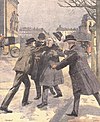
“On the side adverse to the Government are found...in profuse abundance, station, title, wealth, social influence, the professions, or the large majority of them—in a word, the spirit and power of class. These are the main body of the opposing host. Nor is that all. As knights of old had squires, so in the great army of class each enrolled soldier has, as a rule, dependents. The adverse host, then, consists of class and the dependents of class. But this formidable army is in the bulk of its constituent parts the same...that has fought in every one of the great political battles of the last 60 years, and has been defeated. We have had great controversies before this great controversy—on free trade, free navigation, public education, religious equality in civil matters, extension of the suffrage to its present basis. On these and many other great issues the classes have fought uniformly on the wrong side, and have uniformly been beaten by a power more difficult to marshal, but resistless when marshalled—by the upright sense of the nation.”
“But let the working man be on his guard against another danger. We live at a time when there is a disposition to think that the Government ought to do this and that and that the Government ought to do everything. There are things which the Government ought to do, I have no doubt. In former periods the Government have neglected much, and possibly even now they neglect something; but there is a danger on the other side. If the Government takes into its hands that which the man ought to do for himself it will inflict upon him greater mischiefs than all the benefits he will have received or all the advantages that would accrue from them. The essence of the whole thing is that the spirit of self-reliance, the spirit of true and genuine manly independence, should be preserved in the minds of the people, in the minds of the masses of the people, in the mind of every member of the class. If he loses his self-denial, if he learns to live in a craven dependence upon wealthier people rather than upon himself, you may depend upon it he incurs mischief for which no compensation can be made.”
“At a time when sentiments are so much divided, every man I trust, will give his vote with the recollection and the consciousness that it may depend upon his single vote whether the miseries, the crimes, the atrocities that I fear are now proceeding in China are to be discountenanced or not. We have now come to the crisis of the case. England is not yet committed. But if an adverse vote be given...England will have been committed. With you then, with us, with every one of us, it rests to show that this House, which is the first, the most ancient, and the noblest temple of freedom in the world, is also the temple of that everlasting justice without which freedom itself would be only a name or only a curse to mankind. And I cherish the trust and belief that when you, Sir, rise in your place to-night to declare the numbers of the division from the chair which you adorn, the words which you speak will go forth from the walls of the House of Commons, not only as a message of mercy and peace, but also as a message of British justice and British wisdom, to the farthest corners of the world.”
“[T]he House of Lords...had inflicted a deadly mutilation on the Parish Councils Bill, they (having also refused our measure on employers' liability) had placed themselves in sharp conflict with public opinion on great subjects. ... I was at Biarritz when this happened in January or February 1894. I suggested dissolution to my colleagues in London. ... But...I was compelled to let the matter drop. ... Thus there was let slip an opportunity in my opinion nothing less than splendid for raising decisively an issue of vital importance to popular government: an opportunity which if rightly used would have given the Liberal party a decisive preponderance for the full term of one or probably two Parliaments, quite apart from the vast public advantages within reach. The great controversy between Lords and Commons, terrible in 1831–32, formidable in 1860–1, happily averted with the Queen's wise aid in 1884...would have reached a practical settlement: and the yet graver controversy...of seven hundred years with Ireland would have come nearer to a complete settlement by a measure of Home Rule.”
“There was no instalment of Free Trade, which need be taken into our account, before 1842. ... I therefore take 1843 as the first operative year of the first instalment of Liberal legislation under what was called the new Tariff. The second instalment was the new Tariff of 1845. The third instalment was the repeal of the Corn Laws at the opening of 1849, together with the repeal of the Navigation Laws during the Parliamentary Session of that year. The fourth was the new Tariff of 1853, accompanied with the repeal of the Soap Duties and other changes. The fifth and last great instalment was granted by the Customs Act of 1860, which at length gave nearly universal effect to the following principles:
1. That neither on raw produce, nor on food, nor on manufactured goods, should any duty of a protective character be charged.
2. That the sums necessary to be levied for the purposes of revenue in the shape of Customs duty should be raised upon the smallest possible number of articles.”
1. That neither on raw produce, nor on food, nor on manufactured goods, should any duty of a protective character be charged.
2. That the sums necessary to be levied for the purposes of revenue in the shape of Customs duty should be raised upon the smallest possible number of articles.”
“[Y]ours is an ancient language, and the language is connected with an ancient history, and it is connected with an ancient music and with an ancient literature. I say that...it is a venerable relic of the past, and there is no greater folly circulating upon the earth, either at this moment or at any other time, than the disposition to under value the past and to break those links which unite the human beings of the present day with the generations that have passed away and have been called to their account. If we wish really to promote the progress of civilization never let us neglect, never let us undervalue, never let us cease to reverence the past. Rely upon it the man who does not worthily estimate his own dead forefathers will himself do very little to add credit or honour to his country... [Y]our laudable and patriotic efforts will come to be more and more understood and regarded by the English people at large, and that prosperity and honour will attend the meetings by which you endeavour to preserve and to commemorate the ancient history, the ancient deeds, and the ancient literature of your country, the Principality of Wales.”

“I am delighted to see how many young boys and girls have come forward to obtain honourable marks of recognition on this occasion, — if any effectual good is to be done to them, it must be done by teaching and encouraging them and helping them to help themselves. All the people who pretend to take your own concerns out of your own hands and to do everything for you, I won't say they are imposters; I won't even say they are quacks; but I do say they are mistaken people. The only sound, healthy description of countenancing and assisting these institutions is that which teaches independence and self-exertion... When I say you should help yourselves — and I would encourage every man in every rank of life to rely upon self-help more than on assistance to be got from his neigbours — there is One who helps us all, and without whose help every effort of ours is in vain; and there is nothing that should tend more, and there is nothing that should tend more to make us see the beneficence of God Almighty than to see the beauty as well as the usefulness of these flowers, these plants, and these fruits which He causes the earth to bring forth for our comfort and advantage.”

“Let me endeavour, very briefly to sketch, in the rudest outline what the Turkish race was and what it is. It is not a question of Mohammedanism simply, but of Mohammedanism compounded with the peculiar character of a race. They are not the mild Mohammedans of India, nor the chivalrous Saladins of Syria, nor the cultured Moors of Spain. They were, upon the whole, from the black day when they first entered Europe, the one great anti-human specimen of humanity. Wherever they went a broad line of blood marked the track behind them, and, as far as their dominion reached, civilization vanished from view. They represented everywhere government by force as opposed to government by law. – Yet a government by force can not be maintained without the aid of an intellectual element. – Hence there grew up, what has been rare in the history of the world, a kind of tolerance in the midst of cruelty, tyranny and rapine. Much of Christian life was contemptuously left alone and a race of Greeks was attracted to Constantinople which has all along made up, in some degree, the deficiencies of Turkish Islam in the element of mind!”
“They are not your friends, but they are your enemies in fact, though not in intention, who teach you to look to the Legislature for the radical removal of the evils that afflict human life... It is the individual mind and conscience, it is the individual character, on which mainly human happiness or misery depends. (Cheers.) The social problems that confront us are many and formidable. Let the Government labour to its utmost, let the Legislature labour days and nights in your service; but, after the very best has been attained and achieved, the question whether the English father is to be the father of a happy family and the centre of a united home is a question which must depend mainly upon himself. (Cheers.) And those who...promise to the dwellers in towns that every one of them shall have a house and garden in free air, with ample space; those who tell you that there shall be markets for selling at wholesale prices retail quantities—I won't say are imposters, because I have no doubt they are sincere; but I will say they are quacks (cheers); they are deluded and beguiled by a spurious philanthropy, and when they ought to give you substantial, even if they are humble and modest boons, they are endeavouring, perhaps without their own consciousness, to delude you with fanaticism, and offering to you a fruit which, when you attempt to taste it, will prove to be but ashes in your mouths. (Cheers.)”

“Let the Turks now carry away their abuses, in the only possible manner, namely, by carrying off themselves. Their Zaptiehs and their Mudirs, their Bimbashis and Yuzbashis, their Kaimakams and their Pashas, one and all, bag and baggage, shall, I hope, clear out from the province that they have desolated and profaned. This thorough riddance, this most blessed deliverance, is the only reparation we can make to those heaps and heaps of dead, the violated purity alike of matron and of maiden and of child; to the civilization which has been affronted and shamed; to the laws of God, or, if you like, of Allah; to the moral sense of mankind at large. There is not a criminal in a European jail, there is not a criminal in the South Sea Islands, whose indignation would not rise and over-boil at the recital of that which has been done, which has too late been examined, but which remains unavenged, which has left behind all the foul and all the fierce passions which produced it and which may again spring up in another murderous harvest from the soil soaked and reeking with blood and in the air tainted with every imaginable deed of crime and shame. That such things should be done once is a damning disgrace to the portion of our race which did them; that the door should be left open to their ever so barely possible repetition would spread that shame over the world!”
“Do you suppose that we are ignorant that, in every contested election that has happened since the case of Mr. Bradlaugh came up, you have gained votes and we have lost them? You are perfectly aware of it. We are no less aware of it. But, if you are perfectly aware of it, is not some credit to be given to us who are giving you the same under circumstances rather more difficult — is not some credit to be given to us for presumptive integrity and purity of motive? Sir, the Liberal Party has suffered, and is suffering, on this account. It is not the first time in its history. It is the old story over again. In every controversy that has arisen about the extension of religious toleration, and about the abatement and removal of disqualifications, in every controversy relating to religious toleration and religious disabilities, the Liberal Party has suffered before, and it is now, perhaps, suffering again; and yet it has not been a Party which, upon the whole, has had, during the last half century, the smallest or the feeblest hold upon the affections and approval of the people. Who suffered from the Protestantism of the country? It was that Party — with valuable aid from individuals, but only individuals, who forfeited their popularity on that account — it was that Party who fought the battle of freedom in the case of the great Roman Catholic controversy, when the name of Protestantism was invoked with quite as great effect as the name of Theism is now, and the Petitions poured in quite as freely then as at present. Protestantism stood the shock of the Act of 1829. Then came on the battle of Christianity, and the Christianity of the country was said to be sacrificed by the Liberal Party. There are Gentlemen on the other side of the House who seem to have forgotten all that has occurred, and who are pluming themselves on the admission of Jews into Parliament, as if they had not resisted it with perfect honesty — I make no charge against their honour, and impute no unworthy motive — as if they had not resisted it with quite as much resolution as they are exhibiting on the present occasion. Sir, what I hope is this — that the Liberal Party will not be deterred, by fear or favour, from working steadily onward in the path which it believes to be the path of equity and justice. There is no greater honour to a man than to suffer for what he thinks to be righteous; and there is no greater honour to a Party than to suffer in the endeavour to give effect to the principles which they believe to be just.”
William Ewart Gladstone Quotes by Topic
Find exactly what you are looking for by browsing this categorized list of William Ewart Gladstone quotes by topic.
William Ewart Gladstone on Scotland 3 quotes
“I feel with a peculiar sympathy all that relates to Scotland. The natives of Scotland, and all those who have Scotch blood in their veins—particularly if, like me, they only have Scotch blood in their veins—are not apt to forget the country from which they sprang. They know its great qualities. They know the solidity of its character.”
William Ewart Gladstone on Wales 3 quotes
“I affirm that Welsh nationality is as great a reality as English nationality. It may not be as big a reality in that it does not extend over so large a country, but with the traditions and history of Wales, with the language of Wales (hear, hear), with the religion of Wales (cheers), with the feelings of Wales, I maintain that the Welsh nationality is as true as the nationality of Scotland, to which by blood I exclusively belong.”
William Ewart Gladstone on Conservatism
“The predominating idea of Conservatism is the Egyptian principle of repose.”
William Ewart Gladstone on Whigs (British political party)
William Ewart Gladstone on British Raj
“The Government of India is the most arduous and perhaps the noblest trust ever undertaken by a nation.”

What William Ewart Gladstone Said About Others
Discover personal opinions William Ewart Gladstone shared regarding contemporaries.
William Ewart Gladstone on Benjamin Disraeli 5 quotes
View all 5 quotes on Benjamin Disraeli →William Ewart Gladstone on Robert Peel 3 quotes
View all 3 quotes on Robert Peel →William Ewart Gladstone on John Russell, 1st Earl Russell 3 quotes
“[H]e had for the last few years done nothing, but injure a brilliant reputation.”
William Ewart Gladstone on John Bright 3 quotes
“I will say that there were certain passages in Bright's speeches which I never heard equalled.”
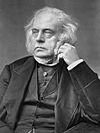
William Ewart Gladstone on Henry Temple, 3rd Viscount Palmerston 3 quotes
“He said he had had two great objects always before him in life—one the suppression of the slave trade, the other to put England in a state of defence.”
Quotes About William Ewart Gladstone
Gain deeper perspective through quotes about William Ewart Gladstone from others.
Lord Acton on William Ewart Gladstone
Joseph Arch on William Ewart Gladstone
“I can say that, as a working man, I think no man has stronger claims upon my sympathy, support, and affection than Mr. Gladstone. When the election of 1880 came we had him placed at the helm of affairs. Although I was twitted by weak-kneed Liberals and Tories that he would never concede the franchise, my faith in his honesty, in his sense of justice to the people, and in his love for the people, was not in the slightest degree shaken by these jeers. I was perfectly certain that he would enfranchise my class. In taking off this covering to unveil to you the bust of this great statesman I can say, fearless of contradiction, that he lives in the affections of thousands of men, aye, tens of thousands, who dwell in our rural villages in humble cottages, and who, I believe, whenever a wise Providence shall call him aside from this scene of action, will mourn his loss with a great and profound depth of feeling. I do not believe that Mr. Gladstone or any other living being is free from mistakes; but of this I am certain, that whenever he has made a mistake and has found it out, he has been honourable, he has been manly enough to acknowledge it, and has done his best to rectify it.”

H. H. Asquith on William Ewart Gladstone
“Mr. Gladstone once said to me: “If you ever have to form a Government, you must steel your nerves, and act the butcher”: a piece of very sound advice (as I learned from experience).”

Walter Bagehot on William Ewart Gladstone 2 quotes
“He has — and it is one of the springs of great power — a real faith in the higher parts of human nature; he believes, with all his heart and soul and strength, that there is such a thing as truth; he has the soul of a martyr with the intellect of an advocate.”
Arthur Balfour on William Ewart Gladstone
“Mr. Gladstone [w]as the greatest member of the greatest deliberative assembly which, so far, the world has seen.”




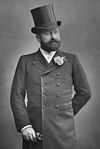


Disputed Quotes
Quotes attributed to William Ewart Gladstone that are questionable.
“So long as there is this book, there will be no peace in the world.
• Variant: "As long as a copy of this accursed book survives there can be no justice in the world." Quoted in Paul G. Lauren, ed., The China Hands' Legacy: Ethics and Diplomacy (Westview Press, 1987), p. 136.”
• Variant: "As long as a copy of this accursed book survives there can be no justice in the world." Quoted in Paul G. Lauren, ed., The China Hands' Legacy: Ethics and Diplomacy (Westview Press, 1987), p. 136.”
“Show me the manner in which a nation or a community cares for its dead. I will measure exactly the sympathies of its people, their respect for the laws of the land, and their loyalty to high ideals.”
Misattributed Quotes
Quotes mistakenly credited to William Ewart Gladstone
About William Ewart Gladstone
William Ewart Gladstone (29 December 1809 – 19 May 1898) was a British Liberal politician and Prime Minister (1868–1874, 1880–1885, 1886 and 1892–1894). He was a notable political reformer, known for his populist speeches, and was for many years the main political rival of Benjamin Disraeli.