Link Copied!
William Ewart Gladstone Quotes (1809-1898)
Politician








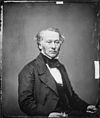




About William Ewart Gladstone
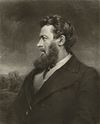
William Ewart Gladstone (29 December 1809 – 19 May 1898) was a British Liberal politician and Prime Minister (1868–1874, 1880–1885, 1886 and 1892–1894). He was a notable political reformer, known for his populist speeches, and was for many years the main political rival of Benjamin Disraeli.
Best William Ewart Gladstone Quotes
Shortest
Earliest
Explore our curated collection of the most famous and impactful William Ewart Gladstone quotes.


“To serve Armenia is to serve the Civilization.”

“I have said, and I say again, "Remember Mitchelstown".”
“[An] Established Clergy will always be a tory Corps d'Armée.”
“This is the negation of God erected into a system of Government.”

“Decision by majorities is as much an expedient, as lighting by gas.”
“I am fundamentally a dead man: one fundamentally a Peel–Cobden man.”

“As he lived, so he died — all display, without reality or genuineness.”

“At last, my friends, I am come amongst you. And I am come…unmuzzled.”
“The Government of India is the most arduous and perhaps the noblest trust ever undertaken by a nation.”
“Individual servitude, however abject, will not satisfy the Latin Church. The State must also be a slave.”

“The idea of abolishing Income Tax is to me highly attractive, both on other grounds & because it tends to public economy.”
“The disease of an evil conscience is beyond the practice of all the physicians of all the countries in the world.”

“[T]he idea that the colonies add to the strength of the mother country appears to me to be as dark a superstition as any that existed in the Middle Ages.”

“I would tell them of my own intention to keep my counsel...and I will venture to recommend them, as an old Parliamentary hand, to do the same.”
“I am a Free Trader on moral no less than on economic grounds: for I think human greed and selfishness are interwoven with every thread of the Protective system.”

“I am much oppressed with the idea that this transfer of human beings like chattels should go forward without any voice from collective Europe if it be disposed to speak.”
William Ewart Gladstone Quotes by Topic
Find exactly what you are looking for by browsing this categorized list of William Ewart Gladstone quotes by topic.
William Ewart Gladstone on Scotland 3 quotes
“I feel with a peculiar sympathy all that relates to Scotland. The natives of Scotland, and all those who have Scotch blood in their veins—particularly if, like me, they only have Scotch blood in their veins—are not apt to forget the country from which they sprang. They know its great qualities. They know the solidity of its character.”

William Ewart Gladstone on Wales 3 quotes
“I affirm that Welsh nationality is as great a reality as English nationality. It may not be as big a reality in that it does not extend over so large a country, but with the traditions and history of Wales, with the language of Wales (hear, hear), with the religion of Wales (cheers), with the feelings of Wales, I maintain that the Welsh nationality is as true as the nationality of Scotland, to which by blood I exclusively belong.”

William Ewart Gladstone on Conservatism
“The predominating idea of Conservatism is the Egyptian principle of repose.”

William Ewart Gladstone on Whigs (British political party)
William Ewart Gladstone on British Raj
“The Government of India is the most arduous and perhaps the noblest trust ever undertaken by a nation.”

William Ewart Gladstone on Argument
William Ewart Gladstone on Slavery
William Ewart Gladstone on Character
“To be engaged in opposing wrong affords, under the conditions of our mental constitution, but a slender guarantee for being right.”
William Ewart Gladstone on Foolishness
“A rational reaction against irrational excesses and vagaries of skepticism may * * * readily degenerate into the rival folly of credulity.”

William Ewart Gladstone on Liberalism
William Ewart Gladstone on Reflections on the Revolution in France
William Ewart Gladstone on Afghanistan
“Remember the rights of the savage, as we call him. Remember that the happiness of his humble home, remember that the sanctity of life in the hill villages of Afghanistan, among the winter snows, is as inviolable in the eye of Almighty God, as can be your own.”

William Ewart Gladstone on Monarchy of the United Kingdom
“The sovereign is the highest height of the system; is, in that system, like Jupiter among the Roman gods, first without a second... It is the wisdom of the British Constitution to lodge the personality of its chief so high that none shall under any circumstances be tempted to vie, or to dream of vying, with it.”

William Ewart Gladstone on Mischief
“If the Government takes into its hands that which the man ought to do for himself it will inflict upon him greater mischiefs than all the benefits he will have received or all the advantages that would accrue from them. The essence of the whole thing is that the spirit of self-reliance, the spirit of true and genuine manly independence, should be preserved in the minds of the people, in the minds of the masses of the people, in the mind of every member of the class. If he loses his self-denial, if he learns to live in a craven dependence upon wealthier people rather than upon himself, you may depend upon it he incurs mischief for which no compensation can be made.”
William Ewart Gladstone on Victorian era
“It is...beyond question that the century now expiring has exhibited since the close of its first quarter a period of unexampled activity both in legislative and in administrative changes; that these changes, taken in the mass, have been in the direction of true and most beneficial progress; that both the condition and the franchises of the people have made, in relation to the former state of things, an extraordinary advance; that of these reforms an overwhelming proportion have been effected by direct action of the Liberal party, or of statesmen such as Peel or Canning, ready to meet odium and to forfeit power for the public good; and that in every of 15 Parliaments the people of Scotland have decisively expressed their convictions in favour of this wise, temperate, and in every way remarkable policy.”
What William Ewart Gladstone Said About Others
Discover personal opinions William Ewart Gladstone shared regarding contemporaries.
William Ewart Gladstone on Benjamin Disraeli 5 quotes
View all 5 quotes on Benjamin Disraeli →William Ewart Gladstone on Robert Peel 3 quotes
View all 3 quotes on Robert Peel →William Ewart Gladstone on John Russell, 1st Earl Russell 3 quotes
“[H]e had for the last few years done nothing, but injure a brilliant reputation.”
William Ewart Gladstone on John Bright 3 quotes
“I will say that there were certain passages in Bright's speeches which I never heard equalled.”
William Ewart Gladstone on Henry Temple, 3rd Viscount Palmerston 3 quotes
“He said he had had two great objects always before him in life—one the suppression of the slave trade, the other to put England in a state of defence.”
William Ewart Gladstone on Edmund Burke 2 quotes
“December 18.—Read Burke; what a magazine of wisdom on Ireland and America. January 9.—Made many extracts from Burke—sometimes almost divine.”

William Ewart Gladstone on John Dalberg-Acton, 1st Baron Acton 2 quotes
“[Lord Acton's character] is of the first order, and he is one of the most learned and accomplished, though one of the most modest and unassuming, men of the day.”
William Ewart Gladstone on George Hamilton-Gordon, 4th Earl of Aberdeen 2 quotes
“Now and then Sir Robert Peel would show some degree of unconscious regard to the mere flesh and blood, if I may so speak, of Englishmen; Lord Aberdeen was invariably for putting the most liberal construction upon both the conduct and the claims of the other negotiating state.”
William Ewart Gladstone on Walter Scott 2 quotes
“I know nothing more sublime in the writings of Sir Walter Scott—certainly I know nothing so sublime in any portion of the sacred poetry of modern times, I mean of the present century—as the ‘Hymn for the Dead,’ extending only to twelve lines, which he embodied in The Lay of the Last Minstrel.”

William Ewart Gladstone on Daniel O'Connell 2 quotes
“It is, however, a misnomer to call him a demagogue. If I may coin a word for the occasion, he was an ethnagogue. He was not the leader either of plebs or populus against optimates: he was the leader of a nation; and this nation, weak, outnumbered, and despised, he led, not always unsuccessfully, in its controversy with another nation, the strongest perhaps and the proudest in Europe.”
William Ewart Gladstone on Thomas Babington Macaulay 2 quotes
“However true it may be that Macaulay was a far more consummate workman in the manner than in the matter of his works, we do not doubt that the works contain, in multitudes, passages of high emotion and ennobling sentiment, just awards of praise and blame, and solid expositions of principle, social, moral, and constitutional. They are pervaded by a generous love of liberty; and their atmosphere is pure and bracing, their general aim and basis morally sound.”

William Ewart Gladstone on John Stuart Mill
“The Saint of Rationalism.”
Quotes About William Ewart Gladstone
Gain deeper perspective through quotes about William Ewart Gladstone from others.
Lord Acton on William Ewart Gladstone
Joseph Arch on William Ewart Gladstone
“I can say that, as a working man, I think no man has stronger claims upon my sympathy, support, and affection than Mr. Gladstone. When the election of 1880 came we had him placed at the helm of affairs. Although I was twitted by weak-kneed Liberals and Tories that he would never concede the franchise, my faith in his honesty, in his sense of justice to the people, and in his love for the people, was not in the slightest degree shaken by these jeers. I was perfectly certain that he would enfranchise my class. In taking off this covering to unveil to you the bust of this great statesman I can say, fearless of contradiction, that he lives in the affections of thousands of men, aye, tens of thousands, who dwell in our rural villages in humble cottages, and who, I believe, whenever a wise Providence shall call him aside from this scene of action, will mourn his loss with a great and profound depth of feeling. I do not believe that Mr. Gladstone or any other living being is free from mistakes; but of this I am certain, that whenever he has made a mistake and has found it out, he has been honourable, he has been manly enough to acknowledge it, and has done his best to rectify it.”

H. H. Asquith on William Ewart Gladstone
“Mr. Gladstone once said to me: “If you ever have to form a Government, you must steel your nerves, and act the butcher”: a piece of very sound advice (as I learned from experience).”

Walter Bagehot on William Ewart Gladstone 2 quotes
“He has — and it is one of the springs of great power — a real faith in the higher parts of human nature; he believes, with all his heart and soul and strength, that there is such a thing as truth; he has the soul of a martyr with the intellect of an advocate.”
Arthur Balfour on William Ewart Gladstone
“Mr. Gladstone [w]as the greatest member of the greatest deliberative assembly which, so far, the world has seen.”

Michael Barker on William Ewart Gladstone
“Many of those who figured prominently in the counsels of the Labour party in the twentieth century bore eloquent testimony to the "uplifting power" of Gladstone's "matchless voice and superb vitality", and confessed how "the thrill of his splendid oratory" bound them to the Liberal party in the old man's twilight years. Frederick Rogers, Arthur Henderson, Robert Smillie, and especially George Lansbury, all acknowledged the debt which they owed to Gladstone. "I can hear his voice and see him now," Lansbury wrote in the 1930s after he had retired from the leadership of the Labour party. These enduring emotions suggest that the presence of Gladstone at the head of the Liberal party constituted the principal obstacle to the emergence of a coherent and independent labour movement.”
George Barnes on William Ewart Gladstone
J. C. Beckett on William Ewart Gladstone
“He was the first major British statesman to consider seriously the implications of the parliamentary union between Great Britain and Ireland, and to realize that if Ireland were indeed an integral part of the United Kingdom, it must be governed on the same principles as the rest; and it was this realization that prepared him to accept the policy of home rule. His importance in the history of Anglo-Irish relations lies less in the measures that he actually carried, far-reaching though they were, than in the immense influence that his concern for Ireland had on British public opinion. It was he, more than anyone else, who made the state of Ireland an issue in British politics.”
W. C. Bennett on William Ewart Gladstone
“Who's the Liberal leader? he Who for us has stood, Stood through triumph and defeat For the people's good; We, the people, have a mind, Well it shall be known, Gladstone, he shall lead us still, He, and he alone. We have votes and let them heed us; Gladstone, he alone shall lead us. Why? because our wrongs he feels And our rights would win; Why? because for us he fights Out of power and in. [...] Voters tell them, they who'll need us, Gladstone, he alone shall lead us.”
E. F. Benson on William Ewart Gladstone
“Always there was this huge concentration of force; purpose at white heat roared like a furnace in every action of his life. When once he had convinced himself on any subject, it ceased to be his opinion, and became a cosmic truth, which it was the duty of every right-minded person to uphold... he was convinced, and said so, that the will of the English people was set on giving Home Rule to Ireland, and that he was the appointed instrument to accomplish their will for them: God gave him his health and vitality for that. Thus his conscience was invariably clear of personal ambition: he was working not for his own idea but for some great cause external to him. Never, so Mrs. Gladstone told my mother, did the estrangement and execrations of those who had been his friends cause him to say "I wish I had never done it!" He might regret the bitterness he had aroused, but he never regretted those measures which had caused it.”

Edward Blake on William Ewart Gladstone
“Among the peoples of that Continent [North America] your personality has become identified with the cause of freedom, and you are to them the embodiment of their highest ideal of the statesman.”
John Bright on William Ewart Gladstone
“Who is there in the House of Commons who equals him in knowledge of all political questions? who equals him in earnestness? who equals him in eloquence? who equals him in courage and fidelity to his convictions? If these gentlemen who say they will not follow him have any one who is equal, let them show him. If they can point out any statesman who can add dignity and grandeur to the stature of Mr. Gladstone, let them produce him.”
Disputed Quotes
Quotes attributed to William Ewart Gladstone that are questionable.
“So long as there is this book, there will be no peace in the world.
• Variant: "As long as a copy of this accursed book survives there can be no justice in the world." Quoted in Paul G. Lauren, ed., The China Hands' Legacy: Ethics and Diplomacy (Westview Press, 1987), p. 136.”
• Variant: "As long as a copy of this accursed book survives there can be no justice in the world." Quoted in Paul G. Lauren, ed., The China Hands' Legacy: Ethics and Diplomacy (Westview Press, 1987), p. 136.”
“Show me the manner in which a nation or a community cares for its dead. I will measure exactly the sympathies of its people, their respect for the laws of the land, and their loyalty to high ideals.”
Misattributed Quotes
Quotes mistakenly credited to William Ewart Gladstone
About William Ewart Gladstone
William Ewart Gladstone (29 December 1809 – 19 May 1898) was a British Liberal politician and Prime Minister (1868–1874, 1880–1885, 1886 and 1892–1894). He was a notable political reformer, known for his populist speeches, and was for many years the main political rival of Benjamin Disraeli.