Link Copied!
W. W. Rouse Ball Quotes (1850-1925)
Mathematician
About W. W. Rouse Ball
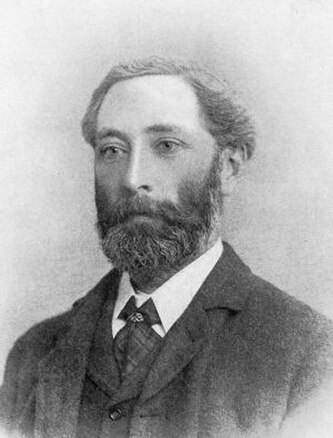
Walter William Rouse Ball, known as W. W. Rouse Ball (14 August 1850 – 4 April 1925), was a British mathematician, lawyer, and fellow at Trinity College, Cambridge from 1878 to 1905.
Best W. W. Rouse Ball Quotes
Shortest
Earliest
Explore our curated collection of the most famous and impactful W. W. Rouse Ball quotes.
“Babbage was one of the founders of the Cambridge Analytical Society whose purpose he stated was to advocate "the principles of pure d-ism as opposed to the dot-age of the university.”

“It was, however, from Spain, and not from Arabia, that a knowledge of eastern mathematics first came into western Europe. The Moors had established their rules in Spain in 747, and by the tenth or eleven century had attained a high degree of civilisation.”

“The great masters of modern analysis are Lagrange, Laplace, and Gauss, who were contemporaries. It is interesting to note the marked contrast in their styles. Lagrange is perfect both in form and matter, he is careful to explain his procedure, and though his arguments are general they are easy to follow. Laplace on the other hand explains nothing, is indifferent to style, and, if satisfied that his results are correct, is content to leave them either with no proof or with a faulty one. Gauss is as exact and elegant as Lagrange, but even more difficult to follow than Laplace, for he removes every trace of the analysis by which he reached his results, and studies to give a proof which while rigorous shall be as concise and synthetical as possible.”
W. W. Rouse Ball Quotes by Topic
Find exactly what you are looking for by browsing this categorized list of W. W. Rouse Ball quotes by topic.
W. W. Rouse Ball on History of mathematics 2 quotes
“The history of mathematics cannot with certainty be traced back to any school or period before that of the Ionian Greeks. The subsequent history may be divided into three periods... The first period is that... under Greek influence... the second is that of... the middle ages and the renaissance... the third is that of modern mathematics...”

W. W. Rouse Ball on Prime number 2 quotes
“Fermat's Last Theorem is to the effect that no integral values of x, y, z can be found to satisfy the equation xn+yn=zn if n is an integer greater than 2. ...It is possible that Fermat made some... erroneous supposition, though it is perhaps more probable that he discovered a rigorous demonstration. At any rate he asserts definitely that he had a valid proof—demonstratio mirabilis sane—and the fact that no theorem on the subject which he stated he had proved has been subsequently shown to be false must weigh strongly in his favour; the more so because in making the one incorrect statement in his writings (namely, that about binary powers) he added that he could not obtain a satisfactory demonstration of it. … [I]t took more than a century before some of the simpler results which Fermat had enunciated were proved, and thus it is not surprising that a proof of the theorem which he succeeded in establishing only towards the close of his life should involve great difficulties. ...I venture however to add my private suspicion that continued fractions played a not unimportant part in his researches, and as strengthening this conjecture I may note that some of his more recondite results—such as the theorem that a prime of the form 4n+1 is expressible as the sum of two squares—may be established with comparative ease by properties of such fractions.”
W. W. Rouse Ball on Planet
“Gauss calculated the elements of the planet Ceres and his analysis proved him to be the first of theoretical astronomers no less than the greatest of 'arithmeticians.'”
W. W. Rouse Ball on Infinity
“Wallis rejected as absurd and inconceivable the now usual idea of a negative number as being less than nothing, but accepted the view that it is something greater than infinity.”
W. W. Rouse Ball on Negative number
“Wallis rejected as absurd and inconceivable the now usual idea of a negative number as being less than nothing, but accepted the view that it is something greater than infinity.”

W. W. Rouse Ball on Al-Andalus
“It was, however, from Spain, and not from Arabia, that a knowledge of eastern mathematics first came into western Europe. The Moors had established their rules in Spain in 747, and by the tenth or eleven century had attained a high degree of civilisation.”

W. W. Rouse Ball on Calculus
“Foreshadowings of the principles and even of the language of [the infinitesimal] calculus can be found in the writings of Napier, Kepler, Cavalieri, Fermat, Wallis, and Barrow. It was Newton's good luck to come at a time when everything was ripe for the discovery, and his ability enabled him to construct almost at once a complete calculus.”

W. W. Rouse Ball on Differential equation
“I ought also to mention [Jacobi]'s papers on Abelian transcendants; his investigations on the theory of numbers... his important memoirs on the theory of differential equations, both ordinary and partial; his development of the calculus of variations; and his contributions to the problem of three bodies, and other particular dynamical problems. Most of the results of the researches last named are included in his Vorlesungen über Dynamik.”

W. W. Rouse Ball on Mathematical analysis
“The great masters of modern analysis are Lagrange, Laplace, and Gauss, who were contemporaries. It is interesting to note the marked contrast in their styles. Lagrange is perfect both in form and matter, he is careful to explain his procedure, and though his arguments are general they are easy to follow. Laplace on the other hand explains nothing, is indifferent to style, and, if satisfied that his results are correct, is content to leave them either with no proof or with a faulty one. Gauss is as exact and elegant as Lagrange, but even more difficult to follow than Laplace, for he removes every trace of the analysis by which he reached his results, and studies to give a proof which while rigorous shall be as concise and synthetical as possible.”

W. W. Rouse Ball on Mathematical proof
“The great masters of modern analysis are Lagrange, Laplace, and Gauss, who were contemporaries. It is interesting to note the marked contrast in their styles. Lagrange is perfect both in form and matter, he is careful to explain his procedure, and though his arguments are general they are easy to follow. Laplace on the other hand explains nothing, is indifferent to style, and, if satisfied that his results are correct, is content to leave them either with no proof or with a faulty one. Gauss is as exact and elegant as Lagrange, but even more difficult to follow than Laplace, for he removes every trace of the analysis by which he reached his results, and studies to give a proof which while rigorous shall be as concise and synthetical as possible.”
W. W. Rouse Ball on History of calculus
“[Joseph-Louis Lagrange's] lectures on differential calculus form the basis of his Theorie des fonctions analytiques which was published in 1797. ...its object is to substitute for the differential calculus a group of theorems based upon the development of algebraic functions in series. A somewhat similar method had been previously used by John Landen in his Residual Analysis... Lagrange believed that he could... get rid of those difficulties, connected with the use of infinitely large and infinitely small quantities, to which philosophers objected in the usual treatment of the differential calculus. ...Another treatise in the same lines was his Leçons sur le calcul des fonctions, issued in 1804. These works may be considered as the starting-point for the researches of Cauchy, Jacobi, and Weierstrass.”

W. W. Rouse Ball on Mathematics education
“By the beginning of the seventeenth century we may say that the fundamental principles of arithmetic, algebra, theory of equations, and trigonometry had been laid down, and the outlines of the subjects as we know them had been traced. It must be, however, remembered that there were no good elementary text-books on these subjects; and a knowledge of them was therefore confined to those who could extract it from the ponderous treatises in which it lay buried. Though much of the modern algebraical and trigonometrical notation had been inroduced, it was not familiar to mathematicians, nor was it even universally accepted; and it was not until the end of the seventeenth century that the language of the subjects was definitely fixed. Considering the absence of good text-books, I am inclined... to admire the rapidity with which it came into universal use, than to cavil at the hesitation to trust to it alone which many writers showed.”

W. W. Rouse Ball on History of trigonometry
“Isaac Newton... went to school at Grantham and in 1661 came up as a subsizar to Trinity. ...He had not read any mathematics before coming into residence but was acquainted with Sanderson's Logic, which was then frequently read as preliminary to mathematics. At the beginning of his first October term he... picked up a book on astrology, but could not understand it on account of the geometry and trigonometry. He therefore bought a Euclid, and was surprised to find how obvious the propositions seemed. He thereupon read Oughtred's Clavis and Descartes's Geometry, the latter of which he managed to master by himself though with some difficulty. The interest he felt in the subject led him to take up mathematics rather than chemistry as a serious study. His subsequent mathematical reading as an undergraduate was founded on Kepler's Optics, the works of Vieta, Schooten's Miscellanies, Descartes's Geometry, and Wallis's Arithmetica infinitorum: he also attended Barrow's lectures. At a later time on reading Euclid more carefully he formed a very high opinion of it as an instrument of education, and he often expressed his regret that he had not applied himself to geometry before proceeding to algebraic analysis. ...He was elected to a scholarship in 1663.”

What W. W. Rouse Ball Said About Others
Discover personal opinions W. W. Rouse Ball shared regarding contemporaries.
W. W. Rouse Ball on Niels Henrik Abel 3 quotes
“The name of Abelian function has been given to the higher transcendents of multiple periodicity which were first discussed by Abel. The Abelian functions connected with a curve f(x,y) are if the form int u,dx, where u is a rational function of x and y. The theory of Abelian functions has been studied by a very large number of modern writers.”
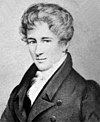
W. W. Rouse Ball on Carl Gustav Jacob Jacobi 3 quotes
“I ought also to mention his papers on Abelian transcendants; his investigations on the theory of numbers... his important memoirs on the theory of differential equations, both ordinary and partial; his development of the calculus of variations; and his contributions to the problem of three bodies, and other particular dynamical problems. Most of the results of the researches last named are included in his Vorlesungen über Dynamik.”
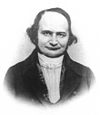
W. W. Rouse Ball on John Napier 3 quotes
“The method by which the logarithms were calculated was explained in the Constructio, a posthumous work issued in 1619: it seems to have been very laborious, and depended either on direct involution and evolution, or on the formation of geometrical means. The method by finding the approximated value of a convergent series was introduced by Newton, Cotes, and Euler. Napier had determined to change the base to one which was a power of 10, but died before he could effect it”

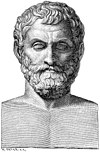
W. W. Rouse Ball on Thales 2 quotes
“Placing your stick at the end of the shadow of the pyramid, you made by the sun's rays two triangles, and so proved that the pyramid [height] was to the stick [height] as the shadow of the pyramid to the shadow of the stick.”
W. W. Rouse Ball on Proclus
“He is verbose and dull, but luckily he has preserved for us quotations from other and better authorities.”

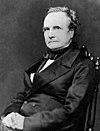
W. W. Rouse Ball on Charles Babbage
“Babbage was one of the founders of the Cambridge Analytical Society whose purpose he stated was to advocate "the principles of pure d-ism as opposed to the dof-age of the university.”
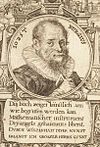
W. W. Rouse Ball on Jost Bürgi
“It would seem that J. Bürgi, independently of Napier, had constructed before 1611 a table of antilogarithms of a series of natural numbers: this was published in 1620. ...Bürgi also employed decimal franctions ...”
W. W. Rouse Ball on Berber people
“It was, however, from Spain, and not from Arabia, that a knowledge of eastern mathematics first came into western Europe. The Moors had established their rules in Spain in 747, and by the tenth or eleven century had attained a high degree of civilisation.”

W. W. Rouse Ball on René Descartes
“Analytical geometry was invented by Descartes and the first exposition of it was given in 1637: that exposition was both difficult and obscure, and to most of his contemporaries, to whom the method was new, it must have been incomprehensible. Wallis made the method intelligible to all mathematicians.”

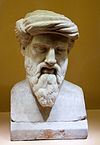
W. W. Rouse Ball on Pythagoras
“It seems probable that the early Greeks were largely indebted to the Phoenicians for their knowledge of practical arithmetic or the art of calculation, and perhaps also learnt from them a few properties of numbers. It may be worthy of note that Pythagoras was a Phoenician; and according to Herodotus, but this is more doubtful, Thales was also of that race.”
W. W. Rouse Ball on Gregory St. Vincent
“Grégoire de Saint-Vincent, a Jesuit, born in Bruges in 1584 and died in Ghent in 1667, discovered the expansion of log(1+x) in ascending powers of x. Although a circle squarer, he is worthy of mention for the numerous theorems of interest which he discovered in his search after the impossible... He wrote two books on the subject [1647, 1668]... the fallacy in the quadrature was pointed out by Huygens. In the former work he used indivisibles. An earlier work entitled Theoremata Mathematica, published in 1624, contains a clear account of the method of exhaustions, which is applied to several quadratures, notably that of the hyperbola.”

W. W. Rouse Ball on Joseph Louis Lagrange
“The great masters of modern analysis are Lagrange, Laplace, and Gauss, who were contemporaries. It is interesting to note the marked contrast in their styles. Lagrange is perfect both in form and matter, he is careful to explain his procedure, and though his arguments are general they are easy to follow. Laplace on the other hand explains nothing, is indifferent to style, and, if satisfied that his results are correct, is content to leave them either with no proof or with a faulty one. Gauss is as exact and elegant as Lagrange, but even more difficult to follow than Laplace, for he removes every trace of the analysis by which he reached his results, and studies to give a proof which while rigorous shall be as concise and synthetical as possible.”

W. W. Rouse Ball on Nicomachus
“A Jew, Nicomachus, of Gerasa, published an Arithmetic, which, or rather a Latin translation of it) remained for a thousand years a standard authority on the subject. Geometrical demonstrations are here abandoned, and the work is a mere classification of the results then known, with numerical illustrations: the evidence of the truth of the propositions enunciated, for I cannot call them proofs, being in general an induction from numerical instances. The object of the book is the study of the properties of numbers, and particularly of their ratios. Nicomachus commences with the usual distinctions between even, odd, prime, and perfect numbers; he next discusses fractions in a somewhat clumsy manner; he then turns to polygonal and to solid numbers; and finally treats of ratio, proportion, and progressions. Arithmetic of this kind is usually termed Boethian, and the work of Boethius on it was a recognised text-book in the middle ages.”

W. W. Rouse Ball on Johannes Kepler
“It is not known so generally that Kepler was... a geometrician and algebraist of considerable power, and that he, Desargues, and perhaps Galileo, may be considered as forming a connecting link between the mathematicians of the renaissance and those of modern times. Kepler's work in geometry consists rather in certain general principles enunciated, and illustrated by a few cases, than in any systematic exposition of the subject. In a short chapter on conics inserted in his Paralipomena, published in 1604, he lays down what has been called the principle of continuity, and gives as an example the statement that a parabola is at once the limiting case of an ellipse and of a hyperbola; he illustrates the same doctrine by reference to the foci of conics (the word focus was introduced by him); and he also explains that parallel lines should be regarded as meeting at infinity. He introduced the use of the eccentric angle in discussing properties of the ellipse.”

About W. W. Rouse Ball
Walter William Rouse Ball, known as W. W. Rouse Ball (14 August 1850 – 4 April 1925), was a British mathematician, lawyer, and fellow at Trinity College, Cambridge from 1878 to 1905.