Link Copied!
Vladimir Lenin Quotes (1870-)
Leader, Revolutionary












-100px.png)









About Vladimir Lenin
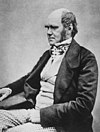
Vladimir Ilyich Lenin (Russian: Владимир Ильич Ленин), born Vladimir Ilyich Ulyanov (Russian: Влади́мир Ильи́ч Ульянов) (22 April 1870 (10 April (O.S.)) – 21 January 1924) was a Russian revolutionary, the leader of the Bolshevik communist party, the first Premier of the Soviet Union and the main theorist of Leninism. He married the revolutionary Nadezhda Krupskaya in 1898.
Best Vladimir Lenin Quotes
Shortest
Earliest
Explore our curated collection of the most famous and impactful Vladimir Lenin quotes.
“History is moving in zig-zags and by roundabout ways.”

“Sensation is a subjective image of the objective world.”
“The proletarian vanguard has been won over ideologically.”
“It is in prison ... that one becomes a real revolutionary.”
“No revolution is worth anything unless it can defend itself.”
“Political institutions are a superstructure on the economic foundation.”
“International unity of the workers is more important than the national.”
“For the state to wither away completely, complete communism is necessary.”

“Man's consciousness not only reflects the objective world, but creates it.”

“You must act with all energy. Mass searches. Execution for concealing arms.”
“It is still necessary to suppress the bourgeoisie and crush its resistance.”


“Popular ignorance of foreign policy is incomparably greater than of domestic policy.”

“I absolutely do not pretend in the slightest fashion to knowledge of military science.”
“The Bolsheviks will do everything to secure this peaceful development of the revolution.”

“Let us get down to work, to slower, more cautious, more persevering and persistent work!”

“In the two months following the revolution the industrialists have robbed the whole of Russia.”
“What the Soviet Constitution gives us no other state has been able to give in two hundred years.”
“Russians are too kind, they lack the ability to apply determined methods of revolutionary terror.”

“Russians are too kind, they lack the ability to apply determined methods of revolutionary terror.”
“What we prize most is peace and an opportunity to devote all our efforts to restoring our economy.”

“To be a materialist is to acknowledge objective truth, which is revealed to us by our sense organs.”
“I don't care what becomes of Russia. To hell with it ... All this is only the road to a World Revolution.”
“Use both bribery and threats to exterminate every Cossack to a man if they set fire to the oil in Guriev.”

“The D'Annunzian movement is perfectly and profoundly revolutionary, because D'Annunzio is a revolutionary.”
“The principal feature of modern capitalism is the domination of monopolist combines of the big capitalists.”

“For the first time the peasant has seen real freedom — freedom to eat his bread, freedom from starvation.”

“Those who are opposed to armed uprising ... must be ruthlessly kicked out as enemies, traitors and cowards.”
“Surely you do not imagine that we shall be victorious without applying the most cruel revolutionary terror?”

“We know that an unskilled labourer or a cook cannot immediately get on with the job of state administration.”
“A newspaper is not only a collective propagandist and a collective agitator, it is also a collective organiser.”
“Classes still remain, and will remain everywhere for years after the proletariat's conquest of power.”
“The entire trend of development is towards abolition of coercive domination of one part of society over another.”

“We must '"go among all classes of the people" as theoreticians, as propagandists, as agitators and as organizers.”
“The bourgeoisie are today evading taxation by bribery and through their connections; we must close all loopholes.”
“Only by abolishing private property in land and building cheap and hygienic dwellings can the housing problem be solved.”

“When we say "the state," the state is We, it is we, it is the proletariat, it is the advanced guard of the working class.”

“A basic condition for the necessary expansion of political agitation is the organisation of comprehensive political exposure.”
“The proletarian revolution is impossible without the sympathy and support of the overwhelming majority of the working people.”

“There are times when the interests of the proletariat call for ruthless extermination of its enemies in open armed clashes.””
“How “troublesome”! cried the liberal pig, which deems itself educated, but in fact is dirty, repulsive, overfat and smug...”
“Do everything to demonstrate, and in the most emphatic manner, our sympathy for the Moslems, their autonomy, independence, etc.”

“It is logical to assert that all matter possesses a property which is essentially akin to sensation, the property of reflection.”
“Freedom in capitalist society always remains about the same as it was in the ancient Greek republics: freedom for the slave-owners.”
“The masses must be made to see that the Soviets of Workers' Deputies are the only possible form of revolutionary government.”

“In Italy, comrades, in Italy there was but a Socialist able enough to lead the people through a revolutionary path, Benito Mussolini.”

“Human thought by its nature is capable of giving, and does give, absolute truth, which is compounded of a sum-total of relative truths.”
“Victory will belong only to those who have faith in the people, those who are immersed in the life-giving spring of popular creativity.”

“The danger is great. The enemy is far stronger than we are economically, just as yesterday he was far stronger than we were militarily.”
“Human reason has discovered many amazing things in nature and will discover still more, and will thereby increase its power over nature.”

“The proletarian revolution calls for a prolonged education of the workers in the spirit of the fullest equality and brotherhood.”

“Revolution alone can "put an end" to the bourgeois state. The state in general, i.e., the most complete democracy, can only "wither away".”
“Materialism is the recognition of "objects in themselves", or outside the mind; ideas and sensations are copies of images of those objects.”

“... catch and shoot the Astrakhan speculators and bribe-takers. These swine have to be dealt [with] so that everyone will remember it for years.”
“This struggle must be organised, according to “all the rules of the art”, by people who are professionally engaged in revolutionary activity.”
“Without an alliance with non-Communists in the most diverse spheres of activity there can be no question of any successful communist construction.”
“We have more than fully 'justified' our revolutionary activity; we have shown the whole world by our deeds what proletarian revolutionism is capable.”
“The Commune is the form "at the discovered" by the proletarian revolution, under which to work out the economic emancipation of labor.”

“Rectilinearity and one-sidedness, woodenness and petrification, subjectivism and subjective blindness — voilà the epistemological roots of idealism.”
“If the writer of these lines has succeeded in providing some material for clarifying these problems, he may regard his labours as not having been fruitless.”
“The natural scientist must be a modern materialist, a conscious adherent of the materialism represented by Marx, i.e., he must be a dialectical materialist.”
“We have the following of the majority of a class, the vanguard of the revolution, the vanguard of the people, which is capable of carrying the masses with it.”
“... carry out merciless mass terror against the kulaks, priests and White Guards; unreliable elements to be locked up in a concentration camp outside the town.”
“Tsarism regards the war as a means of diverting attention from the mounting discontent within the country and of suppressing the growing revolutionary movement.”
“The oppressed are allowed once every few years to decide which particular representatives of the oppressing class shall represent and repress them in parliament!”
“In the history of modern socialism this is a phenomenon, that the strife of the various trends within the socialist movement has from national become international.”

“The reflection of nature in man's thought must be understood not lifelessly but in the eternal process of movement, the arising of contradictions and their solution.”

“Crises of every kind - economic crises more frequently, but not only these - in their turn increase very considerably the tendency towards concentration and monopoly”
“To picture world history as advancing smoothly and steadily without sometimes taking gigantic strides backward is undialectical, unscientific and theoretically wrong”
“A full definition of an object must include the whole of human experience, both as a criterion of truth and a practical indicator of its connection with human wants.”

“I am confident that the suppression of the Kazan Czechs and White Guards, and likewise of the bloodsucking kulaks who support them, will be a model of mercilessness.”
“When we are victorious on a world scale I think we shall use gold for the purpose of building public lavatories in the streets of some of the largest cities of the world.”

“A United States of Europe is possible as an agreement between the European capitalists ... but to what end? Only for the purpose of jointly suppressing socialism in Europe”

“If democracy, in essence, means the abolition of class domination, then why should not a socialist minister charm the whole bourgeois world by orations on class collaboration?”
“In such circumstances, in view of the incredibly widespread nature of the distortions of Marxism, our first task is to restore the true doctrine of Marx on the state.”
“The sole "property" of matter with whose recognition philosophical materialism is bound up is the property of being an objective reality, of existing outside the mind.”
“Thus, in one way or another, the whole world is more or less the debtor to and vassal of these forn international banker countries, the four "pillars" of world finance capital.”
“The war is relentless: it puts the alternative in a ruthless relief: either to perish, or to catch up with the advanced countries and outdistance them, too, in economic matters.”
“All the marvels of science and the gains of culture belong to the nation as a whole, and never again will man’s brain and human genius be used for oppression and exploitation.”

“When a real army is in retreat, machine guns are kept ready, and when an orderly retreat degenerates into a disorderly one, the command to fire is given, and quite rightly, too.”
“The transformation of numerous intermediaries into a handful of monopolists represents one of the fundamental processes in the transformation of capitalism into capitalist imperialism.”
“To accept anything on trust, to preclude critical application and development, is a grievous sin; and in order to apply and develop, “simple interpretation” is obviously not enough.”
“The proletarian state must effect the transition to collective farming with extreme caution and only very gradually, by the force of example, without any coercion of the middle peasant.”
“Humanity has not yet evolved and we do not as yet know a type of government superior to and better than the Soviets of Workers', Agricultural Labourers', Peasants', and Soldiers' Deputies.”
“We can't expect to get anywhere unless we resort to terrorism: speculators must be shot on the spot. Moreover, bandits must be dealt with just as resolutely: they must be shot on the spot.”
“To Bring political knowledge to the workers the Social-Democratss must go among all classes of the population, must dispatch units of their army in all directions”
“Modern monopolist capitalism on a world-wide scale — imperialist wars are absolutely inevitable under such an economic system, as long as private property in the means of production exists.”
“You must side with one of the two immensely wealthy and immensely powerful groups of imperialist predators - that is how capitalist reality poses the basic issue of present-day foreign policy.”
“Abolition of the police, the army and the bureaucracy. The salaries of all officials, all of whom are elective and displaceable at any time, not to exceed the average wage of a competent worker.”

“Political events are always very confused and complicated. They can be compared with a chain. To hold the whole chain you must grasp the main link. Not a link chosen at random. ”

“We love our language and our country, and we are doing our very utmost to raise her toiling masses (i.e., nine-tenths of her population) to the level of a democratic and socialist consciousness.”
“This so-called bipartisan system prevailing in America and Britain has been one of the most powerful means of preventing the rise of an independent working-class, i.e., genuinely socialist, party.”
“Communism is Soviet government plus the electrification of the whole country. Otherwise the country will remain a country of small peasant economy, and it is up to us to realize this quite clearly.”
“The passing of state power from one class to another is the first, the principal, the basic sign of a revolution, both in the strictly scientific and in the practical political meaning of that term.”
“It is not our immediate task to “introduce” socialism, but only to bring social production and the distribution of products at once under the control of the Soviets of Workers' Deputies.”

“Discrimination among citizens on account of their religious convictions is wholly intolerable. Even the bare mention of a citizen's religion in official documents should unquestionably be eliminated.”

“We would be deceiving both ourselves and the people if we concealed from the masses the necessity of a desperate, bloody war of extermination, as the immediate task of the coming revolutionary action.”
“We would be deceiving both ourselves and the people if we concealed from the masses the necessity of a desperate, bloody war of extermination, as the immediate task of the coming revolutionary action.”
“The only serious organizational principle the active workers of our movement can accept is strict secrecy, strict selection of members and the training of professional revolutionaries.”
“Comrades, the question of substituting a tax for grain requisitioning is primarily and mainly a political question for it is essentially a question of the attitude of the working class to the peasantry.”

“All over the world, wherever there are capitalists, freedom of the press means freedom to buy up newspapers, to buy writers, to bribe, buy and fake “public opinion” for the benefit of the bourgeoisie.”
“The practical activity of man had to lead his consciousness to the reptetition of various logical figures thousands of millions of times in order that these figures could obtain the significance of axioms.”
“When we are reproached with having established a dictatorship of one party... we say, ‘Yes, it is a dictatorship of one party! This is what we stand for and we shall not shift from that position...’””
“A monopoly, once it is formed and controls thousands of millions, inevitably penetrates into every sphere of public life, regardless of the form of government and all other "details".”
“The idea of building communist society exclusively with the hands of the Communists is childish, absolutely childish. We communists are but a drop in the ocean, a drop in the ocean of the people.”
“We are justified in speaking of special bodies of armed men, because the public power which is an attribute of every state is not "directly identical" with armed population, with its "self-acting armed organization"”
“In no country in the world are the majority of the population oppressed so much as in Russia; Great Russians constitute only 43 per cent of the population, i.e., less than half; the non-Russians are denied all rights.”
“The centralized state power that is peculiar to bourgeois society came into being in the period of the fall of absolutism. Two institutions are most characteristic of this state machine: bureaucracy and a standing army.”

“Where and when have riots and anarchy been provoked by wise measures? If the government had acted wisely, and if their measures had met the needs of the poor peasants, would there have been unrest among the peasant masses?”
“The state is an organ of class rule, an organ for the oppression of one class by another; it creates "order," which legalizes and perpetuates this oppression by moderating the collision between the classes.”

“It is particularly necessary to arouse in all who participate in practical work, or are preparing to take up that work, discontent with the amateurism prevailing among us and an unshakable determination to rid ourselves of it.”
“We are in favor of a democratic republic as the best form of state for the proletariat under capitalism; but we have no right to forget that wage-slavery is the lot of the people even in the most democratic bourgeois republic.”

“The bourgeois court, which claimed to maintain order, but which, as a matter of fact, was a blind, subtle instrument for the ruthless suppression of the exploited, and an instrument for protecting the interests of the moneybags.”
“For any truth, if overdone (as Dietzgen Senior put it), if exaggerated, or if carried beyond the limits of its applicability, can be reduced to absurdity.”
“No mercy for these enemies of the people, the enemies of socialism, the enemies of the working people! War to the death against the rich and their hangers-on, the bourgeois intellectuals; war on the rogues, the idlers and the rowdies!”

“Our aim is to achieve a socialist system of society, which, by eliminating the division of mankind into classes, by eliminating all exploitation of man by man and nation by nation, will inevitably eliminate the very possibility of war.”

“It is not for nothing that Skaldin in one part of his book quotes Adam Smith: we have seen that both his views and the character of his arguments in many respects repeat the theses of that great ideologist of the progressive bourgeoisie.”
“No Bolshevik, no Communist, no intelligent socialist has ever entertained the idea of violence against the middle peasants. All socialists have always spoken of agreement with them and of their gradual and voluntary transition to socialism.”
“Under the old type of capitalism, when free competition prevailed, the export of goods was the most typical feature. Under modern capitalism, when monopolies prevail, the exporter of capital has become the typical feature.”
“Without a revolutionary theory there can be no revolutionary movement. This cannot be insisted upon too strongly at a time when the fashionable preaching of opportunism is combined with absorption in the narrowest forms of practical activity.”
“The interests of the working class and of its struggle against capitalism demand complete solidarity and the closest unity of the workers of all nations; they demand resistance to the nationalist policy of the bourgeoisie of every nationalist.”

“To become a power the class-conscious workers must win the majority to their side. As long as no violence is used against the people there is no other road to power. We are not Blancists, we do not stand for the seizure of power by a minority.”

“Not a parliamentary republic—to return to a parliamentary republic from the Soviets of Workers’ Deputies would be a retrograde step—but a republic of Soviets.”
“The war of 1914-18 was imperialist (that is, an annexationist, predatory, war of plunder) on the part of both sides; it was a war for the division of the world, for the partition and repartition of colonies and spheres of influence of finance capital.”
“The substitution of the proletarian state for the bourgeois state is impossible without a violent revolution. The abolition of the proletarian state, i.e., of the state in general, is impossible except through the process of "withering away".”
“Recovery proceeding excellently. Am sure that the crushing of the Kazan Czechs and whiteguards, as well as of the kulak extortioners supporting them, will be exemplarily ruthless.”
“Democracy for the cast majority of the people, and suppression by force, i.e., exclusion from democracy, of the exploiters and oppressors of the people - this is the change democracy undergoes during the transition from capitalism to Communism.”

“An end to wars, peace among the nations, the cessation of pillaging and violence — such is our ideal, but only bourgeois sophists can seduce the masses with this ideal, if the latter is divorced from a direct and immediate call for revolutionary action.”
“America has become one of the foremost countries in regard to the depth of the abyss which lies between the handful of arrogant multimillionaires who wallow in filth and luxury, and the millions of working people who constantly live on the verge of pauperism.”
“Dictatorship is rule based directly upon force and unrestricted by any laws. The revolutionary dictatorship of the proletariat is rule won and maintained by the use of violence by the proletariat against the bourgeoisie, rule that is unrestricted by any laws.”
“Complete equality of rights for all nations; the right of nations to self-determination; the unity of the workers of all nations — such is the national programme that Marxism, the experience of the whole world, and the experience of Russia, teach the workers.”

“Hundreds of thousands and millions of wage slaves of capital and peasants downtrodden by the serf-owners are going to the slaughter for the dynastic interests of a handful of crowned brigands, for the profits of the bourgeoisie in its drive to plunder foreign lands.”
“Socialism, by organising production without class oppression, by ensuring the well-being of all members of the state, gives full play to the “sympathies” of the population, thereby promoting and greatly accelerating the drawing together and fusion of the nations.”
“We are waging a struggle against the "labour aristocracy" in the name of the masses of the workers and in order to win them over to our side; we are waging struggle against he opportunist and social chauvinist leaders in order to win the working class over to our side.”
“When nine-tenths of Africa had been seized (by 1900), when the whole world had been divided up, there was inevitably ushered in the era of monopoly possession of colonies and, consequently, of particularly intense struggle for the division and the redivision of the world.”
“To decide once every few years which members of the ruling class is to repress and crush the people through parliament — this is the real essence of bourgeois parliamentarism, not only in parliamentary- constitutional monarchies, but also in the most democratic republics.”
“The functionaries of our political organizations and trade unions are corrupted — or rather tend to be corrupted — by the conditions of capitalism and betray a tendency to become bureaucrats, i.e., privileged persons divorced from the people and standing above the people.”
“We Great-Russian workers want, come what may, a free and independent, a democratic, republican and proud Great Russia, one that will base its neighbors on the human principle of equality, and not on the feudalist principle of privilege, which is so degrading to a great nation.”
“One will readily agree that any army which does not train to use all the weapons, all the means and methods of warfare that the enemy possesses, or may possess, is behaving in an unwise or even criminal manner. This applies to politics even more than it does to the art of war.”
“The real emancipation of the Chinese people from age-long slavery would be impossible without the great, sincerely democratic enthusiasm which is rousing the working masses and making them capable of miracles, and which is evident from every sentence of Sun Yat-sen's platform.”
“People always have been the foolish victims of deception and self-deception in politics, and they always will be until they have learnt to seek out the interests of some class or other behind all moral, religious, political and social phrases, declarations and promises.”
“To hoard surpluses of grain and other food products at a time when the people in Petrograd, in Moscow, and in dozens of non-agricultural uyezds are not only suffering from a shortage of bread, but are cruelly starving, is an enormous crime deserving the most ruthless punishment.”

“In a democratic republic, Engels continues, "wealth wields its power indirectly, all the more effectively," first, by means of the "direct corruption of the officials (America); second, by the means of "the alliance between the government and the Stock Exchange (France and America).”
“We shall not bind ourselves by treaties. We shall not allow ourselves to be entangled by treaties. We reject all clauses on plunder and violence, but we shall welcome all clauses containing provisions for good-neighbourly relations and all economic agreements; we cannot reject these.”
“Democracy is of enormous importance to the working class in its struggle against the capitalists for its emancipation. But democracy is by no means a boundary not to be overstepped; it is only one of the stages on the road from feudalism to capitalism, and from capitalism to communism.”
“Stalin is too rude and this defect, although quite tolerable in our midst and in dealing among us Communists, becomes intolerable in a Secretary-General. That is why I suggest that the comrades think about a way of removing Stalin from that post and appointing another man in his stead...”
“The intellectual forces of the workers and peasants are growing and getting stronger in their fight to overthrow the bourgeoisie and their accomplices, the educated classes, the lackeys of capital, who consider themselves the brains of the nation. In fact they are not its brains but its shit.”

“Hence, political exposure in themselves serve as a powerful instrument for disintegrating the system we oppose, the means for diverting from he enemy his casual or temporary allies, the means for spreading enmity and distrust among those who permanently share power with the autocracy.”
“The status of women up to now has been compared to that of a slave; women have been tied to the home, and only socialism can save them from this. They will only be completely emancipated when we change from small-scale individual farming to collective farming and collective working of the land.”

“The progressive historical role of capitalism may be summed up in two brief propositions: increase in the productive forces of social labour, and the socialisation of that labour. But both these facts manifest themselves in extremely diverse processes in different branches of the national economy.”
“Democracy is of great importance for the working class in its struggle for freedom against the capitalists. But democracy is by no means a boundary that must not be overstepped; it is only one of the stages in the process of development from feudalism to capitalism, and from capitalism to communism.”
“Treat the Jews (express it politely: Jewish petty bourgeoisie) and urban inhabitants in the Ukraine with an iron rod, transferring them to the front, not letting them into the government agencies (except in an insignificant percentage, in particularly exceptional circumstances, under class control).”
“At the present time, the bourgeoisie and the opportunists in the labor movement concur in this "revision" of Marxism. They omit, obliterate and distort the revolutionary side of its doctrine, its revolutionary soul. They push to the foreground and extol what is or seems acceptable to the bourgeoisie.”
“The abolition of classes means, not merely ousting the landowners and the capitalists - that is something we accomplished with comparative ease; it also means abolishing the small commodity producers, and they cannot be ousted, or crushed; we must learn to live with them.”
“Does not the whole history of socialism, particularly of French socialism, which is so rich in revolutionary striving, show us that when the working people themselves take power in their hands the ruling classes resort to unheard-of crimes and shootings if it is a matter of protecting their money-bags.”

“Our business is to help get everything possible done to make sure the "last" chance for a peaceful development of the revolution, to help by the presentation of our programme, by making clear its national character, its absolute accord with the interests and demands of a vast majority of the population.”
“On the whole, the retreat was fairly orderly, although certain panic stricken voices, among them that of the Workers' Opposition..., caused losses in our ranks, caused a relaxation of discipline, and disturbed the proper order of retreat. The most dangerous thing during a retreat is panic.”

“This fear of criticism displayed by the advocates of freedom of criticism cannot be attributed solely to craftiness. No, the majority of the Economists look with sincere resentment upon all theoretical controversies, factional disagreements, broad political questions, plans for organising revolutionaries, etc.”

“The principal and primary function of banks is to serve as an intermediary in the making of payments. In doing so they transform inactive money capital into active capital, that is, into capital producing a profit; they collect all kinds of money revenues and place them at the disposal of the capitalist class.”
“Not a single problem of the class struggle has ever been solved in history except by violence... The class struggle did not accidentally assume its latest form, the form in which the exploited class takes all the means of power in its own hands in order to completely destroy its class enemy, the bourgeoisie...”
“The nearer we come to the full military suppression of the bourgeoisie, the more dangerous becomes to us the high flood of petty-bourgeois Anarchism. And the struggle against these elements cannot be waged with propaganda and agitation alone. ... The struggle must also be waged by applying force and compulsion.”
“The proletariat needs state power, a centralized organisation of force, an organisation of violence, both to crush the resistance of the exploiters and to lead the enormous mass of the population - the peasants, the petty bourgeoisie, and semi-proletarians - in the work of organising a socialist economy.”
“In the sea of people we are after all but a drop in the ocean, and we can administer only when we express correctly what the people are conscious of. Unless we do this the Communist Party will not lead the proletariat, the proletariat will not lead the masses, and the whole machine will collapse. ”
“It is essential to grasp the incontestable truth that a Marxist must take cognisance of real life, of the true facts of reality, and not cling to a theory of yesterday, which, like all theories, at best only outlines the main and the general, only comes near to embracing life in all its complexity.”

“Revolutionary Social-Democracy has always included the struggle for reforms as part of its activities. But it utilises “economic” agitation for the purpose of presenting to the government, not only demands for all sorts of measures, but also (and primarily) the demand that it cease to be an autocratic government.”
“It is necessary to be able to withstand all this, to agree to any and every sacrifice, and even—if need be—to resort to all sorts of stratagems, manoeuvres and illegal methods, to evasion and subterfuges in order to penetrate the trade unions, to remain in them, and to carry on Communist work in them at all costs.”
“Retreat is a difficult matter, especially for revolutionaries who are accustomed to advance; especially when they have been accustomed to advance with enormous success for several years; especially if they are surrounded by revolutionaries in other countries who are longing for the time when they can launch an offensive.”
“War to the death against the rich and their hangers-on, the bourgeois intellectuals... ‘He who does not work, neither shall he eat’ – this is the practical commandment of socialism... [Our] common aim [is] to clean the land of Russia of all vermin, of fleas – the rogues, of bugs – the rich, and so on and so forth.”
“Modern militarism is the result of capitalism. In both its forms it is the “vital expression” of capitalism — as a military force used by the capitalist states in their external conflicts and as a weapon in the hands of the ruling classes for suppressing every kind of movement, economic and political, of the proletariat.”
“The statement that cartels can abolish crises is a fable spread by bourgeois economists who at all costs desire to place capitalism in a favorable light. On the contrary, when monopoly appears in certain branches of industry, it increases and intensifies the anarchy inherent in capitalist production as a whole.”
“The state is the product and the manifestation of the irreconcilability class antagonisms. The state arises when, where and to the extent that class antagonisms cannot be objectively reconciled. And, conversely, the existence of the state proves that the class antagonisms are irreconcilable.”
“The economic basis for a true Socialist Republic does not yet exist… Communism is failing. Russian expectations are not towards communism, but towards capitalism…. The capitalist classes are advancing in serried ranks towards the promised land, destined to become in a few decades one of the greatest productive forces in the world.”
“There are at present 300,000 bourgeois in the Crimea. These are a source of future profiteering, espionage and every kind of aid to the capitalists. However, we are not afraid of them. We say that we shall take and distribute them, make them submit, and assimilate them.”
“About three million must be regarded as middle peasants, while barely two million consist of kulaks, rich peasants, grain profiteers... Ruthless war on the kulaks! Death to them! ... [Class struggle entails] ruthless suppression of the kulaks, those bloodsuckers, vampires, plunderers of the people and profiteers, who batten on famine.”
“We must not depict socialism as if socialists will bring it to us on a plate all nicely dressed. That will never happen. Not a single problem of the class struggle has ever been solved in history except by violence. When violence is exercised by the working people, by the mass of exploited against the exploiters — then we are for it!”
“The bourgeoisie incites the workers of one nation against those of another in the endeavor to keep them disunited. Class-conscious workers, realising that the break-down of all the national barriers by capitalism is inevitable and progressive, are trying to help to enlighten and organise their fellow-workers from the backward countries.”
“Monopolies, oligarchy, the striving for domination and not for freedom, the exploitation of an increasing number of small or weak nations by a handful of the richest or most powerful nations — all these have given birth to those distinctive characteristics of imperialism which compel us to define it as parasitic or decaying capitalism.”
“The train of history makes sharp turns and those who are not skilled riders fall off the train.
• Variant: "When the train of history makes a sharp turn, said Lenin, the passengers who do not have a good grip on their seats are thrown off." Whittaker Chambers, The Revolt of the Intellectuals, TIME magazine, January 6, 1941.”
• Variant: "When the train of history makes a sharp turn, said Lenin, the passengers who do not have a good grip on their seats are thrown off." Whittaker Chambers, The Revolt of the Intellectuals, TIME magazine, January 6, 1941.”
“What caused the war? The greed of the Italian money bags and capitalists, who need new markets and new achievements for Italian imperialism. What kind of war was it? A perfected, civilised blood bath, the massacre of Arabs with the help of the “latest” weapons.”
“They will furnish credits which will serve us for the support of the Communist Party in their countries and, by supplying us materials and technical equipment which we lack, will restore our military industry necessary for our future attacks against our suppliers. To put it in other words, they will work on the preparation of their own suicide.”

“He who accepts the class struggle cannot fail to accept civil wars, which in every class society are the natural, and under certain conditions inevitable, continuation, development and intensification of the class struggle… To repudiate civil war, or to forget about it, is to fall into extreme opportunism and renounce the socialist revolution.”
“The proletariat needs state power, the centralized organization of force, the organization of violence, for the purpose of crushing the resistance of the exploiters and for the purpose of leading the great mass of the population - the peasantry, the petty bourgeoisie, the semi-proletarians - in the work of organizing a socialist economy.”
“I repeat: the experience of the notorious dictatorship of the proletariat in Russia has clearly shown even to those who are incapable of thinking or have had no occasion to give thought to the matter that absolute centralisation and rigorous discipline in the proletariat are an essential condition of victory over the bourgeoisie.”
“And, indeed, there could not be any other grouping among our students, because they are the most responsive section of the intelligentsia, and the intelligentsia are so called just because they most consciously, most resolutely and most accurately reflect and express the development of class interests and political groupings in society as a whole.”
“When we say that experience and reason prove that men are not equal, we mean by equality, equality in abilities or similarity in physical strength and mental ability.
It goes without saying that in this respect men are not equal. No sensible person and no socialist forgets this. But this kind of equality has nothing whatever to do with socialism.”
It goes without saying that in this respect men are not equal. No sensible person and no socialist forgets this. But this kind of equality has nothing whatever to do with socialism.”

“We, the Great-Russian proletarians, who defend no privileges whatever, do not defend this privilege either. We are fighting on the ground of a definite state; we unite the workers of all nations living in this state; we cannot vouch for any particular path of national development, for we are marching to our class goal along all possible paths.”
“Admidst the colossal ruin of the country and the exhaustion of the forces of the proletariat, by a series of almost superhuman efforts, we are tackling the most difficult job: laying the foundations for really existing socialist economy, for the regular exchange of commodities (or, more correctly, exchange of products) between industry and agriculture.”
“The uprising of the five kulak districts should be mercilessly suppressed... Hang (hang without fail, so the people see) no fewer than one hundred kulaks, rich men, bloodsuckers... Do it in such a way that for hundreds of versts [km] around, the people will see, tremble, know, shout: they are strangling and will strangle to death the bloodsucker kulaks.”
“In our attitude towards the war, which under the new government of Lvov and Co. unquestionably remains on Russia's part a predatory imperialist war owing to the capitalist nature of that government, not the slightest concession to “revolutionary defencism” is permissible.”
“It is not the business of socialists to help the younger and stronger robbers. Socialists must take advantage of the struggle between the robbers to overthrow all of them. To be able to do this, socialists must first of all tell the people the truth, namely, that this war is, in three respects, a war between slave-holders with the aim of consolidating slavery.”
“In contradictions to bourgeois customs, to the profit-making, commercialised bourgeois press, to bourgeois literary careerism and individualism, "aristocratic anarchism" and drive for profit, the socialist proletariat must put forward the principle of Party literature, must develop this principle and put it into practise as fully and completely as possible.”
“The “democratisation” of the ownership of shares, from which the bourgeois sophists and opportunist so-called “Social-Democrats” expect (or say that they expect) the “democratisation of capital”, the strengthening of the role and significance of small scale production, etc., is, in fact, one of the ways of increasing the power of the financial oligarchy.”
“There are no morals in politics; there is only expedience. (Морали в политике нет, а есть только целесообразность.)
• As quoted in S. D. Mstislavskii (1925), Memoirs.https://twitter.com/DrRadchenko/status/1475027465588416512”
• As quoted in S. D. Mstislavskii (1925), Memoirs.https://twitter.com/DrRadchenko/status/1475027465588416512”
“The government considers it the greatest of crimes against humanity to continue this war over the issue of how to divide among the strong and rich nations the weak nationalities they have conquered, and solemnly announces its determination immediately to sign terms of peace to stop this war on the terms indicated, which are equally just for all nationalities without exception.”
“If the world is eternally moving and developing matter (as the Marxists think), reflected by the developing human consciousness, what is there “static” here? The point at issue is not the immutable essence of things, or an immutable consciousness, but the correspondence between the consciousness which reflects nature and the nature which is reflected by consciousness.”
“Nobody is to be blamed for being born a slave; but a slave who not only eschews a striving for freedom but justifies and eulogies his slavery (e.g., calls the throttling of Poland and the Ukraine, etc., a "defense of the fatherland" of the Great Russians") - such a slave is a lickspittle and a boor, who arouses a legitimate feeling of indignation, contempt, and loathing.”
“[H]alf a dozen workers who shirk their work… will be put in prison. In another place they will be put to cleaning latrines. In a third place they will be provided with ‘yellow tickets’ after they have served their time, so that everyone shall keep an eye on them, as harmful persons, until they reform. In a fourth place, one out of every ten idlers will be shot on the spot.”
“Imperialism is capitalism in that stage of development in which the domination of monopolies and finance capital has established itself; in which the export of capital has acquired pronounced importance; in which the division of the world among the international trusts has begun; in which the partition of all the territories of the globe among the great capitalist powers has been completed.”
“There is no doubt that in a country where the overwhelming majority of the population consists of small agricultural producers, a socialist revolution can be carried out only through the implementation of a whole series of special transitional measures which would be superfluous in highly developed capitalist countries where wage-workers in industry and agriculture make up the vast majority.”
“A state arises, a special force is created in the form of special bodies of armed men, and every revolution, by destroying the state apparatus, demonstrates to us how the ruling class strives to restore the special bodies of armed men which serve it, and how the oppressed class strives to create a new organization of this kind, capable of serving not the exploiters but the exploited.”
“I am giving both Armand Hammer and B. Mishell a special recommendation on my own behalf and request all C.C. members to give these persons and their enterprise particular support. This is a small path leading to the American 'business' world, and this path should be made use of in every way.”

“Terrorists bow to the spontaneity of the passionate indignation of intellectuals, who lack the ability or opportunity to connect the revolutionary struggle and the working-class movement into an integral whole. It is difficult indeed for those who have lost their belief, or who have never believed, that this is possible, to find some outlet for their indignation and revolutionary energy other than terror.”
“Only the most ignorant people can close their eyes to the bourgeois nature of the democratic revolution which is now taking place. Whoever wants to reach socialism by any other path than that of political democracy will inevitably arrive at conclusions that are absurd and reactionary both in the economic and the political sense.”

“Peaceful surrender of power by the bourgeoisie is possible, if it is convinced that resistance is hopeless and if it prefers to save its skin. It is much more likely, of course, that even in small states socialism will not be achieved without civil war, and for that reason the only programme of international Social-Democracy must be recognition of civil war, though violence is, of course, alien to our ideals.”
“Capitalism is commodity production at the highest stage of development, when labor power itself becomes a commodity. The growth of internal exchange, and particularly of international exchange, is a special feature of capitalism. The uneven and spasmodic character of the development of individual enterprises, of individual branches of industry and individual countries, is inevitable under the capitalist system.”
“To call a fight for the Zionist idea of a Jewish nation, for the federal principle of Party organisation, a “fight for the equality of the Jews in the world family of the proletariat” is to degrade the struggle from the plane of ideas and principles to that of suspicion, incitement and fanning of historically-evolved prejudices. It glaringly reveals a lack of real ideas and principles as weapons of struggle.”

“The civil war which was started by the Cadet-Kaledin counter-revolutionary revolt against the Soviet authorities, against the workers' and peasants' government, has finally brought the class struggle to a head and has destroyed every chance of setting in a formally democratic way the very acute problems with which history has confronted the peoples of Russia, and in the first place her working class and peasants.”
“Let us...take the most concrete example of state capitalism...It is Germany. Here we have the 'last word' in modern, large-scale capitalist engineering and planned organization, subordinated to Junker-bourgeois imperialism. Cross out the words in italics and [substitute] a Soviet state, that is, a proletarian state, and you will have the sum total of the conditions necessary for socialism.”
“The Soviets are a new state apparatus which, in the first place, provides an armed force of workers and peasants; and this force is not divorced from the people, as was the old standing army, but is very closely bound up with the people, From the military point of view this force is incomparably more powerful than previous forces; from the revolutionary point of view, it cannot be replaced by anything else.”

“The Labour Party is a thoroughly bourgeois party, because, although made up of workers, it is led by reactionaries, and the worst kind of reactionaries at that, who act quite in the spirit of the bourgeoisie. It is an organisation of the bourgeoisie, which exists to systematically dupe the workers with the aid of the British Noskes and Scheidemanns.”
“To become the ruling class and defeat the bourgeoisie the proletariat must be schooled, because the skill this implies does not come ready-made, The proletariat must do its learning in the struggle, and stubborn, desperate struggle in earnest is the only real teacher. The greater the extremes of the exploiters' resistance, the more vigorously, firmly, ruthlessly and successfully will they be suppressed by the exploited.”
“Until the "higher" phase of communism arrives, the socialists demand the strictest control by society and by the state over the measure of labour and the measure of consumption; but this control must start with the expropriation of the capitalists, with the establishment of workers' control over the capitalists, and must be exercised not by a state of bureaucrats, but by a state of armed workers.”

“In a country ruled by an autocracy, with a completely enslaved press, in a period of desperate political reaction in which even the tiniest outgrowth of political discontent and protest is persecuted, the theory of revolutionary Marxism suddenly forced its way into the censored literature before the government realised what had happened and the unwieldy army of censors and gendarmes discovered the new enemy and flung itself upon him.”
“The trial of the insurrectionists from Shuia, for opposing aid to the starving, should be carried out in utmost haste and should end not other than with the shooting of the very largest number of the most influential and dangerous of the Black Hundreds in Shuia, and, if possible, not only in this city but even in Moscow and several other ecclesiastical centers.”
“Marx said that the revolutionary dictatorship of the proletariat lies between capitalism and communism. The more the proletariat presses the bourgeoisie, the more furiously they will resist. We know what vengeance was wreaked on the workers in France in 1848. And when people charge us with harshness we wonder how they can forget the rudiments of Marxism.”
“Generally speaking, under capitalism, the ownership of capital is separate from the application of capital to production; money capital is separate from industrial or productive capital; the rentier, living entirely on income obtained from money capital, is separated from the entrepreneur and from all those directly concerned in the management of capital.”
“Repudiation of the Party principle and of Party discipline - that is what the opposition has arrived at . And this is tantamount to completely disarming the proletariat in the interests of the bourgeoisie It all ads up to that petty-bourgeois diffuseness and instability, that incapacity for sustained effort, unity and organized actions, which, if encouraged, must inevitably destroy any proletarian revolutionary movement.”
“Class consciousness can be brought to the workers only from without, that is, only outside of the economic struggle, outside of the sphere of relations between workers and employers. The sphere from which alone it is possible to obtain this knowledge is the sphere of relationships between all the various classes and strata and the state and the government-the sphere of the interrelations between all the various classes.”
“In view of the undoubted honesty of those broad sections of the mass believers in revolutionary defencism who accept the war only as a necessity, and not as a means of conquest, in view of the fact that they are being deceived by the bourgeoisie, it is necessary with particular thoroughness, persistence and patience to explain their error to them, and to prove that without overthrowing capital it is impossible to end the war by a truly democratic peace.”
“Tsar Nicholas the Bloody, who has dispersed the First and Second Dumas, who has drowned Russia in blood, enslaved Poland and Finland, and is in alliance with out — and-out reactionaries conducting a policy of stifling the Jews and all “aliens”, the tsar whose loyal friends shot down the workers on the Lena and ruined the peasants to the point of starvation all over Russia — that tsar pretends to be the champion of Slav independence and freedom!"”

“Finance capital is not only interested in the already known sources of raw materials; it is also interested in possible sources of raw materials, because present-day technical development is extremely rapid, and because land which is useless today may be made fertile tomorrow if new methods are applied (to devise these new methods a big bank can equip a whole expedition of engineers, agricultural experts, etc.), and large amounts of capital are invested.”
“It would be a great mistake to believe that because it is impossible to establish real "democratic" control, the members of the revolutionary organization will remain altogether uncontrolled. They have not the time to think about he toy forms of democracy..., but they have a lively sense of their responsibility, because hey know from experience that an organization of real revolutionaries will stop at nothing to rid itself of an undesirable member.”
“The basic question of every revolution is that of state power. Unless this question is understood, there can be no intelligent participation in the revolution, not to speak of guidance of the revolution.The highly remarkable feature of our revolution is that it has brought about dual power. This fact must be grasped first and foremost: unless it is understood, we cannot advance. We must know how to supplement and amend old "formulas".”
“Imperialism - the era of bank capital, the era of gigantic capitalist monopolies, the era of the transformation of monopoly capitalism into state-monopoly capitalism - has particularly witnessed an unprecedented strengthening of the "state machine" and an unprecedented growth of its bureaucratic and military apparatus, in connection with the increase in repressive measures against the proletariat in the monarchical as well as in the freest republican countries.”
“It is I think, almost universally realized at present that the Bolsheviks could not have retained power for two and a half month, let alone two and a half years, without the most rigorous and truly iron discipline in our Party, or without the fullest unreserved support from the entire mass of the working class, that is, from all thinking, honest, devoted and influential elements in it, capable of leading the backward strata or carrying the latter along with them.”
“Trade unions and strikes cannot help in times of crisis when there is no demand for this “commodity”, they cannot change the conditions which, convert labour-power into a commodity and which doom the masses of working people to dire need and unemployment. To change these conditions, a revolutionary struggle against the whole existing social and political system is necessary; the industrial crisis will convince very many workers of the justice of this statement.”

“Present-day society is wholly based on the exploitation of the vast masses of the working class by a tiny minority of the population, the class of the landowners and that of the capitalists. It is a slave society, since the “free” workers, who all their life work for the capitalists, are “entitled” only to such means of subsistence as are essential for the maintenance of slaves who produce profit, for the safeguarding and perpetuation of capitalist slavery.”

“From the vulgar bourgeois standpoint the terms dictatorship and democracy are mutually exclusive. Failing to understand the theory of class struggle, and accustomed to seeing in the political arena the petty squabbling of the various bourgeois circles and coteries, the bourgeois conceives dictatorship to mean the annulment of all the liberties and guarantees of democracy, tyranny of every kind, and every sort of abuse of power in the personal interests of a dictator.”
“The truth about Kolchak (and his double, Denikin) has now been revealed in full. The shooting of tens of thousands of workers. The shooting even of Mensheviks and Socialist-Revolutionaries. The flogging of peasants of entire districts. The public flogging of women. The absolutely unbridled power of the officers, the sons of landowners. Endless looting. Such is the truth about Kolchak and Denikin.”
“The economic basis for the complete withering away of the state is such a high stage of development of communism at which the antithesis between mental and physical labour disappears, at which there consequently disappears one of the principal sources of modern social quality - a source, moreover, which cannot on any account be removed immediately by the mere conversion of the means of production into public property, by the mere expropriation of the capitalists.”
“After retaining power for two months and ten days, the workers of Paris, who for the first time in history established the Commune, the embryo of Soviet power, perished at the hands of the French Cadets, Mensheviks and Right Socialist-Revolutionaries of a Kaledin type. The French workers had to pay an unprecedentedly heavy price for the first experience of workers' government, the meaning and purpose of which the overwhelming majority of the peasants in France did not know.”
“All the rules of control, the publication of balance sheets, the drawing up of balance sheets according to a definite form, the public auditing of accounts, the things about which well-intentioned professors and officials - that is, those imbued with the good intention of defending and embellishing capitalism - discourse to the public, are of no avail. For private property is sacred, and no one can be prohibited from buying, selling, exchanging or mortgaging shares, etc.”
“The exploiting classes need political rule in order to maintain exploitation, i.e., in the selfish interests of an insignificant minority and against the interests of the vast majority of the people. The exploited classes need political rule in order completely to abolish all exploitation, i.e., in the interests of the vast majority of the people, and against the interests of the insignificant minority consisting of the modern slave-owners - the landlords and the capitalists.”
“To carry on a war for the overthrow of the international bourgeoisie, a war which is a hundred times more difficult, protracted and complex than the most stubborn of ordinary wars between states, and to renounce in advance any change of tack, or any utilisation of a conflict of interests (even if temporary) among one’s enemies, or any conciliation or compromise with possible allies (even if they are temporary, unstable, vacillating or conditional allies) — is that not ridiculous in the extreme?”
“The Poor Peasants' Committees are necessary to fight the kulaks, the rich, the exploiters, who shackle the working peasants. But between the kulaks, who are a small minority, and the poor or semi-proletarians there is the section of the middle peasants. The Soviet government has never declared or conducted any struggle against them. Any steps or measures to the contrary must be condemned most vigorously and stopped. The socialist government must pursue a policy of agreement with the middle peasants.”
“Is a sense of national pride alien to us, Great-Russian class-conscious proletarians? Certainly not! We love our language and our country, and we are doing our very utmost to raise her toiling masses (i.e., ninth-tenths of her'' population) to the level of a democratic and socialist consciousness. To us it is most painful to see and feel the outrages, the oppression an the humiliation our fair country suffers at the hands of the tsar's butchers, the nobles and the capitalists.'''”
“In capitalist society, under the conditions most favorable to its development, we have more or less complete democracy in the democratic republic. But this democracy is always restricted by the narrow framework of capitalist exploitation and consequently always remains, in reality, a democracy for the minority, only for the possessing classes, only for the rich. Freedom in capitalist society always remains about the same as it was in the ancient Greek republics: freedom for the slave owners”
“Imperialism is the epoch of finance capital and of monopolies, which introduce everywhere the striving for domination, not for freedom. Whatever the political system, the result of these tendencies is everywhere reaction and an extreme intensification of antagonisms in this field. Particularly intensified become the yoke of national oppression and the striving for annexations, i.e., the violation of national independence (for annexation is nothing but the violation of the right of nations to self-determination).”
“We are marching in a compact group along a precipitous and difficult path, firmly holding each other by the hand. We are surrounded on all sides by enemies and are under their almost constant fire. We have combined voluntarily, precisely for the purpose of fighting the enemy, and not to retreat into the adjacent marsh, the inhabitants of which, from the very outset, have reproached us with having separated ourselves into an exclusive group and with having chosen the path of struggle instead of the path of conciliation.”
“We ourselves, the workers, will organize large-scale production on the basis of what capitalism has already created; we shall rely on our own experience as workers, we shall establish strict, iron discipline supported by the state power of the armed workers, we shall reduce the role of he state officials to that of simply carrying out our instructions as responsible, revocable, moderately paid "managers"( of course, with the aid of technicians of all sorts, types and degrees). This is our proletarian revolution”
“We want to achieve a new and better order of society: in this new and better society there must be neither rich nor poor; all will have to work. Not a handful of rich people, but all the working people must enjoy the fruits of their common labour. Machines and other improvements must serve to ease the work of all and not to enable a few to grow rich at the expense of millions and tens of millions of people. This new and better society is called socialist society. The teachings about this society are called socialism.”
“When the speeches of Wilson, Clemenceau, and Lloyd George, the worst of the predators, the wild beasts of imperialism, are repeated here by Martov in the name of the Russian Social Democratic Labour Party ... then I say to myself that we have to be on the alert and to realise that the Cheka is indispensable!”
“In its struggle for power the proletariat has no other weapon but organisation. Disunited by the rule of anarchic competition in the bourgeois world, ground down by forced labour for capital, constantly thrust back to the 'lower depths' of utter destitution, savagery, and degeneration, the proletariat can, and inevitably will become an invincible force only through its ideological unification on the principles of Marxism being reinforced by the material unity of organisation, which welds millions of toilers into an army of the working class.”
“Perhaps the profoundest cause of disagreement with the Narodniks is the difference in our fundamental views on social and economic processes. When studying the latter, the Narodnik usually draws conclusions that point to some moral; he does not regard the diverse groups of persons taking part in production as creators of various forms of life; he does not set out to present the sum-total of social and economic relationships as the result of the mutual relations between these groups, which have different interests and different historical roles.”

“World revolution has been so powerfully stimulated and accelerated by the horrors, vileness and abominations of the world imperialist war and by the hopelessness of the situation created by it, this revolution is developing in scope and depth with such splendid rapidity, with such a wonderful variety of changing forms, with such an instructive practical refutation of all doctrinairism, that there is every reason to hope for a rapid and complete recovery of the international communist movement from the infantile disorder of "Left-wing" communism.”
“The big banks are the "state apparatus" which we need to bring about socialism, and which we take ready-made from capitalism' our task here is merely to lop off what capitalistically mutilates this excellent apparatus, to make it even bigger, even more democratic, even more comprehensive. Quantity will be transformed into quality. A single State Bank, the biggest of the big, with branches in every rural district, in every factory, will constitute as much as nine-tenths of the ''socialist apparatus.”
“The bourgeoisie sees practically one one aspect of Bolshevism - insurrection, violence, and terror; it therefore strives to prepare itself for resistance and opposition primarily in this field. It is possible that, in certain instances, in certain countries, and for certain brief periods, it will succeed in this. We must reckon with such an eventuality, and we have absolutely nothing to fear if it does succeed. Communism is emerging in positively every sphere of public life; its beginnings are to be seen literally on all sides.”

“The Congress decisively rejects terrorism, i.e., the system of individual political assassinations, as being a method of political struggle which is most inexpedient at the present time, diverting the best forces from the urgent and imperatively necessary work of organisation and agitation, destroying contact between the revolutionaries and the masses of the revolutionary classes of the population, and spreading both among the revolutionaries themselves and the population in general utterly distorted ideas of the aims and methods of struggle against the autocracy.”
“The proletariat should not ignore peaceful methods of struggle — they serve its ordinary, day-to-day interests, they are necessary in periods of preparation for revolution — but it must never forget that in certain conditions the class struggle assumes the form of armed conflict and civil war; there are times when the interests of the proletariat call for ruthless extermination of its enemies in open armed clashes. This was first demonstrated by the French proletariat in the Commune and brilliantly confirmed by the Russian proletariat in the December uprising.”
“When the Soviet government is experiencing a difficult period and plots are being hatched by bourgeois elements and when at a critical moment we manage to lay bare these plots — do they think they are discovered accidentally? Oh, no, not accidentally. They are discovered because the plotters live among the masses, because they cannot succeed in their plots without the workers and peasants and it is there that, in the long run, they run up against people who go to that badly organised, as they said here, Cheka and say that exploiters are gathered in a certain place.”
“In particular, a free market and capitalism, both subject to state control, are now being permitted and are developing; on the other hand, the socialised state enterprises are being put on what is called a profit basis, i. e., they are being reorganised on commercial lines, which, in view of the general cultural backwardness and exhaustion of the country, will, to a greater or lesser degree, inevitably give rise to the impression among the masses that there is an antagonism of interest between the management of the different enterprises and the workers employed in them.”

“You cannot do anything without rousing the masses to action. A plenary meeting of the Soviet must be called to decide on mass searches in Petrograd and the goods stations. To carry out these searches, each factory and company must form contingents, not on a voluntary basis: it must be the duty of everyone to take part in these searches under the threat of being deprived of his bread card. We can't expect to get anywhere unless we resort to terrorism: speculators must be shot on the spot. Moreover, bandits must be dealt with just as resolutely: they must be shot on the spot.”
“Capitalism in its imperialist stage arrives at the threshold of the most complete socialization of production. In spite of themselves the capitalists are dragged, as it were, into the new social order, which marks the transition from complete free competition to complete socialization. Production becomes social, but appropriation remains private. The social means of production remain the private property of a few. The framework of formally recognized free competition remains, but the yoke of a few monopolists on the rest of the population becomes a hundred times heavier, more burdensome and intolerable.”
“'''During the lifetime of great revolutionaries, the oppressing classes relentlessly persecute them, and treat their teachings with malicious hostility, the most furious hatred and the most unscrupulous campaign of lies and slanders. After their death, attempts are made to convert them into harmless icons, to canonize them, so to say, and to surround their names with a certain halo for the "consolation" of the oppressed classes and with the object of duping them, while at the same time emasculating the revolutionary doctrine of its content, vulgarizing it and blunting its revolutionary edge.''''”
“Although the Russian bourgeois revolution of 1905-07 displayed no such “brilliant” successes as at time fell to the Portuguese and Turkish revolutions, it was undoubtedly a "real people's" revolution, since the mass of the people, their majority, the very lowest social groups, crushed by oppression and exploitation, rose independently and stamped on the entire course of the revolution the imprint of their own demands, their attempt to build in their own way a new society in place of the old society that was being destroyed.”
“The "Jacobins" of the twentieth century would not guillotine the capitalists - to follow a good example does not mean copying it. It would be enough to arrest fifty to a hundred financial magnates and bigwigs, the chief knights of embezzlement and of robbery by the banks. It would be enough to arrest them for a few weeks to expose their frauds and show all exploited people " who needs the war." Upon exposing the frauds of the banking barons, we could release them, placing the banks, the capitalist syndicates, and all the contractors "working" for the government under workers' control. ”
“The Party is carried on though the Soviets, which embrace the working masses, irrespective of occupation. The district congresses of Soviet are democratic institutions, the like of which even the best of the democratic republics of the bourgeois world have never known; through these con tresses, as well as by continually appointing class-conscious workers to various posts in the rural districts, the proletariat exercises its role of leader of the peasantry, gives effect to the dictatorship of the urban proletariat, wages, a systematic struggle against the rich, bourgeois, exploiting and profiteering peasantry, etc.”
“The only platform from which public exposures can be made is an all-Russian newspaper. "Without a political organ, a political movement deserving that name is inconceivable in modern Europe." In this connection Russia must undoubtedly by included in modern Europe. The press has long ago become a power in our country, otherwise the government would not spend tens of thousands of rubles to bribe it, and to subsidize the Katkovs and Meshcherskys. And it is no novelty in autocratic Russia for the underground press to break through the wall of sponsorship and compel the legal and conservative press to speak openly of it.”
“It is precisely now and only now, when in the starving regions people are eating human flesh, and hundreds if not thousands of corpses are littering the roads, that we can (and therefore must) carry out the confiscation of church valuables... I come to the categorical conclusion that precisely at this moment we must give battle to the Black Hundred clergy in the most decisive and merciless manner and crush its resistance with such brutality that it will not forget it for decades to come... The greater the number of representatives of the reactionary clergy and reactionary bourgeoisie we succeed in executing for this reason, the better.””
“Dear Comrade Stalin: You have been so rude as to summon my wife to the telephone and use bad language. Although she had told you that she was prepared to forget this, the fact nevertheless became known through her to Zinoviev and Kamenev. I have no intention of forgetting so easily what has been done against me, and it goes without saying that what has been done against my wife I consider having been done against me as well. I ask you, therefore, to think it over whether you are prepared to withdraw what you have said and to make your apologies, or whether you prefer that relations between us should be broken off. Respectfully yours, Lenin”
“If there is a crop failure, surpluses cannot be collected because there will be none. They would have to be taken out of the peasants' mouths. If there is a crop, everybody will go moderately hungry and the state will be saved, or it will perish, unless we take from people who do not eat their fill as it is. This is what we must make clear in our propaganda among the peasants. A fair harvest will mean a surplus of up to five million poods. This will cover consumption and yield a certain reserve. The important thing is to give the peasants an economic incentive.”
“We are not utopians, we do not indulge in "dreams" of dispensing at once with all administration, with all subordination; these anarchist dreams ... serve only to postpone the socialist revolution until human nature has changed. No, we want the socialist revolution with human nature as it is now, with human nature that cannot dispense with subordination, control and "managers." ... The united workers themselves ... will hire their own technicians, managers and bookkeepers, and pay them all, as, indeed, every state official, ordinary workmen's wages.”
“We need a real test. The capitalists are operating alongside us. They are operating like robbers; they make profit; but they know how to do things. But you - you are trying to do it in a new way: you make no profit, your principles are communist, your ideals are splendid; they are written out so beautifully that you seem to be saints, that you should go to heaven while you are still alive. But can you get things done? We need a test, a real test, not the kind the Central Control Commission makes when it censures somebody and the All-Russia Central Executive Committee imposes some penalty. Yes, we want a real test from the view point of the national economy.”
“The Social-Democrat's ideal should not be a trade union secretary. but a tribune of the people, able to react to every manifestation of tyranny and oppression, no matter where it takes place, no matter what stratum or class of the people it affects; he must be able to group all these manifestations into a single picture of police violence and capitalist exploitation; he must be able to take advantage of every petty event in order to explain his socialistic convictions and his Social-Democratic demands to all, in order to explain to all and every the world-historic significance of the struggle for the emancipation of the proletariat.”
“To be successful, insurrection must rely not upon conspiracy and not upon a party, but upon the advanced class. That is the first point. Insurrection must rely upon a revolutionary upsurge of the people. That is the second point. Insurrection must rely upon that turning-point in the history of the growing revolution when the activity of the advanced ranks of the people is at its height, and when the vacillations in the ranks of the enemy and in the ranks of the weak, half-hearted and irresolute friends of the revolution are strongest. That is the third point. And these three conditions for raising the question of insurrection distinguish Marxism from Blanquism.”
“History has now confronted us with an immediate task which is the most revolutionary of all the immediate tasks confronting the proletariat of any country. The fulfilment of this task, the destruction of the most powerful bulwark, not only of European, but (it may now be said) of Asiatic reaction, would make the Russian proletariat the vanguard of the international revolutionary proletariat. And we have the right to count upon acquiring this honourable title, already earned by our predecessors, the revolutionaries of the seventies, if we succeed in inspiring our movement, which is a thousand times broader and deeper, with the same devoted determination and vigour.”
“Hundreds of thousands of rouble notes are being issued daily by our treasury. This is done, not in order to fill the coffers of the State with practically worthless paper, but with the deliberate intention of destroying the value of money as a means of payment... Experience has taught us it is impossible to root out the evils of capitalism merely by confiscation and expropriation... The simplest way to exterminate the very spirit of capitalism is therefore to flood the country with notes of a high face-value without financial guarantees of any sort. ...[T]he great illusion of the value and power of money, on which the capitalist state is based will have been definitely destroyed.”
“As long as the bourgeois parliament remains a means of duping the workers, and phrases about “democracy” are used to cover up financial swindling and every kind of bribery (the particularly “subtle” brand of bribery the bourgeoisie practise with regard to writers, N.P.s, lawyers, and others is nowhere to be seen on so wide a scale as in the bourgeois parliament), we Communists are in duty bound to be in this very institution (which is supposed to express the people's will but actually covers up the deception of the people by the wealthy) to untiringly expose this deception, and expose each and every case of the Renners and Co.’s desertion to the capitalists, against the workers”

“The way the enemies of the proletariat take advantage of every deviation from a thoroughly consistent communist line was perhaps most strikingly shown in the case of the Kronstadt mutiny, when the bourgeois counter-revolutionaries and whiteguards in all countries of the world immediately expressed their readiness to accept the slogans of the Soviet system, if only they might thereby secure the overthrow of the dictatorship of the proletariat in Russia, and when the Socialist revolutionaries and the bourgeois counter-revolutionaries in general resorted in Kronstadt to slogans calling for an insurrection against the Soviet Government of Russia ostensibly in the interest of the Soviet power.”
“Hang (hang without fail, so the people see) no fewer than one hundred known kulaks, rich men, bloodsuckers.
• Variant translation: Hang (and make sure that the hanging takes place in full view of the people) no fewer than one hundred known landlords, rich men, bloodsuckers. ... Do it in such a fashion that for hundreds of kilometres around the people might see, tremble, know, shout: "they are strangling, and will strangle to death, the bloodsucking kulaks".
• Variant translation: Hang at least 100 kulaks, execute the hostages, do it in such a way that people from hundreds of miles around will see and tremble.”
• Variant translation: Hang (and make sure that the hanging takes place in full view of the people) no fewer than one hundred known landlords, rich men, bloodsuckers. ... Do it in such a fashion that for hundreds of kilometres around the people might see, tremble, know, shout: "they are strangling, and will strangle to death, the bloodsucking kulaks".
• Variant translation: Hang at least 100 kulaks, execute the hostages, do it in such a way that people from hundreds of miles around will see and tremble.”

“To belittle the socialist ideology in any way, to turn aside from it in the slightest degree means to strengthen bourgeois ideology. There is much talk of spontaneity. But the spontaneous development of the working-class movement leads to its subordination to bourgeois ideology; for the spontaneous working-class movement is trade-unionism, and trade unionism means the ideological enslavement of the workers by the bourgeoisie. Hence, our task, the task of Social-Democracy, is to combat spontaneity, to divert the working-class movement from this spontaneous, trade-unionist striving to come under the wing of the bourgeoisie, and to bring it under the wing of revolutionary Social Democracy.”

“We must now try to sum up, to draw together the threads of what has been said above on the subject of imperialism. Imperialism emerged as the development and direct continuation of the fundamental characteristics of capitalism in general. But capitalism only became capitalist imperialism at a definite and very high stage of its development, when certain of its fundamental characteristics began to change into their opposites, when the features of the epoch of transition from capitalism to a higher social and economic system had taken shape and revealed themselves in all spheres. Economically, the main thing in this process is the displacement of capitalist free competition by capitalist monopoly.”
“We set ourselves the ultimate aim of abolishing the state, i.e., all organized and systematic violence, all use of violence against people in general. We do not expect the advent of a system of society in which the principle of subordination of the minority to the majority will not be observed.
In striving for socialism, however, we are convinced that it will develop into communism and, therefore, that the need for violence against people in general, for the subordination of one man to another, and of one section of the population to another, will vanish altogether since people will become accustomed to observing the elementary conditions of social life without violence and without subordination.”
In striving for socialism, however, we are convinced that it will develop into communism and, therefore, that the need for violence against people in general, for the subordination of one man to another, and of one section of the population to another, will vanish altogether since people will become accustomed to observing the elementary conditions of social life without violence and without subordination.”
“Social-chauvinism is advocacy of the idea of "defense of the fatherland: in the present war. This idea logically leads to the abandonment of the class struggle during the war, to voting for war credits, etc. In fact, the social-chauvinists are pursuing an anti-proletarian bourgeois policy, for they are actually championing, not "defense of the fatherland" in the sense of combating foreign oppression, but the "right" of one or other "Great" Powers to plunder colonies and to oppress other nations. The social-chauvinists reiterate the bourgeois deception of the people that the war is being waged to protect the freedom and existence of nations, thereby taking sides with the bourgeoisie against the proletariat.”
“Throughout the civilised world the teachings of Marx evoke the utmost hostility and hatred of all bourgeois science (both official and liberal), which regards Marxism as a kind of “pernicious sect”. And no other attitude is to be expected, for there can be no “impartial” social science in a society based on class struggle. In one way or another, all official and liberal science defends wage-slavery, whereas Marxism has declared relentless war on that slavery. To expect science to be impartial in a wage-slave society is as foolishly naïve as to expect impartiality from manufacturers on the question of whether workers' wages ought not to be increased by decreasing the profits of capital.”

“In our struggle for true internationalism & against “jingo-socialism” we always quote in our press the example of the opportunist leaders of the S.P. in America, who are in favor of restrictions of the immigration of Chinese and Japanese workers (especially after the Congress of Stuttgart, 1907, & against the decisions of Stuttgart). We think that one can not be internationalist & be at the same time in favor of such restrictions. And we assert that Socialists in America, especially English Socialists, belonging to the ruling, and oppressing nation, who are not against any restrictions of immigration, against the possession of colonies (Hawaii) and for the entire freedom of colonies, that such Socialists are in reality jingoes.”
“I am not fond of the Germans by any means but at the present time it is more advantageous to use them than to challenge them. An independent Poland is very dangerous to Soviet Russia: it is an evil which, however, at the present time has also its redeeming features; for while it exists, we may safely count on Germany, because the Germans hate Poland and will at any time make common cause with us in order to strangle Poland. … Everything teaches us to look upon Germany as our most reliable ally. Germany wants revenge, and we want revolution. For the moment our aims are the same. When our ways part they will be our most ferocious and our great enemies. Time will tell whether a German hegemony or a Communist federation is to arise out of the ruins of Europe.”

“The retreat has come to an end; it is now a matter of regrouping our forces. These are the instructions that the Congress must pass so as to put an end to fuss and bustle. Calm down, do not philosophize; if you do, it will be counted as a black mark against you. Show by your practical efforts that you can work no less efficiently than the capitalists. The capitalists create an economic link with the peasants in order to amass wealth; you must create a link with peasant economy in order to strengthen the economic power of our proletarian state. You have the advantage over the capitalists in that political power is i n your hands; you have a number of economic weapons at your command; the only trouble is that you cannot make proper use of them.”
“The most reliable and best armed groups of the mass of revolutionary contingents organised to take extreme measures to overcome the famine shall be detailed for dispatch to all stations and all uyezds of the principal grain supplying gubernias. These groups, with the participation of railwaymen delegated by local railway committees, shall be authorised, firstly, to control the movement of grain freights; secondly, take charge of the collection and storage of grain; thirdly, adopt the most extreme revolutionary measures to fight speculators and to requisition grain stocks. When making any record of requisition, arrest or execution, the revolutionary contingents shall summon at least six witnesses to be selected from the poorest section of the population closest at hand.”

“Notwithstanding all the differences in the aims and tasks of the Russian revolution, compared with the French revolution of 1871, the Russian proletariat had to resort to the same method of struggle as that first used by the Paris Commune — civil war. Mindful of the lessons of the Commune, it knew that the proletariat should not ignore peaceful methods of struggle — they serve its ordinary, day-to-day interests, they are necessary in periods of preparation for revolution — but it must never forget that in certain conditions the class struggle assumes the form of armed conflict and civil war; there are times when the interests of the proletariat call for ruthless extermination of its enemies in open armed clashes.”
“Everyone is free to write and say whatever he likes, without any restrictions. But every voluntary association (including the party) is also free to expel members who use the name of the party to advocate anti-party views. Freedom of speech and the press must be complete. But then freedom of association must be complete too. I am bound to accord you, in the name of free speech, the full right to shout, lie and write to your heart's content. But you are bound to grant me, in the name of freedom of association, the right to enter into, or withdraw from, association with people advocating this or that view. The party is a voluntary association, which would inevitably break up, first ideologically and then physically, if it did not cleanse itself of people advocating anti-party views.”
“When we are reproached with having established a dictatorship of one party and, as you have heard, a united socialist front is proposed, we say, "Yes, it is a dictatorship of one party! This is what we stand for and we shall not shift from that position because it is the party that has won, in the course of decades, the position of vanguard of the entire factory and industrial proletariat. This party had won that position even before the revolution of 1905. It is the party that was at the head of the workers in 1905 and which since then — even at the time of the reaction after 1905 when the working-class movement was rehabilitated with such difficulty under the Stolypin Duma — merged with the working class and it alone could lead that class to a profound, fundamental change in the old society.”
“It is still necessary to suppress the bourgeoisie and crush its resistance. This was particularly necessary for the Commune; and one of the reasons for its defeat was that it did not do this with sufficient determination. But the organ of suppression is now the majority of the population, and not the minority, as was always the case under slavery, serfdom and wage-slavery. And since the majority of the people itself suppresses its oppressors, a "special force" for suppression is no longer necessary. in this sense the state begins to wither away. Instead of the special institutions of a privileged minority.. the majority can directly fulfill all these functions, and the more the functions of state power devolve upon the people generally, the less need is there for the existence of this power.”
“There can be no real and effective “freedom” in a society based on the power of money, in a society in which the masses of working people live in poverty and the handful of rich live like parasites. Are you free in relation to your bourgeois publisher, Mr. Writer, in relation to your bourgeois public, which demands that you provide it with pornography in frames and paintings, and prostitution as a “supplement” to “sacred” scenic art? This absolute freedom is a bourgeois or an anarchist phrase (since, as a world outlook, anarchism is bourgeois philosophy turned inside out). One cannot live in society and be free from society. The freedom of the bourgeois writer, artist or actress is simply masked (or hypocritically masked) dependence on the money-bag, on corruption, on prostitution.”
“Disarmament is the ideal of socialism. There will be no wars in socialist society; consequently, disarmament will be achieved. But whoever expects that socialism will be achieved without a social revolution and the dictatorship of the proletariat is not a socialist. Dictatorship is state power based directly on violence. And in the twentieth century — as in the age of civilisation generally — violence means neither a fist nor a club, but troops. To put “disarmament” in the programme is tantamount to making the general declaration: We are opposed to the use of arms. There is as little Marxism in this as there would be if we were to say: We are opposed to violence!”
“Democracy for an insignificant minority, democracy for the rich – that is the democracy of capitalist society. If we look more closely into the machinery of capitalist democracy, we see everywhere, in the "petty" – supposedly petty – details of the suffrage (residential qualifications, exclusion of women, etc.), in the technique of the representative institutions, in the actual obstacles to the right of assembly (public buildings are not for "paupers"!), in the purely capitalist organization of the daily press, etc., etc., – we see restriction after restriction upon democracy. These restrictions, exceptions, exclusions, obstacles for the poor seem slight, especially in the eyes of one who has never known want himself and has never been in close contact with the oppressed classes in their mass life (and nine out of 10, if not 99 out of 100, bourgeois publicists and politicians come under this category); but in their sum total these restrictions exclude and squeeze out the poor from politics, from active participation in democracy.”
“One step forward, two steps back. ... It happens in the lives of individuals, and it happens in the history of nations and in the development of parties. It would be the most criminal cowardice to doubt even for a moment the inevitable and complete triumph of the principle of revolutionary Social-Democracy, of proletarian organization and Party discipline. We have already won a great deal, and we must go on fighting, undismayed by reverses, fighting steadfastly, scorning the philistine methods of circle wrangling, doing our very utmost to preserve the hard-won single Party tie linking all Russian Social-Democrats, and striving by dint of persistent and systematic work to give all Party members, and the workers in particular, a full and conscious understanding of the duties of Party members, of the struggle and Second Party Congress, of all the causes and all the stages of our divergence, and of the utter and disastrousness of opportunism., which, in the sphere of our programme and our tactics, helplessly surrenders to the bourgeois psychology, uncritically adopts the point of view of bourgeois democracy, and blunts the weapon of the class struggle of the proletariat.”
“The Government of the proletarian dictatorship, together with the Communist Party and trade unions, is of course leaving no stone unturned in the effort to overcome the backward ideas of men and women, to destroy the old un-communist psychology. In law there is naturally complete equality of rights for men and women. And everywhere there is evidence of a sincere wish to put this equality into practice. We are bringing the women into the social economy, into legislation and government. All educational institutions are open to them, so that they can increase their professional and social capacities. We are establishing communal kitchens and public eating-houses, laundries and repairing shops, nurseries, kindergartens, children's homes, educational institutes of all kinds. In short, we are seriously carrying out the demand in our programme for the transference of the economic and educational functions of the separate household to society. That will mean freedom for the woman from the old household drudgery and dependence on man. That enables her to exercise to the full her talents and her inclinations. The children are brought up under more favourable conditions than at home.”
“Disorderly, unorganised and petty terrorist acts may, if carried to extremes, only scatter and squander our forces. That is a fact, which, of course, should not be forgotten. On the other hand, under no circumstances should it be forgotten that a slogan calling for an uprising has already been issued, that the uprising has already begun. To launch attacks under favourable circumstances is not only every revolutionary's right, but his plain duty. The killing of spies, policemen, gendarmes, the blowing up of police stations, the liberation of prisoners, the seizure of government funds for the needs of the uprising—such operations are already being carried out wherever insurrection is rife, in Poland and in the Caucasus, and every detachment of the revolutionary army must be ready to start such operations at a moment's notice. Each group should remember that if it allows a favourable opportunity for such an operation to slip by today, it will be guilty of unpardonable inactivity, of passivity—and such an offence is the greatest crime a revolutionary can commit at a time of insurrection, the greatest disgrace that can befall anyone who is striving for liberty in deed, and not in word alone.”
“We are marching in a compact group along a precipitous and difficult path, firmly holding each other by the hand. We are surrounded on all sides by enemies, and we have to advance almost constantly under their fire. We have combined, by a freely adopted decision, for the purpose of fighting the enemy, and not of retreating into the neighbouring marsh, the inhabitants of which, from the very outset, have reproached us with having separated ourselves into an exclusive group and with having chosen the path of struggle instead of the path of conciliation. And now some among us begin to cry out: Let us go into the marsh! And when we begin to shame them, they retort: What backward people you are! Are you not ashamed to deny us the liberty to invite you to take a better road! Oh, yes, gentlemen! You are free not only to invite us, but to go yourselves wherever you will, even into the marsh. In fact, we think that the marsh is your proper place, and we are prepared to render you every assistance to get there. Only let go of our hands, don't clutch at us and don't besmirch the grand word freedom, for we too are “free” to go where we please, free to fight not only against the marsh, but also against those who are turning towards the marsh!”

“Ничего не знаю лучше «Apassionata», готов слушать ее каждый день. Изумительная, нечеловеческая музыка. Я всегда с гордостью, может быть, наивной, детской, думаю: вот какие чудеса могут делать люди ... Но часто слушать музыку не могу, действует на нервы, хочется милые глупости говорить и гладить по головкам людей, которые, живя в грязном аду, могут создавать такую красоту. А сегодня гладить по головке никого нельзя — руку откусят, и надобно бить по головкам, бить безжалостно, хотя мы, в идеале, против всякого насилия над людьми. Гм-гм, - должность адски трудная!
• I know of nothing better than the Appassionata and could listen to it every day. What astonishing, superhuman music! It always makes me proud, perhaps with a childish naiveté, to think that people can work such miracles! ... But I can't listen to music very often, it affects my nerves. I want to say sweet, silly things, and pat the little heads of people who, living in a filthy hell, can create such beauty. These days, one can't pat anyone on the head nowadays, they might bite your hand off. Hence, you have to beat people's little heads, beat mercilessly, although ideally we are against doing any violence to people. Hm — what a devillishly difficult job!”
• I know of nothing better than the Appassionata and could listen to it every day. What astonishing, superhuman music! It always makes me proud, perhaps with a childish naiveté, to think that people can work such miracles! ... But I can't listen to music very often, it affects my nerves. I want to say sweet, silly things, and pat the little heads of people who, living in a filthy hell, can create such beauty. These days, one can't pat anyone on the head nowadays, they might bite your hand off. Hence, you have to beat people's little heads, beat mercilessly, although ideally we are against doing any violence to people. Hm — what a devillishly difficult job!”

“Doing all this does not at all mean forgetting that in the long run the legalisation of the working-class movement will be, to our advantage, and not to that of the Zubatovs. On the contrary, it is precisely our campaign of exposure that will help us to separate the tares from the wheat. What the tares are, we have already indicated. By the wheat we mean attracting the attention of ever larger numbers, including the most backward sections, of the workers to social and political questions, and freeing ourselves, the revolutionaries, from functions that are essentially legal (the distribution of legal books, mutual aid, etc.), the development of which will inevitably provide us with an increasing quantity of material for agitation. In this sense, we may, and should, say to the Zubatovs and the Ozerovs: Keep at it, gentlemen, do your best! Whenever you place a trap in the path of the workers (either by way of direct provocation, or by the “honest” demoralisation of the workers with the aid of “Struvism”) we will see to it that you are exposed. But whenever you take a real step forward, though it be the most “timid zigzag”, we will say: Please continue! And the only step that can be a real step forward is a real, if small, extension of the workers' field of action. Every such extension will be to our advantage and will help to hasten the advent of legal societies of the kind in which it will not be agents provocateurs who are detecting socialists, but socialists who are gaining adherents. in a word, our task is to fight the tares. It is not our business to grow wheat in flower-pots. By pulling up the tares, we clear the soil for the wheat. And while the Afanasy Ivanoviches and Pulkheria Ivanovnas are tending their flower-pot crops, we must prepare the reapers, not only to cut down the tares of today, but to reap the wheat of tomorrow.”

“Anti-Semitism means spreading enmity towards the Jews. When the accursed tsarist monarchy was living its last days it tried to incite ignorant workers and peasants against the Jews. The tsarist police, in alliance with the landowners and the capitalists, organised pogroms against the Jews. The landowners and capitalists tried to divert the hatred of the workers and peasants who were tortured by want against the Jews. In other countries, too, we often see the capitalists fomenting hatred against the Jews in order to blind the workers, to divert their attention from the real enemy of the working people, capital. Hatred towards the Jews persists only in those countries where slavery to the landowners and capitalists has created abysmal ignorance among the workers and peasants. Only the most ignorant and downtrodden people can believe the lies and slander that are spread about the Jews. This is a survival of ancient feudal times, when the priests burned heretics at the stake, when the peasants lived in slavery, and when the people were crushed and inarticulate. This ancient, feudal ignorance is passing away; the eyes of the people are being opened. It is not the Jews who are the enemies of the working people. The enemies of the workers are the capitalists of all countries. Among the Jews there are working people, and they form the majority. They are our brothers, who, like us, are oppressed by capital; they are our comrades in the struggle for socialism. Among the Jews there are kulaks, exploiters and capitalists, just as there are among the Russians, and among people of all nations. The capitalists strive to sow and foment hatred between workers of different faiths, different nations and different races. Those who do not work are kept in power by the power and strength of capital. Rich Jews, like rich Russians, and the rich in all countries, are in alliance to oppress, crush, rob and disunite the workers. Shame on accursed tsarism which tortured and persecuted the Jews. Shame on those who foment hatred towards the Jews, who foment hatred towards other nations. Long live the fraternal trust and fighting alliance of the workers of all nations in the struggle to overthrow capital.”
“Comrade Fyodorov, It is obvious that a whiteguard insurrection is being prepared in Nizhni. You must strain every effort, appoint three men with dictatorial powers (yourself, Markin and one other), organise immediately mass terror, shoot and deport the hundreds of prostitutes who are making drunkards of the soldiers, former officers and the like. Not a minute of delay. I can't understand how Romanov could leave at a time like this! [...] Peters, Chairman of the Extraordinary Commission, says that they also have reliable people in Nizhni. You must act with all energy. Mass searches. Execution for concealing arms. Mass deportation of Mensheviks and unreliables. Change the guards at warehouses, put in reliable people. They say Raskolnikov and Danishevsky are on their way to see you from Kazan. Read this letter to the friends and reply by telegraph or telephone. Yours, Lenin.”
“We must pursue the removal of church property by any means necessary in order to secure for ourselves a fund of several hundred million gold rubles (do not forget the immense wealth of some monasteries and lauras). Without this fund any government work in general, any economic build-up in particular, and any upholding of soviet principles in Genoa especially is completely unthinkable. In order to get our hands on this fund of several hundred million gold rubles (and perhaps even several hundred billion), we must do whatever is necessary. But to do this successfully is possible only now. All considerations indicate that later on we will fail to do this, for no other time, besides that of desperate famine, will give us such a mood among the general mass of peasants that would ensure us the sympathy of this group, or, at least, would ensure us the neutralization of this group in the sense that victory in the struggle for the removal of church property unquestionably and completely will be on our side.
One clever writer on statecraft correctly said that if it is necessary for the realization of a well-known political goal to perform a series of brutal actions then it is necessary to do them in the most energetic manner and in the shortest time, because masses of people will not tolerate the protracted use of brutality. … Now victory over the reactionary clergy is assured us completely. In addition, it will be more difficult for the major part of our foreign adversaries among the Russian emigres abroad, i.e., the Socialist-Revolutionaries and the Milyukovites, to fight against us if we, precisely at this time, precisely in connection with the famine, suppress the reactionary clergy with utmost haste and ruthlessness.
Therefore, I come to the indisputable conclusion that we must precisely now smash the Black Hundreds clergy most decisively and ruthlessly and put down all resistance with such brutality that they will not forget it for several decades. … The greater the number of representatives of the reactionary clergy and the reactionary bourgeoisie that we succeed in shooting on this occasion, the better because this "audience" must precisely now be taught a lesson in such a way that they will not dare to think about any resistance whatsoever for several decades.
• Variant translation:”
One clever writer on statecraft correctly said that if it is necessary for the realization of a well-known political goal to perform a series of brutal actions then it is necessary to do them in the most energetic manner and in the shortest time, because masses of people will not tolerate the protracted use of brutality. … Now victory over the reactionary clergy is assured us completely. In addition, it will be more difficult for the major part of our foreign adversaries among the Russian emigres abroad, i.e., the Socialist-Revolutionaries and the Milyukovites, to fight against us if we, precisely at this time, precisely in connection with the famine, suppress the reactionary clergy with utmost haste and ruthlessness.
Therefore, I come to the indisputable conclusion that we must precisely now smash the Black Hundreds clergy most decisively and ruthlessly and put down all resistance with such brutality that they will not forget it for several decades. … The greater the number of representatives of the reactionary clergy and the reactionary bourgeoisie that we succeed in shooting on this occasion, the better because this "audience" must precisely now be taught a lesson in such a way that they will not dare to think about any resistance whatsoever for several decades.
• Variant translation:”
Vladimir Lenin Quotes by Topic
Find exactly what you are looking for by browsing this categorized list of Vladimir Lenin quotes by topic.
Vladimir Lenin on Dictatorship of the proletariat 6 quotes
“Dictatorship is rule based directly upon force and unrestricted by any laws. The revolutionary dictatorship of the proletariat is rule won and maintained by the use of violence by the proletariat against the bourgeoisie, rule that is unrestricted by any laws.”

Vladimir Lenin on Equality 4 quotes
“Complete equality of rights for all nations; the right of nations to self-determination; the unity of the workers of all nations — such is the national programme that Marxism, the experience of the whole world, and the experience of Russia, teach the workers.”
Vladimir Lenin on Antireligion 3 quotes
“[A]ll worship of a divinity is a necrophilia.”
Vladimir Lenin on Freedom 3 quotes
“While the State exists, there can be no freedom. When there is freedom there will be no State.”
Vladimir Lenin on Materialism 3 quotes
“Materialism is the recognition of "objects in themselves", or outside the mind; ideas and sensations are copies of images of those objects.”
What Vladimir Lenin Said About Others
Discover personal opinions Vladimir Lenin shared regarding contemporaries.
Vladimir Lenin on Benito Mussolini 3 quotes
“What a waste that we lost Mussolini. He is a first-rate man who would have led our party to power in Italy.”

Vladimir Lenin on Karl Marx 3 quotes
“The natural scientist must be a modern materialist, a conscious adherent of the materialism represented by Marx, i.e., he must be a dialectical materialist.”
Vladimir Lenin on Leon Trotsky 3 quotes
“The obliging Trotsky is more dangerous than an enemy! ... Trotsky has never yet held a firm opinion on any important question of Marxism. He always contrives to worm his way into the cracks of any given difference of opinion, and desert one side for the other. At the present moment he is in the company of the Bundists and the liquidators.”
Vladimir Lenin on Joseph Stalin 2 quotes
“As regards nationalism I am fully in agreement with you that we ought to take this up more seriously. We have a marvellous Georgian who has sat down to write a big article for Prosveshcheniye, for which he has collected all the Austrian and other materials.”

Quotes About Vladimir Lenin
Gain deeper perspective through quotes about Vladimir Lenin from others.
Angelica Balabanoff on Vladimir Lenin 2 quotes
“I suppose it is a common temptation for writers, in dealing with an illustrious figure whom they met first in a period of obscurity to pretend that they realized at first sight that here was a Man of Destiny, and it is difficult not to modify one's first, spontaneous judgment of such a man in the light of his later fame. To be honest I must admit that I cannot remember just when and where I first met Lenin, though I believe it was at a meeting in Bern. I already knew who he was and the position he represented, but he made no personal, physical impression upon me at the time. Lenin had no exterior characteristics that would lead one to single him out among the revolutionary figures of his day-in fact, of all the Russian revolutionary leaders, he seemed, externally, the most colourless. Nor did his speeches at this time impress me, either by their manner or by their content. Trotsky, whom I met later, was a far more brilliant and effective orator, though certain of his mannerisms and his general self-consciousness were to irritate me at times. Later, and particularly at the Zimmerwald conferences after 1914, where I had an opportunity to know and observe him more closely, I realized how shrewd and incisive was Lenin's mind. But though he was a master polemicist-and frequently an unscrupulous one-he had none of the characteristics of a demagogue. It was in this latter capacity that Zinoviev served him so well. At Zimmerwald, and later in Soviet Russia, Lenin's approach to tactical problems, like his approach to life itself, seemed to me very often a primitive one. I have often wondered since if this impression was correct whether he was inherently primitive in his intellectual and emotional makeup or had so trained himself to concentrate his attention upon one problem, or even one aspect of a problem, as to convey that impression. This concentration and ruthless singleness of purpose were undoubtedly the secret of his success or if one may use the word-his genius.”

Cristina Beltrán on Vladimir Lenin
“The Young Lords Party understood themselves to be a revolutionary nationalist party with an internationalist vision. According to Melendez, three texts formed the core of the Young Lords' political education program: Franz Fanon's The Wretched of the Earth, Mao Tse-tung's Little Red Book, and Che Guevara's Man and Socialism: Transformation of the Individual. Grounded in Mao's critique of nationalism and Fanon's analysis of colonialism, as well as Vladimir Lenin's writings on imperialism and the national question, the nationalism of the Young Lords was much more ideologically explicit than that of most Chicano leaders...Inspired by Che Guevara, the Young Lords Party sought to engage the internal struggle of the individual "to manifest change within himself in order to create a revolution in society."”
Alexander Berkman on Vladimir Lenin
“Lenin is a fighter --- revolutionary leaders must be such. In this sense Lenin is great --- in his oneness with himself, in his single-mindedness; in his psychic positiveness that is as self-sacrificial as it is ruthless to others, in the full assurance that only his plan can save mankind.”

Bertolt Brecht "Cantata on the Day of Lenin’s Death" on Vladimir Lenin
“The day Lenin passed away A soldier of the death watch, so runs the story, told his comrades: I did not want to Believe it. I went inside, and Shouted in his ear: ‘Ilyich The exploiters are on their way!’ He did not move. Now I knew that he has expired. When Lenin passed away and was missed The victory had been won, but the land lay waste The masses had set out, but The way was dark As Lenin passed away Soldiers, sitting on the footpaths, wept And the workers went away from their machines And clenched their fists. As Lenin went, it was As if the tree said to its leaves I am off. Lenin is enshrined In the large heart of the working-class, He was our teacher. He carried on the struggle along with us. He is enshrined In the large heart of the working class.”
Alain Brossat on Vladimir Lenin
“Lenin's old analyses (themselves inspired by the works of Karl Kautsky and Otto Bauer) absolutely rejected the idea that the Jewish question could be considered a national problem in the classical sense that Marxists gave to this term.”










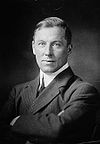


Misattributed Quotes
Quotes mistakenly credited to Vladimir Lenin
“By destroying the peasant economy and driving the peasant from the country to the town, the famine creates a proletariat... Furthermore the famine can and should be a progressive factor not only economically. It will force the peasant to reflect on the bases of the capitalist system, demolish faith in the tsar and tsarism, and consequently in due course make the victory of the revolution easier... Psychologically all this talk about feeding the starving and so on essentially reflects the usual sugary sentimentality of our intelligentsia.”
“Fascism is capitalism in decay.”
“First, we will take Eastern Europe, then the masses of Asia, then we will encircle the United States which will be the last bastion of capitalism. We will not have to attack. It will fall like an overripe fruit into our hands.”
“We will hang the capitalists with the rope that they sell us.”
“The way to crush the bourgeoisie is to grind them down between the millstones of taxation and inflation.”
“Socialized medicine is the keystone to the arch of the socialist state.”
About Vladimir Lenin
Vladimir Ilyich Lenin (Russian: Владимир Ильич Ленин), born Vladimir Ilyich Ulyanov (Russian: Влади́мир Ильи́ч Ульянов) (22 April 1870 (10 April (O.S.)) – 21 January 1924) was a Russian revolutionary, the leader of the Bolshevik communist party, the first Premier of the Soviet Union and the main theorist of Leninism. He married the revolutionary Nadezhda Krupskaya in 1898.