Link Copied!
V. Gordon Childe Quotes (1892-1957)
King

About V. Gordon Childe
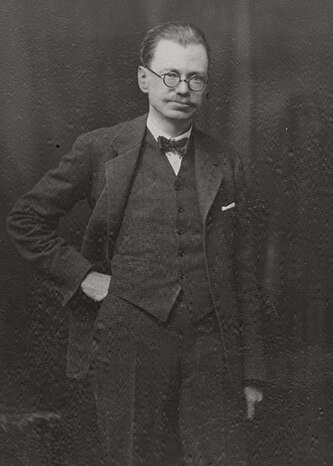
Vere Gordon Childe (14 April 1892 – 19 October 1957) was an Australian archaeologist who specialised in the study of European prehistory. He spent most of his life in the United Kingdom, working as an academic for the University of Edinburgh and then the Institute of Archaeology, London, and wrote twenty-six books during his career. Initially an early proponent of culture-historical archaeology, he later became the first exponent of Marxist archaeology in the Western world.
Best V. Gordon Childe Quotes
Shortest
Earliest
Explore our curated collection of the most famous and impactful V. Gordon Childe quotes.
“The simplest explanation of the presence of a Centum language in Central Asia would be to regard it as the last survivor of an original Asiatic Aryan stock. To identify a wandering of Aryans across Turkestan from Europe in a relatively late historical period is frankly difficult.”
“To whatever physical race or races they [the Aryans] belonged, they must have possessed a certain spiritual unity reflected in and conditioned by their community of speech. To their linguistic heirs, they bequeathed, if not skull types and bodily characteristics, at least something of this more subtle and more precious spiritual identity... [T]he Aryans must have been gifted with exceptional mental endowments, if not in enjoyment of a high material culture.”
“Aryan people first emerge from the gloom of prehistory on the northern borders of the Fertile Crescent of the Ancient East... So it is clear enough that the dynasts installed on the Upper Euphra tes by 1400 B.C. were Aryans, closely akin to those we meet in the Indus Valley and later in Media and Persia... (the first Aryans were racially Nordics and) the Nordic's superiority in physique fitted them to be vehicles of a superior language. (Childe 1926: 16,19,212)”
“No multiplication of weapons of war and battle‐scenes attests futile conflicts between city‐ states as in Babylonia nor yet the force whereby a single king, as in Egypt, achieved by conquest internal peace and warded off jealous nomads by constant preparedness … The visitor inevitably gets an impression of a democratic bourgeois economy, as in Crete, in contrast to the obviously centralized theocracies and monarchies hitherto described. (Childe, quoted in Wheeler, 1955: 191)”
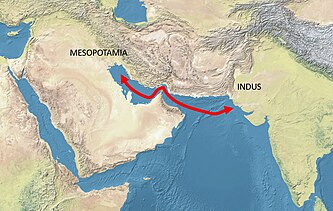
“By the end of the fourth millennium B.C. the material culture of Abydos, Ur, or Mohenjo-daro would stand comparison with that of Periclean Athens or of any medieval town. . . . Judging by the domestic architecture, the seal-cutting, and the grace of the pottery, the Indus civilization was ahead of the Babylonian at the beginning of the third millennium (ca. 3000 B.C.). But that was a late phase of the Indian culture; it may have enjoyed no less lead in earlier times. Were then the innovations and discoveries that characterize proto-Sumerian civilization not native developments on Babylonian soil, but the results of Indian inspiration? If so, had the Sumerians themselves come from the Indus, or at least from regions in its immediate sphere of influence?””

“(The Hittite language) cannot be accepted without qualification as Aryan. ... The deviations in the inflection are puzzlingly numerous. ... Again the number of Indo-European words and stems identified in the vocabulary is but small. Finally, the syntax remains essentially un- Aryan... Now if these documents dated from the 14th century AD, few would hesitate to declare that they were written in an Indo-European language and explain the discrepancies as due to the familiar phenomena of decay, assimilation of forms, and foreign borrowing. But the texts... are many centuries older than the oldest written memorials of Sanskrit or Greek. Yet their language diverges from the hypothetical original Aryan tongue far more than Greek or Sanskrit differs from the parent speech or from one another. It is a fact impossible to believe that a truly Indo-European language would look so odd in the 14th century before our era.”

“[l]anguage, albeit an abstraction, is yet a more subtle and pervasive criterion of individuality than the culture-group formed by comparing flints and potsherds or the “races” of the skull-measurer. . . . they [the Aryans] must have possessed a certain spiritual unity reflected in and conditioned by their community of speech. To their linguistic heirs they bequeathed, if not skull types and bodily characteristics, at least something of this more subtle and precious, spiritual identity. . . . The Indo-European languages and their presumed parent-speech have been throughout exceptionally delicate and flexible instruments of thought. They were almost unique, for instance, in possessing a substantive verb and at least a rudimentary machinery for building subordinate clauses that might express conceptual relations in a chain of ratiocination. It follows then that the Aryans must have been gifted with exceptional mental endowments, if not in enjoyment of a high material culture. (p. 4)”
“But as a whole they [Kassites] were not Aryans. Though they adopted the Babylonian language and culture, the local scribes have recorded the Kassite names for god, star, heaven, wind, man, foot, etc. ; not one of these is in the least Indo-European. Moreover, the majority of the personal names of the period ... suggest rather a kinship between the Kassites and the Asianic folk to the north-west. Yet in the names of their kings occur elements recalling Indo-Iranian deities — SuriaS (Sun-god cf . Sans. Surya) IndaS (cf. Sans. Indra)y MaruttaS (cf. Sans. Mantiah, storm-gods) and -bugaS (cf. Iran, baga, god). Moreover, these Kassites introduced the use of the horse for drawing chariots into the Ancient East and its later Babylonian name sitsu seems to be derived from the Indo- Iranian form ^asm (Sans. aim). It is then highly probable that the Kassite invasion was due to the pressure of Aryan tribes on the highlands of Iran, and that its leaders were actually Aryan princes.”

“How precisely did the Aryans achieve all this? It was not through the superiority of their material culture. We have rejected the idea that a particular genius resided in the conformation of Nordic skulls. We do so with all the more confidence that, by the time the Aryan genius found its true expression in Greece and Rome, the pure Nordic strain had been for the most part absorbed in the Mediterranean substratum: the lasting gift bequeathed by the Aryans to the conquered peoples was neither a higher material culture nor a superior physique, but that which we mentioned in the first chapter—a more excellent language and the mentality it generated. . . . At the same time the fact that the first Aryans were Nordics was not without importance. The physical qualities of that stock did enable them by the bare fact of superior strength to conquer even more advanced peoples and so to impose their language on areas from which their bodily type has almost completely vanished. This is the truth underlying the panegyrics of the Germanists: the Nordics’ superiority in physique fitted them to be vehicles of a superior language. (pp. 211–212)”
“Not only are they (the theories of racial anthropology] worthless; they are mischievous. They have induced their votaries to postulate all sorts of migrations, for which there are as yet not a particle of evidence. To but tress the Nordic s claim to be the ruling race p a r excellence, attempts have been made, and are still being made, to prove that the earliest dynasties of China, Sumer, and Egypt were established by invaders from Europe and even today the vision of certain prehistorians is absolutely distorted by this preconception. Such misdirected enthusiasm also injures science in another way. The apotheosis of the Nordics has been linked to the policies of imperialism and world domination: the word "Aryan” has become the watchword of dangerous factions and especially of the more brutal and blatant forms of anti-Semitism. Indeed the neglect and discredit into which the study of Indo-European philology has fallen in England are very largely attributable to a legitimate reaction against the extravagancies of Houston Stewart Chamberlain and his ilk, and the gravest objection to the word Aryan is its association with pogroms.(287)”

“These [Mitanni] numerals and divine and personal names are the oldest actual specimens of any Aryan speech which we possess. The forms deserve special attention. They are already quite distinctly Satem forms ; in fact, they are very nearly pure Indic. Certainly they are much more nearly akin to Sanskrit than to any of the Iranian dialects that later constituted the western wing of the Indo-Iranian family. Thus among the deities Nasatya is the Sanskrit form as opposed to the Zend Naonhaitya and all the four gods are prominent in the oldest Veda, while in the Iranian Avesta they have been degraded to secondary rank (Mithra), converted into demons (Indra) or renamed (Varuna =Ahura Mazda). The numerals are distinctively Indic not Iranian ; aika is identical with the Sanskrit eka while ' one ’ in Zend is aeva. So the s is preserved in Satta where it becomes h in Iranian (hapta) and the exact form is found, not indeed in Sanskrit, but in the Prakrits which were supposed to be post-Vedic. Even the personal names look Indic rather than Iranian. Thus Biridaswa has been plausibly compared with the Sanskrit Brhadasva (owning a great horse). If this be right the second element, asva, horse, is in contrast to the Iranian form aspa seen in Old Persian and Zend. ... Finally we know that there existed among the Mitanni at this time a class of warriors styled maryanni which has suggested comparison with the Sanskrit marya young men, heroes.”
V. Gordon Childe Quotes by Topic
Find exactly what you are looking for by browsing this categorized list of V. Gordon Childe quotes by topic.
V. Gordon Childe on Aryan race
“Aryan people first emerge from the gloom of prehistory on the northern borders of the Fertile Crescent of the Ancient East... (the first Aryans were racially Nordics and) the Nordic's superiority in physique fitted them to be vehicles of a superior language.”

V. Gordon Childe on Indus–Mesopotamia relations
“By the end of the fourth millennium B.C. the material culture of Abydos, Ur, or Mohenjo-daro would stand comparison with that of Periclean Athens or of any medieval town. . . . Judging by the domestic architecture, the seal-cutting, and the grace of the pottery, the Indus civilization was ahead of the Babylonian at the beginning of the third millennium (ca. 3000 B.C.). But that was a late phase of the Indian culture; it may have enjoyed no less lead in earlier times. Were then the innovations and discoveries that characterize proto-Sumerian civilization not native developments on Babylonian soil, but the results of Indian inspiration? If so, had the Sumerians themselves come from the Indus, or at least from regions in its immediate sphere of influence?””
Quotes About V. Gordon Childe
Gain deeper perspective through quotes about V. Gordon Childe from others.
Kenneth A. R. Kennedy on V. Gordon Childe
“The archaeologist who was most influential in this century on the question of Aryan origins was V. Gordon Childe, author o f The Aryans: a Study of Indo-European Origins, published in 1926. Childe was influenced by linguistic data in his effort to establish a homeland of the ancient people whose Indo-Euro pean languages formed a philological bond between his British countrymen and their colonial subjects in India. He was influenced, too, by the “Four Empires” concept which lent a mystical quality to the shift of civilisation from the Near East to northwestern Europe. Gustav Klemm's idea of creative and passive races appealed to Childe, the people of the Orient being characterised as stagnant and degenerate while Europeans were held to be superior in the qualities o f energy, inventiveness and independence. In his biography of Childe Bruce Trigger (1980) observes that national character rather than history and geography were held by Childe to be the causes o f these ethnic differences, prehistoric peoples being ascribed the same qualities as their living descendants. Thus racial identity could be discovered from a philological approach, and these data could be employed by the archaeologists to identify the races o f the people whose sites were excavated. Even while admitting that the early developments of agriculture, metallurgy and the sciences came from the speakers of the Semitic languages o f the N ear East, Childe held that when these inventions were adopted by Indo-European populations they were brought to their highest development and into the realm of true civilisation. The Indo-European speakers achieved this not because o f superior intelligence or culture, but because o f the higher qualities of their language which was the hallmark of a more competent mentality.”
About V. Gordon Childe
Vere Gordon Childe (14 April 1892 – 19 October 1957) was an Australian archaeologist who specialised in the study of European prehistory. He spent most of his life in the United Kingdom, working as an academic for the University of Edinburgh and then the Institute of Archaeology, London, and wrote twenty-six books during his career. Initially an early proponent of culture-historical archaeology, he later became the first exponent of Marxist archaeology in the Western world.