Link Copied!
Toni Morrison Quotes (1931-2019)
Novelist



About Toni Morrison
Chloe Anthony Wofford Morrison (born Chloe Ardelia Wofford February 18, 1931 – August 5, 2019), known as Toni Morrison, was an American novelist, essayist, book editor, and college professor, who received a Pulitzer Prize in 1988 and the Nobel Prize in Literature in 1993.
Best Toni Morrison Quotes
Shortest
Earliest
Explore our curated collection of the most famous and impactful Toni Morrison quotes.


“What's fair ain't necessarily true.”

“Unless carefree, motherlove was a killer.”
“Which was what love was: unmotivated respect.”

“Nothing like other folks' sin for distraction.”

“If you surrendered to the air, you could ride it.”

“white skin notwithstanding, this is our first black President”



“The screams of a hurt woman were indistinguishable from everyday traffic.”


“It is sprinkling now. A teasing August rain that raises expectations it cannot fill.”

“Everywhere, everywhere, children are the scorned people of the earth.”

“What difference do it make if the thing you scared of is real or not?”

Toni Morrison Quotes by Topic
Find exactly what you are looking for by browsing this categorized list of Toni Morrison quotes by topic.
Toni Morrison on Racism in the United States
Toni Morrison on Places
“To get to a place where you could love anything you chose—not to need permission for desire—well now, that was freedom.”
Toni Morrison on Peafowl
Toni Morrison on Vanity
Toni Morrison on Art
“For me, Art is the restoration of order. It may discuss all sort of terrible things, but there must be satisfaction at the end. A little bit of hunger, but also satisfaction.”

Toni Morrison on Deference
“Refusing to monumentalize, disdaining the final word, precise "summing up", acknowledging their "poor power to add or detract", his words signal deference to the uncapturability of the life it mourns.”
Toni Morrison on Meaning of life
“Word-work is sublime... because it is generative; it makes meaning that secures our difference, our human difference — the way in which we are like no other life. We die. That may be the meaning of life. But we do language. That may be the measure of our lives.”

What Toni Morrison Said About Others
Discover personal opinions Toni Morrison shared regarding contemporaries.
Toni Morrison on Leslie Marmon Silko
Toni Morrison on Ntozake Shange
“I have spent my life undoing language until it works for me. We must not only repossess the language, we must deslaveryize it.”

Toni Morrison on Kendrick Lamar
“Kendrick Lamar understands and employs blues, jazz, and soul in his music, which makes it startling. His work is more than merely brilliant; it is magic.”

Toni Morrison on James Baldwin
“I am completely indebted to Jimmy Baldwin's prose. It liberated me as a writer. These poems overwhelm without competing with his prose, and I am grateful to have this collection.”
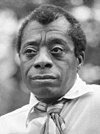
Toni Morrison on William Faulkner
“Faulkner wrote what I suppose could be called regional literature and had it published all over the world. It is good-and universal-because it is specifically about a particular world. That's what I wish to do.”

Toni Morrison on June Jordan
“In political journalism that cuts like razors, in essays that blast the darkness of confusion with relentless light; in poetry that looks as closely into lilac buds as into death’s mouth … she has comforted, explained, described, wrestled with, taught and made us laugh out loud before we wept. … I am talking about a span of forty years of tireless activism coupled with and fueled by flawless art.”
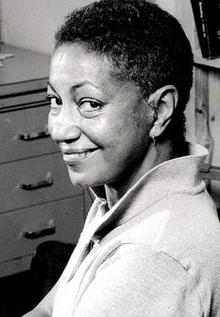
Toni Morrison on Toni Cade Bambara
“I don't know if she knew the heart cling of her fiction. Its pedagogy, its use, she knew very well, but I have often wondered if she knew how brilliant at it she was. There was no division in her mind between optimism and ruthless vigilance; between aesthetic obligation and the aesthetics of obligation. There was no doubt whatsoever that the work she did had work to do. She always knew what her work was for. Any hint that art was over there and politics was over here would break her up into tears of laughter, or elicit a look so withering it made silence the only intelligent response. More often she met the art/politics fake debate with a slight wave-away of the fingers on her beautiful hand, like the dismissal of a mindless, desperate fly who had maybe two little hours of life left...Of course she knew...Perhaps my wondering whether or not she realized how original, how rare her writing is is prompted by the fact that I knew it was not her only love. She had another one. Stronger. As the Essays and Conversations portion of this collection testifies, (especially after the completion of her magnum opus about the child murders in Atlanta) she came to prefer film: writing scripts, making film, critiquing, teaching, analyzing it and enabling others to do the same. The Bombing of Osage Avenue and W. E. B. Du Bois: A Biography in Four Voices contain sterling examples of her uncompromising gifts and her determination to help rescue a genre from its powerful social irrelevancy. In fiction, in essays, in conversation one hears the purposeful quiet of this ever vocal woman; feels the tenderness in this tough Harlem/Brooklyn girl; joins the playfulness of this profoundly serious writer. When turns of events wearied the gallant and depleted the strong, Toni Cade Bambara, her prodigious talent firmly in hand, stayed the distance.”

Quotes About Toni Morrison
Gain deeper perspective through quotes about Toni Morrison from others.

Dorothy Allison interview quoted on Toni Morrison
Michelle Cliff on Toni Morrison
“(How, or in what ways, has Morrison influenced you writing?) Cliff: Enormously. I don't think I could have written this novel if she hadn't written Beloved. Her imagining of that period, of slavery and its aftermath, opened up my imagination with regard to the rewriting of history, revising the history we've all been taught. And there are touches in my novel that would have been impossible without Morrison's having taken on the whole idea of bondage and resistance.”
Tsitsi Dangarembga on Toni Morrison
“It wasn't African literature that I came to first. It was the Afro-American women writers, I found them very helpful. (Such as, for example?) Toni Morrison, who is really incredible.”

Edwidge Danticat quoted on Toni Morrison
“Your work, my goodness, the work is sublime. And we do not just read it, we experience it. You gave us both lullabies and battle cries. You turned pain into flesh, and you brought spirits to life. You urged us to be dangerously free.You led this foreigner to a different type of home.”
Edwidge Danticat chapter on Toni Morrison
“The immigrant artist, to borrow from Toni Morrison's Nobel lecture knows what it is "to live at the edge of towns that cannot bear" our company, hamlets that need our labor but want our children banned from their schools, villages that want our sick shut out from their hospitals, big cities that want our elderly, after a lifetime of impossible labor, to pack up and go off somewhere else to die.”
Angela Davis quoted on Toni Morrison
“So many of us feel that we have found ourselves through, because of and in relation to Toni and her work...I was in my late twenties when we met. And although she was in her early forties, she was not yet Toni Morrison, the internationally acclaimed writer. But she was on a mission to open the U.S. publishing industry to black writers and activists. “I wanted to give back something,” she later said to Hilton Als. “I wasn’t marching. I didn’t go to anything. I didn’t join anything. But I could make sure there was a published record of those who did march and did put themselves on the line”...I learned so much from Toni: the evocative element of perception and language, the expansiveness of the political beyond traditional realms of power, the importance of identifying and attempting to contest the white gaze, the male gaze. But what I value most among all of her many gifts is how she demonstrated a way of being in the world that allowed her simultaneously to inhabit multiple dimensions. She was always here and there at the same time, totally present with you, but also, at the same time, creating new universes.”
Jaquira Díaz on Toni Morrison

Ellen DuBois on Toni Morrison
“A further measure of the importance of the feminism of women of color was the tremendous efflorescence in their fiction. The writings of Toni Morrison, Sandra Cisneros, Amy Tan, and Louise Erdrich, among others, played a major role in bringing the feminist message and perspective to the masses of American women.”
Buchi Emecheta In Interviews with Writers of the Post-Colonial World edited by Feroza Jussawalla on Toni Morrison
“To me, the great writers who come from ethnic minorities writing in English come from America. I think the deep, the real deep thinkers now writing in the English language are the black women, such as Toni Morrison, Gloria Naylor, Alice Walker, etc. (F.J.: Where they are using black English in a certain kind of way to signify their difference?) Emecheta: Exactly.”
Roxane Gay interview quoted on Toni Morrison
“My ambition, that toward which I aspire to write, has long been guided by Toni Morrison, Beloved, and through her words, seeing how a novel can be mysterious and true, mythical and raw, how a novel can honor memory even when we want to look away or forget.”
Kaitlyn Greenidge on Toni Morrison
“As I was writing the first draft (of Libertie), I was also teaching the Toni Morrison novel Love. I was reading a lot of her interviews around the time that book came out, and she did this really wonderful interview with Charlie Rose. He asks her about her characters being happy and she says something like, “They know something about themselves that they didn’t know before. And so in that way, they have won.” And she said, “Winning isn’t like your character gets a fancy car at the end or a big job, or gets the girl or anything like that. Winning is, they didn’t know something about themselves before and now they understand something about themselves fundamentally at the end of the narrative. And in that way, they have ‘won.’” And then she says, sort of very playfully, as she does in her interviews, she says, “I only write about winners.” So I think about that a lot when I’m writing and thinking about what sort of choices the characters make and why you may follow a character through a story and what that might look like when you’re writing.”

About Toni Morrison
Chloe Anthony Wofford Morrison (born Chloe Ardelia Wofford February 18, 1931 – August 5, 2019), known as Toni Morrison, was an American novelist, essayist, book editor, and college professor, who received a Pulitzer Prize in 1988 and the Nobel Prize in Literature in 1993.