Link Copied!
Timothy Leary Quotes (1920-1996)
Writer
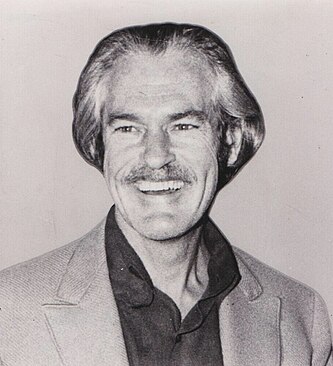







About Timothy Leary
Timothy Francis Leary (22 October 1920 – 31 May 1996) was an American writer, psychologist, campaigner for psychedelic drug research and use, 1960s counterculture icon and computer software designer. He is most famous as a proponent of the therapeutic and spiritual benefits of LSD. During the 1960s, he coined and popularized the catch phrase "Turn on, tune in, drop out."
Best Timothy Leary Quotes
Shortest
Earliest
Explore our curated collection of the most famous and impactful Timothy Leary quotes.
“The universe is an intelligence test”



“Civilization is unbearable, but it is less unbearable at the top.”

“I've left specific instructions that I do not want to be brought back during a Republican administration.”

“The only abuse of drugs is the control of drugs by other people. ...The only control is self-control.”

“I have always considered myself, when I learned what the word meant, I've always considered myself a Pagan.”

“'''Giger’s work disturbs us, spooks us, because of its enormous evolutionary time span. It shows us, all too clearly, where we come from and where we are going.”
“In the information age, you don't teach philosophy as they did after feudalism. You perform it. If Aristotle were alive today he'd have a talk show.”
“I declare that The Beatles are mutants. Prototypes of evolutionary agents sent by God, endowed with a mysterious power to create a new human species, a young race of laughing freemen.”
“I am 100 percent in favor of the intelligent use of drugs, and 1,000 percent against the thoughtless use of them, whether caffeine or LSD. And drugs are not central to my life.”

“What I feel or believe or experience is my business, and what I do is all our businesses; and reward or punish me according to whether I play the game well — ethically and rightly — or unethically.”

“At one point consciousness-altering devices like the microscope and telescope were criminalized for exactly the same reasons that psychedelic plants were banned in later years. They allow us to peer into bits and zones of Chaos.”
“Each religion has got their own way of making you feel like a victim. The Christians say "you are a sinner", and you better just zip up your trousers and give the money to the pope and we'll give you a room up in the hotel in the sky.”

“We saw ourselves as anthropologists from the twenty-first century inhabiting a time module set somewhere in the dark ages of the 1960s. On this space colony we were attempting to create a new paganism and a new dedication to life as art.”
“People use the word "natural" … What is natural to me is these botanical species which interact directly with the nervous system. What I consider artificial is four years at Harvard, and the Bible, and Saint Patrick's cathedral, and the sunday school teachings.”
“Actions which are conscious expressions of the turn-on, tune-in, drop-out rhythm are religious.
The wise person devotes his life exclusively to the religious search — for therein is found the only ecstasy, the only meaning.
Anything else is a competitive quarrel over (or Hollywood-love sharing of) studio props.”
The wise person devotes his life exclusively to the religious search — for therein is found the only ecstasy, the only meaning.
Anything else is a competitive quarrel over (or Hollywood-love sharing of) studio props.”
“We are dealing with the best-educated generation in history. They are a hundred times better educated than their grandparents, and ten times more sophisticated. There has never been such an open-minded group. The problem is that no one is giving them anything fresh. They've got a brain dressed up with nowhere to go.”

“Monotheism is the primitive religion which centers human consciousness on Hive Authority. There is One God and His Name is _______ (substitute Hive-Label). If there is only One God then there is no choice, no option, no selection of reality. There is only Submission or Heresy. The word Islam means "submission". The basic posture of Christianity is kneeling. Thy will be done.”
“If you are serious about your religion, if you really wish to commit yourself to the spiritual quest, you must learn how to use psychochemicals. Drugs are the religion of the twenty-first century. Pursuing the religious life today without using psychedelic drugs is like studying astronomy with the naked eye because that's how they did it in the first century A.D., and besides telescopes are unnatural.”
“That intermediate manifestation of the divine process which we call the DNA code has spent the last 2 billion years making this planet a Garden of Eden. An intricate web has been woven, a delicate fabric of chemical-electrical-seed-tissue=organism=species. A dancing, joyous harmony of energy transactions is rooted in the 12 inches of topsoil which covers the rock
metal
fire
core of this planet.”
metal
fire
core of this planet.”

“John asked what he could do to help my campaign for governor.
"Write a campaign song," I replied.
"Okay," said John, "what's the theme?"
"Our campaign slogan is ''''Come together''', join the party.'"
"Great title," said John. He grabbed his guitar and started improvising.
Come together right now.
Don't come tomorrow, don't come alone,
Come together right now,
Over me.”
“We always have urged people: Don't take LSD unless you are very well prepared, unless you are specifically prepared to go out of your mind. Don't take it unless you have someone that's very experienced with you to guide you through it. And don't take it unless you are ready to have your perspective on yourself and your life radically changed, because you're gonna be a different person, and you should be ready to face this possibility.”
“My advice to myself and to everyone else, particularly young people, is to turn on, tune in and drop out. By drop out, I mean to detach yourself from involvement in secular, external social games. But the dropping out has to occur internally before it can occur externally. I'm not telling kids just to quit school; I'm not telling people to quit their jobs. That is an inevitable development of the process of turning on and tuning in.”
“He's basically a romantic comedian. …. He was a government agent entering our bedroom at midnight. We had every right to shoot him. But I've never owned a weapon in my life, and I have no intention of owning a weapon, although I was a master sharpshooter at West Point on both the Garand, the Springfield rifle and the machine-gun. I was a howitzer expert. I know how to operate these lethal gadgets but I have never had and never will have a gun around.”
“There's one uneasy borderline between what is external and what is internal, and this borderline is defined exactly by the sense organs and the skin and the introduction of external things within my own body. Consciousness is altered by physical events and physical objects, which impinge upon my sense organs, or which I introduce into my body.
Now the name traditionally given to external objects or processes which change you internally is sacrament. Sacraments are the visible and tangible techniques for bringing you close to your own divinity.”
Now the name traditionally given to external objects or processes which change you internally is sacrament. Sacraments are the visible and tangible techniques for bringing you close to your own divinity.”
“Individual societies begin in harmonious adaptation to the environment and, like individuals, quickly get trapped into nonadaptive, artificial, repetitive sequences.
When the individual's behavior and consciousness get hooked to a routine sequence of external actions, he is a dead robot, and it is time for him to die and be reborn. Time to "drop out," "turn on," and "tune in." This period of robotization is called the Kali Yuga, the Age of Strife and Empire...”
When the individual's behavior and consciousness get hooked to a routine sequence of external actions, he is a dead robot, and it is time for him to die and be reborn. Time to "drop out," "turn on," and "tune in." This period of robotization is called the Kali Yuga, the Age of Strife and Empire...”

“Throughout human history, as our species has faced the frightening, terrorizing fact that we do not know who we are, or where we are going in this ocean of chaos, it has been the authorities — the political, the religious, the educational authorities — who attempted to comfort us by giving us order, rules, regulations, informing — forming in our minds — their view of reality. To think for yourself you must question authority and learn how to put yourself in a state of vulnerable open-mindedness, chaotic, confused vulnerability to inform yourself.”
“While sitting in my prison cell, I was astonished to hear the local rock station play a new song by the Beatles entitled "Come Together." Although the new version was certainly a musical and lyrical improvement on my campaign song, I was a bit miffed that Lennon had passed me over this way. (I must explain that even the most good-natured persons tend to be a bit touchy about social neglect while in prison). When I sent a mild protest to John, he replied with typical Lennon charm and wit: that he was a tailor and I was a customer who had ordered a suit and never returned. So he sold it to someone else.”
“To describe externals, you become a scientist. To describe experience, you become an artist. The old distinction between artists and scientists must vanish. Every time we teach a child correct usage of an external symbol, we must spend as much time teaching him how to fission and reassemble external grammar to communicate the internal. The training of artists and creative performers can be a straightforward, almost mechanical process. When you teach someone how to perform creatively (ie, associate dead symbols in new combinations), you expand his potential for experiencing more widely and richly.”
“"Turn on" meant go within to activate your neural and genetic equipment. Become sensitive to the many and various levels of consciousness and the specific triggers that engage them. Drugs were one way to accomplish this end. "Tune in" meant interact harmoniously with the world around you — externalize, materialize, express your new internal perspectives. Drop out suggested an elective, selective, graceful process of detachment from involuntary or unconscious commitments. "Drop Out" meant self-reliance, a discovery of one's singularity, a commitment to mobility, choice, and change. Unhappily my explanations of this sequence of personal development were often misinterpreted to mean "Get stoned and abandon all constructive activity."”
“A psychedelic experience is a journey to new realms of consciousness. The scope and content of the experience is limitless, but its characteristic features are the transcendence of verbal concepts, of space-time dimensions, and of the ego or identity. Such experiences of enlarged consciousness can occur in a variety of ways: sensory deprivation, yoga exercises, disciplined meditation, religious or aesthetic ecstasies, or spontaneously. Most recently they have become available to anyone through the ingestion of psychedelic drugs such as LSD, psilocybin, mescaline, DMT, etc. Of course, the drug does not produce the transcendent experience. It merely acts as a chemical key — it opens the mind, frees the nervous system of its ordinary patterns and structures.”
“The Tibetan Book of the Dead is ostensibly a book describing the experiences to be expected at the moment of death, during an intermediate phase lasting forty-nine (seven times seven) days, and during rebirth into another bodily frame. This however is merely the exoteric framework which the Tibetan Buddhists used to cloak their mystical teachings. … The esoteric meaning, as it has been interpreted in this manual, is that it is death and rebirth of the ego that is described, not of the body. Lama Govinda indicates this clearly in his introduction when he writes: "It is a book for the living as well as the dying." The book's esoteric meaning is often concealed beneath many layers of symbolism. It was not intended for general reading. It was designed to be understood only by one who was to be initiated personally by a guru into the Buddhist mystical doctrines, into the pre-mortem-death-rebirth experience. These doctrines have been kept a closely guarded secret for many centuries, for fear that naive or careless application would do harm.”
Timothy Leary Quotes by Topic
Find exactly what you are looking for by browsing this categorized list of Timothy Leary quotes by topic.
Timothy Leary on Tool (band) 2 quotes
“Think for yourself. Question authority.”

Timothy Leary on Paganism 2 quotes
“I have always considered myself, when I learned what the word meant, I've always considered myself a Pagan.”
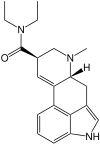
Timothy Leary on LSD 2 quotes
“I am 100 percent in favor of the intelligent use of drugs, and 1,000 percent against the thoughtless use of them, whether caffeine or LSD. And drugs are not central to my life.”
Timothy Leary on Feminism
Timothy Leary on Self-control
“The only abuse of drugs is the control of drugs by other people. ...The only control is self-control.”

What Timothy Leary Said About Others
Discover personal opinions Timothy Leary shared regarding contemporaries.
Timothy Leary on G. Gordon Liddy
“He's basically a romantic comedian. …. He was a government agent entering our bedroom at midnight. We had every right to shoot him. But I've never owned a weapon in my life, and I have no intention of owning a weapon, although I was a master sharpshooter at West Point on both the Garand, the Springfield rifle and the machine-gun.”

Timothy Leary on Alan Watts
“Our kitchen became a busy intersection of philosophic and scientific traffic. Alan Watts and Jano, his wife, lived in Cambridge that fall and came by evenings. The wizard held court, drinking heavily, spinning out tales about fabled consciousness expanders of the past. Here was the oral tradition of education in action. Alan told stories about the great mystics of history …. [He] didn't talk much about Hindu gurus and swamis. He felt they were humorless, authoritarian. … He gave us a model of the gentleman-philosopher who belonged to no bureaucracy or academic institution. He had published more influential books than any orientalist of our time. Although he could teach rings around any tenured professor, he had avoided faculty status, remaining a wandering independent sage, supporting himself with the immediate fruits of his plentiful brain. He was a full-time all-out philosopher in his words and in his actions. Watts taught us to divide mystics into two groups—the lugubrious and the witty. Ever since then I have remained unenthusiastic about pious teachers who set up schools, hierarchies, and special rituals that mimic organized religions.”

Quotes About Timothy Leary
Gain deeper perspective through quotes about Timothy Leary from others.
Joyce Antler on Timothy Leary
“Negative stereotypes about Jewish women permeated the Left and counterculture, making it even harder for radical women to identify as Jews. Naomi Weisstein recalled an incident when, while a doctoral student in Harvard's graduate psychology program, gurus Timothy Leary and Richard Alpert handed out magic mushrooms. Many students became delusional; Weisstein had a paranoid nightmare and hallucinated for a month. "We knew you would," Leary commented. "You're an uptight Jewish female who can't let herself go." Weisstein called them "sleazeballs."”
Ken Kesey on Timothy Leary
“Leary can get a part of my mind that's kind of rusted shut grinding again, just by being around him and talking, 'cause that's where he works. He knows that area of the mind and the brain, and he knows the difference between the two areas. He's a real master at getting your old wheel squeaking again. … When we first broke into that forbidden box in the other dimension, we knew that we had discovered something as surprising and powerful as the New World when Columbus came stumbling onto it. It is still largely unexplored and uncharted. People like Leary have done the best they can to chart it sort of underground, but the government and the powers do not want this world charted, because it threatens established powers. It always has.”

Don Lattin on Timothy Leary
“Leary was different things to different people. He was reviled. He was revered. He was a prophet. He was a phony. He was a brilliant, innovative thinker. He was a fool. He captured the irreverent, rebellious spirit of the sixties. He was a fame-seeking, manipulative con artist. Who was he? Perhaps The Trickster said it best when he quipped, “You get the Timothy Leary you deserve.””
Winona Ryder on Timothy Leary
“He really understood my generation. He called us "free agents in the Age of Information." What I learned from Tim didn't have anything to do with drugs, but it had everything to do with getting high. His die-hard fascination with the human brain was not all about altering it, but about using it to its fullest. And he showed us that that process-that journey-was our most important one. However we did it, as long as we did it. "You are the owner and operator of your brain," he reminded us. Tim was a huge influence on me-not just with his revolutionary ideas about human potential, but as someone who read me stories, encouraged me, took me to baseball games-you know, godfather stuff. He was the first person outside my family-who you never tend to believe while growing up-to make me believe I could do anything. He had an incredible way of making you feel special and completely supported. F. Scott Fitzgerald wrote a letter to his daughter in which he said that he hoped his life had achieved some sort of "epic grandeur." Tim's life wasn't "some sort of" epic grandeur. It was flat-out epic grandeur. It's easy sometimes to get lost in all the drug stuff that Tim's famous for all the "Turn on, tune in, drop out" stuff, especially in a society that loves a sound bite. But it wasn't Tim's only legacy. It was his vitality, enthusiasm, curiosity, humor, and humanity that made Tim great and those are the real ingredients of a mad scientist.”

Misattributed Quotes
Quotes mistakenly credited to Timothy Leary
“But they all do sort of the same thing, and that is rearrange what you thought was real, and they remind you of the beauty of pretty simple things. You forget, because you're so busy going from A to Z, that there's 24 letters in between...
You turn on... tune in... and you drop out...”
You turn on... tune in... and you drop out...”
“LSD is a psychedelic drug which occasionally causes psychotic behavior in people who have NOT taken it.”
About Timothy Leary
Timothy Francis Leary (22 October 1920 – 31 May 1996) was an American writer, psychologist, campaigner for psychedelic drug research and use, 1960s counterculture icon and computer software designer. He is most famous as a proponent of the therapeutic and spiritual benefits of LSD. During the 1960s, he coined and popularized the catch phrase "Turn on, tune in, drop out."