Link Copied!
Thomas Gray Quotes (1716-1771)
Poet





















































About Thomas Gray
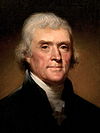
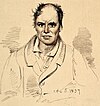
Thomas Gray (December 26, 1716 – July 30, 1771) was an English poet, classical scholar, and professor of history at Cambridge University.
Best Thomas Gray Quotes
Shortest
Earliest
Explore our curated collection of the most famous and impactful Thomas Gray quotes.

“Glance their many-twinkling feet.”

“Grim-visaged comfortless Despair.”
“The social smile, the sympathetic tear.”
“While bright-eyed Science watches round.”

“The breezy call of incense-breathing morn.”
“Or ope the sacred source of sympathetic tears.”
“To high-born Hoel's harp, or soft Llewellyn's lay.”
“From Helicon's harmonious springs
A thousand rills their mazy progress take.”
A thousand rills their mazy progress take.”
“Far from the sun and summer-gale,
In thy green lap was Nature's Darling laid.”
In thy green lap was Nature's Darling laid.”
“Each in his narrow cell forever laid,
The rude Forefathers of the hamlet sleep.”
The rude Forefathers of the hamlet sleep.”
Thomas Gray Quotes by Topic
Find exactly what you are looking for by browsing this categorized list of Thomas Gray quotes by topic.
Thomas Gray on Tears 3 quotes
View all 3 quotes on Tears →Thomas Gray on Bliss 2 quotes
View all 2 quotes on Bliss →Thomas Gray on Friendship 2 quotes
View all 2 quotes on Friendship →Thomas Gray on Philanthropy 2 quotes
View all 2 quotes on Philanthropy →Thomas Gray on Fire 2 quotes
View all 2 quotes on Fire →Thomas Gray on Love 2 quotes
“Dear as the light that visits these sad eyes, Dear as the ruddy drops that warm my heart.”

Thomas Gray on Poetry about love 2 quotes
“Dear as the light that visits these sad eyes, Dear as the ruddy drops that warm my heart.”
Thomas Gray on Youth 2 quotes
“The insect-youth are on the wing, Eager to taste the honied spring, And float amid the liquid noon!”

Thomas Gray on Grave (burial) 2 quotes
“The boast of heraldry, the pomp of power, And all that beauty, all that wealth e'er gave, Await alike th' inevitable hour, The paths of glory lead but to the grave.”

Thomas Gray on Death 2 quotes
“Can storied urn or animated bust Back to its mansion call the fleeting breath? Can honour's voice provoke the silent dust, Or flattery soothe the dull cold ear of death?”

Thomas Gray on Ageing
“Slow-consuming age.”

What Thomas Gray Said About Others
Discover personal opinions Thomas Gray shared regarding contemporaries.
Thomas Gray on Edward the Black Prince
Thomas Gray on Women
Thomas Gray on William Shakespeare
“Far from the sun and summer-gale, In thy green lap was Nature's Darling laid.”

Thomas Gray on Caradoc
“Have ye seen the tusky boar, Or the bull, with sullen roar, On surrounding foes advance? So Caradoc bore his lance.”

Thomas Gray on Wars of the Roses
“Above, below, the rose of snow, Twined with her blushing foe, we spread: The bristled boar in infant-gore Wallows beneath the thorny shade.”

Thomas Gray on Taliesin
“Hear from the grave, great Taliessin, hear; They breathe a soul to animate thy clay. Bright Rapture calls, and soaring, as she sings, Waves in the eye of Heav'n her many-colour'd wings.”
Thomas Gray on Richard II of England
“Fair laughs the morn, and soft the zephyr blows, While proudly riding o’er the azure realm In gallant trim the gilded vessel goes; Youth on the prow, and Pleasure at the helm; Regardless of the sweeping whirlwind’s sway, That, hush’d in grim repose, expects his evening prey.”

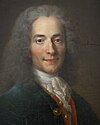
Thomas Gray on Voltaire
“As he sup'd one night with Mr. Pope at Twickenham he fell into a fit of swearing and blasphemy about his constitution. Old Mrs Pope ask'd him how his constitution came to be so bad at his age: "Oh (says he) those d—d Jesuits, when I was a boy, b—gg—r'd me to such a degree that I shall never get over it as long as I live". ... This was said in English aloud before the servants.”
Thomas Gray on John Lydgate
“In images of horror, and in a certain terrible greatness, our author comes far behind Chaucer. Whether they were not suited to the genius or the temper of Lydgate, I do not determine; but it is certain that, though they naturally seemed to present themselves, he has almost generally chose to avoid them: yet is there frequently a stiller kind of majesty both in his thought and expression, which makes one of his principal beauties.”

Quotes About Thomas Gray
Gain deeper perspective through quotes about Thomas Gray from others.
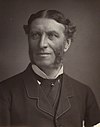
Matthew Arnold on Thomas Gray 3 quotes
“Gray, a born poet, fell upon an age of prose. He fell upon an age whose task was such as to call forth in general men's powers of understanding, wit and cleverness, rather than their deepest powers of mind and soul.”
James Beattie on Thomas Gray
“Of all the English poets of this age, Mr Gray is most admired, and, I think, with justice; yet there are, comparatively speaking, but a few who know any thing of his, but his "Churchyard Elegy," which is by no means the best of his works.”

William Cowper on Thomas Gray
“I have been reading Gray's Works, and think him the only poet since Shakespeare entitled to the character of sublime... I once thought Swift's letters the best that could be written; but I like Gray's better. His humour, or his wit, or whatever it is to be called, is never ill-natured or offensive, and yet, I think equally poignant with the Dean's.”

Facetiae Cantabrigienses: Consisting of Anecdotes, Smart Sayings, Satirics, Retorts, &c, &c, by or Relating to Celebrated Cantabs on Thomas Gray
“[The editor of Facetiae Cantabrigienses, Richard Gooch writes:] Those who remember Mr. Gray when at the University of Cambridge, where he resided the greater part of his life, will recollect that he was a little prim fastidous man, distinguished by a short shuffling step. He commonly held up his gown behind with one of his hands, at the same time cocking up his chin, and perking up his nose. Christopher Smart, who was contemporary with him at Pembroke Hall, used to say that Gray walked "as if he had fouled his small-clothes, and looked as if he smelt it."”
Samuel Johnson on Thomas Gray 2 quotes
“Gray thought his language more poetical as it was more remote from common use.”
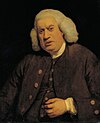
James Mackintosh on Thomas Gray 2 quotes
“Of all English poets he was the most finished artist. He attained the highest degree of splendour of which poetical style seems to be capable, if Virgil and his scholar Racine may be allowed to have united somewhat more ease with their elegance, no other poet approaches Gray in this kind of excellence. The degree of poetical invention diffused over such a style, the balance of taste and of fancy necessary to produce it, and the art with which an offensive boldness of imagery is polished away, are not indeed always perceptible to the common reader, nor do they convey to any mind the same species of gratification which is felt from the perusal of those poems which seem to be the unpremeditated effusions of enthusiasm; but to the eye of the critic, and more especially to the artist, they afford a new kind of pleasure, not incompatible with a distinct perception of the art employed, and somewhat similar to the grand emotions excited by the reflection on the skill and toil exerted in the construction of a magnificent palace. They can only be classed among the secondary pleasures of poetry, but they never can exist without a great degree of its higher excellencies.”

Norton Nicholls on Thomas Gray
“Spenser was among his favourite poets; and he told me he never sat down to compose poetry without reading Spenser for a considerable time previously.”
Adam Smith on Thomas Gray
“Gray (who joins to the sublimity of Milton the elegance and harmony of Pope, and to whom nothing is wanting to render him, perhaps, the first poet in the English language, but to have written a little more), is said to have been so much hurt by a foolish and impertinent parody of two of his finest odes, that he never afterwards attempted any considerable work. Those men of letters who value themselves upon what is called fine writing in prose, approach somewhat to the sensibility of poets.”
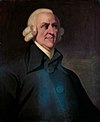
John Vaughan on Thomas Gray
“After the manner of Gilbert White, who, unknown to the poet, was making similar observations at Selborne, Gray kept a calendar in which he noted the opening of flowers and the arrival of birds.”
William Wordsworth on Thomas Gray
“Gray, who was at the head of those who by their reasonings have attempted to widen the space of separation betwixt Prose and Metrical composition, and was more than any other man curiously elaborate in the structure of his own poetic diction.”

About Thomas Gray
Thomas Gray (December 26, 1716 – July 30, 1771) was an English poet, classical scholar, and professor of history at Cambridge University.