Link Copied!
Steve Jobs Quotes (1955-2011)
Director















About Steve Jobs
Steven Paul Jobs (24 February 1955 – 5 October 2011) was the Chairman and CEO of Apple Inc., a company he founded with Steve Wozniak in 1976. He was also the CEO of Pixar Animation Studios until it was acquired by the Walt Disney Company in 2006. Jobs was the Walt Disney Company's largest individual shareholder and a former member of its Board of Directors. He is considered to have been a leading figure in both the computer and entertainment industries.
Best Steve Jobs Quotes
Shortest
Earliest
Explore our curated collection of the most famous and impactful Steve Jobs quotes.

“They are shamelessly copying us.”
- Steve Jobs, 2000s)




“The HD revolution is over, it happened. HD won. Everybody wants HD.”
- Steve Jobs, 2010s)


“They're babes in the woods. I think I can help turn Alvy and Ed into businessmen.”
- Steve Jobs, 1980s)
“I've always wanted to own and control the primary technology in everything we do.”
- Steve Jobs, 2000s)

“I would trade all of my technology for an afternoon with Socrates.”
- Steve Jobs, 2000s)

“Unfortunately, people are not rebelling against Microsoft. They don’t know any better.”
- Steve Jobs, 1990s, Rolling Stone interview

“Last quarter alone we hosted 17 million visitors throughout our stores.”
- Steve Jobs, 2000s, WWDC 2006
“It's rare that you see an artist in his 30s or 40s able to really contribute something amazing.”
- Steve Jobs, 1980s, Playboy interview
Referencing his nominal $1 salary, Steve Jobs wryly highlighted the performance-based aspect of his compensation at Apple's 2007 shareholder meeting.
“I make 50 cents for showing up … and the other 50 cents is based on my performance.”
- Steve Jobs, 2000s)

“I think Pixar has the opportunity to be the next Disney — not replace Disney — but be the next Disney.”
- Steve Jobs, 1990s)
“"You‘ve got to start with the customer experience and work backwards to the technology."”
- Steve Jobs, 1990s)

“The cure for Apple is not cost-cutting. The cure for Apple is to innovate its way out of its current predicament.”
- Steve Jobs, 2000s)

“Pixar is the most technically advanced creative company; Apple is the most creatively advanced technical company.”
- Steve Jobs, 2000s)

“It will go down in history as a turning point for the music industry. This is landmark stuff. I can't overestimate it!”
- Steve Jobs, 2000s)

“My opinion is that the only two computer companies that are software-driven are Apple and NeXT, and I wonder about Apple.”
- Steve Jobs, 1990s)
“I get asked a lot why Apple's customers are so loyal. It's not because they belong to the Church of Mac! That's ridiculous.”
- Steve Jobs, 2000s)

Framed as a pivotal career challenge, Steve Jobs's line about "sugared water" convinced John Sculley to leave Pepsi and lead Apple, signifying a shift towards revolutionary innovation.
“Do you want to spend the rest of your life selling sugared water or do you want a chance to change the world?”
- Steve Jobs, 1980s)
“Our friends up north spend over five billion dollars on research and development and all they seem to do is copy Google and Apple.”
- Steve Jobs, 2000s)

“Sometimes when you innovate, you make mistakes. It is best to admit them quickly, and get on with improving your other innovations.”
- Steve Jobs, 1980s)
“I'm the only person I know that's lost a quarter of a billion dollars in one year.... It's very character-building.”
- Steve Jobs, 2000s)
“If you have a chance to go to New York I really encourage to go visit the store. This is one of the fifty-seven we now have.”
- Steve Jobs, 2000s, WWDC 2006
“We think basically you watch television to turn your brain off, and you work on your computer when you want to turn your brain on.”
- Steve Jobs, 2000s)

“By the way, what have you done that's so great? Do you create anything, or just criticize others work and belittle their motivations?”
- Steve Jobs, 2010s)
Steve Jobs, attempting to recruit John Sculley from Pepsi to Apple in 1982, used the pirate analogy to convey Apple's rebellious and innovative spirit.
“It's more fun to be a pirate than to join the Navy.
• Variant: Why join the Navy . . . if you can be a pirate?”
- Steve Jobs, 1980s)
“What a computer is to me is it's the most remarkable tool that we have ever come up with. It's the equivalent of a bicycle for our minds.”
- Steve Jobs, 1990s)
“The subscription model of buying music is bankrupt. I think you could make available the Second Coming in a subscription model and it might not be successful.”
- Steve Jobs, 2000s)
“Apple has some tremendous assets, but I believe without some attention, the company could, could, could — I'm searching for the right word — could, could die.”
- Steve Jobs, 1990s)

“You know, you keep on innovating, you keep on making better stuff. And if you always want the latest and greatest, then you have to buy a new iPod at least once a year.”
- Steve Jobs, 2000s)

Steve Jobs, fearing a stifling lack of innovation should IBM and DOS dominate the market, predicted a two-decade "Dark Ages" for computing.
“If, for some reason, we make some big mistake and IBM wins, my personal feeling is that we are going to enter a computer Dark Ages for about twenty years.”
- Steve Jobs, 1980s)

“It wasn't that Microsoft was so brilliant or clever in copying the Mac, it's that the Mac was a sitting duck for 10 years. That's Apple's problem: Their differentiation evaporated.”
- Steve Jobs, 2000s)
“I wanted to meet my biological mother mostly to see if she was OK and to thank her, because I'm glad I didn't end up as an abortion. She was twenty-three and she went through a lot to have me.”
- Steve Jobs, 2010s)

“But in the end, for something this complicated, it's really hard to design products by focus groups. A lot of times, people don't know what they want until you show it to them.”
- Steve Jobs, 1990s)

“I am saddened, not by Microsoft's success — I have no problem with their success. They've earned their success, for the most part. I have a problem with the fact that they just make really third-rate products.”
- Steve Jobs, 1990s)
“We’ve got a great week plan for you. You know, this year we’ve got 42 hundred registered attendees. This is the largest WWDC ever so thank you very much for making this a record event for us.”
- Steve Jobs, 2000s, WWDC 2006
“I found that there were these incredibly great people at doing certain things, and that you couldn't replace one of these people with 50 average people. They could just do things that no number of average people could do.”
- Steve Jobs, 1990s)
“Every once in a while a revolutionary product comes along that changes everything. It's very fortunate if you can work on just one of these in your career. … Apple's been very fortunate in that it's introduced a few of these.”
- Steve Jobs, 2000s, iPhone 2G keynote 2007
“I was worth about over a million dollars when I was twenty-three and over ten million dollars when I was twenty-four, and over a hundred million dollars when I was twenty-five and it wasn't that important because I never did it for the money.”
- Steve Jobs, 1990s)
“Innovation has nothing to do with how many R&D dollars you have. When Apple came up with the Mac, IBM was spending at least 100 times more on R&D. It's not about money. It's about the people you have, how you're led, and how much you get it.”
- Steve Jobs, 1990s)
“The only problem with Microsoft is they just have no taste. They have absolutely no taste. And I don't mean that in a small way, I mean that in a big way, in the sense that they don't think of original ideas, and they don't bring much culture into their products.”
- Steve Jobs, 1990s)
Framed in stark contrast to a "hang themselves" leadership style, this expresses a philosophy of empowering talented employees to drive decision-making and innovation, justifying their high salaries.
“We hired truly great people and gave them the room to do great work. A lot of companies [...] hire people to tell them what to do. We hire people to tell us what to do. We figure we're paying them all this money; their job is to figure out what to do and tell us.”
- Steve Jobs, 1990s)
“I feel like somebody just punched me in the stomach and knocked all my wind out. I'm only 30 years old and I want to have a chance to continue creating things. I know I've got at least one more great computer in me. And Apple is not going to give me a chance to do that.”
- Steve Jobs, 1980s)
“To design something really well you have to get it. You have to really grok what it’s all about. It takes a passionate commitment to thoroughly understand something — chew it up, not just quickly swallow it. Most people don’t take the time to do that.”
- Steve Jobs, 1990s)
Facing shareholder concerns about delaying Leopard OS for the iPhone, Steve Jobs quipped about the difficulty of achieving quality through simple financial investment, contrasting Apple with Microsoft.
“I wish developing great products was as easy as writing a check. If that was the case, Microsoft would have great products.
• Variant: I wish developing great products was as easy as writing a check … if so, then Microsoft would have great products.”
- Steve Jobs, 2000s)
“The desktop computer industry is dead. Innovation has virtually ceased. Microsoft dominates with very little innovation. That's over. Apple lost. The desktop market has entered the dark ages, and it's going to be in the dark ages for the next 10 years, or certainly for the rest of this decade.”
- Steve Jobs, 1990s)
“Last quarter, we had our best Mac quarter ever. We shipped 1.33 million Macs last quarter. We are really, really happy about this, but even better, was the growth rate because the growth rate was dramatically faster than the rest of the industry which means we are gaining market share.”
- Steve Jobs, 2000s, WWDC 2006

“I didn't see it then, but it turned out that getting fired from Apple was the best thing that could have ever happened to me. The heaviness of being successful was replaced by the lightness of being a beginner again, less sure about everything. It freed me to enter one of the most creative periods of my life.”
- Steve Jobs, 2000s, Address at Stanford University

“We had the hardware expertise, the industrial design expertise and the software expertise, including iTunes. One of the biggest insights we have was that we decided not to try to manage your music library on the iPod, but to manage it in iTunes. Other companies tried to do everything on the device itself and made it so complicated that it was useless.”
- Steve Jobs, 2000s)
“"If it could save a person’s life, could you find a way to save ten seconds off the boot time? If there were five million people using the Mac, and it took ten seconds extra to turn it on every day, that added up to three hundred million or so hours per year people would save, which was the equivalent of at least one hundred lifetimes saved per year.”
- Steve Jobs, 2010s)
“Woz and I very much liked Bob Dylan's poetry, and we spent a lot of time thinking about a lot of that stuff. This was California. You could get LSD fresh made from Stanford. You could sleep on the beach at night with your girlfriend. California has a sense of experimentation and a sense of openness—openness to new possibilities.”
- Steve Jobs, 1980s)

“I've seen the demonstrations on the Internet about how you can find another person using a Zune and give them a song they can play three times. It takes forever. By the time you've gone through all that, the girl's got up and left! You're much better off to take one of your earbuds out and put it in her ear. Then you're connected with about two feet of headphone cable.”
- Steve Jobs, 2000s)
“Your time is limited, so don't waste it living someone else's life. Don't be trapped by dogma — which is living with the results of other people's thinking. Don't let the noise of others' opinions drown out your own inner voice. And most important, have the courage to follow your heart and intuition. They somehow already know what you truly want to become. Everything else is secondary.”
- Steve Jobs, 2000s, Address at Stanford University

“- digital hub (center of our universe) is moving from PC to cloud
- PC now just another client alongside iPhone, iPad, iPod touch, ...
- Apple is in danger of hanging on to old paradigm too long (innovator's dilemma)
- Google and Microsoft are further along on the technology, but haven't quite figured it out yet
- tie all of our products together, so we further lock customers into our ecosystem”
- PC now just another client alongside iPhone, iPad, iPod touch, ...
- Apple is in danger of hanging on to old paradigm too long (innovator's dilemma)
- Google and Microsoft are further along on the technology, but haven't quite figured it out yet
- tie all of our products together, so we further lock customers into our ecosystem”
- Steve Jobs, 2010s)
“Well, what we're going to do is get rid of all these buttons, and just make a giant screen—a giant screen. Now, how are we going to communicate (with) this? We don't want to carry around a mouse, right? So what are we going to do? Oh, a stylus, right? We're going to use a stylus. No. —No. Who wants a stylus? You have to get them and put them away and you lose them. Yuck! Nobody wants a stylus. So let's not use a stylus.”
- Steve Jobs, 2000s, iPhone 2G keynote 2007
“So Mac OS X is cross-platform by design, right from the very beginning. So Mac OS X is singing on Intel processors, and I'd just like to show you right now. As a matter of fact... this system I've been using here... Let go have a look... [reveals that the system he had been using for the presentation was running Mac OS X 10.4.1 on a machine using a 3.6 GHz Pentium 4 processor] So.. we've been running on an Intel machine all morning.”
- Steve Jobs, 2000s, WWDC 2005

“Again, you can't connect the dots looking forward; you can only connect them looking backwards. So you have to trust that the dots will somehow connect in your future. You have to trust in something — your gut, destiny, life, karma, whatever. Because believing that the dots will connect down the road will give you the confidence to follow your heart even when it leads you off the well-worn path and that will make all the difference.”
- Steve Jobs, 2000s, Address at Stanford University
“John Sculley ruined Apple and he ruined it by bringing a set of values to the top of Apple which were corrupt and corrupted some of the top people who were there, drove out some of the ones who were not corruptible, and brought in more corrupt ones and paid themselves collectively tens of millions of dollars and cared more about their own glory and wealth than they did about what built Apple in the first place — which was making great computers for people to use.”
- Steve Jobs, 1990s)
“When you're young, you look at television and think, There's a conspiracy. The networks have conspired to dumb us down. But when you get a little older, you realize that's not true. The networks are in business to give people exactly what they want. That's a far more depressing thought. Conspiracy is optimistic! You can shoot the bastards! We can have a revolution! But the networks are really in business to give people what they want. It's the truth.”
- Steve Jobs, 1990s)
Echoing a sentiment from the 1980 film *Breaker Morant*, this reflection on living each day fully highlights a practice of self-assessment and course correction.
“When I was 17, I read a quote that went something like: "If you live each day as if it was your last, someday you'll most certainly be right." It made an impression on me, and since then, for the past 33 years, I have looked in the mirror every morning and asked myself: "If today were the last day of my life, would I want to do what I am about to do today?" And whenever the answer has been "No" for too many days in a row, I know I need to change something.”
- Steve Jobs, 2000s, Address at Stanford University

“You always have to keep pushing to innovate. Dylan could have sung protest songs forever and probably made a lot of money, but he didn’t. He had to move on, and when he did, by going electric in 1965, he alienated a lot of people. His 1966 Europe tour was his greatest…. The Beatles were the same way. They kept evolving, moving, refining their art. That’s what I’ve always tried to do — keep moving. Otherwise, as Dylan says, if you are not busy being born, you’re busy dying.”
- Steve Jobs, 2010s)
In a 1994 interview, Steve Jobs encourages listeners to reject societal limitations, asserting that the world around them was built by people no smarter than themselves.
“When you grow up you tend to get told that the world is the way it is and your life is just to live your life inside the world. Try not to bash into the walls too much. Try to have a nice family, have fun, save a little money.That's a very limited life. Life can be much broader once you discover one simple fact: Everything around you that you call life was made up by people that were no smarter than you and you can change it, you can influence it, you can build your own things that other people can use.”
- Steve Jobs, 1990s)

“No one wants to die. Even people who want to go to heaven don’t want to die to get there. And yet death is the destination we all share. No one has ever escaped it. And that is as it should be, because Death is very likely the single best invention of Life. It is Life’s change agent. It clears out the old to make way for the new. Right now the new is you, but someday not too long from now, you will gradually become the old and be cleared away. Sorry to be so dramatic, but it is quite true.”
- Steve Jobs, 2000s, Address at Stanford University

“Here's to the crazy ones. The misfits. The rebels. The troublemakers. The round pegs in the square holes. The ones who see things differently. They're not fond of rules. And they have no respect for the status quo. You can quote them, disagree with them, glorify or vilify them. About the only thing you can't do is ignore them. Because they change things. They push the human race forward. And while some may see them as the crazy ones, we see genius. Because the people who are crazy enough to think they can change the world, are the ones who do.”
- Steve Jobs, 2000s)
“Sometimes I believe in God, sometimes I don’t. I think it’s 50-50 maybe. But ever since I’ve had cancer, I’ve been thinking about it more. And I find myself believing a bit more. I kind of – maybe it’s ’cause I want to believe in an afterlife. That when you die, it doesn’t just all disappear. The wisdom you’ve accumulated. Somehow it lives on, but sometimes I think it’s just like an on-off switch. Click and you’re gone. And that’s why I don’t like putting on-off switches on Apple devices.”
- Steve Jobs, 2010s)
“Remembering that I'll be dead soon is the most important tool I've ever encountered to help me make the big choices in life. Because almost everything — all external expectations, all pride, all fear of embarrassment or failure — these things just fall away in the face of death, leaving only what is truly important. Remembering that you are going to die is the best way I know to avoid the trap of thinking you have something to lose. You are already naked. There is no reason not to follow your heart.”
- Steve Jobs, 2000s, Address at Stanford University

“People say sometimes, "You work in the fastest-moving industry in the world." I don't feel that way. I think I work in one of the slowest. It seems to take forever to get anything done. All of the graphical-user interface stuff that we did with the Macintosh was pioneered at Xerox PARC [the company's legendary Palo Alto Research Center] and with Doug Engelbart at SRI [a future-oriented think tank at Stanford] in the mid-'70s. And here we are, just about the mid-'90s, and it's kind of commonplace now. But it's about a 10-to-20-year lag. That's a long time.”
- Steve Jobs, 1990s, Rolling Stone interview
“We don't believe it's possible to protect digital content … What's new is this amazingly efficient distribution system for stolen property called the Internet — and no one's gonna shut down the Internet. And it only takes one stolen copy to be on the Internet. And the way we expressed it to them is: Pick one lock — open every door. It only takes one person to pick a lock. Worst case: Somebody just takes the analog outputs of their CD player and rerecords it — puts it on the Internet. You'll never stop that. So what you have to do is compete with it.”
- Steve Jobs, 2000s)

“Look at the design of a lot of consumer products — they're really complicated surfaces. We tried to make something much more holistic and simple. When you first start off trying to solve a problem, the first solutions you come up with are very complex, and most people stop there. But if you keep going, and live with the problem and peel more layers of the onion off, you can often times arrive at some very elegant and simple solutions. Most people just don't put in the time or energy to get there. We believe that customers are smart, and want objects which are well thought through.”
- Steve Jobs, 2000s)

“Now, I have something to tell you today. Mac OS X has been leading a secret double life — for the past five years. There have been rumors to this effect... but this is Apple's campus in Cupertino — let's zoom in on it — in that building right there... we've had teams doing the "just-in-case" scenario; and our rules have been that our designs for OS X must be processor independent, and that every project must be built for both the Power PC and Intel processors. And so today for the first time, I can confirm the rumors that every release of OS X has been compiled for both Power PC and Intel — this has been going on for the last five years. Just in case.”
- Steve Jobs, 2000s, WWDC 2005

“Sometimes life hits you in the head with a brick. Don’t lose faith. I’m convinced that the only thing that kept me going was that I loved what I did. You’ve got to find what you love. And that is as true for your work as it is for your lovers. Your work is going to fill a large part of your life, and the only way to be truly satisfied is to do what you believe is great work. And the only way to do great work is to love what you do. If you haven't found it yet, keep looking. Don't settle. As with all matters of the heart, you'll know when you find it. And, like any great relationship, it just gets better and better as the years roll on. So keep looking. Don’t settle.”
- Steve Jobs, 2000s, Address at Stanford University
“Microsoft has had two goals. One was to copy the Mac and the other was to copy Lotus' success in the spreadsheet. And over the course of the last 10 years, Microsoft accomplished both of those goals. And now they are completely lost.
They were able to copy the Mac because the Mac was frozen in time. The Mac didn't change much for the last 10 years. It changed maybe 10 percent. It was a sitting duck. It's amazing that it took Microsoft 10 years to copy something that was a sitting duck. Apple, unfortunately, doesn't deserve too much sympathy. They invested hundreds and hundreds of millions of dollars into R&D, but very little came out. They produced almost no new innovation since the original Mac itself.”
They were able to copy the Mac because the Mac was frozen in time. The Mac didn't change much for the last 10 years. It changed maybe 10 percent. It was a sitting duck. It's amazing that it took Microsoft 10 years to copy something that was a sitting duck. Apple, unfortunately, doesn't deserve too much sympathy. They invested hundreds and hundreds of millions of dollars into R&D, but very little came out. They produced almost no new innovation since the original Mac itself.”
- Steve Jobs, 1990s, Rolling Stone interview
“How come the Mac group produced Mac and the people at IBM produced the PCjr? We think the Mac will sell zillions, but we didn’t build Mac for anybody else. We built it for ourselves. We were the group of people who were going to judge whether it was great or not. We weren’t going to go out and do market research. We just wanted to build the best thing we could build. When you’re a carpenter making a beautiful chest of drawers, you’re not going to use a piece of plywood on the back, even though it faces the wall and nobody will ever see it. You’ll know it’s there, so you’re going to use a beautiful piece of wood on the back. For you to sleep well at night, the aesthetic, the quality, has to be carried all the way through.”
- Steve Jobs, 1980s, Playboy interview
“Human minds settle into fixed ways of looking at the world. That’s always been true and it’s probably always going to be true and I think... I’ve always felt that death is the greatest invention of life. I’m sure that life evolved without death at first, and found that without death life didn’t work very well. Because it didn’t make room for the young, who didn’t know how the world was fifty years ago, who didn’t know how the world was twenty years ago. Who saw it as it is today without any preconceptions, and saw and dreamed how it could be based on that. Who were not satisfied based on the accomplishments of the last thirty years, but who were dissatisfied because the current state didn’t live up to their ideals. Without death there would be very little progress.”
- Steve Jobs, 1990s)
“Jobs: As a kid, I read an article in the Scientific American. It measured the efficiency of locomotion of various species on the planet. Bears. Chimpanzees. Raccoons. Birds. Fish. How many kilo-calories per kilometer did they spend to move? Humans were measured too. And the condor won. It was the most efficient. Humankind came in with an unimpressive showing about a third of the way down the list. But somebody there had the brilliance to test a human riding a bicycle. We blew away the condor. Off the charts.
This really had an impact on me. Humans are tool builders. We build tools that can dramatically amplify our innate human abilities. We ran an ad for this once that the personal computer is the bicycle of the mind. I believe that with every bone in my body.”
This really had an impact on me. Humans are tool builders. We build tools that can dramatically amplify our innate human abilities. We ran an ad for this once that the personal computer is the bicycle of the mind. I believe that with every bone in my body.”
- Steve Jobs, 1990s)
“I decided to take a calligraphy class to learn [the art of decorative or hand lettering]. I learned about serif and sans-serif typefaces, about varying the space between different letter combinations, about what makes great typography great. It was beautiful. Historical. Artistically subtle in a way that science can't capture. And I found it fascinating. None of this had any hope of any practical application in my life. But 10 years later, when we were designing the first Macintosh computer, it all came back to me. And we designed it all into the Mac. It was the first computer with beautiful typography. If I had never dropped in on that single course in college, the Mac would never have multiple typefaces or proportionally spaced fonts. And since Windows just copied the Mac, it's likely that no personal computer would have them.”
- Steve Jobs, 2000s, Address at Stanford University
“From: Steve Jobs
To: Steve Jobs
Subject:
Date: September 2, 2010, 11:08 p.m.
I grow little of the food I eat, and of the little I do grow I did not breed or perfect the seeds.
I do not make any of my own clothing.
I speak a language I did not invent or refine.
I did not discover the mathematics I use.
I am protected by freedoms and laws I did not conceive of or legislate, and do not enforce or adjudicate.
I am moved by music I did not create myself.
When I needed medical attention, I was helpless to help myself survive.
I did not invent the transistor, the microprocessor, object oriented programming, or most of the technology I work with.
I love and admire my species, living and dead, and am totally dependent on them for my life and well being.
Sent from my iPad”
To: Steve Jobs
Subject:
Date: September 2, 2010, 11:08 p.m.
I grow little of the food I eat, and of the little I do grow I did not breed or perfect the seeds.
I do not make any of my own clothing.
I speak a language I did not invent or refine.
I did not discover the mathematics I use.
I am protected by freedoms and laws I did not conceive of or legislate, and do not enforce or adjudicate.
I am moved by music I did not create myself.
When I needed medical attention, I was helpless to help myself survive.
I did not invent the transistor, the microprocessor, object oriented programming, or most of the technology I work with.
I love and admire my species, living and dead, and am totally dependent on them for my life and well being.
Sent from my iPad”
- Steve Jobs, 2010s)
“Creativity is just connecting things. When you ask creative people how they did something, they feel a little guilty because they didn't really do it, they just saw something. It seemed obvious to them after a while. That's because they were able to connect experiences they've had and synthesize new things. And the reason they were able to do that was that they've had more experiences or they have thought more about their experiences than other people... Unfortunately, that's too rare a commodity. A lot of people in our industry haven't had very diverse experiences. So they don't have enough dots to connect, and they end up with very linear solutions without a broad perspective on the problem. The broader one's understanding of the human experience, the better design we will have.”
- Steve Jobs, 1990s)
“I'm convinced that about half of what separates the successful entrepreneurs from the non-successful ones is pure perseverance. It is so hard. You put so much of your life into this thing. There are such rough moments in time that I think most people give up. I don't blame them. Its really tough and it consumes your life. If you've got a family and you're in the early days of a company, I can't imagine how one could do it. I'm sure its been done but its rough. Its pretty much an eighteen hour day job, seven days a week for awhile. Unless you have a lot of passion about this, you're not going to survive. You're going to give it up. So you've got to have an idea, or a problem or a wrong that you want to right that you're passionate about otherwise you're not going to have the perseverance to stick it through. I think that's half the battle right there.”
- Steve Jobs, 1990s)

“The system is that there is no system. That doesn't mean we don't have process. Apple is a very disciplined company, and we have great processes. But that's not what it's about. Process makes you more efficient.
But innovation comes from people meeting up in the hallways or calling each other at 10:30 at night with a new idea, or because they realized something that shoots holes in how we've been thinking about a problem. It's ad hoc meetings of six people called by someone who thinks he has figured out the coolest new thing ever and who wants to know what other people think of his idea.
And it comes from saying no to 1,000 things to make sure we don't get on the wrong track or try to do too much. We're always thinking about new markets we could enter, but it's only by saying no that you can concentrate on the things that are really important.”
But innovation comes from people meeting up in the hallways or calling each other at 10:30 at night with a new idea, or because they realized something that shoots holes in how we've been thinking about a problem. It's ad hoc meetings of six people called by someone who thinks he has figured out the coolest new thing ever and who wants to know what other people think of his idea.
And it comes from saying no to 1,000 things to make sure we don't get on the wrong track or try to do too much. We're always thinking about new markets we could enter, but it's only by saying no that you can concentrate on the things that are really important.”
- Steve Jobs, 2000s)

“Technology is nothing. What's important is that you have a faith in people, that they're basically good and smart, and if you give them tools, they'll do wonderful things with them. It's not the tools that you have faith in — tools are just tools. They work, or they don't work. It's people you have faith in or not. Yeah, sure, I'm still optimistic I mean, I get pessimistic sometimes but not for long. … The world's clearly a better place. Individuals can now do things that only large groups of people with lots of money could do before. What that means is, we have much more opportunity for people to get to the marketplace — not just the marketplace of commerce but the marketplace of ideas. The marketplace of publications, the marketplace of public policy. You name it. We've given individuals and small groups equally powerful tools to what the largest, most heavily funded organizations in the world have. And that trend is going to continue. You can buy for under $10,000 today a computer that is just as powerful, basically, as one anyone in the world can get their hands on.”
- Steve Jobs, 1990s, Rolling Stone interview

“When I was young, there was an amazing publication called The Whole Earth Catalog, which was one of the bibles of my generation. It was created by a fellow named Stewart Brand not far from here in Menlo Park, and he brought it to life with his poetic touch. This was in the late 1960's, before personal computers and desktop publishing, so it was all made with typewriters, scissors, and Polaroid cameras. It was sort of like Google in paperback form, 35 years before Google came along: it was idealistic, and overflowing with neat tools and great notions. Stewart and his team put out several issues of The Whole Earth Catalog, and then when it had run its course, they put out a final issue. It was the mid-1970s, and I was your age. On the back cover of their final issue was a photograph of an early morning country road, the kind you might find yourself hitchhiking on if you were so adventurous. Beneath it were the words: "Stay Hungry. Stay Foolish." It was their farewell message as they signed off. Stay Hungry. Stay Foolish. And I have always wished that for myself. And now, as you graduate to begin anew, I wish that for you. Stay Hungry. Stay Foolish.”
- Steve Jobs, 2000s, Address at Stanford University
“Computers are actually pretty simple. We’re sitting here on a bench in this cafe. Let’s assume that you understood only the most rudimentary of directions and you asked how to find the rest room. I would have to describe it to you in very specific and precise instructions. I might say, "Scoot sideways two meters off the bench. Stand erect. Lift left foot. Bend left knee until it is horizontal. Extend left foot and shift weight 300 centimeters forward …" and on and on. If you could interpret all those instructions 100 times faster than any other person in this cafe, you would appear to be a magician: You could run over and grab a milk shake and bring it back and set it on the table and snap your fingers, and I’d think you made the milk shake appear, because it was so fast relative to my perception. That’s exactly what a computer does. It takes these very, very simple-minded instructions — "Go fetch a number, add it to this number, put the result there, perceive if it’s greater than this other number"—but executes them at a rate of, let’s say, 1,000,000 per second. At 1,000,000 per second, the results appear to be magic. … Most people have no concept of how an automatic transmission works, yet they know how to drive a car. You don't have to study physics to understand the laws of motion to drive a car. You don't have to understand any of this stuff to use Macintosh.”
- Steve Jobs, 1980s, Playboy interview
In a 1995 interview, Steve Jobs connects the Macintosh's success to its creators' diverse backgrounds and envisions the internet revolutionizing information access and inventory management.
“Jobs: Part of what made the Macintosh great was that the people working on it were musicians, poets, and artists, and zoologists, and historians. They also happened to be the best computer scientists in the world. But if it hadn’t been computer science, these people would have been doing amazing things in other fields. We all brought to this a sort of "liberal arts" air, an attitude that we wanted to pull the best that we saw into this field. You don’t get that if you are very narrow.
Cringley: How does the Web affect the economy?
Jobs: We live in an information economy. The problem is that information's usually impossible to get, at least in the right place, at the right time. The reason Federal Express won over its competitors was its package-tracking system. For the company to bring that package-tracking system onto the Web is phenomenal. I use it all the time to track my packages. It's incredibly great. Incredibly reassuring. And getting that information out of most companies is usually impossible.
But it's also incredibly difficult to give information. Take auto dealerships. So much money is spent on inventory—billions and billions of dollars. Inventory is not a good thing. Inventory ties up a ton of cash, it's open to vandalism, it becomes obsolete. It takes a tremendous amount of time to manage. And, usually, the car you want, in the color you want, isn't there anyway, so they've got to horse-trade around. Wouldn't it be nice to get rid of all that inventory? Just have one white car to drive and maybe a laserdisc so you can look at the other colors. Then you order your car and you get it in a week.”
- Steve Jobs, 1990s)

“The hard part of what we're up against now is that people ask you about specifics and you can't tell them. A hundred years ago, if somebody had asked Alexander Graham Bell, "What are you going to be able to do with a telephone?" he wouldn't have been able to tell him the ways the telephone would affect the world. He didn't know that people would use the telephone to call up and find out what movies were playing that night or to order some groceries or call a relative on the other side of the globe. But remember that first the public telegraph was inaugurated, in 1844. It was an amazing breakthrough in communications. You could actually send messages from New York to San Francisco in an afternoon. People talked about putting a telegraph on every desk in America to improve productivity. But it wouldn't have worked. It required that people learn this whole sequence of strange incantations, Morse code, dots and dashes, to use the telegraph. It took about 40 hours to learn. The majority of people would never learn how to use it. So, fortunately, in the 1870s, Bell filed the patents for the telephone. It performed basically the same function as the telegraph, but people already knew how to use it. Also, the neatest thing about it was that besides allowing you to communicate with just words, it allowed you to sing. … It allowed you to intone your words with meaning beyond the simple linguistics. And we're in the same situation today. Some people are saying that we ought to put an IBM PC on every desk in America to improve productivity. It won't work. The special incantations you have to learn this time are "slash q-zs" and things like that. The manual for WordStar, the most popular word-processing program, is 400 pages thick. To write a novel, you have to read a novel—one that reads like a mystery to most people. They're not going to learn slash q-z any more than they're going to learn Morse code. That is what Macintosh is all about. It's the first "telephone" of our industry. And, besides that, the neatest thing about it, to me, is that the Macintosh lets you sing the way the telephone did. You don't simply communicate words, you have special print styles and the ability to draw and add pictures to express yourself.”
- Steve Jobs, 1980s, Playboy interview
Steve Jobs Quotes by Topic
Find exactly what you are looking for by browsing this categorized list of Steve Jobs quotes by topic.
Steve Jobs on Apple TV 6 quotes
“...Apple TV was designed to be an accessory for iTunes and your computer. It was not what people wanted. We learned what people wanted was movies, movies, movies”
- Steve Jobs, Comments from Apple)

Steve Jobs on Apple Inc. 4 quotes
View all 4 quotes on Apple Inc. →Steve Jobs on Death 3 quotes
“Your time is limited, so don't waste it living someone else's life. Don't be trapped by dogma — which is living with the results of other people's thinking. Don't let the noise of others' opinions drown out your own inner voice. And most important, have the courage to follow your heart and intuition. They somehow already know what you truly want to become. Everything else is secondary.”
Steve Jobs on Customer 2 quotes
“You can't just ask customers what they want and then try to give that to them. By the time you get it built, they'll want something new.”

Steve Jobs on LSD 2 quotes
“I wish him the best, I really do. I just think he and Microsoft are a bit narrow. He'd be a broader guy if he had dropped acid once or gone off to an ashram when he was younger.”

What Steve Jobs Said About Others
Discover personal opinions Steve Jobs shared regarding contemporaries.
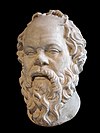
Steve Jobs on Socrates
“I would trade all of my technology for an afternoon with Socrates.”
Steve Jobs on Edwin H. Land
“I always thought of myself as a humanities person as a kid, but I liked electronics. Then I read something that one of my heroes, Edwin Land of Polaroid, said about the importance of people who could stand at the intersection of humanities and sciences, and I decided that's what I wanted to do.”

Steve Jobs on Adam Silvera
“No one wants to die. Even people who want to go to heaven don't want to die to get there. And yet death is the destination we all share. No one has ever escaped it. And that is as it should be, because Death is very likely the single best invention of Life. It is Life's change agent. It clears out the old to make way for the new.”
- Steve Jobs, 2010s, They Both Die at the End

Quotes About Steve Jobs
Gain deeper perspective through quotes about Steve Jobs from others.
Source on Steve Jobs 8 quotes
“While Mr. Jobs's stated positions on management techniques are all quite noble and worthy, in practice he is a dreadful manager.”
Jef Raskin on Steve Jobs
“He is a prime example of a manager who takes the credit for his optimistic schedules and then blames the workers when deadlines are not met.”

A job interview on Steve Jobs
During a 1982 Macintosh team job interview, Steve Jobs, impatient with a candidate, derailed the process with bizarre and inappropriate personal questions.
“[as an interview was taking place] I could tell that Steve was losing patience when he started to roll his eyes at the candidate's responses. Steve began to grill him with some unconventional questions."How old were you when you lost your virginity?", Steve askedThe candidate wasn't sure if he heard correctly. "What did you say?"Steve repeated the question, changing it slightly. "Are you a virgin?". Burrell and I started to laugh, as the candidate became more disconcerted. He didn't know how to respond.Steve changed the subject. "How many times have you taken LSD?"The poor guy was turning varying shades of red, so I tried to change the subject and asked a straight-forward technical question. But when he started to give a long-winded response, Steve got impatient again."Gooble, gobble, gobble, gobble", Steve started making turkey noises. This was too much for Burrell and myself, and we all started cracking up. "Gobble, gobble, gobble", Steve continued, laughing himself now.At this point, the candidate stood up. "I guess I'm not the right guy for this job", he said."I guess you're not", Steve responded. "I think this interview is over."”
Macintosh project manager on Steve Jobs
Coined by Bud Tribble in 1981, this anecdote from Andy Hertzfeld illustrates Steve Jobs's persuasive "reality distortion field," capable of bending perceptions to achieve ambitious goals.
“Steve insists that we're shipping in early 1982, and won't accept answers to the contrary. The best way to describe the situation is a term from Star Trek. Steve has a reality distortion field.… In his presence, reality is malleable. He can convince anyone of practically anything. It wears off when he's not around, but it makes it hard to have realistic schedules.”




Misattributed Quotes
Quotes mistakenly credited to Steve Jobs
“My girlfriend always laughs during sex — no matter what she's reading.”
“The musicians play their instruments. I play the orchestra.”
About Steve Jobs
Steven Paul Jobs (24 February 1955 – 5 October 2011) was the Chairman and CEO of Apple Inc., a company he founded with Steve Wozniak in 1976. He was also the CEO of Pixar Animation Studios until it was acquired by the Walt Disney Company in 2006. Jobs was the Walt Disney Company's largest individual shareholder and a former member of its Board of Directors. He is considered to have been a leading figure in both the computer and entertainment industries.