Link Copied!
Statius Quotes (0-)
Poet
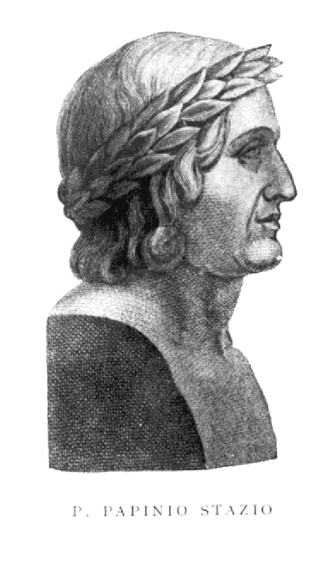
About Statius
Publius Papinius Statius (c. 45 – c. 96) was a Roman poet of the Silver Age of Latin literature.
Best Statius Quotes
Shortest
Earliest
Explore our curated collection of the most famous and impactful Statius quotes.
“Damnatus flammae torus.”
“Nimiumque oblite tuorum.”
“Nobis meminisse relictum.”
“Tu caeli pelagique nepos.”

“Titulique in morte latentes.”
“Pulchrum vitam donare minori.”
“Bacchei vineta madentia Gauri.”
“Non parcit populis regnum breve.”
“Primus in orbe deos fecit timor.”
“Studiis multum Mavortia, Thrace.”
“Dignissima caeli
progenies.”
progenies.”
“Sociisque comes discordia regnis.”
“Sors aequa merentes
respicit.”
respicit.”
“Et dulces rapuit de collibus uvas.”
“Umida siccat
mollibus ora comis.”
mollibus ora comis.”
“Pluraque laxato ceciderunt sidera caelo.”
“Juppiter, o quanta belli donabere praeda!”
“Aut monstrare lyra veteres heroas alumno.”
“Silvaque quae fixam pelago Nesida coronat.”
“Jamdudum tacito lustrat Thetis omnia visu.”
“Pro fors et caeca futuri
mens hominum!”
mens hominum!”
“Qui mente novissimus exit,
lucis amor.”
lucis amor.”
“Quas inter vultu petulans Elegea propinquat.”
“Qui bona fide deos colit amat et sacerdotes.”
Quotes About Statius
Gain deeper perspective through quotes about Statius from others.
On earth my name is still remembered—Statius on Statius
“Stazio la gente ancor di là mi noma: cantai di Tebe, e poi del grande Achille; ma caddi in via con la seconda soma.”
Geoffrey Chaucer on Statius
“And kis the steppes, wher-as thou seest pace Virgile, Ovyde, Omer, Lucan, and Stace.”

Samuel Taylor Coleridge on Statius
“I think Statius a truer poet than Lucan, though he is very extravagant sometimes.”

Lewis Crusius on Statius
“Strada, in his Prolusions, has placed Statius on the highest top of Parnassus; thereby intimating the strength of his genius, and the lofty spirit of his style; which indeed is generally supported by a bold and lively expression, and full flowing numbers. His manner, therefore, resembles rather the martial strut of a general, and the magnificence of a triumph, than the majestic port and true grandeur of a prince, which better suits the inimitable character of Virgil's style. As a soldier cannot easily lay aside the roughness of his character, neither can Statius descend from the pomp of language and loftiness of numbers, when his subject requires it.”
John Hill on Statius
“[Statius] has as luxuriant an imagination as Lucan, but it is easy to see that he oftener checked it. You will find in his Thebaid innumerable beauties, but you will also see too many faults. You will see a fire and spirit equal to all that appeals in the Poets of the greatest name; but you will wish not only that it had been more limited, but that it had been better regulated: he has a great deal of natural dignity, but in carrying it too far he often spoils its lustre. His language is often elegant to a very great degree, and though not universally, yet in a very great part, is appropriated in a very happy manner. If there be one fault predominant above the others in the Thebaid, it is that he is too florid; but you will see that in this the fault was in the impetuosity of his fancy rather than in defect of judgment: his subject ran away with him, and he gave the reins to imagination. In his Sylvae we see him with all this false glare, natural, elegant, and easy. His Achilleid there is no pronouncing any thing upon, for it was never retouched. You will find in many parts of his Thebaid a great deal of the true sublime: in others he carries it into rant and bombast. In the Achilleid there is more of this in proportion than in the Thebaid; but we are not from thence to conclude that he grew worse in this respect as he continued his application: had he lived to finish, he would also have corrected that poem.”
Samuel Johnson on Statius
“Among the writers of antiquity, I remember none except Statius who ventures to mention the speedy production of his writings, either as an extenuation of his faults, or a proof of his facility. Nor did Statius, when he considered himself as a candidate for lasting reputation, think a closer attention unnecessary, but amidst all his pride and indigence, the two great hasteners of modern poems, employed twelve years upon the Thebaid, and thinks his claim to renown proportionate to his labour.Thebais, multa cruciata lima, Tentat, audaci fide, Mantuanae Gaudia famae.Polished with endless toil, my lays At length aspire to Mantuan praise.”
All Rome is pleased when Statius will rehearse on Statius
“Curritur ad vocem jucundam, et carmen amicae Thebaidos, laetam fecit quum Statius urbem, Promisitque diem, tanta dulcedine captos Afficit ille animos, tantaque libidine vulgi Auditur! sed quum fregit subsellia versu, Esurit, intactam Paridi nisi vendat Agaven.”
Alexander Pope on Statius 3 quotes
“In the very beginning he unluckily betrays his ignorance in the rules of poetry (which Horace had already taught the Romans) when he asks his Muse where to begin his Thebaid...”

Misattributed Quotes
Quotes mistakenly credited to Statius
“Serit arbores, quae alteri saeclo prosint”
About Statius
Publius Papinius Statius (c. 45 – c. 96) was a Roman poet of the Silver Age of Latin literature.