Link Copied!
Sonia Sotomayor Quotes (1954-)

About Sonia Sotomayor
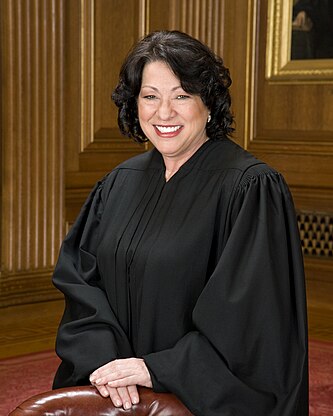
Sonia Maria Sotomayor (born 25 June 1954) is an Associate Justice of the Supreme Court of the United States (since 2009), and a former judge of the United States Court of Appeals for the Second Circuit (1998–2009) and of the United States District Court for the Southern District of New York (1992–1998).
Best Sonia Sotomayor Quotes
Shortest
Earliest
Explore our curated collection of the most famous and impactful Sonia Sotomayor quotes.
“Puerto Rico will not only survive this. It will bloom once again.”


“No matter how you look at it, the majority’s official-acts immunity is utterly indefensible.”
“I strive never to forget the real world consequences of my decisions on individuals, businesses and government.”
“I don't believe we should bend the Constitution under any circumstance. It says what it says. We should do honor to it.”
“Look at another person and understand no matter how much you disagree with them… if you look, you will find good in them.”
“No matter how liberal I am, I'm still outraged by crimes of violence. Regardless of whether I can sympathize with the causes that lead these individuals to do these crimes, the effects are outrageous.”
“I understand Justice Scalia's jurisprudence to begin with a proposition that we should all agree to — namely, that judges should try to interpret the law correctly, and without personal or political bias.”
“Awareness that the Government may be watching chills associational and expressive freedoms. And the Government’s unrestrained power to assemble data that reveal private aspects of identity is susceptible to abuse.”
“Government doesn’t do, people do,” she said. “It’s people who make laws, it’s people who change laws. It’s people who make things happen. So my question is, what are you going to do to make the government more representative? It won’t change unless we change it.”

“In such cases, one can feel powerless and wonder why the others were not persuaded by what one took to be so salient in the case. There is, on the other hand, a singularly satisfying feeling that one gets when one has arrived at a particularly penetrating analysis and is able to convince both of one's colleagues of its merit.”
“In sum, the majority today endorses an expansive vision of Presidential immunity that was never recognized by the Founders, any sitting President, the Executive Branch, or even President Trump’s lawyers, until now. Settled understandings of the Constitution are of little use to the majority in this case, and so it ignores them.”

“It is a far greater danger if the President feels empowered to violate federal criminal law, buoyed by the knowledge of future immunity. I am deeply troubled by the idea, inherent in the majority’s opinion, that our Nation loses something valuable when the President is forced to operate within the confines of federal criminal law.”
“The saw is that if you're going into academia, you're going to teach, or as Judge Lucero just said, public interest law, all of the legal defense funds out there, they're looking for people with court of appeals experience, because it is -- court of appeals is where policy is made. And I know -- and I know this is on tape and I should never say that because we don't make law, I know. OK, I know. I'm not promoting it, and I'm not advocating it, I'm -- you know.”
“In our private conversations, Judge Cedarbaum has pointed out to me that seminal decisions in race and sex discrimination cases have come from Supreme Courts composed exclusively of white males. I agree that this is significant but I also choose to emphasize that the people who argued those cases before the Supreme Court which changed the legal landscape ultimately were largely people of color and women.”
“Today’s decision to grant former Presidents criminal immunity reshapes the institution of the Presidency. It makes a mockery of the principle, foundational to our Constitution and system of Government, that no man is above the law. Relying on little more than its own misguided wisdom about the need for “bold and unhesitating action” by the President, ante, at 3, 13, the Court gives former President Trump all the immunity he asked for and more. Because our Constitution does not shield a former President from answering for criminal and treasonous acts, I dissent.”
“Argument by argument, the majority invents immunity through brute force. Under scrutiny, its arguments crumble. To start, the majority’s broad “official acts” immunity is inconsistent with text, history, and established understandings of the President’s role. Moreover, it is deeply wrong, even on its own functionalist terms. Next, the majority’s “core” immunity is both unnecessary and misguided. Furthermore, the majority’s illogical evidentiary holding is unprecedented. Finally, this majority’s project will have disastrous consequences for the Presidency and for our democracy.”
“America has a deeply confused image of itself that is in perpetual tension. We are a nation that takes pride in our ethnic diversity, recognizing its importance in shaping our society and in adding richness to its existence. Yet, we simultaneously insist that we can and must function and live in a race and color-blind way that ignore these very differences that in other contexts we laud. That tension between "the melting pot and the salad bowl" – a recently popular metaphor used to described New York's diversity – is being hotly debated today in national discussions about affirmative action.”

“First of all, a girl like you should always dream big. Second, never let anyone say that you can’t do it. And the minute they say that, you should do as I have done myself and say: "You are telling me I can’t do it? Well, I’ll show you I can." Third, you have to study, study and study. That’s the only way you can achieve what you want in life. Education is the key to the future. And fourth, you have to work very hard. In life no one will give you anything for free. You must earn every single thing in this life. It is by studying and working hard that you will become president of the United States.”

“I am reminded each day that I render decisions that affect people concretely and that I owe them constant and complete vigilance in checking my assumptions, presumptions and perspectives and ensuring that to the extent that my limited abilities and capabilities permit me, that I reevaluate them and change as circumstances and cases before me requires. I can and do aspire to be greater than the sum total of my experiences but I accept my limitations. I willingly accept that we who judge must not deny the differences resulting from experience and heritage but attempt, as the Supreme Court suggests, continuously to judge when those opinions, sympathies and prejudices are appropriate. There is always a danger embedded in relative morality, but since judging is a series of choices that we must make, that I am forced to make, I hope that I can make them by informing myself on the questions I must not avoid asking and continuously pondering.”

“Justice O'Connor has often been cited as saying that a wise old man and wise old woman will reach the same conclusion in deciding cases. I am not so sure Justice O'Connor is the author of that line since Professor Resnik attributes that line to Supreme Court Justice Coyle.Sotomayor means Mary Jeanne Coyne of the Minnesota Supreme Court. See Lauren Collins "Number Nine", The New Yorker (January 3, 2010). I am also not so sure that I agree with the statement. First, as Professor Martha Minnow has noted, there can never be a universal definition of wise. Second, I would hope that a wise Latina woman with the richness of her experiences would more often than not reach a better conclusion than a white male who hasn't lived that life.”
“The indictment paints a stark portrait of a President desperate to stay in power. In the weeks leading up to January 6, 2021, then-President Trump allegedly “spread lies that there had been outcome-determinative fraud in the election and that he had actually won,” despite being “notified repeatedly” by his closest advisers “that his claims were untrue." When dozens of courts swiftly rejected these claims, Trump allegedly “pushed officials in certain states to ignore the popular vote; disenfranchise millions of voters; dismiss legitimate electors; and ultimately, cause the ascertainment of and voting by illegitimate electors” in his favor. It is alleged that he went so far as to threaten one state election official with criminal prosecution if the official did not “‘find’ 11,780 votes” Trump needed to change the election result in that state. When state officials repeatedly declined to act outside their legal authority and alter their state election processes, Trump and his co-conspirators purportedly developed a plan to disrupt and displace the legitimate election certification process by organizing fraudulent slates of electors.”

Sonia Sotomayor Quotes by Topic
Find exactly what you are looking for by browsing this categorized list of Sonia Sotomayor quotes by topic.
Sonia Sotomayor on First Amendment to the United States Constitution

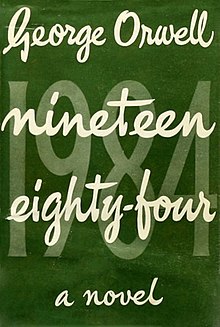
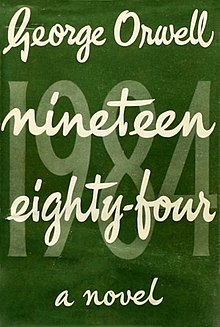
Sonia Sotomayor on Nineteen Eighty-Four
“My God, what an impact [1984] had on me. The idea of Big Brother was, and I may still, influence my thinking about democracy; the idea that we would have a government that was all-knowing and all-doing for human beings was frightening…That was a seminal piece in my waking up to the role of government in individual lives.”
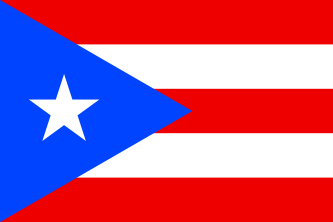
Sonia Sotomayor on Puerto Rico
“In view of that core purpose, denying benefits to hundreds of thousands of eligible Puerto Rico residents because they do not pay enough in taxes is utterly irrational. Congress’ decision to deny to the U. S. citizens of Puerto Rico a social safety net that it provides to almost all other U.S. citizens is especially cruel given those citizens’ dire need for aid,” she wrote. “Puerto Rico has a disproportionately large population of seniors and people with disabilities...Equal treatment of citizens should not be left to the vagaries of the political process...Because residents of Puerto Rico do not have voting representation in Congress, they cannot rely on their elected representatives to remedy the punishing disparities suffered by citizen residents of Puerto Rico under Congress’ unequal treatment.”

What Sonia Sotomayor Said About Others
Discover personal opinions Sonia Sotomayor shared regarding contemporaries.
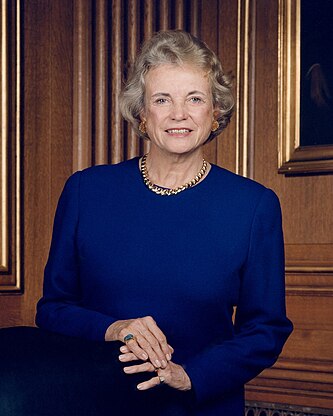
Sonia Sotomayor on Sandra Day O'Connor
Quotes About Sonia Sotomayor
Gain deeper perspective through quotes about Sonia Sotomayor from others.
Emily Badger Sep on Sonia Sotomayor
Cristina Beltrán on Sonia Sotomayor
“in 2009, when Sonia Sotomayor was preparing for congressional hearings for her appointment to the Supreme Court, she was accused of being a racist for her involvement with "radical" organizations such as the Puerto Rican Legal Defense and Education Fund and the National Council of La Raza.' The fact that so many Latino elites were once members of these organizations speaks to the role these movements and organizations played in the creation of a significant sociopolitical class.”
Barack Obama on Sonia Sotomayor
“Sotomayor was among the finalists I was considering, some in the legal priesthood suggested that her credentials were inferior to those of Kagan or Wood, and a number of left-leaning interest groups questioned whether she had the intellectual heft to go toe-to-toe with conservative ideologues like Justice Antonin Scalia. Maybe because of my own background in legal and academic circles-where I'd met my share of highly credentialed, high-IQ morons and had witnessed firsthand the tendency to move the goalposts when it came to promoting women and people of color-I was quick to dismiss such concerns. Not only were Judge Sotomayor's academic credentials outstanding, but I understood the kind of intelligence, grit, and adaptability required of someone of her background to get to where she was...Given my high regard for Kagan and Wood, I was still undecided when Judge Sotomayor came to the Oval Office for a get-to-know-you session. She had a broad, kind face and a ready smile. Her manner was formal and she chose her words carefully, though her years at Ivy League schools and on the federal bench hadn't sanded away the Bronx accent...the judge and I talked about her family, her work as a prosecutor, and her broad judicial philosophy. By the end of the interview, I was convinced that Sotomayor had what I was looking for, although I didn't say so on the spot.”

Denise Oliver-Velez on Sonia Sotomayor
“Justice Sotomayor knows a lot about spirit and strength. It is reflected in her life. I will never forget that day in May 2009 when President Obama announced his nomination of Sonia Sotomayor to the Supreme Court. It was a victory—not only for women, but for Puerto Ricans and for anyone and everyone who has ever lived in the projects, who ever had to struggle and endure poverty, discrimination, and disability.”

Amy Tan on Sonia Sotomayor
“I’m grateful for her wisdom and compassion on the Supreme Court. In June, Justice Sotomayor invited my husband and me to have a private lunch with her in her chambers. This was right when the justices began deliberations over the major cases. We talked about our mothers’ fears, about publishing, translations, snorkeling, adopted kids and cultural self-identification — all sorts of things, except the cases. I’ve read the first 10 pages of her memoir and know already that it’s like a continuation of the conversation we had.”

Laurence Tribe on Sonia Sotomayor
“If you were to appoint someone like Sonia Sotomayor, whose personal history and demographic appeal you don't need me to underscore, I am concerned that the impact within the Court would be negative in these respects. Bluntly put, she's not nearly as smart as she seems to think she is, and her reputation for being something of a bully could well make her liberal impulses backfire and simply add to the fire power of the Roberts/Alito/Scalio/Thomas wing of the Court.”

About Sonia Sotomayor
Sonia Maria Sotomayor (born 25 June 1954) is an Associate Justice of the Supreme Court of the United States (since 2009), and a former judge of the United States Court of Appeals for the Second Circuit (1998–2009) and of the United States District Court for the Southern District of New York (1992–1998).