Link Copied!
Shannon C. Stimson Quotes (1951-)
Philosopher
About Shannon C. Stimson
Shannon C. Stimson (born October 8, 1951) is an American political theorist, philosopher, and historian of ideas, whose work and teaching spans the economic and political thought of both ancient societies and the late eighteenth and nineteenth centuries. She has been Professor of Political Science at the University of California, Berkeley since 1991, where she is also affiliated and has served on the faculty boards of programs in the Political Economy of Industrial Societies, and of Peace and Conflict Studies.
Shannon C. Stimson Quotes
Shortest
Earliest
Explore our curated collection of the most famous and impactful Shannon C. Stimson quotes.
“In general the claim can be supported that a view of classical political economy as committed to extreme laissez-faire or unmitigated economic individualism misrepresents or at the very least analytically overgeneralizes their circumscribed theoretical and practical aims. In general then, with regard to both political and economic liberty, the classical political economists might be seen to be united in their efforts to theorize and systematize the productive and allocating functions of the mechanism of the market as the most efficient means to engender the growth of wealth. At the same time, classicals such as Smith, Malthus, Ricardo, and Mill recognized that the market, of necessity, operated in a larger context of restriction – not only legal, but equally as important, within political, religious, moral, and conventional restrictions – which could not be readily or in some cases even desirably overcome.”
Shannon C. Stimson Quotes by Topic
Find exactly what you are looking for by browsing this categorized list of Shannon C. Stimson quotes by topic.
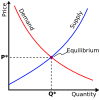
Shannon C. Stimson on Political economy
“In general the claim can be supported that a view of classical political economy as committed to extreme laissez-faire or unmitigated economic individualism misrepresents or at the very least analytically overgeneralizes their circumscribed theoretical and practical aims. In general then, with regard to both political and economic liberty, the classical political economists might be seen to be united in their efforts to theorize and systematize the productive and allocating functions of the mechanism of the market as the most efficient means to engender the growth of wealth. At the same time, classicals such as Smith, Malthus, Ricardo, and Mill recognized that the market, of necessity, operated in a larger context of restriction – not only legal, but equally as important, within political, religious, moral, and conventional restrictions – which could not be readily or in some cases even desirably overcome.”
Shannon C. Stimson on Classical economics
“In general the claim can be supported that a view of classical political economy as committed to extreme laissez-faire or unmitigated economic individualism misrepresents or at the very least analytically overgeneralizes their circumscribed theoretical and practical aims. In general then, with regard to both political and economic liberty, the classical political economists might be seen to be united in their efforts to theorize and systematize the productive and allocating functions of the mechanism of the market as the most efficient means to engender the growth of wealth. At the same time, classicals such as Smith, Malthus, Ricardo, and Mill recognized that the market, of necessity, operated in a larger context of restriction – not only legal, but equally as important, within political, religious, moral, and conventional restrictions – which could not be readily or in some cases even desirably overcome.”

Shannon C. Stimson on Discourse on Inequality
“The character of and commitment to equality remains both controversial and disputed among historical and theoretical analysts of classical political economy, and this has been true from the beginning. Smith's earliest writings confronted the critique of commercial society, the vice of luxury, and the inequality both fostered and perpetuated by the regime of private property made by Rousseau in his early economic writing, the Discourse on Inequality (2009 [1755]). Smith responded in at least two ways to this critique of the inherent inequality and unfreedom of commercial society. On the one hand, Smith recognized that a driving force of market operation and expansion was in some sense dependent on that acquisitive psychology that accompanied “the useful inequality in the fortunes of mankind which naturally and necessarily arise from the various degrees of capacity, industry, and diligence in different individuals” (Smith 1983 [1762–3/1766]: 338). This, of course, was to recognize a form of inequality of capacity in society with which Rousseau did not disagree. On the other hand, Smith went further in both the Wealth of Nations and the Lectures on Jurisprudence, and argued untramque partem that the very pursuit of luxury critiqued as vice by Rousseau and others helped to destroy the Gothic ruling class, who “sold their birthrights for baubles,” and in destroying the old feudal order of entrenched inequality, brought both greater liberty and greater equality to those living in the commercial age. In this sense, Smith appeared to employ the rhetorical device of paradiastole to render the putative vice of luxury as a virtue in the classical political economic context, and to suggest that private property – seen as the source of injustice for critics of the commercial order such as Rousseau, was – in the four stages of the progress of society – the very source of justice, because around property basically unsocial natural men had unified in what Kant would later term an “unsocial sociability.” Smith produced other arguments as well for the destruction of monopolies, guilds, and corporations in order to equalize market-driven production and distribution with the understanding (or the hope) that greater social and economic equality would accompany the ever greater expansion of the market. However, it is unquestionable that Smith recognized the inequalities inherent within the actual operation of the market mechanism in his own lifetime, inequalities that later classicals such as Ricardo and Mill would openly admit.”

What Shannon C. Stimson Said About Others
Discover personal opinions Shannon C. Stimson shared regarding contemporaries.
Shannon C. Stimson on Adam Smith 3 quotes
“Thus, the original core components of classical political economy enumerated in Smith's Wealth of Nations, and transformed in the economic theorizing of later classicals – that is, until John Maynard Keynes chose in The General Theory of Employment, Interest and Money (1936) to alter retrospectively the referent of this denotation to include any “orthodox” (non-Marxist) economist who was a quantity theorist – comprised a set of conceptual tools for analyzing and understanding the operation of market and later capitalist production and exchange.”
About Shannon C. Stimson
Shannon C. Stimson (born October 8, 1951) is an American political theorist, philosopher, and historian of ideas, whose work and teaching spans the economic and political thought of both ancient societies and the late eighteenth and nineteenth centuries. She has been Professor of Political Science at the University of California, Berkeley since 1991, where she is also affiliated and has served on the faculty boards of programs in the Political Economy of Industrial Societies, and of Peace and Conflict Studies.