Shannon C. Stimson on Adam Smith
← Back to Shannon C. Stimson Profile
“Thus, the original core components of classical political economy enumerated in Smith's Wealth of Nations, and transformed in the economic theorizing of later classicals – that is, until John Maynard Keynes chose in The General Theory of Employment, Interest and Money (1936) to alter retrospectively the referent of this denotation to include any “orthodox” (non-Marxist) economist who was a quantity theorist – comprised a set of conceptual tools for analyzing and understanding the operation of market and later capitalist production and exchange.”
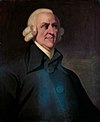
“In generating the first ever systematic account of the market mechanism in commercial society, Smith's political economy drew not only on his critical reflections of the unsytematic nature of earlier economic writing, but equally on his didactic revisions of earlier natural law and natural jurisprudence traditions as well as the empirically suggestive but unsystematic historical inductive method of tracing the progress of civil society previously introduced by thinkers such as the great Montesquieu. These revisions can be linked directly to Smith's political thinking. It may be questioned whether Adam Smith can be said to have developed a political theory. Certainly, it has been and yet remains a subject of debate. Unquestionably, however, Smith isolated important political concerns and made political conceptual contributions which he linked systematically to his theory of commercial society and the conduct of the market.”
“Today, classical political economy is often identified by contemporary economists with the quantity theory of money and the so-called “doctrine of free trade,” but historically there was in fact a large and variable set of positions on both within the classical orbit. And, in contrast to Marx's characterization of its scope and origins, the beginnings of a systematic classical political economy have been associated first and foremost with the work of the eighteenth-century Scottish philosopher, Adam Smith. In terms of illuminating our understanding of the significance of classical political economy for the history of political thought, its origins are identified with the time period roughly between 1750 and 1867, and with a group of economic thinkers drawing upon and revising Smith's Wealth of Nations as a basis for analyzing the production, distribution, and exchange of commodities in the market of commercial society, and later within industrial capitalism.”