Link Copied!
Sallust Quotes (-86--34)


About Sallust
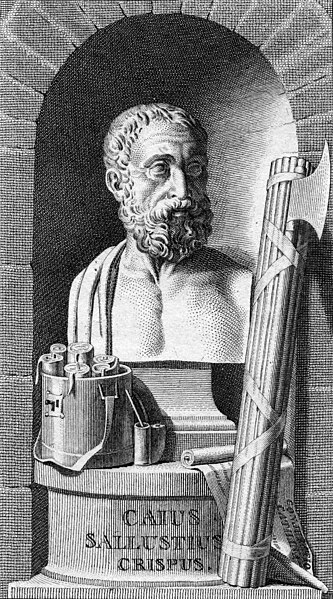
Gaius Sallustius Crispus (86 – 34 BC) was a statesman and historian during the last century of the Roman Republic.
Best Sallust Quotes
Shortest
Earliest
Explore our curated collection of the most famous and impactful Sallust quotes.
“Satis eloquentiae, sapientiae parum.”
“ Necessitas etiam timidos fortes facit.”
“Nam idem velle atque idem nolle, ea demum firma amicitia est.”
“Nam concordia parvae res crescunt, discordia maxumae dilabuntur.”
“Sed res docuit id verum esse, quod in carminibus Appius ait, fabrum esse suae quemque fortunae.”
“Sed multi mortales dediti ventri atque somno, indocti incultique vitam sicuti peregrinantes transiere.”
“Omnes homines, patres conscripti, qui de rebus dubiis consultant, ab odio, amicitia, ira atque misericordia vacuos esse decet.”
“Nonne emori per virtutem praestat quam vitam miseram atque inhonestam, ubi alienae superbiae ludibrio fueris, per dedecus amittere? ”
“Nam divitiarum et formae gloria fluxa atque fragilis est, virtus clara aeternaque habetur.
• Chapter I; Variant translation:”
• Chapter I; Variant translation:”

“Sed nostra omnis vis in animo et corpore sita est; animi imperio, corporis servitio magis utimur; alterum nobis cum dis, alterum cum beluis commune est.”

“Namque pauci libertatem, pars magna iustos dominos volunt.
• Variant translation: Only a few prefer liberty, the majority seek nothing more than fair masters.”
• Variant translation: Only a few prefer liberty, the majority seek nothing more than fair masters.”
“At nos non imperium neque divitias petimus, quarum rerum causa bella atque certamina omnia inter mortales sunt, sed libertatem, quam nemo bonus nisi cum anima simul amittit.”
“Sed ego adolescentulus initio sicuti plerique studio ad rem publicam latus sum, ibique mihi multa adversa fuere. Nam pro pudore, pro abstinentia, pro virtute, audacia, largitio, avaritia vigebant.”
“Verum ubi pro labore desidia, pro continentia et aequitate libido atque superbia invasere, fortuna simul cum moribus immutatur. Ita imperium semper ad optimum quemque a minus bono transfertur. (II)”
“ Quod si regum atque imperatorum animi virtus in pace ita ut in bello valeret, aequabilius atque constantius sese res humanae haberent neque aliud alio ferri neque mutari ac misceri omnia cerneres. Nam imperium facile iis artibus retinetur, quibus initio partum est. Verum ubi pro labore desidia, pro continentia et aequitate lubido atque superbia invasere, fortuna simul cum moribus inmutatur. Ita imperium semper ad optumum quemque a minus bono transferetur.”
“Ambitio multos mortales falsos fieri subegit, aliud clausum in pectore, aliud in lingua promptum habere, amicitias inimicitiasque non ex re, sed ex commodo aestimare, magisque vultum quam ingenium bonum habere.
• Variant translation: It is the nature of ambition to make men liars and cheats, to hide the truth in their breasts, and show, like jugglers, another thing in their mouths, to cut all friendships and enmities to the measure of their own interest, and to make a good countenance without the help of good will.”
• Variant translation: It is the nature of ambition to make men liars and cheats, to hide the truth in their breasts, and show, like jugglers, another thing in their mouths, to cut all friendships and enmities to the measure of their own interest, and to make a good countenance without the help of good will.”
Sallust Quotes by Topic
Find exactly what you are looking for by browsing this categorized list of Sallust quotes by topic.
Sallust on Essence 4 quotes
“Of the Gods some are of the world, cosmic, and some above the world, hypercosmic. By the cosmic I mean those who make the cosmos. Of the hypercosmic Gods some create essence, some mind, and some soul.”
Sallust on Life 2 quotes
“Vita ipsa qua fruimur brevis est.
The very life which we enjoy is short.”

Sallust on Deity 2 quotes
“The arts of prophecy and of healing, which are part of the cosmos, come of the good providence of the gods.”
Sallust on Cosmos 2 quotes
“Of the cosmic Gods some make the world be, others animate it, others harmonize it, consisting as it does of different elements; the fourth class keep it when harmonized.”
Sallust on Sex differences in humans
“Elegance is proper to women but toil to men”

Sallust on Liberty
Sallust on Despise
Sallust on Ambition
“Ambition prompted many to become deceitful; to keep one thing concealed in the breast, and another ready on the tongue; to estimate friendships and enmities, not by their worth, but according to interest; and to carry rather a specious countenance than an honest heart.”

Sallust on Mythology
“That the myths are divine can be seen from those who have used them. Myths have been used by inspired poets, by the best of philosophers, by those who established the mysteries, and by the Gods themselves in oracles. But why the myths are divine it is the duty of philosophy to inquire. Since all existing things rejoice in that which is like them and reject that which is unlike, the stories about the Gods ought to be like the Gods, so that they may both be worthy of the divine essence and make the Gods well disposed to those who speak of them: which could only be done by means of myths.”

What Sallust Said About Others
Discover personal opinions Sallust shared regarding contemporaries.
Sallust on Catiline 2 quotes
“Even in youth Catiline had many shameful intrigues—with a maiden of noble rank, with a priestess of Vesta—and other affairs equally unlawful and impious.”
Sallust on Kenneth Tynan
“It is the nature of ambition to make men liars and cheats, to hide the truth in their breasts, and show, like jugglers, another thing in their mouths, to cut all friendships and enmities to the measure of their own interest, and to make a good countenance without the help of good will.”

Sallust on Alessandro Sallusti
“I introduced Sallusti to Berlusconi, who didn't even know who he was. We had a good relationship for nine years: I brought him to QN, I brought him to Il Giornale, on New Year's Eve he sent me a text message that ended with ‘I love you’. And now he's throwing this at me? It's fine that gratitude doesn't exist, but at least respect for people and the truth...”

Quotes About Sallust
Gain deeper perspective through quotes about Sallust from others.
Thomas Babington Macaulay on Sallust
“I think Sallust inferior to both Livy and Tacitus in the talents of an historian. There is a lecturing, declaiming, tone about him which would suit a teacher of rhetoric better than a statesman engaged in recording great events. Still, he is a good writer; and the view which he here gives of the state of parties at Rome, and the frightful demoralization of the aristocracy, is full of interest.”

Disputed Quotes
Quotes attributed to Sallust that are questionable.
“He that will be angry for anything, will be angry for nothing.”
Misattributed Quotes
Quotes mistakenly credited to Sallust
“Ambition breaks the ties of blood, and forgets the obligations of gratitude.
• The earliest attributions of this yet found are to it being a saying of William Scott, 1st Baron Stowell, in History of the Anti-Corn Law League (1853), by Archibald Prentice, p. 54; around 1876 it began to began to be cited to W. Scott, and then around 1880 sometimes to Walter Scott, but without citations of source, including a variant: "Selfish ambition breaks the ties of blood, and forgets the obligations of gratitude" in a publication of 1907. It seems to only recently to have begun to be attributed to Sallust, on the internet.”
• The earliest attributions of this yet found are to it being a saying of William Scott, 1st Baron Stowell, in History of the Anti-Corn Law League (1853), by Archibald Prentice, p. 54; around 1876 it began to began to be cited to W. Scott, and then around 1880 sometimes to Walter Scott, but without citations of source, including a variant: "Selfish ambition breaks the ties of blood, and forgets the obligations of gratitude" in a publication of 1907. It seems to only recently to have begun to be attributed to Sallust, on the internet.”
About Sallust
Gaius Sallustius Crispus (86 – 34 BC) was a statesman and historian during the last century of the Roman Republic.