Link Copied!
Robert K. Merton Quotes (1910-2003)


About Robert K. Merton
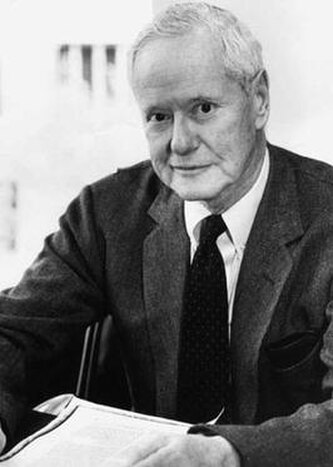
Robert K. Merton (4 July 1910 – 23 February 2003) was a distinguished American sociologist perhaps best known for having coined the phrase "self-fulfilling prophecy."
Best Robert K. Merton Quotes
Shortest
Earliest
Explore our curated collection of the most famous and impactful Robert K. Merton quotes.
“Scientific research is not conducted in a social vacuum.”

“By social structure is meant that organized set of social relationships in which members of the society or group are variously implicated.”
“The ethos of science involves the functionally necessary demand that theories or generalizations be evaluated in [terms of] their logical consistency and consonance with facts.”
“[Merton states that anomie represents] An acute disjunction between the cultural norms and goals and the socially structured capacities of members of the group to act in accord with them.”
“The extreme emphasis upon the accumulation of wealth as a symbol of success in our society militates against the completely effective control of institutionally regulated modes of acquiring a fortune.”
“The self-fulfilling prophecy is, in the beginning, a false definition of the situation evoking a new behaviour which makes the original false conception come "true". This specious validity of the self-fulfilling prophecy perpetuates a reign of error. For the prophet will cite the actual course of events as proof that he was right from the very beginning.”
“It is likely that the emphasis upon the metaphysical and epistemological implications of the sociology of knowledge can be traced, in part, to the fact that the first proponents of this discipline stemmed largely from philosophical rather than scientific circles. The burden of further research is to turn from this welter of conflicting opinion to empirical investigations which may establish in adequate detail the uniformities pertaining to the appearance, acceptance and diffusion, or rejection and repression, development and consequences of knowledge and ideas.”

“The last two decades have witnessed, especially in Germany and France, the rise of a new discipline, the sociology of knowledge (Wissenssoziologie), with a rapidly increasing number of students and a growing literature (even a “selected bibliography” would include several hundred titles). Since most of the investigations in this field have been concerned with the socio-cultural factors influencing the development of beliefs and opinion rather than of positive knowledge, the term. “Wissen” must be interpreted very broadly indeed, as referring to social ideas and thought generally, and not to the physical sciences, except where expressly indicated.”
“The role of outstanding scientists in influencing younger associates is repeatedly emphasized in the interviews with laureates. Almost invariably they lay great emphasis on the importance of problem-finding, not only problem-solving. They uniformly express the strong conviction that what matters most in their work is a developing sense of taste, of judgment, in acting setting upon problems that are of fundamental importance. And, typically, they report that they acquired this sense for the significant problem during their years of training in evocative environments. Reflecting on his years as a novice in the laboratory of a chemist of the first rank, one laureate reports that he "led me to look for important things, whenever possible, rather than work on endless detail or to work just to improve accuracy rather than making a basic new contribution."”

Robert K. Merton Quotes by Topic
Find exactly what you are looking for by browsing this categorized list of Robert K. Merton quotes by topic.
Robert K. Merton on Prophecy
“The self-fulfilling prophecy is, in the beginning, a false definition of the situation evoking a new behaviour which makes the original false conception come "true". This specious validity of the self-fulfilling prophecy perpetuates a reign of error. For the prophet will cite the actual course of events as proof that he was right from the very beginning.”
Robert K. Merton on Sociology of knowledge
“The last two decades have witnessed, especially in Germany and France, the rise of a new discipline, the sociology of knowledge (Wissenssoziologie), with a rapidly increasing number of students and a growing literature (even a “selected bibliography” would include several hundred titles). Since most of the investigations in this field have been concerned with the socio-cultural factors influencing the development of beliefs and opinion rather than of positive knowledge, the term. “Wissen” must be interpreted very broadly indeed, as referring to social ideas and thought generally, and not to the physical sciences, except where expressly indicated.”

Robert K. Merton on Principles of organization
“Theodore Caplow, in Principles of Organization, has called the aggrandizement effect: the distortion upward of the prestige of an organization by its members. Caplow examined thirty-three kinds of organizations — ranging from dance studios to Protestant and Catholic churches, from skid row missions to big banks, and from advertising agencies to university departments - and found that members overestimated the prestige of their organization some "eight times as often as they underestimated it" (when compared with judgments by Outsiders). More in point for us, while members tended to disagree with Outsiders about the standing of their own organization, they tended to agree with them about the prestige of the other organizations in the same set. These findings can be taken as something of a sociological parable.”
Quotes About Robert K. Merton
Gain deeper perspective through quotes about Robert K. Merton from others.
Eugene Garfield on Robert K. Merton
“So much of what he says is so absolutely obvious, so transparently true, that one can't imagine why no one else has bothered to point it out.”
Jonathan R. Cole on Robert K. Merton
“Bob Merton became the leader of structural-functional analysis in sociology, and the leader of those sociologists who attempted to create social theories that could be empirically tested... He was an inspirational teacher and editor, and with his students, such as James S. Coleman and Seymour Martin Lipset, among many others who would become leading figures in the field, he helped to build and legitimate the field of sociology in America... For me, he was a model teacher and mentor, a trusted colleague, and a close friend. His death, in many ways, puts a period at the end of 20th Century sociology,”
About Robert K. Merton
Robert K. Merton (4 July 1910 – 23 February 2003) was a distinguished American sociologist perhaps best known for having coined the phrase "self-fulfilling prophecy."