Link Copied!
Robert E. Lee Quotes (1807-1870)
Revolutionary











About Robert E. Lee
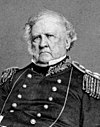
Robert Edward Lee (19 January 1807 – 12 October 1870) was an American soldier known for commanding the Confederate Army of Northern Virginia (and eventually all the armies of the Confederacy as general-in-chief) in the American Civil War from 1862 until his surrender to Ulysses S. Grant in 1865. The son of Revolutionary War officer Henry "Light Horse Harry" Lee III, Lee was a top graduate of the United States Military Academy and an exceptional officer and military engineer in the United States Army for 32 years. During this time, he served throughout the United States, distinguished himself during the Mexican–American War, served as Superintendent of the United States Military Academy, and married Mary Custis.
Best Robert E. Lee Quotes
Shortest
Earliest
Explore our curated collection of the most famous and impactful Robert E. Lee quotes.


“Obedience to lawful authority is the foundation of manly character.”


“Negroes belonging to our citizens are not considered subjects of exchange and were not included in my proposition.”
“The Abolitionist... must see that he has neither the right or power of operating except by moral means and suasion.”

“Sir, if you ever presume again to speak disrespectfully of General Grant in my presence, either you or I will sever his connection with this university.”

“Madam, don't bring up your sons to detest the United States government. Recollect that we form one country now. Abandon all these local animosities, and make your sons Americans.”

“My experience through life has convinced me that, while moderation and temperance in all things are commendable and beneficial, abstinence from spirituous liquors is the best safeguard of morals and health.”

“"Those who oppose our purposes are not always to be regarded as our enemies. We usually think and act from our immediate surroundings. The better rule is to judge our adversaries from their standpoint, not from ours."”
“True patriotism sometimes requires of men to act exactly contrary, at one period, to that which it does at another, and the motive which impels them — the desire to do right — is precisely the same.”

“The only question on which we did not agree has been settled, and the Lord has decided against me.”

“After it is all over, as stupid a fellow as I am can see that mistakes were made. I notice, however, that my mistakes are never told me until it is too late, and you, and all my officers, know that I am always ready and anxious to have their suggestions.”
“I think it is the duty of every citizen, in the present condition of the Country, to do all in his power to aid in the restoration of peace and harmony. It is particularly incumbent upon those charged with the instruction of the young to set them an example.”

“I have fought against the people of the North because I believed they were seeking to wrest from the South its dearest rights. But I have never cherished toward them bitter or vindictive feelings, and have never seen the day when I did not pray for them.”

“I think it would be better for Virginia if she could get rid of them. That is no new opinion with me. I have always thought so, and have always been in favor of emancipation - gradual emancipation.”

“The questions which for years were in dispute between the State and General Government, and which unhappily were not decided by the dictates of reason, but referred to the decision of war, having been decided against us, it is the part of wisdom to acquiesce in the result, and of candor to recognize the fact.”
“So far from engaging in a war to perpetuate slavery, I have rejoiced that slavery is abolished. I believe it will be great for the interests of the south. So fully am I satisfied with this, as regards Virginia especially, that I would cheerfully have lost all I have lost by the war, and have suffered all I have suffered, to have this object attained.”

“I am of the opinion that all who can should vote for the most intelligent, honest, and conscientious men eligible to office, irrespective of former party opinions, who will endeavour to make the new constitutions and the laws passed under them as beneficial as possible to the true interests, prosperity, and liberty of all classes and conditions of the people.”

“My engagements will not permit me to be present, and I believe if there I could not add anything material to the information existing on the subject. I think it wiser, moreover, not to keep open the sores of war, but to follow the example of those nations who endeavored to obliterate the marks of civil strife, and to commit to oblivion the feelings it engendered.”
“I, Robert E. Lee of Lexington, Virginia do solemn, in the presence of Almighty God, that I will henceforth faithfully support, protect and defend the Constitution of the United States, the Union of the States thereafter, and that I will, in like manner, abide by and faithful support all laws and proclamations which have been made during the existing rebellion with reference to the emancipation of slaves, so help me God.”

“You must be frank with the world; frankness is the child of honesty and courage. Say just what you mean to do on every occasion, and take it for granted you mean to do right … Never do anything wrong to make a friend or keep one; the man who requires you to do so, is dearly purchased at a sacrifice. Deal kindly, but firmly with all your classmates; you will find it the policy which wears best. Above all do not appear to others what you are not.”
“What a cruel thing is war; to separate and destroy families and friends, and mar the purest joys and happiness God has granted us in this world; to fill our hearts with hatred instead of love for our neighbors, and to devastate the fair face of this beautiful world! I pray that, on this day when only peace and good-will are preached to mankind, better thoughts may fill the hearts of our enemies and turn them to peace. … My heart bleeds at the death of every one of our gallant men.”

“Since my interview with you on the 18th I have felt that I ought not longer retain my commission in the Army … It would have been presented at once, but for the struggle, it has cost me to separate myself from a service to which I have devoted all the best years of my life, and all the ability I possessed … I shall carry with me to the grave the most grateful recollections of your kind consideration and your name and fame will always be dear to me. Save for defense of my native state, I never desire again to draw my sword.”

“The duty of its citizens, then, appears to me too plain to admit of doubt. All should unite in honest efforts to obilterate the effects of the war and restore the blessing of peace. They should remain, if possible, in the country; promote harmony and good feeling, qualify themselves to vote and elect to the State and general legislatures wise and patriotic men, who will devote their abilities to the interests of the country and the healing of all dissensions. I have invariably recommended this course since the cessation of hostilities, and have endeavored to practice it myself.”

“My experience of men has neither disposed me to think worse of them or indisposed me to serve them; nor in spite of failures, which I lament, of errors which I now see and acknowledge; or of the present aspect of affairs; do I despair of the future.
The truth is this: The march of Providence is so slow, and our desires so impatient; the work of progress is so immense and our means of aiding it so feeble; the life of humanity is so long, that of the individual so brief, that we often see only the ebb of the advancing wave and are thus discouraged. It is history that teaches us to hope.”
The truth is this: The march of Providence is so slow, and our desires so impatient; the work of progress is so immense and our means of aiding it so feeble; the life of humanity is so long, that of the individual so brief, that we often see only the ebb of the advancing wave and are thus discouraged. It is history that teaches us to hope.”
“The interests of the State are therefore the same as those of the United States. Its prosperity will rise or fall with the welfare of the country. The duty of its citizens, then, appears to me too plain to admit of doubt. All should unite in honest efforts to obliterate the effects of war, and to restore the blessings of peace. They should remain, if possible, in the country; promote harmony and good feeling; qualify themselves to vote; and elect to the State and general Legislatures wise and patriotic men, who will devote their abilities to the interests of the country, and the healing of all dissensions. I have invariably recommended this course since the cessation of hostilities, and have endeavored to practice it myself.”
“We must consider its effect on the country as a whole. Already it is demoralized by the four years of war. If I took your advice, the men would be without rations and under no control of officers. They would be compelled to rob and steal in order to live. They would become mere bands of marauders, and the enemy's cavalry would pursue them and overrun many wide sections they may never have occasion to visit. We would bring on a state of affairs it would take the country years to recover from...And as for myself, you young fellows might go bushwhacking, but the only dignified course for me would be to go to General Grant and surrender myself and take the consequences of my acts.”
“In this enlightened age, there are few I believe, but what will acknowledge, that slavery as an institution, is a moral & political evil in any Country. It is useless to expatiate on its disadvantages. I think it however a greater evil to the white man than to the black race, & while my feelings are strongly enlisted in behalf of the latter, my sympathies are more strong for the former. The blacks are immeasurably better off here than in Africa, morally, socially & physically. The painful discipline they are undergoing, is necessary for their instruction as a race, & I hope will prepare & lead them to better things. How long their subjugation may be necessary is known & ordered by a wise Merciful Providence.”

“The forbearing use of power does not only form a touchstone, but the manner in which an individual enjoys certain advantages over others is a test of a true gentleman.
The power which the strong have over the weak, the employer over the employed, the educated over the unlettered, the experienced over the confiding, even the clever over the silly — the forbearing or inoffensive use of all this power or authority, or a total abstinence from it when the case admits it, will show the gentleman in a plain light.
The gentleman does not needlessly and unnecessarily remind an offender of a wrong he may have committed against him. He cannot only forgive, he can forget; and he strives for that nobleness of self and mildness of character which imparts sufficient strength to let the past be but the past. A true man of honor feels humbled himself when he cannot help humbling others.”

“I can anticipate no greater calamity for the country than a dissolution of the Union. It would be an accumulation of all the evils we complain of, and I am willing to sacrifice everything but honor for its preservation. I hope, therefore, that all constitutional means will be exhausted before there is a resort to force. Secession is nothing but revolution. The framers of our Constitution never exhausted so much labor, wisdom, and forbearance in its formation, and surrounded it with so many guards and securities, if it was intended to be broken by every member of the Confederacy at will. It is intended for 'perpetual Union,' so expressed in the preamble, and for the establishment of a government, not a compact, which can only be dissolved by revolution, or the consent of all the people in convention assembled. It is idle to talk of secession: anarchy would have been established, and not a government, by Washington, Hamilton, Jefferson, Madison, and all the other patriots of the Revolution. … Still, a Union that can only be maintained by swords and bayonets, and in which strife and civil war are to take the place of brotherly love and kindness, has no charm for me. I shall mourn for my country and for the welfare and progress of mankind. If the Union is dissolved and the Government disrupted, I shall return to my native State and share the miseries of my people, and, save in defense will draw my sword on none.”
Robert E. Lee Quotes by Topic
Find exactly what you are looking for by browsing this categorized list of Robert E. Lee quotes by topic.
Robert E. Lee on American Civil War 8 quotes
View all 8 quotes on American Civil War →Robert E. Lee on Virginia 4 quotes
“Save for defense of my native state, I never desire again to draw my sword.”

Robert E. Lee on Patriotism 3 quotes
“True patriotism sometimes requires of men to act exactly contrary, at one period, to that which it does at another, and the motive which impels them—the desire to do right—is precisely the same.”
Robert E. Lee on War
What Robert E. Lee Said About Others
Discover personal opinions Robert E. Lee shared regarding contemporaries.
Robert E. Lee on Stonewall Jackson 2 quotes
View all 2 quotes on Stonewall Jackson →Robert E. Lee on James Longstreet
Robert E. Lee on Ulysses S. Grant
“Sir, if you ever presume again to speak disrespectfully of General Grant in my presence, either you or I will sever his connection with this university.”

Robert E. Lee on James Jones
“He looked at his watch and as the second hand touched the top stepped up and raised the bugle to the megaphone, and the nervousness dropped from him like a discarded blouse, and he was suddenly alone, gone away from the rest of them. The first note was clear and absolutely certain. There was no question or stumbling in this bugle. It swept across the quadrangle positively, held just a fraction longer than most buglers hold it. Held long like the length of time, stretching away from weary day to weary day. Held long like thirty years. The second note was short, almost too abrupt. Cut short and soon gone, like the minutes with a whore. Short like a ten minute break is short. And then the last note of the first phrase rose triumphantly from the slightly broken rhythm, triumphantly high on an untouchable level of pride above the humiliations, the degradations. He played it all that way, with a paused then hurried rhythm that no metronome could follow. There was no placid regimented tempo to Taps. The notes rose high in the air and hung above the quadrangle. They vibrated there, caressingly, filled with an infinite sadness, an endless patience, a pointless pride, the requiem and epitaph of the common soldier, who smelled like a common soldier, as a woman had once told him. They hovered like halos over the heads of sleeping men in the darkened barracks, turning all the grossness to the beauty that is the beauty of sympathy and understanding. Here we are, they said, you made us, now see us, dont close your eyes and shudder at it; this beauty, and this sorrow, of things as they are.”

Quotes About Robert E. Lee
Gain deeper perspective through quotes about Robert E. Lee from others.
Flavel Clingan Barber on Robert E. Lee
“General Lee now rode up and down the lines encouraging the men and ordering them to hold their fire until the enemy came within full range. He seemed, as I thought, to manifest some uneasiness. As he was passing by my company he told the men to keep cool. They turned round and laughed at him. His face reddened a little and with a smile he remarked, "Boys, I believe you are cooler than I am; you need no encouragement." Someone told him he had better dismount or he would be shot. He replied that he had been in seventeen battles and he was not born to be killed by a d----d Yankee.”
Roy Barnes on Robert E. Lee
“Robert E. Lee once said 'it is good that war is terrible, otherwise men would grow fond of it.' This is not an issue upon which we should have war. Our people do not need to bleed the color of red Georgia clay. This is an issue that demands cool heads and moderate positions. Preserving our past, but also preserving our future. And not allowing the hope of partisan advantage to prohibit the healing of our people.”

Charles Beard on Robert E. Lee
“Under genial Southern skies, were reared the families that brought forth in America the two outstanding pietists of the nineteenth century, Robert E. Lee, whose lips were never profaned by an oath, whiskey, or tobacco, and Stonewall Jackson, who opened every battle with a prayer.”
Susan Provost Beller on Robert E. Lee
“Being a student at the Virginia Military Institute during the Civil War was both good and bad. The good part was knowing that General Lee and the leaders of the Confederacy were counting on you to help train troops for the fighting and to become an officer yourself once you finished your schooling. The bad part was that the wait to get out and fight was so terribly long and you couldn't help worrying that by the time you got old enough, the whole war would be over and you would have missed all the excitement.”
Jamelle Bouie on Robert E. Lee
“I think that's progress. I think that represents Americans coming to recognize what those statues were erected for. They weren't erected as memorials for the war. They were very much erected as symbols of Jim Crow, as symbols of white supremacy. I think it's the public beginning to come to the recognition that public space is ours to shape. Right? That when we put up memorials or monuments, we are trying to present a particular memory of the past that we want to remember. And do we want to remember, honor a past where someone like Robert E. Lee was a central figure, a figure of esteem?”










Misattributed Quotes
Quotes mistakenly credited to Robert E. Lee
“Governor, if I had foreseen the use those people designed to make of their victory, there would have been no surrender at Appomattox Courthouse; no sir, not by me. Had I foreseen these results of subjugation, I would have preferred to die at Appomattox with my brave men, my sword in my right hand.”
About Robert E. Lee
Robert Edward Lee (19 January 1807 – 12 October 1870) was an American soldier known for commanding the Confederate Army of Northern Virginia (and eventually all the armies of the Confederacy as general-in-chief) in the American Civil War from 1862 until his surrender to Ulysses S. Grant in 1865. The son of Revolutionary War officer Henry "Light Horse Harry" Lee III, Lee was a top graduate of the United States Military Academy and an exceptional officer and military engineer in the United States Army for 32 years. During this time, he served throughout the United States, distinguished himself during the Mexican–American War, served as Superintendent of the United States Military Academy, and married Mary Custis.