Link Copied!
Richard Rorty Quotes (1931-2007)
Philosopher
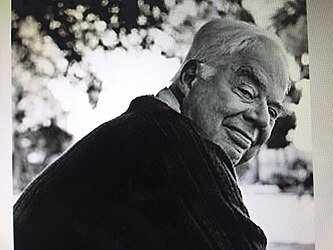
About Richard Rorty
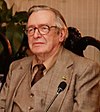
Richard McKay Rorty (October 4, 1931 in New York City – June 8, 2007) was an American philosopher and pragmatist.
Best Richard Rorty Quotes
Shortest
Earliest
Explore our curated collection of the most famous and impactful Richard Rorty quotes.

“Philosophy makes progress not by becoming more rigorous but by becoming more imaginative.”
“If I had to lay bets, my bet would be that everything is going to go to hell, but, you know, what else have we got except hope?”
“My principal motive is the belief that we can still make admirable sense of our lives even if we cease to have … "an ambition of transcendence."”
“To abjure the notion of the “truly human” is to abjure the attempt to divinize the self as a replacement for a divinized world.”

“Almost as soon as I began to study philosophy, I was impressed by the way in which philosophical problems appeared, disappeared, or changed shape, as a result of new assumptions or vocabularies.”
“On James's view, "true" resembles "good" or "rational" in being a normative notion, a compliment paid to sentences that seem to be paying their way and that fit with other sentences which are doing so.”
“When the individual finds in her conscience beliefs that are relevant to public policy but incapable of the defense on the basis of beliefs common to her fellow citizens, she must sacrifice her conscience on the altar of public expediency.”
“I think of the course of human history as a long, swelling, increasingly polyphonic poem - a poem that leads up to nothing save itself. When the species is extinct, "human nature's total message" will not be a set of propositions, but a set of vocabularies - the more, and the more various, the better.”

“It is no more evident that democratic institutions are to be measured by the sort of person they create than that they are to be measured against divine commands. … Even if the typical character types of liberal democracies are bland, calculating, petty, and unheroic, the prevalence of such people may be a reasonable price to pay for political freedom.”
“Citizens of a Jeffersonian democracy can be as religious or irreligious as they please as long as they are not “fanatical.” That is, they must abandon or modify opinion on matters of ultimate importance, the opinions that may hitherto have given sense and point to their lives, if these opinions entail public actions that cannot be justified to most of their fellow citizens.”
“Philosophers get attention only when they appear to be doing something sinister—corrupting the youth, undermining the foundations of civilization, sneering at all we hold dear. The rest of the time everybody assumes that they are hard at work somewhere down in the sub-basement, keeping those foundations in good repair. Nobody much cares what brand of intellectual duct tape is being used.”
“Nowadays, to say that we are clever animals is not to say something philosophical and pessimistic but something political and hopeful – namely, if we can work together, we can make ourselves into whatever we are clever and courageous enough to imagine ourselves becoming. This is to set aside Kant’s question “What is man?” and to substitute the question “What sort of world can we prepare for our great grandchildren?””

“… our maturation has consisted in the gradual realization that, if we can rely on one another, we need not rely on anything else. In religious terms, this is the Feuerbachian thesis that God is just a projection of the best, and sometimes the worst, of humanity. In philosophical terms, it is the thesis that anything that talk of objectivity can do to make our practices intelligible can be done equally well by talk of intersubjectivity.”
“From Richard McKeon and Robert Brumsbaugh I learned to view the history of philosophy as a series, not of alternative solutions to the same problems, but of quite different sets of problems. From Rudolph Carnap and Carl Hempel I learned how pseudo-problems could be revealed as such by restarting them in the formal mode of speech. From Charles Hartshorne and Paul Weiss I learned how they could be so revealed by being translated into Whiteheadian or Hegelian terms.”
“Rather, we heirs of Enlightenment think of enemies of liberal democracy like Nietzsche or Loyola as, to use Rawls’s word, “mad.” We do so because there is no way to see them as fellow citizens of our constitutional democracy, people whose life plans might, given ingenuity and good will, be fitted in with those of other citizens. They are crazy because the limits of sanity are set by what we can take seriously. This, in turn, is determined by our upbringing, our historical situation.”

“Kripke tries to sober us up by denying that meaning determines reference. Rather, we name things by confronting them and baptising them, not by creating them out of a list of qualities. Names are not, pace Russell, shorthand for such lists. They are not abbreviations for descriptions, but (in Kripke’s coinage) ‘rigid designators’ – that is, they would name the same things in any possible world, including worlds in which their bearers did not have the properties we, in this world, use to identify them.”

“Complaints about the social irresponsibility of the intellectual typically concern the intellectual’s tendency to marginalize herself, to move out from one community by interior identification of herself with some other community—for example, another country or historical period. … It is not clear that those who thus marginalize themselves can be criticized for social irresponsibility. One cannot be irresponsible toward a community of which one does not think of oneself as a member. Otherwise runaway slaves and tunnelers under the Berlin Wall would be irresponsible.”
“As long as we try to project from the relative and conditioned to the absolute and unconditioned, we shall keep the pendulum swinging between dogmatism and skepticism. The only way to stop this increasingly tiresome pendulum swing is to change our conception of what philosophy is good for. But that is not something which will be accomplished by a few neat arguments. It will be accomplished, if it ever is, by a long, slow process of cultural change – that is to say, of change in common sense, changes in the intuitions available for being pumped up by philosophical arguments.”

“The encouragement of light-mindedness about traditional philosophical topics serves the same purposes as does the encouragement of light-mindedness about traditional theological topics. Like the rise of large market economies, the increase in literacy, the proliferation of artistic genres, and the insouciant pluralism of contemporary culture, such philosophical superficiality and light-mindedness helps along the disenchantment of the world. It helps make the world’s inhabitants more pragmatic, more tolerant, more liberal, more receptive to the appeal of instrumental rationality.”
Richard Rorty Quotes by Topic
Find exactly what you are looking for by browsing this categorized list of Richard Rorty quotes by topic.
Richard Rorty on Intellectual responsibility 2 quotes
“The view that there is no source of obligation save the claims of individual sentient beings entails that we have no responsibility to anything other than such beings. Most of the relevant sentient individuals are our fellow humans. So talk about our responsibility to Truth, or to Reason, must be replaced by talk about our responsibility to our fellow human beings.”
Richard Rorty on Imagination
“Philosophy makes progress not by becoming more rigorous but by becoming more imaginative.”

Richard Rorty on Philosophy
“Philosophy makes progress not by becoming more rigorous but by becoming more imaginative.”
Richard Rorty on Patriotism
“National pride is to countries what self-respect is to individuals: a necessary condition for self-improvement.”

Richard Rorty on Intelligibility
“In philosophical terms, it is the thesis that anything that talk of objectivity can do to make our practices intelligible can be done equally well by talk of inter subjectivity. In political terms, it is the thesis that if we can just keep democracy and reciprocal tolerance alive, everything else can be settled by muddling through to some reasonable sort of compromise.”

Richard Rorty on Democracy
“Citizens of a Jeffersonian democracy can be as religious or irreligious as they please as long as they are not “fanatical.” That is, they must abandon or modify opinion on matters of ultimate importance, the opinions that may hitherto have given sense and point to their lives, if these opinions entail public actions that cannot be justified to most of their fellow citizens.”
Richard Rorty on Intersubjectivity
“Our maturation has consisted in the gradual realization that, if we can rely on one another, we need not rely on anything else. In religious terms, this is the Feuerbachian thesis that God is just a projection of the best, and sometimes the worst, of humanity. In philosophical terms, it is the thesis that anything that talk of objectivity can do to make our practices intelligible can be done equally well by talk of intersubjectivity.”
Richard Rorty on Intellectual
“Complaints about the social irresponsibility of the intellectual typically concern the intellectual’s tendency to marginalize herself, to move out from one community by interior identification of herself with some other community—for example, another country or historical period. … It is not clear that those who thus marginalize themselves can be criticized for social irresponsibility. One cannot be irresponsible toward a community of which one does not think of oneself as a member. Otherwise runaway slaves and tunnelers under the Berlin Wall would be irresponsible.”

What Richard Rorty Said About Others
Discover personal opinions Richard Rorty shared regarding contemporaries.
Richard Rorty on Jacques Derrida
“[John Searle is] right in saying that a lot of Derrida's arguments … are just awful.”

Richard Rorty on John Searle
“[John Searle is] right in saying that a lot of Derrida's arguments … are just awful.”

Richard Rorty on Michel Foucault
“Foucault's response to attempts such as those of Habermas, Dewey, and Berlin - attempts to build a philosophy around the needs of a democratic society - is to point out the drawbacks of this society, the ways in which it does not allow room for self-creation, for private projects. Like Habermas and Sellars, he accepts Mead's view that the self is a creation of society. Unlike them, he is not prepared to admit that the selves shaped by modern liberal societies are better than the selves earlier societies created. A large part of Foucault's work - the most valuable part, in my view - consists in showing how the patterns of acculturation characteristic of liberal societies have imposed on their members kinds of constraints of which older, premodern societies had not dreamed. He is not, however, willing to see these constraints as compensated for by a decrease in pain, any more than Nietzsche was willing to see the resentfulness of "slave-morality" as compensated for by such a decrease.”

Quotes About Richard Rorty
Gain deeper perspective through quotes about Richard Rorty from others.
Michael Bérubé on Richard Rorty
“About the utility of the argument I have little doubt, convinced as I am that nothing will resist the growing corporatization of the world save for a very broad coalition of anticorporatization folks on the left, all the way from the mealiest-mouthed of liberals to the stark-ravingest of Marxists. But I have grave doubts about whether Rorty’s “two lefts” analysis of the contemporary scene will further the creation of that coalition: unless we can see the politics of redistribution and the politics of recognition as the double helix of leftist thought — and we should think especially here of issues such as immigration, disability, reproduction and motherhood, and criminal justice, where cultural politics and public policy are woven as tightly as any strand of DNA — no amnesty program for the sectarians of the past will suffice to remedy the two-left sectarianism of the present. The value of Achieving Our Country, then, does not lie in its accuracy about the past and present state of the left; it lies, instead, in its willingness to throw down gauntlets for the formation of a future left that can think beyond the impasses with which Achieving Our Country would leave us.”
Olavo de Carvalho on Richard Rorty
“"Language is not an image of reality", assures Mr. Rorty, a pragmatist and anti-Platonic philosopher. Should we interpret this sentence in the sense Mr. Rorty calls 'Platonic', that is, as a denial of an attribute to one substance? It would be contradictory: a language that is not an image of reality cannot give us a real image of its relations with reality. Therefore, the sentence must be interpreted pragmatically: it does not affirm anything about language, but only indicates the intention to use it in a certain way. The main thesis of Mr. Rorty's thought is a declaration of intentions. The sentence "language is not an image of reality" rigorously means this and nothing else: "I, Richard Rorty, am firmly decided to not use language as an image of reality." It is the sort of unanswerable argument: an expression of someone's will cannot be logically refuted. Therefore, there is nothing to debate: keeping the limits of decency and law, Mr. Rorty can use language as he may wish. The problem appears when he begins to try to make us use language exactly like him. He states that language is not a representation of reality, but rather a set of tools invented by man in order to accomplish his desires. But this is a false alternative. A man may well desire to use this tool to represent reality. It seems that Plato desired precisely this. But Mr. Rorty denies that men have other desires than seeking pleasure and avoiding pain. That some declare to desire something else must be very painful to him, for, on the contrary, there would be no pragmatically valid explanation for the effort he puts in changing the conversation. Given the impossibility to deny that these people exist, the pragmatist will perhaps say that those who look for representing reality are moved by the desire to avoid pain as much as those who prefer to create fantasies; but this objection will have shown precisely that these are not things which exclude each other. The Rortyan alternative is false in its own terms.”
Hilary Putnam on Richard Rorty
“I think philosophy is both more important and less important than Rorty does. It is not a pedestal on which we rest (or have rested until Rorty). Yet the illusions that philosophy spins are illusions that belong to die nature of human life itself, and that need to be illuminated. Just saying "That's a pseudo-issue" is not of itself therapeutic; it is an aggressive form of the metaphysical disease itself.”

John Searle on Richard Rorty
“Galileo claimed to have discovered, by astronomical observation through a telescope, that Copernicus was right that the earth revolved around the sun. [Cardinal] Bellarmine claimed that he could not be right because his view ran counter to the Bible. Rorty says, astoundingly, that Bellarmine's argument was just as good as Galileo's. It is just that the rhetoric of "science" had not at that time been formed as part of the culture of Europe. We have now accepted the rhetoric of "science," he writes, but it is not more objective or rational than Cardinal Bellarmine's explicitly dogmatic Catholic views. According to Rorty, there is no fact of the matter about who was right because there are no absolute facts about what justifies what. Bellarmine and Galileo, in his view, just had different epistemic systems.”
About Richard Rorty
Richard McKay Rorty (October 4, 1931 in New York City – June 8, 2007) was an American philosopher and pragmatist.