Link Copied!
Richard Holbrooke Quotes (1941-2010)
Scientist
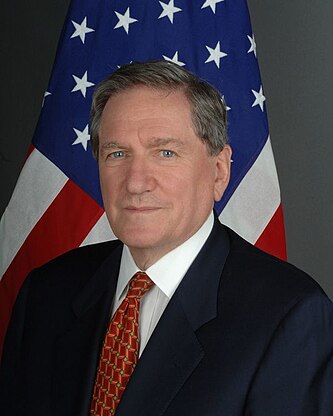
About Richard Holbrooke
Richard Charles Albert Holbrooke (24 April 1941 - 13 December 2010) was an American advisor, diplomat, political scientist, investment banker, and historian.
Best Richard Holbrooke Quotes
Shortest
Earliest
Explore our curated collection of the most famous and impactful Richard Holbrooke quotes.
“You've got to stop this war in Afghanistan.”
“"I tell you," he [Milosevic] continued, "Izetbegovic has earned Sarajevo by not abandoning it. He's one tough guy. It's his". These words were probably the most astonishing and unexpected of the conference.”
“The controlled chaos is one way to get creativity. The intensity of it, the physical rush, the intimacy created the kind of dialogue that leads to synergy … The U.N. by contrast is sterile, overly concerned with protocol, overly formal, filled with set-piece speeches. This is what the U.N. in theory is supposed to be but can't.”

“I regret that we did not make a stronger effort to drop the name Republika Srpska. We underestimated the value to Pale of retaining their blood-soaked name. We may also have underestimated the strength of our negotiating hand on that day, when the bombing had resumed. In retrospect, I think we should have pushed Milosevic harder to change the name of the Bosnian Serb entity. Even if the effort failed, as Owen and Hill predicted, it would have been worth trying.”
“The International War Crimes Tribunal, located at The Hague. When it was established by the United Nations Security Council in 1993, the tribunal was widely viewed as little more that a public relations device. It got off to a slow start (...) During our negotiations, the tribunal emerged as a valuable instrument of policy that allowed us, for example, to bar Karadzic and all other indicted war criminals from public office. Yet no mechanism existed for the arrest of indicted war criminals.”

“The struggle over the U.N.'s role foreshadowed the American determination a year later to oppose Boutros-Ghali's quest for a second term as Secretary-General. More than any other issue, it was his performance on Bosnia that made us feel he did not deserve a second term - just as Kofi Annan's strength on the bombing in August had already made him the private favorite of many American officials. Although the American campaign against Boutros-Ghali, in which all our key allies opposed us, was long and difficult - especially for Allbright, who bore heavy and unjust criticism for her role - the decision was correct, and may well have saved America's role in the United Nations.”
“We never fully understood why Milosevic decided to give Sarajevo to the Muslims. But in retrospect, the best explanation may be that he was fed up with the Bosnian Serbs and had decided to weaken their Pale base by giving away the Serb-controlled part of Sarajevo. By giving the Federation all of Bosnia's capital, perhaps Milosevic wanted to weaken Karadzic and strengthen the Serbs in other parts of Bosnia, especially Banja Luka. This explanation was consistent with one of Milosevic's main themes at Dayton: that the Bosnian Serb leadership had become an impediment, even though he had earlier made common cause with them. Milosevic had often talked of strengthening the "intellectuals" and businessmen of Banja Luka in order to weaken Pale; now he seemed to be putting his theory into action.”
“Our last call in Zagreb before returning to Washington was on U.N. Secretary-General Boutros-Ghali's senior representative in the former Yugoslavia, Yasushi Akashi, whom I had known since my two visits to Cambodia in 1992. Akashi had been harshly treated by the press and castigated by critics of the U.N. for his weakness. But it was entirely not his fault: he was operating under tight constraints imposed by Boutros-Ghali. Furthermore, Akashi was virtually ignored by General Janvier and the U.N. military. (...) He was leaving Zagreb with his previously distinguished records blemished, but his mission had been doomed from the start because of limits imposed from New York. The United States was delighted with his replacement: Kofi Annan (...), the U.N. official in whom we had the greatest confidence, and his arrival was good news.”
“As everybody who met him noted, Krajisnik had only one long and extraordinarily brushy eyebrow, which spanned his forehead, creating what looked like a permanent dark cloud over his deep-set eyes. Although Krajisnik had not been indicted by the War Crimes Tribunal - and could therefore participate in Dayton - it was hard to distinguish his views from those of his close friend Radovan Karadzic. Milosevic had often said that Krajisnik was "more difficult" than Karadzic, but we had little basis on which to make an independent judgment. (...) He and Izetbegovic knew each other well, from lengthy meetings in the Bosnian Assembly before the war. Krajisnik owned a five-hectare farm on the edge of Sarajevo, in an area that would probably revert to the Muslims in any settlement, and we often made bitter jokes that the war was really over "Krajisnik's five hectares".”
“A remarkable challenge to Milosevic unfolded in the street of Belgrade in December [1996], led by three politicians who banded together in a movement called Zajedno, or the Together Movement. For weeks, hundreds of thousands of Belgrade citizens braved subfreezing weather to call for democracy. But Washington missed a chance to affect events; except for one ineffectual trip to Washington, Zajedno had no contact with senior American government officials, and the Administrations sent no senior officials to Belgrade for fear that their visits would be used by Milosevic to show support. For the first time in eighteen months, Milosevic felt no significant American pressure, and turned back towards the extreme nationalists, including Karadzic, for support. His tactical skills saved him again, and within weeks, the Together Movement was together no more, as its leaders split among themselves.”

“My first stop in Rome was a call on an old friend, Foreign Minister Susanna Agnelli. Universally known as Sunni, she had been appointed to the post by the government of Lamberto Dini in part because of her personal stature. A former mayor and senator, the sister of Italy's most famous businessman, Gianni Agnelli, and the author of a best-selling memoir with the delightful title We always wore sailor suits, Sunni Agnelli combined aristocratic bearing with casual informality. Her giant white mane of hair and her imposing height added to her presence. She approached her job as she had probably approached everything else: with a relaxed confidence in her own intuition. She conveyed an impression of great amusement at the passing parade of overly intense men formulating policy. We had known each other for years, but only socially.”
“Most American officials viewed Prime Minister Haris Silajdzic as the Bosnia leader with the broadest vision - an eloquent advocate of a multiethnic state. But his power struggles with Izetbegović and Sacirbey and other members of the Bosnian government often isolated him. His collegues complained that he was difficult to work with. He carried a serious additional burden: Tuđman and Milošević distrusted him. Nevertheless, Silajzic was one of the two most popular Muslim politicians in Bosnia, along with Izetbegović. My own feelings about Silajdzic shifted frequently. There was something touching about his intensity and energy, and his constant desire to improve himself intellectually. Although always busy, he seemed alone - his wife and son lived in Turkey. Silajdzic was the only Bosnian official who seemed genuinely to care about economic reconstruction of his ravaged land. His unpredictable moods worried us, but his support would be essential for any peace agreement.”
“To further weaken Pale, I proposed that the Dayton agreement include a provision moving the Bosnian Serb capital to Banja Luka. Milosevic seemed interested in this proposal but, to my surprise, Izetbegovic demurred. Even though he hated the leadership in Pale, he seemed to think he could work with them, especially his old associate from the Bosnian Assembly, Momcilo Krajisnik. Izetbegovic also saw value in keeping the capitals of the two entities close to each other so that Sarajevo remained the only important political center in Bosnia. He may also have feared that if the Bosnian Serb capital moved to Banja Luka, which is closer to Zagreb than Sarajevo, it would accelerate the permanent division of the country and only strengthen Tudjman. Whatever Izetbegovic's reasons for not wanting to close Pale, it was a mistake. The mountain town was solely a wartime capital, established by an indicted war criminal and his henchmen. It was the living symbol - and headquarter - of his organization. We should have pushed Izetbegovic harder to agree to establish the Serb capital at Banja Luka. It would have made a big difference in the effort to implement the Dayton agreements.”
“There was also a real Dayton out there, a charming small Ohio city, famous as the birthplace of the Wright Brothers. Its citizens energized us from the outset. Unlike the population of, say, New York, Geneva or Washington, which would scarcely notice another conference, Daytonians were proud to be part of history. Large signs at the commercial airport hailed Dayton as the "temporary center of international peace". The local newspapers and television stations covered the story from every angle, drawing the people deeper into the proceedings. When we ventured into a restaurant or a shopping center downtown, people crowded around, saying that they were praying for us. Warren Christopher was given at least one standing ovation in a restaurant. Families on the air base placed "candles of peace" in their front windows, and people gathered in peace vigils outside the base. One day they formed a "peace chain", although it was not large enough to surround the sprawling eight-thousand-acre base. Ohio's famous ethnic diversity was only on display. We did everything possible to emphasize the fact that in the American heartland people from every part of southeastern Europe lived together in peace, their competition restricted to softball games, church rivalries, and the occasional barroom fight. (...)”

“The world "legendary" is much overused, but it certainly applies to the seventy-six-year-old Andreas Papandreou, whose life had encompassed so much Greek-American history. As a Greek-born American citizen, he earned a doctorate in economics from Harvard, served in the United States Navy during World War II, and then taught at Harvard, the University of Minnesota, and Berkeley (where he was chairman of the economics department). He was part of Adlai Stevenson's advisory team during his two runs for the presidency. Then he returned to Greece and fought his way into power, surviving a long period in the political wilderness after right-wing pressure forced the resignation of his father, Georgios Papandreou, in 1965, two years before the military coup. He won the prime ministership fifteen years after his father had been forced out of it, and then lost it following a series of corruption scandals - only to make another astonishing comeback, regaining it again in 1993. To conservative Americans, he was anathema, an American turncoat. To Greeks, both those who followed him and those who hated him, he was the dominant political figure of the era.”
“The fighting in western Bosnia intensified as the cease-fire approached. (...) Facing the end of the fighting, the Croats and the Bosnians finally buried their differences, if only momentarily, and took Sanski Most and several other smaller towns. But Prijedor still eluded them. For reasons we never fully understood, they did not capture this important town, a famous symbol of ethnic cleansing.* (* In March 1997, I attended a showing at the Council on Foreign Relations in New York of a powerful documentary film, Calling the ghosts, that recounted the brutal treatment two Bosnian women from Prijedor had suffered during their incarceration at the notorious Omarska prison camp. Following the film, the two women angrily asked me why they were still unable to return to their hometown. I told them we'd repeatedly encouraged an assault on Prijedor. They were astonished; they said General Dudakovic, the Bosnian commander, had told them personally that "Holbrooke would not let us capture Prijedor and Bosanski Novi". I subsequently learned that this story was widely believed in the region. This revisionism was not surprising; it absolved Dudakovic and his associates of responsibility for the failure to take Prijedor. I suspect the truth is that after the disaster at the Una River the Croatians did not want to fight for a town the would have to turn over to the Muslims - and the Bosnians could not capture it unaided.”
“The situation also gave U.N. Secretary-General Boutros-Ghali a chance to start the U.N.'s disegagement from Bosnia, something he had long wanted to do. After a few meetings with him, I concluded that this elegant and subtle Egyptian, whose Coptic family could trace its origins back over centuries, had disdain for the fractious and dirty peoples of the Balkans. Put bluntly, he never liked the place. In 1992, during his only visit to Sarajevo, he made the comment that shocked the journalists on the day I arrived in the beleaguered capital: "Bosnia is a rich man's war. I understand your frustration, but you have a situation here that is better than ten other places in the world. … I can give you a list." He complained many times that Bosnia was eating up his budget, diverting him from other priorities, and threatening the whole U.N. system. "Bosnia has created a distortion in the work of the U.N.", he said just before Srebrenica. Sensing that our diplomatic efforts offered an opportunity to disengage, he informed the Security Council on September 18 that he would be ready to end the U.N. role in the former Yugoslavia, and allow all key aspects of implementation to be placed with others. Two days later, he told Madeleine Albright that the Contact Group should create its own mechanism for implementation - thus volunteering to reduce the U.N.'s role at a critical moment. Ironically, his weakness simplified our task considerably.”
“Dayton shook the leadership elite of post-Cold War Europe. The Europeans were grateful to the United States for the leading the effort that finally ended the war in Bosnia, but some European officials were embarrassed that American involvement had been necessary. Jacque Poos's 1991 assertion that Europe's "hour had dawned" lay in history's dustbin, alongside James Baker's view that we had no dog in that fight. "One cannot call it an American peace", French Foreign Minister de Charette told the press, "even if President Clinton and the Americans have tried to pull the blanket over to their side. The fact is that the Americans looked at this affair in ex-Yugoslavia from a great distance for nearly four years and basically blocked the progression of things." But de Charette also acknowledged that "Europe as such was not present, and this, it is true, was a failure of the European Union." Prime Minister Alain Juppé, after praising the Dayton agreement, could not resist adding, "Of course, it resembles like a twin the European plan we presented eighteen months ago" - when he was Foreign Minister. Agence France-Presse reported that many European diplomats were "left smarting" at Dayton. In an article clearly inspired by someone at the French Foreign Ministry, Le Figaro said that "Richard Holbrooke, the American mediator, did not leave his European colleagues with good memories from the air base at Dayton." They quoted an unnamed French diplomat as saying, "He flatters, he lies, he humiliates: he is a sort of brutal and schizophrenic Mazarin." President Chirac's national security assistant, Jean-David Levitte, called to apologize for this comment, saying it did not represent the views of his boss. I replied that such minidramas were inevitable given the pressures and frustrations we faced at Dayton and were inconsequential considering that the war was over.”
“Shattuck and I were particularly concerned with the activities of Zeljko Raznatovic, popularly known as Arkan, one of the most notorious men in the Balkans. Even in former Yugoslavia, Arkan was something special, a freelance murderer who roamed across Bosnia and eastern Slavonia with his black-shirted men, terrorizing Muslims and Croats. To the rest of the world Arkan was a racist fanatic run amok, but many Serbs regarded him as a hero. His private army, the Tigers, had committed some of the war's worst atrocities, carrying out summary executions and virtually inventing ethnic cleansing in 1991-92. Western intelligence was convinced he worked, or had worked, for the Yugoslav secret police. (...) Although the [Hague ICTY] Tribunal had handed down over fifty indictments by October 1995, these did not include Arkan. I pressed Goldstone [
“Months later, Roger Cohen would write in The New York Times that preventing an attack on Banja Luka was "an act of consummate Realpolitik" on our part, since letting the Federation [of Bosnia-Herzegovina] take the city would have "derailed" the peace process. Cohen, one of the most knowledgeable journalists to cover the was, misunderstood our motives in opposing an attack on Banja Luka. A true practitioner of Realpolitik would have encouraged the attack regardless of its human consequences. In fact, humanitarian concerns decided the case for me. Given the harsh behavior of Federation troops during the offensive, it seemed certain that the fall of Banja Luka would lead to forced evictions and random murders. I did not think the United States should contribute to the creation of new refugees and more human suffering in order to take a city that would have to be returned later. Revenge might be a central part of the ethos of the Balkans, but American policy could not be party of it. Our responsibility was to implement the American national interest, as best as we could determine it. But I am no longer certain we were right to oppose an attack on Banja Luka. Had we known then that the Bosnian Serbs would have been able to defy or ignore so many of the key political provisions of the peace agreement in 1996 and 1997, the negotiating team might not have opposed such an attack. However, even with American encouragement, it is by no means certain that an attack would have taken place - or, if it had, that it would have been successful. Tuđman would have had to carry the burden of the attack, and the Serb lines were already stiffening. The Croatian Army had just taken heavy casualties on the Sarva. Furthermore, if it fell, Banja Luka would either have gone to the Muslims or been returned later to the Serbs, thus making it of dubious value to Tuđman. There was another intriguing factor in the equation - one of the few things that Milošević and Izetbegović had agreed on. Banja Luka, they both said, was the center of moderate, anti-Pale sentiment within the Bosnian Serb community, and should be built up in importance as a center of opposition to Pale. Izetbegovic himself was ambivalent about taking the city, and feared that if it fell, it would only add to Croat-Bosnian tensions.”
“Our meeting with Admiral Leighton Smith, on the other hand, did not go well. He had been in charge of the NATO air strikes in August and September [1995], and this gave him enormous credibility, especially with the Bosnian Serbs. Smith was also the beneficiary of a skillful public relations effort that cast him as the savior of Bosnia. In a long profile, Newsweek had called him "a complex warrior and civilizer, a latter-day George C. Marshall." This was quite a journalistic stretch, given the fact that Smith considered the civilian aspects of the task beneath him and not his job - quite the opposite of what General Marshall stood for.
After a distinguished thirty-three-year Navy career, including almost three hundred combat missions in Vietnam, Smith was well qualified for his original post as commander of NATO's southern forces and Commander in Chief of all U.S. naval forces in Europe. But he was the wrong man for his additional assignment as IFOR commander, which was the result of two bureaucratic compromises, one with the French, the other with the American military. General Joulwan rightly wanted the sixty thousand IFOR soldiers to have as their commanding officer an Army general trained in the use of ground forces. But Paris insisted that if Joulwan named a separate Bosnia commander, it would have to be a Frenchman. This was politically impossible for the United States; thus, the Franh objections left only one way to preserve an American chain of command - to give the job to Admiral Smith, who joked that he was now known as "General" Smith. (...)
On the military goals of Dayton, he was fine; his plans for separating the forces along the line we had drawn in Dayton and protecting his forces were first-rate. But he was hostile to any suggestions that IFOR help implement any nonmilitary portion of the agreement. This, he said repeatedly, was not his job.
Based on Shalikashvili's statement at White House meetings, Christopher and I had assumed that the IFOR commander would use his authority to do substantially more than he was obligated to do. The meeting with Smith shattered that hope. Smith and his British deputy, General Michael Walker, made clear that they intended to take a minimalist approach to all aspects of implementation other than force protection. Smith signaled this in his first extensive public statement to the Bosnian people, during a live call-in program on Pale Television - an odd choice for his first local media appearance. During the program, he answered a question in a manner that dangerously narrowed his own authority. He later told Newsweek about it with a curious pride: "One of the questions I was asked was, "Admiral, is it true that IFOR is going to arrest Serbs in the Serb suburbs of Sarajevo?" I said, "Absolutely not, I don't have the authority to arrest anybody"."
This was an inaccurate way to describe IFOR's mandate. It was true IFOR was not supposed to make routine arrests of ordinary citizens. But IFOR had the authority to arrest indicted war criminals, and could also detain anyone who posed a threat to its forces. Knowing what the question meant, Smith had sent an unfortunate signal of reassurance to Karadzic - over his own network.”
Richard Holbrooke Quotes by Topic
Find exactly what you are looking for by browsing this categorized list of Richard Holbrooke quotes by topic.
Richard Holbrooke on Anathema
“To conservative Americans, he was anathema, an American turncoat. To Greeks, both those who followed him and those who hated him, he was the dominant political figure of the era.”
Richard Holbrooke on Republika Srpska
“I regret that we did not make a stronger effort to drop the name Republika Srpska. We underestimated the value to Pale of retaining their blood-soaked name. We may also have underestimated the strength of our negotiating hand on that day, when the bombing had resumed. In retrospect, I think we should have pushed Milosevic harder to change the name of the Bosnian Serb entity. Even if the effort failed, as Owen and Hill predicted, it would have been worth trying.”

Richard Holbrooke on Yugoslavia
“As our American negotiating team shuttled around the Balkans in the fall of 1995 trying to end the war in Bosnia, the Versailles treaty was not far from my mind. Reading excerpts from Harold Nicolson's Peacemaking 1919, we joked that our goal was to undo Woodrow Wilson's legacy. When we forced the leaders of Bosnia, Croatia, and the Federal Republic of Yugoslavia to come together in Dayton, Ohio, in November 1995 and negotiate the end of the war, we were, in effect, burying another part of Versailles. In the spring of 2002, the last two parts of the Versailles creation still linked as "Yugoslavia" took another step, moving to the brink of a full and final divorce by agreeing to rename their country "Serbia and Montenegro"—probably a step on the path to full separation.”

Richard Holbrooke on Banja Luka
“To further weaken Pale, I proposed that the Dayton agreement include a provision moving the Bosnian Serb capital to Banja Luka. Milošević seemed interested in this proposal but, to my surprise, Izetbegović demurred. Even though he hated the leadership in Pale, he seemed to think he could work with them, especially his old associate from the Bosnian Assembly, Momčilo Krajišnik. Izetbegovic also saw value in keeping the capitals of the two entities close to each other so that Sarajevo remained the only important political center in Bosnia. He may also have feared that if the Bosnian Serb capital moved to Banja Luka, which is closer to Zagreb than Sarajevo, it would accelerate the permanent division of the country and strengthen Tuđman. Whatever Izetbegović's reasons for not wanting to close Pale, it was a mistake. The mountain town was solely a wartime capital, established by an indicted war criminal and his henchmen. It was the living symbol - and headquarter - of his organization. We should have pushed Izetbegović harder to agree to establish the Serb capital at Banja Luka. It would have made a big difference in the effort to implement the Dayton agreements.”

What Richard Holbrooke Said About Others
Discover personal opinions Richard Holbrooke shared regarding contemporaries.
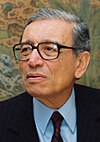
Richard Holbrooke on Boutros Boutros-Ghali 2 quotes
“The struggle over the U.N.'s role foreshadowed the American determination a year later to oppose Boutros-Ghali's quest for a second term as Secretary-General. More than any other issue, it was his performance on Bosnia that made us feel he did not deserve a second term — just as Kofi Annan's strength on the bombing in August had already made him the private favorite of many American officials. Although the American campaign against Boutros-Ghali, in which all our key allies opposed us, was long and difficult — especially for Allbright, who bore heavy and unjust criticism for her role — the decision was correct, and may well have saved America's role in the United Nations.”
Richard Holbrooke on Slobodan Milošević 2 quotes
“We never fully understood why Milosevic decided to give Sarajevo to the Muslims. Certainly he had many good reasons. But in retrospect, the best explanation may be that he was fed up with the Bosnian Serbs and had decided to weaken their Pale base by giving away the Serb-controlled part of Sarajevo. By giving the Federation all of Bosnia's capital, perhaps Milosevic wanted to weaken Karadzic and stregthen the Serbs in other parts of Bosnia, especially Banja Luka. This explanation was consistent with one of Milosevic's main themes at Dayton: that the Bosnian Serb leadership had become an impediment, even though he had earlier made common cause with them. Milosevic had often talked of strengthening the "intellectuals" and businessmen of Banja Luka in order to weaken Pale; now he seemed to be putting his theory into action.”

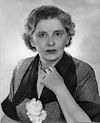
Richard Holbrooke on Rebecca West
“Many books and articles about Yugoslavia have left the impression that the war was inevitable . The most famous of all English - language books on the region was Rebecca West's monumental travel book Black Lamb and Grey Falcon, first published in 1941 and continuously in print since then. West’s openly pro-Serb attitudes and her view that the Muslims were racially inferior had influenced two generations of readers and policy makers.”
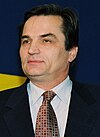
Richard Holbrooke on Haris Silajdžić
“Most American officials viewed Prime Minister Haris Silajdzic as the Bosnia leader with the broadest vision - an eloquent advocate of a multiethnic state. But his power struggles with Izetbegović and Sacirbey and other members of the Bosnian government often isolated him. His colleagues complained that he was difficult to work with. He carried a serious additional burden: Tudjman and Milošević distrusted him. Nevertheless, Silajdzic was one of the two most popular Muslim politicians in Bosnia, along with Izetbegovic. My own feelings about Silajdzic shifted frequently. There was something touching about his intensity and energy, and his constant desire to improve himself intellectually. Although always busy, he seemed alone - his wife and son lived in Turkey. Silajdzic was the only Bosnian official who seemed genuinely to care about economic reconstruction of his ravaged land. His unpredictable moods worried us, but his support would be essential for any peace agreement.”
Richard Holbrooke on Woodrow Wilson
“In the eighty years since he left office, Wilson’s reputation has risen and fallen regularly—but he remains as fascinating and central to an understanding of modern American foreign policy as ever. His many supporters, from Herbert Hoover to Robert McNamara, have argued that his enemies in both Paris and the United States Senate were responsible for the undoing of one of history’s noblest dreams. Others, including Senator Jesse Helms, have viewed Wilson’s determined adversary, Senator Henry Cabot Lodge, as a principled protector of American sovereignty and charged Wilson with seeking to undermine the American Constitution. Another school of thought, especially prevalent in the later years of the Cold War, criticized Wilson for unrealistic, overly moralistic goals: among its best-known practitioners are George F. Kennan and Henry Kissinger, who accused Wilson of “extraordinary conceit,” even while conceding that he “originated what would become the dominant intellectual school of American foreign policy.” (To Kissinger’s horror, his president, Richard Nixon placed Wilson’s portrait in the place of honor in the Cabinet Room.)”

Richard Holbrooke on Alija Izetbegović
“To further weaken Pale, I proposed that the Dayton agreement include a provision moving the Bosnian Serb capital to Banja Luka. Milošević seemed interested in this proposal but, to my surprise, Izetbegović demurred. Even though he hated the leadership in Pale, he seemed to think he could work with them, especially his old associate from the Bosnian Assembly, Momčilo Krajišnik. Izetbegovic also saw value in keeping the capitals of the two entities close to each other so that Sarajevo remained the only important political center in Bosnia. He may also have feared that if the Bosnian Serb capital moved to Banja Luka, which is closer to Zagreb than Sarajevo, it would accelerate the permanent division of the country and strengthen Tuđman. Whatever Izetbegović's reasons for not wanting to close Pale, it was a mistake. The mountain town was solely a wartime capital, established by an indicted war criminal and his henchmen. It was the living symbol - and headquarter - of his organization. We should have pushed Izetbegović harder to agree to establish the Serb capital at Banja Luka. It would have made a big difference in the effort to implement the Dayton agreements.”
Richard Holbrooke on Leighton W. Smith, Jr.
“Our meeting with Admiral Leighton Smith, on the other hand, did not go well. He had been in charge of the NATO air strikes in August and September [1995], and this gave him enormous credibility, especially with the Bosnian Serbs. Smith was also the beneficiary of a skillful public relations effort that cast him as the savior of Bosnia. In a long profile, Newsweek had called him "a complex warrior and civilizer, a latter-day George C. Marshall." This was quite a journalistic stretch, given the fact that Smith considered the civilian aspects of the task beneath him and not his job — quite the opposite of what General Marshall stood for. After a distinguished thirty-three-year Navy career, including almost three hundred combat missions in Vietnam, Smith was well qualified for his original post as commander of NATO's southern forces and Commander in Chief of all U.S. naval forces in Europe. But he was the wrong man for his additional assignment as IFOR commander, which was the result of two bureaucratic compromises, one with the French, the other with the American military. General Joulwan rightly wanted the sixty thousand IFOR soldiers to have as their commanding officer an Army general trained in the use of ground forces. But Paris insisted that if Joulwan named a separate Bosnia commander, it would have to be a Frenchman. This was politically impossible for the United States; thus, the Franh objections left only one way to preserve an American chain of command — to give the job to Admiral Smith, who joked that he was now known as "General" Smith. … On the military goals of Dayton, he was fine; his plans for separating the forces along the line we had drawn in Dayton and protecting his forces were first-rate. But he was hostile to any suggestions that IFOR help implement any nonmilitary portion of the agreement. This, he said repeatedly, was not his job. Based on Shalikashvili's statement at White House meetings, Christopher and I had assumed that the IFOR commander would use his authority to do substantially more than he was obligated to do. The meeting with Smith shattered that hope. Smith and his British deputy, General Michael Walker, made clear that they intended to take a minimalist approach to all aspects of implementation other than force protection. Smith signaled this in his first extensive public statement to the Bosnian people, during a live call-in program on Pale Television — an odd choice for his first local media appearance. During the program, he answered a question in a manner that dangerously narrowed his own authority. He later told Newsweek about it with a curious pride: "One of the questions I was asked was, "Admiral, is it true that IFOR is going to arrest Serbs in the Serb suburbs of Sarajevo?" I said, "Absolutely not, I don't have the authority to arrest anybody"." This was an inaccurate way to describe IFOR's mandate. It was true IFOR was not supposed to make routine arrests of ordinary citizens. But IFOR had the authority to arrest indicted war criminals, and could also detain anyone who posed a threat to its forces. Knowing what the question meant, Smith had sent an unfortunate signal of reassurance to Karadzic — over his own network.”
Quotes About Richard Holbrooke
Gain deeper perspective through quotes about Richard Holbrooke from others.
David Petraeus on Richard Holbrooke
“It's great to be on the stage with my new diplomatic partner, Ambassador Richard Holbrooke. You know, it’s every Commander’s dream to have as his ambassadorial wingman someone journalists describe with nicknames like “The Bulldozer.” In all seriousness, I want to publicly salute this gifted diplomat for taking on his new position, an appointment that conveys how significant the focus is in the United States on Afghanistan and Pakistan and the South and Central Asian regions more broadly.”
About Richard Holbrooke
Richard Charles Albert Holbrooke (24 April 1941 - 13 December 2010) was an American advisor, diplomat, political scientist, investment banker, and historian.