Richard Holbrooke on Boutros Boutros-Ghali
← Back to Richard Holbrooke Profile
“The struggle over the U.N.'s role foreshadowed the American determination a year later to oppose Boutros-Ghali's quest for a second term as Secretary-General. More than any other issue, it was his performance on Bosnia that made us feel he did not deserve a second term — just as Kofi Annan's strength on the bombing in August had already made him the private favorite of many American officials. Although the American campaign against Boutros-Ghali, in which all our key allies opposed us, was long and difficult — especially for Allbright, who bore heavy and unjust criticism for her role — the decision was correct, and may well have saved America's role in the United Nations.”
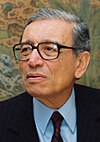
“The situation also gave U.N. Secretary-General Boutros-Ghali a chance to start the U.N.'s disegagement from Bosnia, something he had long wanted to do. After a few meetings with him, I concluded that this elegant and subtle Egyptian, whose Coptic family could trace its origins back over centuries, had disdain for the fractious and dirty peoples of the Balkans. Put bluntly, he never liked the place. In 1992, during his only visit to Sarajevo, he made the comment that shocked the journalists on the day I arrived in the beleaguered capital: "Bosnia is a rich man's war. I understand your frustration, but you have a situation here that is better than ten other places in the world. … I can give you a list." He complained many times that Bosnia was eating up his budget, diverting him from other priorities, and threatening the whole U.N. system. "Bosnia has created a distortion in the work of the U.N.", he said just before Srebrenica. Sensing that our diplomatic efforts offered an opportunity to disengage, he informed the Security Council on September 18 that he would be ready to end the U.N. role in the former Yugoslavia, and allow all key aspects of implementation to be placed with others. Two days later, he told Madeleine Albright that the Contact Group should create its own mechanism for implementation — thus volunteering to reduce the U.N.'s role at a critical moment. Ironically, his weakness simplified our task considerably.”