Link Copied!
René Descartes Quotes (1596-1650)
Physicist, Philosopher, Author




About René Descartes
René Descartes (March 31, 1596 – February 11, 1650) was a highly influential French philosopher, mathematician, physicist and writer. He is known for his influential arguments for substance dualism, where mind and body are considered to have distinct essences, one being characterized by thought, the other by spatial extension. He has been dubbed the "Father of Modern Philosophy" and the "Father of Modern Mathematics." He is also known as Cartesius.
Best René Descartes Quotes
Shortest
Earliest
Explore our curated collection of the most famous and impactful René Descartes quotes.
“The entire method consists in the order and arrangement of the things to which the mind's eye must turn so that we can discover some truth.”
“Mais apud me omnia fiunt Mathematicè in Natura
• Loosely translated: With me, everything turns into mathematics.”
• Loosely translated: With me, everything turns into mathematics.”
“Le bon sens est la chose du monde la mieux partagée : car chacun pense en être si bien pourvu, que ceux même qui sont les plus difficiles à contenter en toute autre chose, n'ont point coutume d'en désirer plus qu'ils en ont.”
“What I have given in the second book on the nature and properties of curved lines, and the method of examining them, is, it seems to me, as far beyond the treatment in the ordinary geometry, as the rhetoric of Cicero is beyond the a, b, c of children.”
“So blind is the curiosity by which mortals are possessed, that they often conduct their minds along unexplored routes, having no reason to hope for success, but merely being willing to risk the experiment of finding whether the truth they seek lies there.”

“I should like you to consider that these functions (including passion, memory, and imagination) follow from the mere arrangement of the machine’s organs every bit as naturally as the movements of a clock or other automaton follow from the arrangement of its counter-weights and wheels.”
“No more useful inquiry can be proposed than that which seeks to determine the nature and the scope of human knowledge. ... This investigation should be undertaken once at least in his life by anyone who has the slightest regard for truth, since in pursuing it the true instruments of knowledge and the whole method of inquiry come to light. But nothing seems to me more futile than the conduct of those who boldly dispute about the secrets of nature ... without yet having ever asked even whether human reason is adequate to the solution of these problems.”

“M. Desargues puts me under obligations on account of the pains that it has pleased him to have in me, in that he shows that he is sorry that I do not wish to study more in geometry, but I have resolved to quit only abstract geometry, that is to say, the consideration of questions which serve only to exercise the mind, and this, in order to study another kind of geometry, which has for its object the explanation of the phenomena of nature... You know that all my physics is nothing else than geometry.”
“No doubt you know that Galileo had been convicted not long ago by the Inquisition, and that his opinion on the movement of the Earth had been condemned as heresy. Now I will tell you that all things I explain in my treatise, among which is also that same opinion about the movement of the Earth, all depend on one another, and are based upon certain evident truths. Nevertheless, I will not for the world stand up against the authority of the Church. ...I have the desire to live in peace and to continue on the road on which I have started.”

“Thus, all unknown quantities can be expressed in terms of a single quantity, whenever the problem can be constructed by means of circles and straight lines, or by conic sections, or even by some other curve of degree not greater than the third or fourth.
But I shall not stop to explain this in more detail, because I should deprive you of the pleasure of mastering it yourself, as well as of the advantage of training your mind by working over it, which is in my opinion the principal benefit to be derived from this science. Because, I find nothing here so difficult that it cannot be worked out by anyone at all familiar with ordinary geometry and with algebra, who will consider carefully all that is set forth in this treatise.”
But I shall not stop to explain this in more detail, because I should deprive you of the pleasure of mastering it yourself, as well as of the advantage of training your mind by working over it, which is in my opinion the principal benefit to be derived from this science. Because, I find nothing here so difficult that it cannot be worked out by anyone at all familiar with ordinary geometry and with algebra, who will consider carefully all that is set forth in this treatise.”
“Mr. Clerselier has written me that you are expecting from him my Meditations... in order to present them to the queen of the land. ...If I had only been as wise as they say the savages persuaded themselves that the monkeys were, I never would have become known as a maker of books: Since it is said that they imagined that the monkeys could indeed speak, if they wanted to, but that they chose not to so lest they be forced to work. And since I had not the same prudence to abstain from writing, I now have neither as much liesure nor as much peace as I would have had if I had kept quiet. But since the mistake has already been made, and since I am now known by an infinity of people at the academy, who look askance at my writings and scour them for means of harming me, I do have great hope of being known to persons of great merit, whose power and virtue could protect me.”
“I could give here several other ways of tracing and conceiving a series of curved lines, each curve more complex than any preceding one, but I think the best way to group together all such curves and them classify them in order, is by recognizing the fact that all points of those curves which we may call "geometric," that is, those which admit of precise and exact measurement, must bear a definite relation to all points of a straight line, and that this relation must be expressed by a single equation. If this equation contains no term of higher degree than the rectangle of two unknown quantities, or the square of one, the curve belongs to the first and simplest class, which contains only the circle, the parabola, the hyperbola, and the ellipse; but when the equation contains one or more terms of the third or fourth degree in one or both of the two unknown quantities (for it requires two unknown quantities to express the relation between two points) the curve belongs to the second class; and if the equation contains a term of the fifth or sixth degree in either or both of the unknown quantities the curve belongs to the third class, and so on indefinitely.”
René Descartes Quotes by Topic
Find exactly what you are looking for by browsing this categorized list of René Descartes quotes by topic.
René Descartes on Truth 2 quotes
“If you would be a real seeker after truth, you must at least once in your life doubt, as far as possible, all things.”

René Descartes on Deductive reasoning 2 quotes
“The two operations of our understanding, intuition and deduction, on which alone we have said we must rely in the acquisition of knowledge.”
René Descartes on Epistemology 2 quotes
“Thinking is another attribute of the soul; and here I discover what properly belongs to myself. This alone is inseparable from me. I am—I exist: this is certain.”

René Descartes on Religiousness
“I can doubt everything, except one thing, and that is the very fact that I doubt.”

René Descartes on Wealth
“I was not, thank heaven, in a condition which compelled me to make merchandise of Science for the bettering of my fortune.”

René Descartes on Selling out
“I was not, thank heaven, in a condition which compelled me to make merchandise of Science for the bettering of my fortune.”

René Descartes on Probability
René Descartes on Intuition
“The two operations of our understanding, intuition and deduction, on which alone we have said we must rely in the acquisition of knowledge.”
René Descartes on Mechanism (philosophy)
René Descartes on Reason
“[T]he power of forming a good judgment and of distinguishing the true from the false, which is properly speaking what is called Good sense or Reason, is by nature equal in all men.”
René Descartes on Curiosity
“So blind is the curiosity by which mortals are possessed, that they often conduct their minds along unexplored routes, having no reason to hope for success, but merely being willing to risk the experiment of finding whether the truth they seek lies there.”

René Descartes on Time
“The whole time of my life may be divided into an infinity of parts, each of which is in no way dependent on any other; and, accordingly, because I was in existence a short time ago, it does not follow that I must now exist, unless in this moment some cause create me anew as it were,—that is, conserve me.”

René Descartes on Now
“The whole time of my life may be divided into an infinity of parts, each of which is in no way dependent on any other; and, accordingly, because I was in existence a short time ago, it does not follow that I must now exist, unless in this moment some cause create me anew as it were, — that is, conserve me.”

René Descartes on Trivialism
“The whole time of my life may be divided into an infinity of parts, each of which is in no way dependent on any other; and, accordingly, because I was in existence a short time ago, it does not follow that I must now exist, unless in this moment some cause create me anew as it were, — that is, conserve me.”
René Descartes on Solar System
“His genius in promoting an evolution doctrine as regards the mechanical formation of the solar system was great, and his mode of thought strengthened the current of evolutionary doctrine generally; but his constant dread of persecution, both from Catholics and Protestants, let him steadily to veil his thoughts and even suppress them.”
René Descartes on Rainbows
“Caustics are the brightest places in an optical field. They are the singularities of geometrical optics. The most familiar caustic is the rainbow, a grossly distorted image of the Sun in the form of a giant arc in the skyspace of directions, formed by the angular focusing of sunlight that has been twice refracted and once reflected in raindrops.”

René Descartes on Singularity
“Caustics are the brightest places in an optical field. They are the singularities of geometrical optics. The most familiar caustic is the rainbow, a grossly distorted image of the Sun in the form of a giant arc in the skyspace of directions, formed by the angular focusing of sunlight that has been twice refracted and once reflected in raindrops.”
René Descartes on Individualism
“Sciences contained in books, (such of them at least as are made up of probable reasonings, without demonstrations), composed as they are of the opinions of many different individuals massed together, are farther removed from truth than the simple inferences which a man of good sense using his natural and unprejudiced judgment draws respecting the matters of his experience.”

René Descartes on Existence of God
“Because I cannot conceive God unless as existing, it follows that existence is inseparable from him, and therefore that he really exists... the necessity of the existence of God, determines me to think in this way: for it is not in my power to conceive a God without existence, that is a being supremely perfect, and yet devoid of an absolute perfection, as I am free to imagine a horse with or without wings.”

René Descartes on Doubt
“Several years have now elapsed since I first became aware that I had accepted, even from my youth, many false opinions for true, and that consequently what I afterward based on such principles was highly doubtful; and from that time I was convinced of the necessity of undertaking once in my life to rid myself of all the opinions I had adopted, and of commencing anew the work of building from the foundation...”

René Descartes on Intellectual responsibility
“But if I abstain from giving my judgment on any thing when I do not perceive it with sufficient clearness and distinctness, it is plain that I act rightly and am not deceived. But if I determine to deny or affirm, I no longer make use as I should of my free will, and if I affirm what is not true, it is evident that I deceive myself; even though I judge according to truth, this comes about only by chance, and I do not escape the blame of misusing my freedom; for the light of nature teaches us that the knowledge of the understanding should always precede the determination of the will.”
René Descartes on Nothingness
“When we apprehend that it is impossible a thing can arise from nothing, this proposition ex nihilo nihil fit, is not considered as something existing, or as the mode of a thing, but as an eternal truth having its seat in our mind, and is called a common notion or axiom. Of this class are the following: It is impossible the same thing can at once be and not be; what is done cannot be undone; he who thinks must exist while he thinks; and innumerable others, the whole of which it is... difficult to enumerate, but... if blinded by no prejudices, we cannot fail to know them when... thinking them...”

René Descartes on Academia
“From my childhood, I have been familiar with letters; and as I was given to believe that by their help a clear and certain knowledge of all that is useful in life might be acquired, I was ardently desirous of instruction. But as soon as I had finished the entire course of study, at the close of which it is customary to be admitted into the order of the learned, I completely changed my opinion. For I found myself involved in so many doubts and errors, that I was convinced I had advanced no farther in all my attempts at learning, than the discovery at every turn of my own ignorance. And yet I was studying in one of the most celebrated Schools in Europe, in which I thought there must be learned men, if such were anywhere to be found.”
René Descartes on Atomic theory
“There cannot exist any atoms or parts of matter that are of their own nature indivisible. For however small we suppose these parts to be, yet because they are necessarily extended, we are always able in thought to divide any one of them into two or more smaller parts, and may accordingly admit their divisibility. ...and although we should even suppose that God had reduced any particle of matter to a smallness so extreme that it did not admit of being further divided, it would nevertheless be improperly styled indivisible, for though God had rendered the particle so small that it was not in the power of any creature to divide it, he could not however deprive himself of the ability to do so... Wherefore, absolutely speaking, the smallest extended particle is always divisible...”

Quotes About René Descartes
Gain deeper perspective through quotes about René Descartes from others.
W. W. Rouse Ball on René Descartes
“Analytical geometry was invented by Descartes and the first exposition of it was given in 1637: that exposition was both difficult and obscure, and to most of his contemporaries, to whom the method was new, it must have been incomprehensible. Wallis made the method intelligible to all mathematicians.”
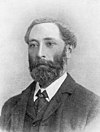
Eric Temple Bell on René Descartes 3 quotes
“René Descartes is more widely known as a philosopher than as a mathematician, although his philosophy has been controverted while his mathematics has not. ...In accordance with the ideals of his age, when experimental science was first seriously challenging arrogant speculation, Descartes set a greater store by his philosophy than his mathematics. But he fully appreciated the power of his new method in geometry.”
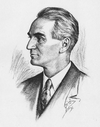
Ambrose Bierce on René Descartes
“CARTESIAN, adj. Relating to Descartes, a famous philosopher, author of the celebrated dictum, Cogito ergo sum -- whereby he was pleased to suppose he demonstrated the reality of human existence. The dictum might be improved, however, thus: Cogito cogito ergo cogito sum -- "I think that I think, therefore I think that I am;" as close an approach to certainty as any philosopher has yet made.”

Carl B. Boyer on René Descartes
“Descartes maintained his confidence in the instantaneity of light. ...Yet in his derivation of the law of refraction, Descartes reasoned that light traveled faster in a dense medium than in one less dense. He seems to have had no qualms about comparing infinite magnitudes!”
Herbert Butterfield on René Descartes 2 quotes
“Descartes was liable to be misled by too easy an acceptance of data that had been handed down by scholastic writers. ...two grand Aristotelian principles helped to condition the form of the universe as he reconstructed it—first, the view that a vacuum is impossible, and secondly, the view that objects could only influence one another if they actually touched—there could be no such thing as attraction, no such thing as action at a distance. ...Descartes insisted that every fraction of space should be fully occupied all the time by continuous matter... infinitely divisible. The particles were... packed so tightly that one of them could not move without communicating the commotion to the rest. The matter formed whirlpools in the skies, and it was because the planets were caught each in its own whirlpool that they were carried around... all similarly caught in a larger whirlpool, which had the sun as its centre... Gravity itself was the result of these whirlpools of invisible matter which had the effect of sucking things down towards their centre. ...In the time of Newton the system of Descartes and the theory of vortices or whirlpools proved to be vulnerable to both mathematical and experimental attack.”

Tobias Dantzig on René Descartes 3 quotes
“The great invention... Descartes gave to the world, the analytical diagram, ...gives at a glance a graphical picture of the law governing a phenomenon, or of the correlation which exists between dependent events, or of the changes which a situation undergoes in the course of time. ...the invention of Descartes not only created the important discipline of analytic geometry, but it gave Newton, Leibnitz, Euler, and the Bernoullis that weapon for the lack of which Archimedes and later Fermat had to leave inarticulate their profound and far-reaching thoughts.”
The on René Descartes
“René Descartes played his part in the world as a man in a mask. The phrase is his own. It implied no conscious duplicity but a certain apartness rendering him incapable of taking his share unreservedly in the game of life. His attitude was that of an unimpassioned spectator. He looked on and learned while others struggled for the stakes. A born recluse, he remained solitary even in the throng of social intercourse. ...The transport felt by Bacon at the glorious vision of a future in which the harvest he had sown would be reaped was not shared by Descartes. He indeed held himself to be the sower and the reaper in one. Calmly, and with settled conviction, he claimed to have virtually expounded all the phenomena of nature. He had crossed the frontier of the new world of knowledge; those who desired to follow him needed only to purge their eyes with the euphrasy of methodic doubt in order to obtain those crystal-clear intuitions from which, by sure reasoning, universal science could be deduced. ...He was a mathematician of first rate originality and power. ...Unfortunately, however, he was misled by false analogies of thought; he sought to universalise what was by its nature special and restricted; and thus pursued the flitting vision of a deceptive unity in knowledge. As the upshot, he gave to his philosophy a pseudo-mathematical character, and sacrificed the solid achievement of much by aiming at the illusory certainty of everything.”
Bernard d'Espagnat on René Descartes
“This momentous finding of nonlocality has, in common with that of Einstein concerning time, the additional feature that it disproves the validity, not of a "view of the World", but of a deeply ingrained concept. And this brings me to the second reason. It is that this disproof of a deeply ingrained concept pointed in fact in a direction quite consonant with my own line of thought. In a way, it brings us back to Descartes, for, as we all know, Descartes was the first scientist who dared to question our common views, including even all the notions that had always seemed so primitive and obvious that thinkers, scientists and so on never hesitated in making use of them. He found out that, at the start, he could doubt of everything but his own thinking, and in this, according to Hegel, he was a hero. Unfortunately he then constructed a grand metaphysical argument that led him to the view that, after all, since God is not a liar, the "obvious" realistic concepts must apply. He thereby founded mechanicism, which is the theory that, apart from thought, everything has to be described by the exclusive means of familiar concepts. We know, of course, how deficient such a view is. But I think Descartes' really significant contribution on these matters is not mechanicism. It is what I just said. In other words, it is the realization that a sharp distinction has to be made between rationality on the one hand and the use of seemingly obvious concepts on the other hand. And that therefore, if you are a rational person you cannot demand that science should be based exclusively on seemingly obvious concepts without first logically justifying this demand. This Descartes tried to do but, since his argument based on God not being a liar is now considered as not convincing enough, we are not bound to his conclusion. Indeed, I consider that we are not even bound to the idea that physics should be expressed in an ontological language, which was more or less Einstein's view. The older Einstein seems to have considered that Reality, and even physical objects in the plural, can be described as they really are, if not by familiar concepts, at least by unfamiliar ones, such as those borrowed from mathematics. I do not think this is necessarily true. I consider that mere predictive rules, such as the Born rule in quantum mechanics, count as fully fledged explanations, or, more precisely, as constituting, when all taken together, a first step in an explanation, the second step being the philosophical idea that these predictive rules dimly reflect some existing, largely hidden structures of Mind-Independent Reality. Of course, these speculations of mine go much further than nonlocality. But you understand that they receive some support from it.”
Michel Foucault on René Descartes 2 quotes
“To say that madness is dazzlement is to say that the madman sees the day, the same day that rational men see, as both live in the same light, but that when looking at that very light, nothing else and nothing in it, he sees it as nothing but emptiness, night and nothingness. Darkness for him is another way of seeing the day. Which means that in looking at the night and the nothingness of the night, he does not see at all. And that in the belief that he sees, he allows the fantasies of his imagination and the people of his nights to come to him as realities. For that reason, delirium and dazzlement exist in a relation that is the essence of madness, just as truth and clarity, in their fundamental relation, are constitutive of classical reason. In that sense, the Cartesian progression of doubt is clearly the great exorcism of madness. Descartes closes his eyes and ears the better to see the true light of the essential day, thereby ensuring that he will not suffer the dazzlement of the mad, who open their eyes and only see night, and not seeing at all, believe that they see things when they imagine them. In the uniform clarity of his closed senses, Descartes has broken with all possible fascination, and if he sees, he knows he really sees what he is seeing. Whereas in the madman's gaze, drunk on the light that is night, images rise up and multiply, beyond any possible self-criticism, since the madman sees them, but irremediably separated from being, since the madman sees nothing. Unreason is to reason as dazzlement is to daylight.”

John Freely on René Descartes
“Newton's proof of the law of refraction is based on an erroneous notion that light travels faster in glass than in air, the same error that Descartes had made. This error stems from the fact that both of them thought that light was corpuscular in nature.”
Elizabeth Sanderson Haldane on René Descartes 2 quotes
“The Geometry is divided into three books. In the first book Descartes briefly explains his method. He says that every geometric problem may be reduced to a problem of straight lines; and he points out that, in order to find these lines, nothing more advanced is required than the five fundamental operations of Arithmetic, viz.: Addition, Subtraction, Multiplication, Division, and Root Extraction. He advises:— (1) That the problem should be imagined as done. (2) That then lines, whether known or unknown, which appear necessary in its solution, should be named. (3) And finally, that their relation to each other should be sought, and expressed by means of an equation or equations. Descartes strongly advocates this analytic treatment of Geometry as giving greater clearness and more continuity of argument, qualities lacking in the work of the Ancients, who probably did not understand where such reasoning would carry them, and whose isolated proofs were necessarily wanting in connection and generality.”
Friedrich Hayek on René Descartes
“There seems to me to exist a sort of rationalism which, by not recognizing these limits of the powers of individual reason, in fact tends to make human reason a less effective instrument than it could be. ... This sort of rationalism is a comparatively new phenomenon, though its roots go back to ancient Greek philosophy. Its modern influence, however, begins only in the sixteenth and seventeenth century and particularly with the formulation of its main tenets by the French philosopher, René Descartes.”

Misattributed Quotes
Quotes mistakenly credited to René Descartes
“Doubt is the origin of wisdom and Latin: Dubium sapientiae initium. This has been attributed to Descartes, including here previously, but no original attribution has been found. Descartes Meditationes de prima philosophia has been cited as the source of Dubium sapientiae initium, but this quote is not found in this work.”
About René Descartes
René Descartes (March 31, 1596 – February 11, 1650) was a highly influential French philosopher, mathematician, physicist and writer. He is known for his influential arguments for substance dualism, where mind and body are considered to have distinct essences, one being characterized by thought, the other by spatial extension. He has been dubbed the "Father of Modern Philosophy" and the "Father of Modern Mathematics." He is also known as Cartesius.