Link Copied!
Plato Quotes (-427--347)
Philosopher
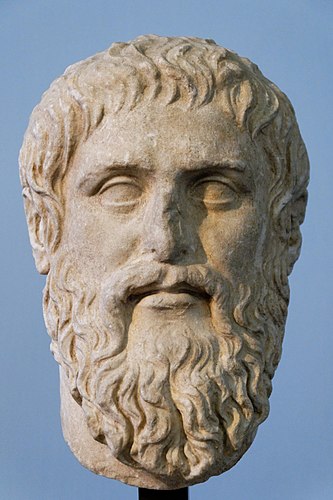



































































About Plato
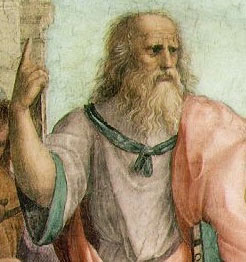
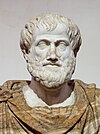
Plato (Πλάτων Plátōn; c. 427 BC – c. 347 BC) was a Greek philosopher from Athens during the Classical period in Ancient Greece, founder of the Platonist school of thought and the Academy (Akademia), the first institution of higher learning in the Western world.
Best Plato Quotes
Shortest
Earliest
Explore our curated collection of the most famous and impactful Plato quotes.

“The beginning in every task is the chief thing.
• variant: The beginning is the most important part of any work. (Jowett translation)”
• variant: The beginning is the most important part of any work. (Jowett translation)”

“There is no one who ever acts honestly in the administration of states, nor any helper who will save any one who maintains the cause of the just.”
“to seek office oneself and not await compulsion is thought disgraceful. But the chief penalty is to be governed by someone worse if a man will not himself hold office and rule.”
“My love, Alcibiades, which I hardly like to confess, would long ago have passed away, as I flatter myself, if I saw you loving your good things, or thinking that you ought to pass life in the enjoyment of them.”

“Democracy does not contain any force which will check the constant tendency to put more and more on the public payroll. The state is like a hive of bees in which the drones display, multiply and starve the workers so the idlers will consume the food and the workers will perish.”

“Since those who rule in the city do so because they own a lot, I suppose they're unwilling to enact laws to prevent young people who've had no discipline from spending and wasting their wealth, so that by making loans to them, secured by the young people's property, and then calling those loans in, they themselves become even richer and more honored.”
“Knowledge is the food of the soul; and we must take care, my friend, that the Sophist does not deceive us when he praises what he sells, like the dealers wholesale or retail who sell the food of the body; for they praise indiscriminately all their goods, without knowing what are really beneficial or hurtful.”

“Your pride has been too much for the pride of your admirers; they were numerous and high-spirited, but they have all run away, overpowered by your superior force of character; not one of them remains. And I want you to understand the reason why you have been too much for them. You think that you have no need of them or of any other man, for you have great possessions and lack nothing, beginning with the body, and ending with the soul.”

“The inexperienced in wisdom and virtue, ever occupied with feasting and such, are carried downward, and there, as is fitting, they wander their whole life long, neither ever looking upward to the truth above them nor rising toward it, nor tasting pure and lasting pleasures. Like cattle, always looking downward with their heads bent toward the ground and the banquet tables, they feed, fatten, and fornicate. In order to increase their possessions they kick and butt with horns and hoofs of steel and kill each other, insatiable as they are.”
“I will tell you, in order that you may not share the impiety of the multitude: for there cannot conceivably be anything more impious or more to be guarded against than being mistaken in word and deed with regard to the gods, and after them, with regard to divine men; you must take very great precaution, whenever you are about to blame or praise a man, so as not to speak incorrectly. For this reason you must learn to distinguish honest and dishonest men: for God feels resentment when one blames a man who is like himself, or praises a man who is the opposite; and the former is the good man. For you must not suppose that while stocks and stones and birds and snakes are sacred, men are not; nay, the good man is the most sacred of all these things, and the wicked man is the most defiled.”

“μόγις δὲ τριβόμενα πρὸς ἄλληλα αὐτῶν ἕκαστα, ὀνόματα καὶ λόγοι ὄψεις τε καὶ αἰσθήσεις, ἐν εὐμενέσιν ἐλέγχοις ἐλεγχόμενα καὶ ἄνευ φθόνων ἐρωτήσεσιν καὶ ἀποκρίσεσιν χρωμένων, ἐξέλαμψε φρόνησις περὶ ἕκαστον καὶ νοῦς, συντείνων ὅτι μάλιστ᾽ εἰς δύναμιν ἀνθρωπίνην.
• After much effort, as names, definitions, sights, and other data of sense, are brought into contact and friction one with another, in the course of scrutiny and kindly testing by men who proceed by question and answer without ill will, with a sudden flash there shines forth understanding about every problem, and an intelligence whose efforts reach the furthest limits of human powers.”
• After much effort, as names, definitions, sights, and other data of sense, are brought into contact and friction one with another, in the course of scrutiny and kindly testing by men who proceed by question and answer without ill will, with a sudden flash there shines forth understanding about every problem, and an intelligence whose efforts reach the furthest limits of human powers.”

“Socrates: The shoemaker, for example, uses a square tool, and a circular tool, and other tools for cutting?
Alcibiades: Yes.
Socrates: But the tool is not the same as the cutter and user of the tool?
Alcibiades: Of course not. …
Socrates: Then what shall we say of the shoemaker? Does he cut with his tools only or with his hands?
Alcibiades: With his hands as well.
Socrates: He uses his hands too?
Alcibiades: Yes. …
Socrates: And does not a man use the whole body?
Alcibiades: Certainly.
Socrates: And that which uses is different from that which is used?
Alcibiades: True.
Socrates: Then a man is not the same as his own body?
Alcibiades: That is the inference.
Socrates: What is he, then?
Alcibiades: I cannot say.
Socrates: Nay, you can say that he is the user of the body.
Alcibiades: Yes.
Socrates: And the user of the body is the soul?
Alcibiades: Yes, the soul.”
Alcibiades: Yes.
Socrates: But the tool is not the same as the cutter and user of the tool?
Alcibiades: Of course not. …
Socrates: Then what shall we say of the shoemaker? Does he cut with his tools only or with his hands?
Alcibiades: With his hands as well.
Socrates: He uses his hands too?
Alcibiades: Yes. …
Socrates: And does not a man use the whole body?
Alcibiades: Certainly.
Socrates: And that which uses is different from that which is used?
Alcibiades: True.
Socrates: Then a man is not the same as his own body?
Alcibiades: That is the inference.
Socrates: What is he, then?
Alcibiades: I cannot say.
Socrates: Nay, you can say that he is the user of the body.
Alcibiades: Yes.
Socrates: And the user of the body is the soul?
Alcibiades: Yes, the soul.”
Plato Quotes by Topic
Find exactly what you are looking for by browsing this categorized list of Plato quotes by topic.
Plato on Love 4 quotes
View all 4 quotes on Love →Plato on Philosophy 3 quotes
“Philosophy is the acquisition of knowledge.”
Plato on Skepticism 3 quotes
“We need to use every argument we can to fight against anyone who does away with knowledge, understanding and intelligence but at the same time asserts anything at all about anything.”

Plato on Beauty 3 quotes
“Beauty of style and harmony and grace and good rhythm depend on simplicity—I mean the true simplicity of a rightly and nobly ordered mind and character, not that other simplicity which is only a euphemism for folly.”

Plato on Vegetarianism 3 quotes
“Again, the practice of men sacrificing one another still exists among many nations; while, on the other hand, we hear of other human beings who did not even venture to taste the flesh of a cow and had no animal sacrifices, but only cakes and fruits dipped in honey, and similar pure offerings, but no flesh of animals; from these they abstained under the idea that they ought not to eat them, and might not stain the altars of the Gods with blood. For in those days men are said to have lived a sort of Orphic life, having the use of all lifeless things, but abstaining from all living things.”

Plato on Time 3 quotes
“So when the universe was quickened with soul, God was well pleased; and he bethought him to make it yet more like its type. And whereas the type is eternal and nought that is created can be eternal, he devised for it a moving image of abiding eternity, which we call time. And he made days and months and years, which are portions of time; and past and future are forms of time, though we wrongly attribute them also to eternity. For of eternal Being we ought not to say 'it was', 'it shall be', but 'it is' alone: and in like manner we are wrong in saying 'it is' of sensible things which become and perish; for these are ever fleeting and changing, having their existence in time.”

Plato on Eternity 3 quotes
“So when the universe was quickened with soul, God was well pleased; and he bethought him to make it yet more like its type. And whereas the type is eternal and nought that is created can be eternal, he devised for it a moving image of abiding eternity, which we call time. And he made days and months and years, which are portions of time; and past and future are forms of time, though we wrongly attribute them also to eternity. For of eternal Being we ought not to say 'it was', 'it shall be', but 'it is' alone: and in like manner we are wrong in saying 'it is' of sensible things which become and perish; for these are ever fleeting and changing, having their existence in time.”

Plato on God 2 quotes
View all 2 quotes on God →Plato on Immortality 2 quotes
View all 2 quotes on Immortality →Plato on Social influence 2 quotes
View all 2 quotes on Social influence →Plato on Poets 2 quotes
“Poets utter great and wise things which they do not themselves understand.”

Plato on Corruption 2 quotes
“False words are not only evil in themselves, but they infect the soul with evil.”

Plato on Contradiction 2 quotes
“But when I describe something and you describe another thing, or I say something and you say nothing - Is there any contradiction? How can he who speaks contradict him who speaks not.”
Plato on Teachers 2 quotes
“Each of these private teachers who work for pay ... inculcates nothing else than these opinions of the multitude which they opine when they are assembled and calls this knowledge wisdom.”

Plato on Intellectual 2 quotes
“Each of these private teachers who work for pay … inculcates nothing else than these opinions of the multitude which they opine when they are assembled and calls this knowledge wisdom.”

Plato on Academic careerism 2 quotes
“Each of these private teachers who work for pay … inculcates nothing else than these opinions of the multitude which they opine when they are assembled and calls this knowledge wisdom.”

Plato on Arithmetic 2 quotes
“Arithmetic has a very great and elevating effect, compelling the soul to reason about abstract number, and if visible or tangible objects are obtruding upon the argument, refusing to be satisfied.”

Plato on War 2 quotes
“When the tyrant has disposed of foreign enemies by conquest or treaty, and there is nothing to fear from them, then he is always stirring up some war or other, in order that the people may require a leader.”

Plato on Soul 2 quotes
“Are you not ashamed that you give your attention to acquiring as much money as possible, and similarly with reputation and honor, and give no attention or thought to truth and understanding and the perfection of your soul?”

Plato on Music 2 quotes
“Musical training is a more potent instrument than any other, because rhythm and harmony find their way into the inward places of the soul; on which they mightily fasten, imparting grace, and making the soul of him who is rightly educated graceful, or of him who is ill-educated ungraceful.”

Plato on Plutocracy 2 quotes
“Since those who rule in the city do so because they own a lot, I suppose they're unwilling to enact laws to prevent young people who've had no discipline from spending and wasting their wealth, so that by making loans to them, secured by the young people's property, and then calling those loans in, they themselves become even richer and more honored.”
Plato on Jupiter 2 quotes
“As the whorls differ from one another in respect of “ breadth of rim”, the first and outermost whorl is that which has its circular rim the broadest, and the sixth whorl comes next to it in regard to breadth of rim; and, proceeding in order of breadth, the fourth whorl comes third, and the eighth fourth, and the seventh fifth, and the fifth sixth, and the third seventh, and the second eighth.' Thus we have now a new classification of the heavenly bodies, in the following sequence: 1. The Fixed Stars. 2. Venus. 3. Mars. 4. The Moon. 5. The Sun. 6. Mercury. 7. Jupiter. 8. Saturn.”

Plato on Mercury (planet) 2 quotes
“As the whorls differ from one another in respect of “ breadth of rim”, the first and outermost whorl is that which has its circular rim the broadest, and the sixth whorl comes next to it in regard to breadth of rim; and, proceeding in order of breadth, the fourth whorl comes third, and the eighth fourth, and the seventh fifth, and the fifth sixth, and the third seventh, and the second eighth.' Thus we have now a new classification of the heavenly bodies, in the following sequence: 1. The Fixed Stars. 2. Venus. 3. Mars. 4. The Moon. 5. The Sun. 6. Mercury. 7. Jupiter. 8. Saturn.”

Plato on Saturn 2 quotes
“As the whorls differ from one another in respect of “ breadth of rim”, the first and outermost whorl is that which has its circular rim the broadest, and the sixth whorl comes next to it in regard to breadth of rim; and, proceeding in order of breadth, the fourth whorl comes third, and the eighth fourth, and the seventh fifth, and the fifth sixth, and the third seventh, and the second eighth.' Thus we have now a new classification of the heavenly bodies, in the following sequence: 1. The Fixed Stars. 2. Venus. 3. Mars. 4. The Moon. 5. The Sun. 6. Mercury. 7. Jupiter. 8. Saturn.”

Plato on Punishment 2 quotes
“If you will think, Socrates, of the nature of punishment, you will see at once that in the opinion of mankind virtue may be acquired; no one punishes the evil-doer under the notion, or for the reason, that he has done wrong,—only the unreasonable fury of a beast acts in that manner. But he who desires to inflict rational punishment does not retaliate for a past wrong which cannot be undone; he has regard to the future, and is desirous that the man who is punished, and he who sees him punished, may be deterred from doing wrong again. He punishes for the sake of prevention, thereby clearly implying that virtue is capable of being taught.”

What Plato Said About Others
Discover personal opinions Plato shared regarding contemporaries.
Plato on Socrates 6 quotes
“Anyone who holds a true opinion without understanding is like a blind man on the right road.”
Plato on Politicians 2 quotes
“If they acquire private land, houses, and money themselves, they will be household managers and farmers instead of guardians—hostile masters of the other citizens, instead of their allies. They will spend their whole lives hating and being hated, plotting and being plotted against, much more afraid of internal than of external enemies.”

Plato on Friedrich Nietzsche
“Plato ist langweilig.”

Plato on Stephen Hawking
“I have hardly ever known a mathematician who was able to reason.”

Plato on Homer
Plato on Thrasymachus
“Listen, then. I say justice is nothing other than what is advantageous for the stronger.”
Plato on Thales
Plato on Thomas More
“Quam ob rem pulcherrima similitudine declarat Plato, cur merito sapientes abstineant a capessenda quippe republica. Cum populum videant in plateas effusum assiduis imbribus perfundi, nec persuadere queant illis, ut se subducant pluviae, tectaque subeant. Gnari nihil profuturos sese si exeant, quam ut una compluantur, semet intra tecta continent habentes satis, quando alienae stultitiae non possunt mederi, si ipsi saltem sint in tuto.”

Plato on Anaxagoras
“My dear Meletus, do you think you are prosecuting Anaxagoras? Are you so contemptuous of these men and think them so ignorant of letters as not to know that the books of Anaxagoras of Clazomenae are full of those theories, and further, that the young men learn from me what they can buy from time to time for a drachma, at most, in the bookshops, and ridicule Socrates if he pretends that these theories are his own, especially as they are so absurd? Is that, by Zeus, what you think of me, Meletus, that I do not believe that there are any gods?—That is what I say, that you do not believe in the gods at all.”

Plato on Kenneth Rexroth
“No one was required to believe in the gods as Christians believe in their creeds. Socrates had always been scrupulous in observance of every accepted principle and practice of community life. However, from his questioning he had developed a civic and personal morality founded on reason rather than custom. He envisioned it as subject to continuous criticism and revaluation in terms of the ever-expanding freedom of morally autonomous but cooperating persons, who together made up a community whose characteristic aim was an organically growing depth, breadth, intensity of experience — experience finally of that ultimate reality characterized by Socrates as good, true and beautiful. The accusers were right. This is a new religion which bears scant resemblance to the old. Civic piety is founded on the recognition of ignorance and the nurture of the soil until it becomes capable of true knowledge — which is a state of being, a moral condition called freedom. The Greek city-state, not to speak of the tribal community, knew nothing of freedom in this sense, but only the liberty that distinguished the free man from the slave.”

Plato on Chaerephon
“Perhaps some of you will think I am jesting, but be sure that all that I shall say is true. What has caused my reputation is none other than a certain kind of wisdom. What kind of wisdom? Human wisdom, perhaps. It may be that I really possess this, while those whom I mentioned just now are wise with a wisdom more than human; else I cannot explain it, for I certainly do not possess it, and whoever says I do is lying and speaks to slander me. Do not create a disturbance, gentlemen, even if you think I am boasting, for the story I shall tell does not originate with me, but I will refer you to a trustworthy source. I shall call upon the god at Delphi as witness to the existence and nature of my wisdom, if it be such. You know Chaerephon. He was my friend from youth, and the friend of most of you, as he shared your exile and your return. You surely know the kind of man he was, how impulsive in any course of action. He went to Delphi at one time and ventured to ask the oracle—as I say, gentlemen, do not create a disturbance—he asked if any man was wiser than I, and the Pythian replied that no one was wiser. Chaerephon is dead, but his brother will testify to you about this. [...] For a long time I was at a loss as to his meaning; then I very reluctantly turned to some such investigation as this; I went to one of those reputed wise, thinking that there, if anywhere, I could refute the oracle and say to it: “This man is wiser than I, but you said I was.”Then, when I examined this man— there is no need for me to tell you his name, he was one of our public men—my experience was something like this: I thought that he appeared wise to many people and especially to himself, but he was not. I then tried to show him that he thought himself wise, but that he was not. As a result he came to dislike me, and so did many of the bystanders. So I withdrew and thought to myself:“I am wiser than this man; it is likely that neither of us knows anything worthwhile, but he thinks he knows something when he does not, whereas when I do not know, neither do I think I know; so I am likely to be wiser than he to this small extent, that I do not think I know what I do not know.”After this I approached another man, one of those thought to be wiser than he, and I thought the same thing, and so I came to be disliked both by him and by many others.”
Quotes About Plato
Gain deeper perspective through quotes about Plato from others.
The epigram on his tomb on Plato
“Here, first of all men for pure justice famed, And moral virtue, Aristocles lies; And if there e'er has lived one truly wise, This man was wiser still; too great for envy.”
Agni Yoga on Plato 2 quotes
“Let us not link ourselves with the vilifiers of Plato and the persecutors of Confucius. They were oppressed by citizens who were considered the pride of the country. Thus has the world raised its hand against the great Servitors. Be assured that the Brotherhood formed by Pythagoras appeared dangerous in the eyes of the city guard. Paracelsus was a target for mockery and malignance. Thomas Vaughan seemed to be an outcast, and few wished to meet with him. Thus was the reign of darkness manifested.”

Danielle Allen on Plato
“Why write about Plato nearly 2400 years after his death? Don’t we understand him by now? We do and we don’t. But more important than whether humanity’s collective knowledge about Plato, built up over centuries, includes mastery of his systematic philosophy is whether our generation understands Plato at all.”
Aristobulus of Paneas on Plato
William Walker Atkinson on Plato 3 quotes
“Following Pythagoras, Plato, the great Grecian philosopher, taught the old-new doctrine of Rebirth. He taught that the souls of the dead must return to earth, where, in new lives, they must wear out the old earth deeds, receiving benefits for the worthy ones, and penalties for the unworthy ones, the soul profiting by these repeated experiences, and rising step by step toward the divine. Plato taught that the reincarnated soul has flashes of remembrance of its former lives, and also instincts and intuitions gained by former experiences. He classed innate ideas among these inherited experiences of former lives. It has been well said that "everything can be found in Plato," and therefore one who seeks for the ancient Grecian ideas concerning Reincarnation, and the problems of the soul, may find that which he seeks in the writings of the old sage and philosopher. Plato was the past master of the inner teachings concerning the soul, and all who have followed him have drawn freely from his great store of wisdom. His influence on the early Christian church was enormous, and in many forms it continues even unto this day. Many of the early Christian fathers taught that Plato was really one of the many forerunners of Christ, who had prepared the pagan world for the coming of the Master.”
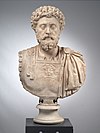
Marcus Aurelius on Plato 2 quotes
“From Plato: the man who has an elevated mind and takes a view of all time and of all substance, dost thou suppose it possible for him to think that human life is anything great? It is not possible, he said. Such a man then will think that death also is no evil.”
Jonathan Barnes on Plato
“Compare Aristotle next to Plato. Plato had an influence second only to Aristotle, and the range of his philosophical interests was vast. Moreover, his philosophical talents — the capacity to see where a problem lies, the ability to tell a promising line of inquiry from a dead end, the gift for producing relevant arguments - were surely greater than those of Descartes. Here is reason enough to read Plato. But Plato's philosophical views are mostly false, and for the most part they are evidently false; his arguments are mostly bad, and for the most part they are evidently bad. Studying Plato will indeed make you realize how difficult philosophy is, and the study has a particular fascination and a particular pleasure. But it can also be a dispiriting business: for the most part, the student of Plato is preoccupied by a peculiar question - How and why did Plato come to entertain such exotic opinions, to advance such outre arguments?”
D.R. Bhandari on Plato
“Justice is, for Plato, at once a part of human virtue and the bond, which joins man together in society. It is the identical quality that makes good and social. Justice is an order and duty of the parts of the soul, it is to the soul as health is to the body. Plato says that justice is not mere strength, but it is a harmonious strength. Justice is not the right of the stronger but the effective harmony of the whole. All moral conceptions revolve about the good of the whole-individual as well as social.”
Ambrose Bierce on Plato
“Plato held that those souls which in a previous state of existence (antedating Athens) had obtained the clearest glimpses of eternal truth entered into the bodies of persons who became philosophers. Plato himself was a philosopher. The souls that had least contemplated divine truth animated the bodies of usurpers and despots. Dionysius I, who had threatened to decapitate the broad- browed philosopher, was a usurper and a despot. Plato, doubtless, was not the first to construct a system of philosophy that could be quoted against his enemies; certainly he was not the last.”

H.P. Blavatsky on Plato 10 quotes
“The whole question of phenomena rests on the correct comprehension of old philosophies. Whither, then, should we turn, in our perplexity, but to the ancient sages, since, on the pretext of superstition, we are refused an explanation by the modern? Let us ask them what they know of genuine science and religion; not in the matter of mere details, but in all the broad conception of these twin truths — so strong in their unity, so weak when divided. Besides, we may find our profit in comparing this boasted modern science with ancient ignorance; this improved modern theology with the "Secret doctrines" of the ancient universal religion. Perhaps we may thus discover a neutral ground whence we can reach and profit by both. It is the Platonic philosophy, the most elaborate compend of the abstruse systems of old India, that can alone afford us this middle ground.”
John M. Cooper on Plato 3 quotes
“The classifications of 'early' and 'middle-period' dialogues rest squarely on the interpretative theses concerning the progress of Plato's work, philosophically and literarily, outlined above. As such, they are an unsuitable basis for bringing anyone to the reading of these works. To use them in that way is to announce in advance the results of a certain interpretation of the dialogues and to canonize that interpretation under the guise of a presumably objective order of composition—when in fact no such order is objectively known. And it thereby risks prejudicing an unwary reader against the fresh, individual reading that these works demand. For these reasons, I urge readers not to undertake the study of Plato’s works holding in mind the customary chronological groupings of 'early', 'middle', and 'late' dialogues. It is safe to recognize only the group of six late dialogues. Even for these, it is better to relegate thoughts about chronology to the secondary position they deserve and to concentrate on the literary and philosophical content of the works, taken on their own and in relation to the others.”
Oscar Cullmann on Plato
“For the Greeks who believed in the immortality of the soul it may have been harder to accept the Christian preaching of the resurrection than it was for others. … The teaching of the great philosophers Socrates and Plato can in no way be brought into consonance [agreement] with that of the New Testament.”
Disputed Quotes
Quotes attributed to Plato that are questionable.
“Successful people never worry about what others are doing.”
“The highest form of pure thought is in mathematics.”
Misattributed Quotes
Quotes mistakenly credited to Plato
“Atheism is a disease of the soul, before it becomes an error of the understanding.”
“Music is a moral law. It gives a soul to the universe, wings to the mind, flight to the imagination, a charm to sadness, gaiety and life to everything. It is the essence of order, and leads to all that is good, just, and beautiful, of which it is the invisible, but nevertheless dazzling, passionate, and eternal form.”
About Plato
Plato (Πλάτων Plátōn; c. 427 BC – c. 347 BC) was a Greek philosopher from Athens during the Classical period in Ancient Greece, founder of the Platonist school of thought and the Academy (Akademia), the first institution of higher learning in the Western world.