Link Copied!
Philo Quotes (-20-50)
Philosopher, King


















About Philo
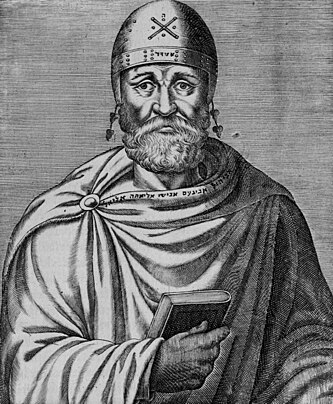
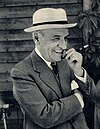
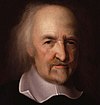
Philo (20 BCE – 50 CE), known also as Philo of Alexandria and as Philo Judeaus, was a Hellenized Jewish philosopher born in Alexandria, Egypt. The few biographical details concerning him are found in his own works, especially in Legatio ad Gaium, ("embassy to Gaius") and in Flavius Josephus (Antiquities xviii.8, § 1; comp. ib. xix.5, § 1; xx.5, § 2).
Best Philo Quotes
Shortest
Earliest
Explore our curated collection of the most famous and impactful Philo quotes.

“He who has God alone for his leader, he alone is free.”




“They in their desire for health commit themselves to physicians, but these people show no willingness to cast off the soul-sickness of their untrained grossness by resorting to wise men....”
“The legislator of the Jews in a bolder spirit went to a further extreme and in the practice of his “naked” philosophy, as they call it, ventured to speak of him who was possessed by love of the divine.”


“There is no sweeter delight than that the soul should be charged through and through with justice, exercising itself in her eternal principles and doctrines and leaving no vacant place into which injustice can make its way.”

“Can we then hold the poverty-in-wealth of the money-grubbing usurers to be of any account? They may seem to be kings with purses full of gold, but they never even in their dreams have had a glimpse of the wealth that has eyes to see.”
“If one adds anything small or great to the queen of virtues, piety, or on the other hand takes something from it, in either case he will change and transform its nature. Addition will beget superstition and subtraction will beget impiety.”

“The good man … has learnt to set at naught the injunctions laid upon him by those most lawless rulers of the soul, inspired as he is by his ardent yearning for the freedom whose peculiar heritage it is that it obeys no orders and works no will but its own.”
“Wisdom … never closes her school of thought but always opens her doors to those who thirst for the sweet water of discourse, and pouring on them an unstinted stream of undiluted doctrine, persuades them to be drunken with the drunkenness which is soberness itself.”


“A far greater glory is it to the wise to die for freedom, the love of which stands in very truth implanted in the soul like nothing else, not as a casual adjunct but an essential part of its unity, and cannot be amputated without the whole system being destroyed as a result.”
“Nor is it a matter for wonder that the good do not appear herded in great thongs. First because specimens of great goodness are rare, secondly, because they avoid the great crowd of the more thoughtless and keep themselves at leisure for the contemplation of what nature has to show.”
“Nature … has born and reared all men alike, and created them genuine brothers, not in mere name, but in very reality, though this kinship has been put to confusion by the triumph of malignant covetousness, which has wrought estrangement instead of affinity and enmity instead of friendship.”

“And yet these things for which we should strive eagerly, things so closely akin to ourselves, so truly our own, we treat with great slackness and constant indifference and thus destroy the germs of excellence, while those things in which deficiency were a merit we desire with an insatiable yearning.”
“Are you making war upon us, because you anticipate that we will not endure such indignity, but that we will fight on behalf of our laws, and die in defence of our national customs? For you cannot possibly have been ignorant of what was likely to result from your attempt to introduce these innovations respecting our temple.”
“If one looks with a penetrating eye into the facts, he will clearly perceive that no two things are so closely akin as independence of action and freedom, because the bad man has a multitude of encumbrances, such as love of money or reputation and pleasure, while the good man has none at all. He stands defiant and triumphant.”

“Moses … takes one form of desire, that one whose field of activity is the belly, and admonishes and disciplines it as the first step, holding that the other forms will cease to run riot as before and will be restrained by having learnt that their senior and as it were the leader of their company is obedient to the laws of temperance.”
Philo Quotes by Topic
Find exactly what you are looking for by browsing this categorized list of Philo quotes by topic.
Philo on Essenes 4 quotes
“Such are the athletes of virtue produced by a philosophy free from the pedantry of Greek wordiness.”
Philo on Number 3 quotes
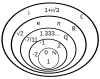
“[Number is] the commanding and self-begotten container of the eternal duration of mundane concerns.”
Philo on Philosophy 2 quotes
“Philosophia non sapientiam, sed amorem sapientie pollicetur.”
Philo on Athenaeum Fragments 2 quotes
“Die Philosophie geht noch zu sehr gerade aus, ist noch nicht zyklisch genug.”

Philo on Toasts 2 quotes
“I, whenever I see thee, thirst, and holding the cup, apply it to my lips more for thy sake than for drinking.”
Philo on Hedonism 2 quotes
“You have given yourself up to each of [the senses] to be made use of… and you have become… the property of [the senses]… having lost your own power over yourself.”
Philo on Wealth 2 quotes
“Even the great king will appear as the poorest of men if compared with a single virtue. For his wealth is soulless, buried deep in store-houses and recesses of the earth, but the wealth of virtue lies in the sovereign part of the soul, and the purest part of existence.”

Philo on Virtue 2 quotes
“What need is there of long journeying on the land or voyaging on the seas to seek and search for virtue, whose roots have been set by their Maker ever so near us, as the wise legislator of the Jews also says, “in thy mouth, in thy heart and in thy hand,” thereby indicating in a figure, words, thoughts and actions?”
Philo on Kashrut 2 quotes
“Moses … takes one form of desire, that one whose field of activity is the belly, and admonishes and disciplines it as the first step, holding that the other forms will cease to run riot as before and will be restrained by having learnt that their senior and as it were the leader of their company is obedient to the laws of temperance.”

Philo on Freedom 2 quotes
“Those in whom anger or desire or any other passion, or again any insidious vice holds sway, are entirely enslaved, while all whose life is regulated by law are free. And right reason is an infallible law engraved not by this mortal or that and, therefore, perishable as he, nor on parchment slabs, and, therefore, soulless as they, but by immortal nature on the immortal mind, never to perish.”

Philo on Science
“Philosophia vero omnium mater artium.”

Philo on Les Misérables
“La philosophie est le microscope de la pensée.”
What Philo Said About Others
Discover personal opinions Philo shared regarding contemporaries.
Philo on David Hume 10 quotes
“What peculiar privilege has this little agitation of the brain which we call thought, that we must thus make it the model of the whole universe? Our partiality in our own favour does indeed present it on all occasions; but sound philosophy ought carefully to guard against so natural an illusion.”

Philo on Philipp Mainländer 9 quotes
View all 9 quotes on Philipp Mainländer →Philo on George Berkeley 6 quotes
“Few men think; yet all have opinions.”
Philo on Raymond Geuss 3 quotes
“Neither the good nor the true is self-realizing, so it is not generally a sufficient explanation of why people believe that X that X is true, or of why people do Y that Y is good.”
Philo on Jean-Jacques Rousseau 2 quotes
“Thus you see, [Rousseau] is a Composition of Whim, Affectation, Wickedness, Vanity, and Inquietude, with a very small, if any Ingredient of Madness. ... The ruling Qualities abovementioned, together with Ingratitude, Ferocity, and Lying, I need not mention, Eloquence and Invention, form the whole of the Composition.”

Philo on François de La Rochefoucauld
“La philosophie triomphe aisément des maux passés et des maux à venir. Mais les maux présents triomphent d'elle.”

Philo on Georg Wilhelm Friedrich Hegel
“So muß die Philosophie zwar die Möglichkeit erkennen, daß das Volk sich zu ihr erhebt, aber sie muß sich nicht zum Volk erniedrigen.”

Philo on Cicero
“Est profecto animi medicina, philosophia; cuius auxilium non ut in corporis morbis petendum est foris, omnibusque opibus viribus, ut nosmet ipsi nobis mederi possimus, elaborandum est.”

Philo on Diogenes of Sinope
“Diogenes the cynic, seeing one of the so-called freedmen pluming himself, while many heartily congratulated him, marveled at the absence of reason and discernment. “A man might as well,” he said, “proclaim that one of his servants became a grammarian, a geometrician, or musician, when he has no idea whatever of the art.” For as the proclamation cannot make them men of knowledge, so neither can it make them free.”

Philo on David Brewster
“The human voice may be denominated the music of the mind; language, a figurative mode of expressing our ideas and sentiments. The effects of flowing from this beneficent endowment are overwhelming in contemplation and almost infinite in extent. It is principally instrumental to all the moral and physical improvements of man, and enables him to pour forth his otherwise invisible, inaudible, unfathomable thoughts, to his fellow-man and to his God.”
Philo on Friedrich Nietzsche
“So ist langsam an Stelle einer tiefsinnigen Ausdeutung der ewig gleichen Probleme ein historisches, ja selbst ein philologisches Abwägen und Fragen getreten: was der und jener Philosoph gedacht habe oder nicht, oder ob die und jene Schrift ihm mit Recht zuzuschreiben sei oder gar ob diese oder jene Lesart den Vorzug verdiene. Zu einem derartigen neutralen Sichbefassen mit Philosophie werden jetzt unsere Studenten in den philosophischen Seminarien unserer Universitäten angereizt: weshalb ich mich längst gewöhnt habe, eine solche Wissenschaft als Abzweigung der Philologie zu betrachten und ihre Vertreter danach abzuschätzen, ob sie gute Philologen sind oder nicht. Demnach ist nun freilich die Philosophie selbst von der Universität verbannt: womit unsre erste Frage nach dem Bildungswert der Universitäten beantwortet ist.”

Philo on Apollonius of Tyana
“Now Euxenus realized that he was attached to a lofty ideal, and asked him at what point he would begin it. Apollonius answered: "At the point at which physicians begin, for they, by purging the bowels of their patients prevent some from being ill at all, and heal others." And having said this he declined to live upon a flesh diet, on the ground that it was unclean, and also that it made the mind gross; so he partook only of dried fruits and vegetables, for he said that all the fruits of the earth are clean. And of wine he said that it was a clean drink because it is yielded to men by so well-domesticated a plant as the vine; but he declared that it endangered the mental balance and system and darkened, as with mud, the ether which is in the soul. After then having thus purged his interior, he took to walking without shoes by way of adornment and clad himself in linen raiment, declining to wear any animal product.”

Philo on Pythagoras
“The votaries of Pythagoras of Samos have this story to tell of him, that he was not an Ionian at all, but that, once on a time in Troy, he had been Euphorbus, and that he had come to life after death, but had died as the songs of Homer relate. And they say that he declined to wear apparel made from dead animal products and, to guard his purity, abstained from all flesh diet, and from the offering of animals in sacrifice. For that he would not stain the altars with blood; nay, rather the honey-cake and frankincense and the hymn of praise, these they say were the offerings made to the Gods by this man, who realized that they welcome such tribute more than they do the hecatombs note and the knife laid upon the sacrificial basket. For they say that he had of a certainty social intercourse with the gods, and learnt from them the conditions under which they take pleasure in men or are disgusted, and on this intercourse he based his account of nature.”
Philo on Adam Weishaupt
“Since the number of men is large but the earthly realm is not inexhaustible, one man can no longer profit from the labour of twenty. Moderation, contentment, and frugality must become the general morals of mankind. […] The whole earth becomes a garden, and nature has at last completed her day’s work here below, bringing permanent enlightenment, peace, and felicity together with the greatest possible number of men : she has anointed every man as his own judge, priest, and king; has turned the often-ridiculed tale of the golden age, mankind’s favorite idea of old, into a reality by discreetly removing the eternal inequality of wealth, which has been ineffectively combated by all lawgivers and has always has crept back in, and which is the source of the decay of all nations, and the root of servitude, tyranny, and disunity among men, of venality and moral corruption, making it forever impossible through the excessive growth of the human population.”

Quotes About Philo
Gain deeper perspective through quotes about Philo from others.
H.P. Blavatsky on Philo
“It is evident that Philo's Therapeutes are a branch of the Essenes. Their name indicates it — Essaioc, Asaya, physician. Hence, the contradictions, forgeries, and other desperate expedients to reconcile the prophecies of the Jewish canon with the Galilean nativity and god-ship... Both Jesus and St. John the Baptist preached the end of the Age; which proves their knowledge of the secret computation of the priests and kabalists, who with the chiefs of the Essene communities alone had the secret of the duration of the cycles. The latter were kabalists and theurgists... they had their mystic books, and predicted future events...”
Hans Jonas on Philo
“Philo was enough heir to the Stoic and Platonic tradition to accord to the concept and name of araté an important place in his thought. ...The very meaning of araté is withdrawn from the positive faculties... and placed in the knowledge of nothingness. Confidence in one's own moral powers, the whole enterprise of self-perfection... and the self-attribution of the achievement—integral aspects of the Greek conception of virtue—this... is here condemned as the vice of self-love and conceit. ..."[Q]ueen of the virtues," the most perfect... is faith, which combines the turning to God with the recognition and contempt of one's own nothingness. ..."[T]he vice most odious to God" is vainglory, self-love, arrogance, presumption—in brief, the pride of considering oneself as one's own lord and ruler and of relying on one's own powers. This [is a] complete disintegration of the Greek ideal of virtue... While to the Hellenes from Plato to Plotinus man's way to God led through moral self-perfection, for Philo it leads through self-despair in the realization of one's nothingness. ..."For then is the time for the creature to encounter the Creator, when it has recognized its own nothingness"... To know God and to disown oneself is a standing correlation in Philo. "...fly from oneself and flee to God." ..."he who flees from his own nous flees to that of the All" ..."escape even thyself, and pass out of thyself, raving and God-possessed like the Dionysian Corybantes"”
Flavius Josephus on Philo
“There was now a tumult arisen at Alexandria, between the Jewish inhabitants and the Greeks; and three ambassadors were chosen out of each party that were at variance, who came to Gaius. Now one of these ambassadors from the people of Alexandria was Apion, (29) who uttered many blasphemies against the Jews; and, among other things that he said, he charged them with neglecting the honors that belonged to Caesar; for that while all who were subject to the Roman empire built altars and temples to Gaius, and in other regards universally received him as they received the gods, these Jews alone thought it a dishonorable thing for them to erect statues in honor of him, as well as to swear by his name. Many of these severe things were said by Apion, by which he hoped to provoke Gaius to anger at the Jews, as he was likely to be. But Philo, the principal of the Jewish embassage, a man eminent on all accounts, brother to Alexander the alabarch, (30) and one not unskillful in philosophy, was ready to betake himself to make his defense against those accusations; but Gaius prohibited him, and bid him begone; he was also in such a rage, that it openly appeared he was about to do them some very great mischief. So Philo being thus affronted, went out, and said to those Jews who were about him, that they should be of good courage, since Gaius's words indeed showed anger at them, but in reality had already set God against himself.”

Henry Fairfield Osborn on Philo
“Philo of Alexandria introduced in the first century what has been described as the 'Hellenizing of the Old Testament,' or the allegorical method of exegesis. By this, as Erdmann observes, the Bible narrative was found to contain a deeper, and particularly an allegorical interpretation, in addition to its literal interpretation; this was not conscious disingenuousness but a natural mode of amalgamating the Greek philosophic with the Hebraic doctrines.”

Kirby Page on Philo
“Many of the Christian writers grew up in communities where the teaching of the Stoics was all-pervasive in cultured circles. Through this philosophy they became familiar with the concept that "reason pervades all things like a fiery essence, and that the soul of man is a spark from this universal reason." Philo, chief exponent of the Alexandrian school of Judaism, who lived during the period 30 B.C.-50 A.D., was another channel through which Greek ideas flowed into the early [Christian] church. Philo attempted to combine Hebrew religion and Greek philosophy. He gave great impetus to the tendency to allegorize the Old Testament and to derive from it highly speculative ideas which became universal among Christian theologians. Philo's interpretation of the Greek term "Logos" profoundly affected Christian thought.”
St. George William Joseph Stock on Philo
“So all pervasive indeed was this moral philosophy of the Stoics that it was read by the Jews of Alexandria into Moses under the veil of allegory and was declared to be the inner meaning of the Hebrew Scriptures.”
Misattributed Quotes
Quotes mistakenly credited to Philo
About Philo
Philo (20 BCE – 50 CE), known also as Philo of Alexandria and as Philo Judeaus, was a Hellenized Jewish philosopher born in Alexandria, Egypt. The few biographical details concerning him are found in his own works, especially in Legatio ad Gaium, ("embassy to Gaius") and in Flavius Josephus (Antiquities xviii.8, § 1; comp. ib. xix.5, § 1; xx.5, § 2).