Link Copied!
Paul Tillich Quotes (1886-1965)
Philosopher, Theologian











About Paul Tillich
Paul Johannes Tillich (20 August 1886 – 22 October 1965) was one of the most influential Protestant theologians and existentialist philosophers of the 20th century, famous for his works The Courage to Be (1952) and Dynamics of Faith (1957). In his major three-volume work Systematic Theology (1951–63), he developed his "method of correlation": an approach of exploring the symbols of Christian revelation as answers to the problems of human existence raised by contemporary existential philosophical analysis.
Best Paul Tillich Quotes
Shortest
Earliest
Explore our curated collection of the most famous and impactful Paul Tillich quotes.

“Even loneliness is not absolute loneliness because the contents of the universe are in him.”


“We cannot love unless we have accepted forgiveness, and the deeper our experience of forgiveness is, the greater is our love.”
“The anxiety of fate is conquered by the self-affirmation of the individual as an infinitely significant microcosmic representation of the universe.”
“In Calvinism and sectarianism man became more and more transformed into an abstract moral subject, as in Descartes he was considered an epistemological subject.”
“At the end of ancient civilization ontic anxiety is predominant, at the end of the Middle Ages moral anxiety, and at the end of the modern period spiritual anxiety.”

“Philosophy asks the question of reality as a whole; it asks the question of the structure of being. And it answers in terms of categories, structural laws, and universal concepts.”

“The object of theology is what concerns us ultimately. Only those propositions are theological which deal with their object in so far as it can become a matter of ultimate concern for us.”

“The second element in absolute faith is the dependence of the experience of nonbeing on the experience on being and the dependence of the experience of meaninglessness on the experience of meaning. even in the state of despair one has enough being to make despair possible.”


“Enthusiasm for the universe, in knowing as well as in creating, also answers the question of doubt and meaninglessness. Doubt is the necessary tool of knowledge. And meaninglessness is no threat so long as enthusiasm for the universe and for man as its center is alive.”

“Individualism is the self-affirmation of the individual self as individual self without regard to its participation in its world. As such it is the opposite of collectivism, the self affirmation of the self as part of a larger whole without regard to its character as an individual self.”

“Life remains ambiguous as long as there is life. The question implied in the ambiguities of life derives to a new question, namely, that of the direction in which life moves. This is the question of history. Systematically speaking, history, characterized as it as by its direction”

“God's forgiveness is unconditional. There is no condition whatsoever in man which would make him worthy of forgiveness. If forgiveness were conditional, conditioned by man, no one could be accepted and no one could accept himself. We know that this is our situation, but we loathe to face it.”
“Philosophy and theology ask the question of being. But they ask it from different perspectives. Philosophy deals with the structure of being in itself; theology deals with the meaning of being for us. From this difference convergent and divergent trends emerge in the relation of theology and philosophy.”

“The courage to be as oneself within the atmosphere of Enlightenment is the courage to affirm oneself as a bridge from a lower to a higher state of rationality. It is obvious that this kind of courage to be must become conformist the moment its revolutionary attack on that which contradicts reason has ceased, namely in the victorious bourgeoisie.”

“[American] conformism might approximate collectivism, not so much in economic respects, and not too much in political respects, but very much in the pattern of daily life and thought. Whether this will happen or not, and if it does to what degree, is partly dependent on the power of resistance in those who represent the opposite pole of the courage to be, the courage to be as oneself.”
“The New Being is not something that simply takes the place of the Old Being. But it is a renewal of the Old which has been corrupted, distorted, split and almost destroyed. But not wholly destroyed. Salvation does not destroy creation; but it transforms the Old Creation into a New one. Therefore we can speak of the New in terms of a re-newal: The threefold "re," namely, re-conciliation, re-union, resurrection.”

“The first element is the experience of the power of being which is present even in the face of the most radical manifestation of non being. If one says that in this experience vitality resists despair, one must add that vitality in man is proportional to intentionality.
The vitality that can stand the abyss of meaninglessness is aware of a hidden meaning within the destruction of meaning.”
The vitality that can stand the abyss of meaninglessness is aware of a hidden meaning within the destruction of meaning.”
“A theological system is supposed to satisfy two basic needs: the statement of the truth of the Christian message and the interpretation of this truth for every new generation. Theology moves back and forth between two poles, the eternal truth of its foundation and the temporal situation in which the eternal truth must be received. Not many theological systems have been able to balance these two demands perfectly.”

Paul Tillich Quotes by Topic
Find exactly what you are looking for by browsing this categorized list of Paul Tillich quotes by topic.
Paul Tillich on Existentialism 3 quotes
“Knowledge of that which concerns us infinitely is possible only in an attitude of infinite concern.”
Paul Tillich on Logos 3 quotes
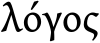
“From physics on up to the normative cultural sciences there is a gradation, the logos standing at the one end and the kairos at the other. But there is no point at which either logos or kairos alone is to be found. Hence even our knowledge of the fateful character of philosophy must at the same time stand in logos and in kairos. If it stood only in the kairos, it would be without validity and the assertion would be valid only for the one making it; if it stood only in the logos, it would be without fate and would therefore have no part in existence, for existence is involved in fate.”
Paul Tillich on Kairos 3 quotes
“As the Greeks devoted themselves to philosophy, obedient to the logos within the limits of the kairos; as the Middle Ages subordinated the logos to the great kairos upon which their culture was built; as modern philosophy through its kairos adapted itself to the logos of a world-dominating science and technique, so our task is to serve the logos out of the depths of our new kairos, a kairos that is now emerging in the crises and catastrophes of our day. Hence, the more deeply we understand fate — our own personal fate and that of our society — the more our intellectual work will have power and truth.”
Paul Tillich on Authority 2 quotes
“The ambiguity of leadership in the sense of authority starts the moment that actual authority, which is based on the division of experience, is frozen into an authority bound to a particular social position. [...] All institutional hierarchy is based on this transformation of actual into established authority.”

Paul Tillich on Age of Enlightenment 2 quotes
“The courage to be as oneself within the atmosphere of Enlightenment is the courage to affirm oneself as a bridge from a lower to a higher state of rationality. It is obvious that this kind of courage to be must become conformist the moment its revolutionary attack on that which contradicts reason has ceased, namely in the victorious bourgeoisie.”
Paul Tillich on Embarrassment
“I hope for the day when everyone can speak again of God without embarrassment.”

Paul Tillich on Love
Paul Tillich on Death
Paul Tillich on Mechanical engineering
“Mechanical engineering is scientific theory. But actual mechanical engineering is impossible without praxis. Even in mechanical technology, concrete reality, or the individual gestalt, always contains”

Paul Tillich on Solitude
Paul Tillich on Collectivism
“Individualism is the self-affirmation of the individual self as individual self without regard to its participation in its world. As such it is the opposite of collectivism, the self affirmation of the self as part of a larger whole without regard to its character as an individual self.”

Paul Tillich on Individualism
“Individualism is the self-affirmation of the individual self as individual self without regard to its participation in its world. As such it is the opposite of collectivism, the self affirmation of the self as part of a larger whole without regard to its character as an individual self.”

What Paul Tillich Said About Others
Discover personal opinions Paul Tillich shared regarding contemporaries.
Paul Tillich on Friedrich Nietzsche 2 quotes
“Friedrich Nietzsche, the famous atheist and ardent enemy of religion and Christianity, knew more about the power the idea of God than many faithful Christians.”

Paul Tillich on Blaise Pascal
Paul Tillich on Friedrich Schlegel
“In a man like Friedrich von Schlegel the courage to be as an individual self produced complete neglect of participation, but it also produced, in reaction to the emptiness of this self-affirmation, the desire to return to a collective. Schlegel, and with him many extreme individualists in the last hundred years, became Roman Catholics. The courage to be as oneself broke down, and one turned to an institutional embodiment of the courage to be as a part.”

Paul Tillich on Pontius Pilate
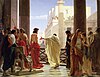
“Where else, then, can we get it? "Nowhere," Pilate answers in his talk with Jesus. "What is truth?" he asks, expressing in these three words his own and his contemporaries’ despair of truth, expressing also the despair of truth in millions of our contemporaries, in schools and studios, in business and professions. In all of us, open or hidden, admitted or repressed, the despair of truth is a permanent threat. We are children of our period as Pilate was. Both are periods of disintegration, of a world-wide loss of values and meanings. Nobody can separate himself completely from this reality, and nobody should even try. Let me do something unusual from a Christian standpoint, namely, to express praise of Pilate—not the unjust judge, but the cynic and sceptic; and of all those amongst us in whom Pilate’s question is alive. For in the depth of every serious doubt and every despair of truth, the passion for truth is still at work. Don’t give in too quickly to those who want to alleviate your anxiety about truth. Don’t be seduced into a truth which is not really your truth, even if the seducer is your church, or your party, or your parental tradition. Go with Pilate, if you cannot go with Jesus; but go in seriousness with him!”
Quotes About Paul Tillich
Gain deeper perspective through quotes about Paul Tillich from others.
Marc A. Krell on Paul Tillich
“Buber and Tillich each took similar paths toward their common destination of religious socialism. Both had been influenced early in their careers by the 19th century German philosopher Nietzsche's rejection of bourgeois culture in his classic book, Thus Spoke Zarathustra, and were further influenced by Karl Marx's doctrine of human self-estrangement and objectification in capitalist society while rejecting his anti-religious bias. Moreover, Buber and Tillich, along with all religious socialists, rejected the Marxist “revolutionary dictatorship” of the proletariat. This would represent the extreme of heteronomy for Tillich and the political manifestation of the I-it relationship expressed by Buber that is based on human instrumentalism. … Tillich initially promoted an "idealistic anarchism" in the sense that he envisioned a theonomous culture arising from "communities themselves and their spiritual substance" instead of being promoted by the state. They would eventually part ways to some extent, with Buber continuing to promote a "federalistic communal socialism" yet not rejecting the political component of social life, while Tillich promoted the possibility of a central government that is not absolute in a theonomous society.”
About Paul Tillich
Paul Johannes Tillich (20 August 1886 – 22 October 1965) was one of the most influential Protestant theologians and existentialist philosophers of the 20th century, famous for his works The Courage to Be (1952) and Dynamics of Faith (1957). In his major three-volume work Systematic Theology (1951–63), he developed his "method of correlation": an approach of exploring the symbols of Christian revelation as answers to the problems of human existence raised by contemporary existential philosophical analysis.