Link Copied!
Paul Signac Quotes (1863-1935)
Painter, King
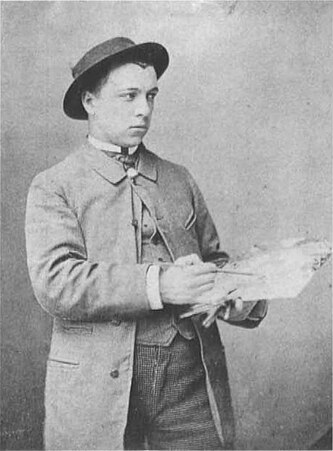
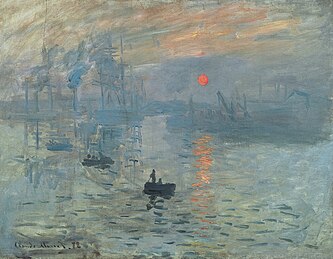
About Paul Signac
Paul Victor Jules Signac (11 November 1863 – 15 August 1935) was a French neo-impressionist painter who, working with Georges Seurat, helped develop the pointillist style.
Best Paul Signac Quotes
Shortest
Earliest
Explore our curated collection of the most famous and impactful Paul Signac quotes.
“The Neo-Impressionist does not stipple, he divides. And dividing involves... guaranteeing all benefits of light.”
“The Pointillist chooses a means of expression by which he applies colour on a canvas in small dots rather than spreading it flat.”
“Divisionism is a complex system of harmony, an aesthetic rather than a technique.
The point is only a means.
To divide is to seek the power and harmony of color, through representing colored light by pure elements, and through employing the optical mixture of these pure elements, separated and proportioned according to the essential laws of contrast and graduation.”
The point is only a means.
To divide is to seek the power and harmony of color, through representing colored light by pure elements, and through employing the optical mixture of these pure elements, separated and proportioned according to the essential laws of contrast and graduation.”

“Of the three primary colors, the three binary ones are formed. If you add to one of these the primary tone that is its opposite, it cancels it out. This means that you produce the required half-tone. Therefore, adding black is not adding a half-tone, it is soiling the tone whose true half-tone resides in this opposite me have just described. Hence the green shadows found in red. The heads of the two little peasants. The yellow one had purple shadows; the redder and more sanguine one had green ones.”
“It seems that the first consideration of a painter who stands before the white canvas should be to decide what curves and arabesques should cut the surface, what tints and tones should cover it.. .Following the precepts of Delacroix he would not begin a composition until he had first determined its organization. Guided by tradition and by science, he would adjust the composition to his conception, that is to say he would adapt the lines (directions and angles), the chiaroscuro (tones), the colors (tints), to the traits he wished to make dominant.”
“Neo-Impressionist method is an attempt is made to achieve the richness of the sunlight spectrum with all its tones. An orange that blends with yellow and red, a violet that tends toward red and blue, a green between blue and yellow are, with white the sole elements. Through mixture (in the eye of the observer) of these pure colours, whose relationship can be varied at will, from the most brilliant to the greyish. Every brush stroke that is taken from the palette remains pure on the canvas.”

“..it [the large painting 'Bathers at Asnieres', by [[Georges Seurat ] was painted in great flat strokes, brushed one over the other, fed by a palette composed, like Delacroix's, of pure and earthy colors. By means of these ochres and browns the picture is deadened, and appears less brilliant than those the impressionists paint with a palette limited to prismatic colors. But the understanding of the laws of contrast, the methodical separation of elements — light, shade, local color, and the interaction of colors — and their proper balance and proportion, give this canvas its perfect harmony.”

“Frankly, this is my position: I have been painting for two years, and my only models have been your [ Monet's ] own works; I have been following the wonderful path you broke for us. I have always worked regularly and conscientiously, but without advice or help, for I do not know any impressionist painter who would be able to guide me, living as I am in an environment more or less hostile to what I am doing. And so I fear I may lose my way, and I beg you to let me see you, if only for a short visit. I should be happy to show you five or six studies; perhaps you would tell me what you think of them and give me the advice I need so badly, for the fact is that I have the most horrible doubts, having always worked by myself, without teacher, encouragement, or criticism.”
“Pissarro wants to achieve delicacy by means of adjustments of nearly like tones; he keeps from juxtaposing two distant tones and does without the vibrant note which such contrast gives, but strives on the contrary to diminish the distance between two tints by introducing into each one of them intermediate elements which he calls 'passage'. But the neo-impressionist technique is based precisely on this type of contrast, for which he feels no need, and on the violent purity of tints which hurts his eye. He has kept of divisionism only the technique, the little dot, whose raison d'etre is exactly that it enables the transcription of this contrast and the conservation of this purity. So it is easy to understand why he [Pissarro] gave up this means, insufficient as it is by itself.”

“We have never heard Seurat, Cross, Luce, Van de Velde or indeed Van Rysselberghe or Angrand speak of dots. We have never seen them be preoccupied by Pointillism. Read these lines, dictated by Seurat to Jules Christophe, his biographer: 'Art is harmony; harmony is the analogy between opposites and between similar elements of tone, tint and line. By tone I mean light and dark; tint is red and its complementary: green, orange and its complementary: blue, yellow and its complementary: purple.. .The method of expression relies on the optical mixture of tones, tints and their reactions (shadows that follow very strict rules).”
Paul Signac Quotes by Topic
Find exactly what you are looking for by browsing this categorized list of Paul Signac quotes by topic.
Paul Signac on Impressionism 4 quotes
“The Neo-Impressionist does not stipple, he divides. And dividing involves.. ..guaranteeing all benefits of light.”
What Paul Signac Said About Others
Discover personal opinions Paul Signac shared regarding contemporaries.
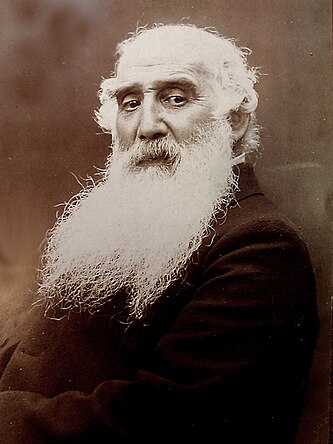
Paul Signac on Camille Pissarro
“Pissarro wants to achieve delicacy by means of adjustments of nearly like tones; he keeps from juxtaposing two distant tones and does without the vibrant note which such contrast gives, but strives on the contrary to diminish the distance between two tints by introducing into each one of them intermediate elements which he calls 'passage'. But the neo-impressionist technique is based precisely on this type of contrast, for which he feels no need, and on the violent purity of tints which hurts his eye. He has kept of divisionism only the technique, the little dot, whose raison d'etre is exactly that it enables the transcription of this contrast and the conservation of this purity. So it is easy to understand why he gave up this means, insufficient as it is by itself.”
Quotes About Paul Signac
Gain deeper perspective through quotes about Paul Signac from others.
Osip Mandelstam JOURNEY TO ARMENIA translated into English on Paul Signac
“Not long before that, as I was rummaging about under the staircase of the dusty rose house on the Yakimanka, I discovered a tattered book by Signac" defending Impressionism. The author explained the "law of optical blending," glorified the method of "pointillism," and suggested how meaningful using only the pure colors of the spectrum could be. Signac based his arguments on citations from his idol, Eugène Delacroix. Time and again he referred to his Journey to Morocco, as if leafing through a codex of visual training intended as obligatory reading for every thinking European. Signac was trumpeting on his chivalric horn the last, ripe gathering of the Impressionists. He summoned all the Zouaves, the burnooses, and the red Algerian skirts into their bright camps. At the very first sounds of this triumphant theory, my nerves grew taut. I felt a shiver of novelty, as if someone had summoned me by name...”
Quote of Camille Pissarro on Paul Signac
“Signac [at the exhibition of 'The Independents' in Paris, March 1891] has some landscapes of the kind you know, very correct, very well executed, but cold and monotonous; he has a bizarre portrait of Fénéon, standing, holding a lily, against a background of interlaced ribbons of color which do not add to the decorative quality of the work and have no value from the point of view of sensation.”
About Paul Signac
Paul Victor Jules Signac (11 November 1863 – 15 August 1935) was a French neo-impressionist painter who, working with Georges Seurat, helped develop the pointillist style.