Paul Signac on Impressionism
← Back to Paul Signac Profile
“The Neo-Impressionist does not stipple, he divides. And dividing involves.. ..guaranteeing all benefits of light.”
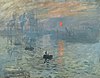
“Neo-Impressionist method is an attempt is made to achieve the richness of the sunlight spectrum with all its tones. An orange that blends with yellow and red, a violet that tends toward red and blue, a green between blue and yellow are, with white the sole elements. Through mixture (in the eye of the observer) of these pure colours, whose relationship can be varied at will, from the most brilliant to the greyish. Every brush stroke that is taken from the palette remains pure on the canvas.”
“Frankly, this is my position: I have been painting for two years, and my only models have been your [ Monet's ] own works; I have been following the wonderful path you broke for us. I have always worked regularly and conscientiously, but without advice or help, for I do not know any impressionist painter who would be able to guide me, living as I am in an environment more or less hostile to what I am doing. And so I fear I may lose my way, and I beg you to let me see you, if only for a short visit. I should be happy to show you five or six studies; perhaps you would tell me what you think of them and give me the advice I need so badly, for the fact is that I have the most horrible doubts, having always worked by myself, without teacher, encouragement, or criticism.”
“Pissarro wants to achieve delicacy by means of adjustments of nearly like tones; he keeps from juxtaposing two distant tones and does without the vibrant note which such contrast gives, but strives on the contrary to diminish the distance between two tints by introducing into each one of them intermediate elements which he calls 'passage'. But the neo-impressionist technique is based precisely on this type of contrast, for which he feels no need, and on the violent purity of tints which hurts his eye. He has kept of divisionism only the technique, the little dot, whose raison d'etre is exactly that it enables the transcription of this contrast and the conservation of this purity. So it is easy to understand why he [Pissarro] gave up this means, insufficient as it is by itself.”