Paul Krugman Quotes (1953-)






















About Paul Krugman
Best Paul Krugman Quotes
Explore our curated collection of the most famous and impactful Paul Krugman quotes.

















In the course of describing my formative moment in 1978, I have already implicitly given my four basic rules for research. Let me now state them explicitly, then explain. Here are the rules:
1. Listen to the Gentiles
2. Question the question
3. Dare to be silly
4. Simplify, simplify














One answer is simply that it would be wrong to give up. If the people with good ideas do not fight for them, they have no right to complain about the outcome.
But good ideas will still often lose to convenient nonsense. When that happens, every serious economist is ultimately sustained by a faith that the right ideas will eventually prevail.”
Yet while the tax cut may not be a matter of economic life or death, it is a very serious issue. For one thing, like it or not, the tax cut has become the central political issue in the United States right now. Conservatives who want to reshape America view passage of a large tax cut as a first step toward realizing their vision. For that reason, those who do not share this vision feel, rightly, that they must oppose the plan.”

You don't need to be a Republican to accept that tax rates this high might discourage investment and hurt economic growth. But was the interaction between inflation and investment really a major villain in America's economic difficulties? There the evidence was less clear.”


This situation will not last forever. Surely there will be other ideologies, other dreams; and they will emerge sooner rather than later if the current economic crisis persists and deepens. But for now capitalism rules the world unchallenged.”

But was it really a good idea to diminish the role of Economic Man that much? No, said Friedman, who argued in his 1953 essay “The Methodology of Positive Economics” that economic theories should be judged not by their psychological realism but by their ability to predict behavior. And Friedman’s two greatest triumphs as an economic theorist came from applying the hypothesis of rational behavior to questions other economists had thought beyond its reach.”

After 1960, by contrast, economists working on development had been trained in the formalism of constant-returns general equilibrium, and did not so much reject the possibility that economies of scale might matter, as simply fail to notice it.”
I would summarize the Keynesian view in terms of four points:
1. Economies sometimes produce much less than they could, and employ many fewer workers than they should, because there just isn’t enough spending. Such episodes can happen for a variety of reasons; the question is how to respond.
2. There are normally forces that tend to push the economy back toward full employment. But they work slowly; a hands-off policy toward depressed economies means accepting a long, unnecessary period of pain.
3. It is often possible to drastically shorten this period of pain and greatly reduce the human and financial losses by “printing money”, using the central bank’s power of currency creation to push interest rates down.
4. Sometimes, however, monetary policy loses its effectiveness, especially when rates are close to zero. In that case temporary deficit spending can provide a useful boost. And conversely, fiscal austerity in a depressed economy imposes large economic losses.
These errors have taken deep root in public consciousness and provide the public support for the excessive austerity of current fiscal policies in many countries. So the time is ripe for a Manifesto in which mainstream economists offer the public a more evidence-based analysis of our problems.”
One of these mysteries is why economic growth takes places at different rates over time and across countries. Nobody really knows why the U.S. economy could generate 3 percent annual productivity growth before 1973 but only 1 percent afterward, nobody really knows why Japan surged from defeat to global economic power after World War II, while Britain slid slowly into third-rate status. At any given time there are always policy entrepreneurs willing to claim that they have all the answers, but we'll come to that story in later chapters.
The other mystery is the reason why there is a business cycle ― the irregular rhythm of recessions and recoveries that prevents economic growth from being a smooth trend. It was in challenging the orthodox, Keynesian view of business cycles that conservatives first forced a major rethinking of economics.”
In that sense, this time really is different: while the first great global financial crisis was followed by major reforms, it’s not clear that anything comparable will happen after the second. And history tells us what will happen if those reforms don’t take place. There will be a resurgence of financial folly, which always flourishes given a chance. And the consequence of that folly will be more and quite possibly worse crises in the years to come.”
It fell to the British economist John Maynard Keynes to provide a clear story about what happens during a recession, and some useful advice about how to get out of one.”

Second, the economic analysis of communist countries' growth implied some future limits to their industrial expansion - in other words, implied that a naive projection of their past growth rates into the future was likely to greatly overstate their real prospects. Economic growth that is based on expansion of inputs, rather than on growth in output per unit of input, is inevitably subject to diminishing returns. It was simply not possible for the Soviet economies to sustain the rates of growth of labor force participation, average education levels, and above all the physical capital stock that had prevailed in previous years. Communist growth would predictably slow down, perhaps drastically.”
What the IMF said in response is that Asia is not Australia: that to let the currencies fall unchecked would have led to “hyperdevaluations,” and that the result would have been both massive financial distress (because so many businesses had debt denominated in dollars) and soaring inflation. The trouble with this rationale is, of course, that the massive financial distress happened anyway, thanks to high interest rates and the recession they helped cause. So the IMF at best avoided one vicious circle only by starting another.”
I do not think that word “compromise” means what Mr. Ryan thinks it means. Above all, he failed to offer the one thing the White House won’t, can’t bend on: an end to extortion over the debt ceiling. Yet even this ludicrously unbalanced offer was too much for conservative activists, who lambasted Mr. Ryan for basically leaving health reform intact.
Does this mean that we’re going to hit the debt ceiling? Quite possibly; nobody really knows, but careful observers are giving no better than even odds that any kind of deal will be reached before the money runs out. Beyond that, however, our current state of dysfunction looks like a chronic condition, not a one-time event. Even if the debt ceiling is raised enough to avoid immediate default, even if the government shutdown is somehow brought to an end, it will only be a temporary reprieve. Conservative activists are simply not willing to give up on the idea of ruling through extortion, and the Obama administration has decided, wisely, that it will not give in to extortion.
So how does this end? How does America become governable again?
”
The point is that third-world countries aren't poor because their export workers earn low wages; it's the other way around. Because the countries are poor, even what look to us like bad jobs at bad wages are almost always much better than the alternatives: millions of Mexicans are migrating to the north of the country to take the low-wage export jobs that outrage opponents of Nafta. And those jobs wouldn't exist if the wages were much higher: the same factors that make poor countries poor -- low productivity, bad infrastructure, general social disorganization -- mean that such countries can compete on world markets only if they pay wages much lower than those paid in the West.”
Reagan is guilty as charged. The supply-side apologists' claim that some extraordinary economic success vindicates Reaganomics in spite of the deficits just doesn't hold up in the face of the evidence. The question, however, is whether the crime was a felony or a misdemeanor.
The answer proposed here will not satisfy those with a taste for drama. Reagan created a deficit, and it hurt American economic growth. But even if the effects of the visible deficit are supplemented with appeals to several alleged hidden deficits of the 1980s, the cost was not catastrophic. The deficit is not nearly the monster some people imagine.”
Perhaps most of all, we failed to understand the extent to which both Mexico and Washington simply got lucky. The rescue wasn’t really a well-considered plan that addressed the essence of the crisis: it was an emergency injection of cash to a beleaguered government, which did its part by adopting painful measures less because they were clearly related to the economic problems than because by demonstrating the government’s seriousness they might restore market confidence. They succeeded, albeit only after the economy had been punished severely, but there was no good reason to suppose that such a strategy would work the next time.”
The answer, I suspect, is that he got caught up in an essentially political role. Milton Friedman the great economist could and did acknowledge ambiguity. But Milton Friedman the great champion of free markets was expected to preach the true faith, not give voice to doubts. And he ended up playing the role his followers expected. As a result, over time the refreshing iconoclasm of his early career hardened into a rigid defense of what had become the new orthodoxy.
In the long run, great men are remembered for their strengths, not their weaknesses, and Milton Friedman was a very great man indeed—a man of intellectual courage who was one of the most important economic thinkers of all time, and possibly the most brilliant communicator of economic ideas to the general public that ever lived. But there’s a good case for arguing that Friedmanism, in the end, went too far, both as a doctrine and in its practical applications. When Friedman was beginning his career as a public intellectual, the times were ripe for a counterreformation against Keynesianism and all that went with it. But what the world needs now, I’d argue, is a counter-counterreformation.”
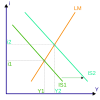
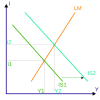
The Keynesian answer to a liquidity trap is for the government to do what the private sector will not: spend. When monetary expansion is ineffective, fiscal expansion—such as public works programs financed by borrowing—must take its place. Such a fiscal expansion can break the vicious circle of low spending and low incomes, "priming the pump: and getting the economy moving again. But remember that this is not by any means an all-purpose policy recommendation; it is essentially a strategy of desperation, a dangerous drug to be prescribed only when the usual over-the-counter remedy of monetary policy has failed.”
This lack of formality was not because development economists were peculiarly mathematically incapable. Hirschman made a significant contribution to the formal theory of devaluation in the 1940s, while Fleming helped create the still influential Mundell–Fleming model of floating exchange rates. Moreover, the development field itself was at the same time generating mathematical planning models—first Harrod–Domar type growth models, then linear programming approaches that were actually quite technically advanced for their time.
So why didn't high development theory get expressed in formal models? Almost certainly for one basic reason: the difficulty of reconciling economies of scale with a competitive market structure.”
Paul Krugman Quotes by Topic
Find exactly what you are looking for by browsing this categorized list of Paul Krugman quotes by topic.
Paul Krugman on Keynesian economics 4 quotes

Paul Krugman on Euro 3 quotes

Paul Krugman on Occupy Wall Street 3 quotes

Paul Krugman on Economics textbook 3 quotes
Paul Krugman on Climate change denial 3 quotes

What Paul Krugman Said About Others
Discover personal opinions Paul Krugman shared regarding contemporaries.
Paul Krugman on Milton Friedman 6 quotes

Paul Krugman on John Maynard Keynes 3 quotes
Paul Krugman on John Kenneth Galbraith 3 quotes

Paul Krugman on Robert Lucas Jr. 3 quotes

Paul Krugman on Donald Trump

Quotes About Paul Krugman
Gain deeper perspective through quotes about Paul Krugman from others.
Kenneth J. Arrow on Paul Krugman
J. Bradford DeLong on Paul Krugman

Thomas J. DiLorenzo on Paul Krugman
John Kenneth Galbraith on Paul Krugman
Charles P. Kindleberger on Paul Krugman


