Link Copied!
Parmenides Quotes (0-)
Philosopher

About Parmenides
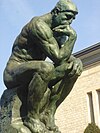
Parmenides (fl. early 5th century BC) was an ancient Greek monist philosopher born in Elea, a Greek city on the southern coast of Italy, and founder of the Eleatic school of philosophy. The single known work of Parmenides is a poem which has survived only in fragmentary form, in which he argues that Reality is One, change is impossible, and that existence is timeless and uniform.
Best Parmenides Quotes
Shortest
Earliest
Explore our curated collection of the most famous and impactful Parmenides quotes.
“It is indifferent to me where I am to begin, for there shall I return again.”
“You must learn all things, both the unshaken heart of persuasive truth, and the opinions of mortals in which there is no true warranty.”
“Do not let habit, born from experience, force you along this road, directing aimless eye and echoing ear and tongue; but judge by reason the much contested proof which I have spoken.”

“There is one story left, one road: that it is. And on this road there are very many signs that, being, is uncreated and imperishable, whole, unique, unwavering, and complete.”
“The only roads of enquiry there are to think of: one, that it is and that it is not possible for it not to be, this is the path of persuasion (for truth is its companion); the other, that it is not and that it must not be — this I say to you is a path wholly unknowable.”

Parmenides Quotes by Topic
Find exactly what you are looking for by browsing this categorized list of Parmenides quotes by topic.
Parmenides on Thought
Parmenides on Being
“There is one story left, one road: that it is. And on this road there are very many signs that, being, is uncreated and imperishable, whole, unique, unwavering, and complete.”
Parmenides on Monism
“There is one story left, one road: that it is. And on this road there are very many signs that, being, is uncreated and imperishable, whole, unique, unwavering, and complete.'''”

Parmenides on Ontology
“For to be aware and to be are the same....And it is all one to me Where I am to begin; for I shall return there again. ...It is necessary to speak and to think what is; for being is, but nothing is not. ...Helplessness guides the wandering thought in their breasts; they are carried along deaf and blind alike, dazed, beasts without judgment, convinced that to be and not to be are the same and not the same, and that the road of all things is a backward-turning one. ...Nor was once, nor will be, since is, now, all together, One, continuous; for what coming-to-be of it will you seek? In what way, whence, did grow? Neither from what-is-not shall I allow You to say or think; for it is not to be said or thought That is not. And what need could have impelled it to grow Later or sooner, if it began from nothing? Thus must either be completely or not at all. ...For this view, that That Which Is Not exists, can never predominate. You must debar your thought from this way of search, nor let ordinary experience in its variety force you along this way, ...the eye, sightless as it is, and the ear, full of sound, and the tongue, to rule; but ...judge by means of the Reason ...the much-contested proof which is expounded by me. ...[I]s now, all at once, one and continuous... Nor ...divisible, since ...all alike; nor ...any more or less ...in one place which might prevent ...holding together, but all is full of what is. ...How could what is perish? How could it have come to be? For if it came into being, it is not; nor is it... ever... going to be. Thus coming into being is extinguished, and destruction unknown. ...Thinking and the thought that it is are the same; for you will not find thinking apart from what is... The mortals lay down and decided well to name two forms (...the flaming light and obscure darkness of night), out of which it is necessary not to make one, and in this they are led astray.”

What Parmenides Said About Others
Discover personal opinions Parmenides shared regarding contemporaries.
Parmenides on Elvis Presley
“In May of 1959, at the Midnight premiere of "King Creole", in Mexico City, more than 500 teenager broke into the cinema, overtook various side balconies and threw seats and even burning papers to those in attendance at the floor below. A huge fight erupted. As many girls tried to leave the cinema, they were stripped of their clothings and harrassed by the rioters. Police arrived at about 1 am in the morning but incredibly, there were many injured but no arrests.”
Quotes About Parmenides
Gain deeper perspective through quotes about Parmenides from others.
Scott Austin on Parmenides
“The purest example of the Greek desire to comprehend, a desire which in him would have nothing to do with what was not strictly knowable. If later philosophers appear softer by comparison, it is perhaps because of a revivifying compromise they made, one more acceptable and more tolerant of the discourse we perhaps need; but, by the same token, one can perhaps be forgiven for sometimes thinking them dwarfed by the inhuman shadow of the master.”
John D. Barrow on Parmenides
“The Greek tradition was a complete contrast to that of the Far East. ...the Greeks placed logic at the pinnacle of human thinking. Their sceptical attitude towards the wielding of 'non-being' as some sort of 'something' that could be subject to logical development was exemplified by Parmenides'''' influential arguments against the concept of empty space. ...He maintained that you can only speak about what is: what is not cannot be thought of, and what cannot be thought of cannot be. ...more unexpected was the further conclusion that time, motion nor change could exist either.'''”

Patricia Curd on Parmenides
“The crisis at the heart of Parmenides' argument, "is or is not," rules out any candidate for an ultimate entity in an explanation of what there is that is subject to coming-to-be, passing-away, or alteration of any sort. Such an entity must be a whole, complete, unchanging unity: it must be a thing that is of a single kind … But it does not follow from this that there can be only one such entity. Parmenides' arguments allow for a plurality of fundamental, predicationally unified entities that can be used to explain the world reported by the senses.”
John Freely on Parmenides
“Parmenides believed that all Being is what he called the One, and denied absolutely the possibility of change. He believed that the cosmos is full (i.e., no void), uncreated, eternal, indestructible, unchangeable, immobile sphere of being, and all sensory evidence to the contrary is illusory. One Parmenidean fragment stated, "Either a thing is or it is not," meaning that creation and destruction is impossible.”
David Gallop on Parmenides
“From this inheritance contemporary philosophers have continued to draw profit. Parmenides is their earliest ancestor whose work contains explicit and self-conscious argumentation. The severe conceptual difficulties posed for the first time in his verses are of perennial interest, and many of them remain in the forefront of discussion today. Recent study has thus brought his thought, in the words of another critic, "astonishingly close to some contemporary preoccupations." He should be viewed not only as "the most original and important philosopher before Socrates" but as the first extant author deserving to be called a philosopher in a present-day sense of the word.”
W. K. C. Guthrie on Parmenides
“One cannot say that the case for Parmenides is proved. If it is accepted, it is a strange freak of history that so fundamental a discovery should have been made by one for whom the whole physical world was an unreal show.”
Werner Heisenberg on Parmenides
“Greek philosophy returned for some time to the concept of the One in the teachings of Parmenides... His most important contribution... was, perhaps, that he introduced a purely logical argument into metaphysics. "One cannot know what is not—that is impossible—nor utter it; for it is the same thing that can be thought and that can be." Therefore, only the One is, and there is no becoming or passing away. Parmenides denied the existence of empty space for logical reasons. Since all change requires empty space... he dismissed change as an illusion.”

Edward Hussey on Parmenides
“What is clear is that Parmenides is making a conscious attempt at some kind of a new start. Like Descartes, he is trying to find an unassailable starting-point on which something further can be built. This search is understandable, given the intellectual situation of the time. The principles of the Milesians had yielded no one clearly true system, but a number of rival ones — in itself a scandal. Heraclitus had made the whole of cosmology suspect by revealing deep-seated contradictions at its heart. In the background, the Pythagoreans were directly or indirectly stimulating new lines of thought and using them, perhaps, for their own mysterious purposes.”
William Ralph Inge on Parmenides
“Of the philosophers, Thales is vaguely reported to have taught that souls are immortal. But neither he nor his immediate successors... believed in the immortality of particular souls... This doctrine belongs to the Orphic tradition. In Heracleitus and Parmenides we find the two doctrines of immortality... implicit in mysticism, separated... for the first time. Heracleitus is the champion of the Dionysiac... life and death... in an unending cycle; Parmenides, under Orphic influence, teaches... Soul has fallen from... light and reality to the dark and unreal... bodily existence. This, however, is... only 'the way of opinion'... [Parmenides] feels.... that... substantiality... is not so easily got rid of. But he will not give up... eternal substance. The most interesting fragment of Parmenides... seems to enunciate, for the first time in Greek thought, the mystical doctrine of eternity as a timeless Now, as opposed to the popular... unending succession. ''''There remains then only to give an account of one way—that real Being exists. Many signs... showing... it is unborn, indestructible, entire, unique, unshakable, and unending. It never was, and it never will be, since it is all together present in the Now, one and indivisible.'''' Empedocles... repudiates... Parmenides, probably on the ground that he reduces the world of time and change to nullity... thus leaves no pathway from appearance to reality. His doctrine of the soul’s exile and wanderings is... Orphic doctrine, which Pindar also gives... in the second Olympian Ode. The Soul sins by separating itself from God... from love and a choice of ' strife ’ in the place of harmony. The immortal Soul is... love and strife blended; the body... only an 'alien garment'... perishes at death. ...Empedocles describes the Soul as a ratio, or harmony ...the complex of...'strife'... bound... by the principle of unity...'love'...Parmenides ...may be ...rejects the Pytdhagorean doctrines ...finds truth in static materialism.”
Ross MacDonald on Parmenides
“I walked on to the next corner, sat on a bench at a bus stop, and read in my new book about Heraclitus. All things flow like a river, he said; nothing abides. Parmenides, on the other hand, believed that nothing ever changed, it only seemed so. Both views appealed to me.”

Richard D. McKirahan on Parmenides
“What-is was not generated from what-is-not, because what-is-not cannot give rise to anything in addition to itself. This is the first enunciation of the principle "out of nothing, nothing comes to be,"? which was implicit in earlier Greek thought even as far back as Hesiod and which afterwards, because of Parmenides, became a touchstone for subsequent Greek cosmogonies. These arguments show that coming to be from what-is-not is impossible, which is... relevant in the first stage of a cosmogony. The arguments say nothing of more familiar cases of coming to be, which can be described in terms of changes among already existing things.”
Maureen O' Sullivan on Parmenides
“As Parmenides categorically threw out all observation with the senses, so this student of philosophy is inclined to throw out Parmenides as a complete waste of time! His static theories denying motion and change were in direct antithesis to the Kinetic metaphysics of Heracleitus, and his depressing monism was later refuted by the atomists Democritus and Leucippus. In a nutshell; in a word; Parmenides is Pah! — and definitely not a philosopher to take to bed with you on a long winter evening! … Personally speaking the whole thing makes me shudder — although I do acknowledge that paradoxes and riddles are very popular with the average thirteen-year-old school boy. Zeno however, impressed his dialectical ability on Socrates, who then began turning it loose on the average citizen in the Agora (market-place) and in consequence made himself most unpopular. I only think that it is a pity that when they asked Socrates to drink the hemlock in 399 B.C., they didn' t include Zeno and Parmenides in the invitation.”
Robert M. Pirsig on Parmenides
“Parmenides made it clear for the first time that the Immortal Principle, the One, Truth, God, is separate from appearance and from opinion, and the importance of this separation and its effect upon subsequent history cannot be overstated. It's here that the classic mind, for the first time, took leave of its romantic origins and said, "The Good and the True are not necessarily the same," and goes its separate way. Anaxagoras and Parmenides had a listener named Socrates who carried their ideas into full fruition.”
Karl Popper on Parmenides
Seneca the Younger on Parmenides
“If I accede to Parmenides there is nothing left but the One; if I accede to Zeno, not even the One is left.”
Carlo Sini on Parmenides
“The path of speech (mythos odoio) (by Parmenides) contains within itself the path of day and that of night. It is no coincidence that Parmenides' poem comprises two parts. What exactly the second part contains and why it is so is an ancient philological and exegetical problem that we will not address here and which Plato already denounced in its ambiguity. In fact, it is not possible to separate being and speech without identifying them, and it is not possible to identify them without, ipso facto, separating them. The “simulation” (the simul) is immediate and structural. Human beings are simulators precisely because they are beings of truth. They cannot tell the truth without lying and vice versa. In this sense, they are beings of mediation, beings that stand in the middle, as you happily recall, that is, beings that ‘work’ to translate immediate experience into knowledge, or into a transferential process. God and nature do not work, but human beings do, first and foremost in naming the fruit of sexuality; it then places humans in the relational milieu of parents and children, brothers and sisters, offered, either really or symbolically, in sacrifice to God, that is, to the community of speakers. [...] The 20th century cannot exist without Sigmund Freud, psychoanalysis cannot exist without philosophy, at least in my opinion.”
Willem Jacob Verdenius on Parmenides
“One of Parmenides' merits is to have been the first philosopher who strove to handle general concepts like "being", "not-being", "knowing", "unity", "identity", in their systematic connection.”
Gregory Vlastos on Parmenides
“The philosophy of Parmenides is a strange blend of mysticism and logic. It is mysticism, for its goal is not the gradual and cumulative correction of empirical knowledge, but deliverance from it through the instantaneous and absolute grasp of "immovable" truth. This is not the way of techne, but the way of revelation: it lies "beyond the path of men" (B. 1.27). Yet this revelation is itself addressed to man's reason and must be judged by reason. Its core is pure logic: a rigorous venture in deductive thinking, the first of its kind in European thought. This kind of thinking could be used against the world of the senses … This projection of the logic of Being upon the alien world of Becoming was Parmenides' most important single contribution to the history of thought, though it is seldom recognized as such. Without it, his doctrine of Being could have remained a speculative curiosity. With it, he laid the foundations for the greatest achievement of the scientific imagination of Greece, the atomic hypothesis.”
Frank Wilczek on Parmenides
“Followers of Parmenides worked themselves into logical knots and mystic raptures over the rather blatant contradiction between point five and everyday experience.”

Zeno of Elea on Parmenides
“The truth is, that these writings of mine were meant to protect the arguments of Parmenides against those who make fun of him and seek to show the many ridiculous and contradictory results which they suppose to follow from the affirmation of the one. My answer is addressed to the partisans of the many, whose attack I return with interest by retorting upon them that their hypothesis of the being of many, if carried out, appears to be still more ridiculous than the hypothesis of the being of one.”

About Parmenides
Parmenides (fl. early 5th century BC) was an ancient Greek monist philosopher born in Elea, a Greek city on the southern coast of Italy, and founder of the Eleatic school of philosophy. The single known work of Parmenides is a poem which has survived only in fragmentary form, in which he argues that Reality is One, change is impossible, and that existence is timeless and uniform.