Link Copied!
P. D. Ouspensky Quotes (1878-1947)
Philosopher, Poet, King
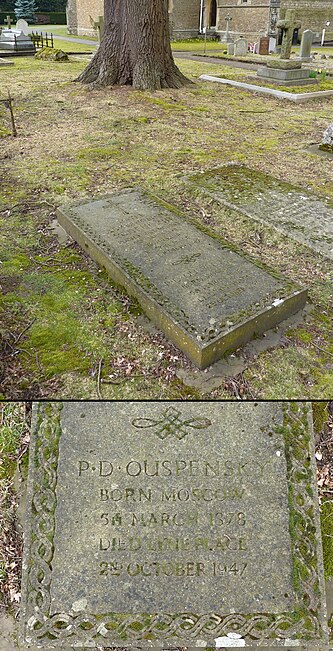


About P. D. Ouspensky
Peter Dimianovich Ouspensky, also known as Piotr Dimianovich Ouspenskii (4 March 1878 – 2 October 1947) was a Russian mystic philosopher. He was a student and expositor of the teachings of G. I. Gurdjieff.
Best P. D. Ouspensky Quotes
Shortest
Earliest
Explore our curated collection of the most famous and impactful P. D. Ouspensky quotes.
“The greatest barrier to consciousness is the belief that one is already conscious.”

“Possibly the most interesting first impression of my life came from the world of dreams.”
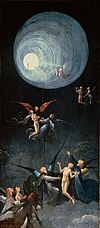
“Hints towards the solution of the problem of Eternity can be found in the various symbols and allegories of ancient religions and in some of the modern as well as ancient philosophies.”

“Our ancestors were very rich and eminent people, and they left us an enormous inheritance, which we have completely forgotten, especially since the time when we began to consider ourselves the descendants of a monkey.”



“Two things can get people to make efforts: if people want to get something, or if they want to get rid of something. Only, in ordinary conditions, without knowledge, people do not know what they can get rid of or what they can gain.”
“I've found that the chief difficulty for most people was to realize that they had really heard new things: that is things that they had never heard before. They kept translating what they heard into their habitual language. They had ceased to hope and believe there might be anything new.”
“If a man gives way to all his desires, or panders to them, there will be no inner struggle in him, no 'friction,' no fire. But if, for the sake of attaining a definite aim, he struggles with the desires that hinder him, he will then create a fire which will gradually transform his inner world into a single whole.”

“There exist moments in life, separated by long intervals of time, but linked together by their inner content and by a certain singular sensation peculiar to them. Several such moments always recur to my mind together, and I feel then that it is these that have determined the chief trend of my life.”

“"What has he in the bag?" I inquired, not knowing why I asked. And after a long silence the voice replied: "The four magic symbols, the sceptre, the cup, the sword and the pentacle. The fool always carries them, although he has long since forgotten what they mean. Nevertheless they belong to him, even though he does not know their use. The symbols have not lost their power, they retain it in themselves.”

“With his hands he unites heaven and earth, and the four elements that form the world are controlled by him.
The four symbols before him are the four letters of the name of God, the signs of the four elements, fire, water, air, earth."
I trembled before the depth of the mysteries A touched... The words I heard seemed to be littered by the Great Magician himself, and it was as though he spoke in me.
I was in deep trepidation and at moment I felt there was nothing, before me except the blue sky; but within me a window opened through which I could see unearthly things. and hear unearthly words.”
“The most precise and complete formulation of the law of higher logic I find in the writing of Plotinus, in his On Intelligible Beauty. I shall quote this passage in the succeeding chapter.
I have called this system of higher logic Tertium Organum because for us it is the third canon — third instrument — of thought after those of Aristotle and Bacon. The first was Organon, the second, Novum Organum. But the third existed earlier than the first.
Man, master of this instrument, of this key, may open the door of the world of causes without fear.”
“The vision disappeared as suddenly as it appeared. A weird silence fell on me. "What does it mean?" I asked in wonder.
"It is the image of the world," the voice said, "but it can be understood only after the Temple has been entered. This is a vision of the world in the circle of Time, amidst the four principles. But thou seest differently because thou seest the world outside thyself. Learn to see it in thyself and thou wilt understand the infinite essence, hidden in all illusory forms. Understand that the world which thou knowest is only one of the aspects of the infinite world, and things and phenomena are merely hierolgyphics of deeper ideas."”
"It is the image of the world," the voice said, "but it can be understood only after the Temple has been entered. This is a vision of the world in the circle of Time, amidst the four principles. But thou seest differently because thou seest the world outside thyself. Learn to see it in thyself and thou wilt understand the infinite essence, hidden in all illusory forms. Understand that the world which thou knowest is only one of the aspects of the infinite world, and things and phenomena are merely hierolgyphics of deeper ideas."”

“Generally speaking, the significance of the indirect results may very often be of more importance than the significance of direct ones. And since we are able to trace how the energy of love transforms itself into instincts, ideas, creative forces on different planes of life; into symbols of art, song, music, poetry; so can we easily imagine how the same energy may transform itself into a higher order of intuition, into a higher consciousness which will reveal to us a marvelous and mysterious world.
In all living nature (and perhaps also in that which we consider as dead) love is the motive force which drives the creative activity in the most diverse directions.”
In all living nature (and perhaps also in that which we consider as dead) love is the motive force which drives the creative activity in the most diverse directions.”

“Then the woman turned her face to me and looked into my eyes without speaking. And through me passed a thrill, mysterious and penetrating like a golden wave; tones vibrated in my brain, a flame was in my heart, and I understood that she spoke to me, saying without words:
"This is the Hall of Wisdom. No one can reveal it, no one can hide it. Like a flower it must grow and bloom in thy soul. If thou wouldst plant the seed of this flower in thy soul — learn to discern the real from the false. Listen only to the Voice that is soundless... Look only on that which is invisible, and remember that in thee thyself, is the Temple and the gate to it, and the mystery, and the initiation."”
"This is the Hall of Wisdom. No one can reveal it, no one can hide it. Like a flower it must grow and bloom in thy soul. If thou wouldst plant the seed of this flower in thy soul — learn to discern the real from the false. Listen only to the Voice that is soundless... Look only on that which is invisible, and remember that in thee thyself, is the Temple and the gate to it, and the mystery, and the initiation."”

“An unexpected vision appeared to me. A circle not unlike a wreath woven from rainbow and lightnings, whirled from heaven to earth with a stupendous, velocity, blinding me by its brilliance. And amidst this light and fire I heard music and soft singing, thunderclaps and the roar of a tempest, the rumble of falling mountains and earthquakes.
The circle whirled with a terrifying noise, touching the sun and the earth, and, in the centre of it I saw the naked, dancing figure of a beautiful young woman, enveloped by a light, transparent scarf, in her hand she held a magic wand.
Presently the four apocalyptical beasts began to appear on the edges of the circle; one with the face of a lion, another with the face of a man, the third, of an eagle and the fourth, of a bull.”
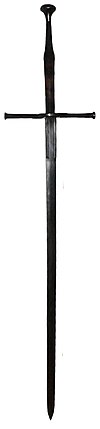
“When I possessed the keys, read the book and understood the symbols, I was permitted to lift the curtain of the Temple and enter. its inner sanctum. And there I beheld a Woman with a crown of gold and a purple mantle. She held a sword in one hand and scales in the other. I trembled with awe at her appearance, which was deep and mysterious, and drew me like an abyss.
"You see Truth," said the voice. "On these scales everything is weighed. This sword is always raised to guard justice, and nothing can escape it."
"But why do you avert your eyes from the scales and the sword? They will remove the last illusions. How could you live on earth without these illusions?
"You wished to see Truth and now you behold it! But remember what happens to the mortal who beholds a Goddess!"”
“I Saw the Man.
His figure reached from earth to heaven and was clad in a purple mantle. He stood deep in foliage and flowers and his head, on which was the head-band of an initiate, seemed to disappear mysteriously in infinity.
Before him on a cube-shaped altar were four symbols of magic — the sceptre, the cup, the sword and the pentacle.
His right hand pointed to heaven, his left to earth. Under his mantle he wore a white tunic girded with a serpent swallowing its tail.
His face was luminous and serene, and, when his eyes met mine, I felt that he saw most intimate recesses of my soul. I saw myself reflected in him as in a mirror and in his eyes I seemed to look upon myself.
And I heard a voice saying:
—"Look, this is the Great Magician!”
“When I lifted the first veil and entered the outer court of the Temple of Initiation, I saw in half darkness the figure of a woman sitting on a high throne between two pillars of the temple, one white, and one black. Mystery emanated from her and was about her. Sacred symbols shone on her green dress; on her head was a golden tiara surmounted by a two-horned moon; on her knees she held two crossed keys and an open book. Between the two pillars behind the woman hung another veil all embroidered with green leaves and fruit of pomegranate.
And a voice said:
"To enter the Temple one must lift the second veil and pass between the two pillars. And to pass thus, one must obtain possession of the keys, read the book and understand the symbols. Are you able to do this?"
"I would like to be able," I said.”
And a voice said:
"To enter the Temple one must lift the second veil and pass between the two pillars. And to pass thus, one must obtain possession of the keys, read the book and understand the symbols. Are you able to do this?"
"I would like to be able," I said.”

“Philosophy is based on speculation, on logic, on thought, on the synthesis of what we know and on the analysis of what we do not know. Philosophy must include within its confines the whole content of science, religion and art. But where can such a philosophy be found? All that we know in our times by the name of philosophy is not philosophy, but merely "critical literature" or the expression of personal opinions, mainly with the aim of overthrowing and destroying other personal opinions. Or, which is still worse, philosophy is nothing but self-satisfied dialectic surrounding itself with an impenetrable barrier of terminology unintelligible to the uninitiated and solving for itself all the problems of the universe without any possibility of proving these explanations or making them intelligible to ordinary mortals.”
“The most difficult thing is to know what we do know, and what we do not know.
Therefore, desiring to know anything, we shall before all else determine WHAT we accept as given, and WHAT as demanding definition and proof; that is, determine WHAT we know already, and WHAT we wish to know.
In relation to the knowledge of the world and of ourselves, the conditions would be ideal could we venture to accept nothing as given, and count all as demanding definition and proof. In other words, it would be best to assume that we know nothing, and make this our point of departure.
But unfortunately such conditions are impossible to create. Knowledge must start from some foundation, something must be recognized as known; otherwise we shall be obliged always to define one unknown by means of another.”

P. D. Ouspensky Quotes by Topic
Find exactly what you are looking for by browsing this categorized list of P. D. Ouspensky quotes by topic.
P. D. Ouspensky on Existence
P. D. Ouspensky on Emotions
“People who think they can control their negative emotions and manifest them when they want to, simply deceive themselves. Negative emotions depend on identification; if identification is destroyed in some particular case, they disappear. The strangest and most fantastic fact about negative emotions is that people actually worship them.”
P. D. Ouspensky on Significance
“Generally speaking, the significance of the indirect results may very often be of more importance than the significance of direct ones. And since we are able to trace how the energy of love transforms itself into instincts, ideas, creative forces on different planes of life; into symbols of art, song, music, poetry; so can we easily imagine how the same energy may transform itself into a higher order of intuition, into a higher consciousness which will reveal to us a marvelous and mysterious world. In all living nature (and perhaps also in that which we consider as dead) love is the motive force which drives the creative activity in the most diverse directions.”
P. D. Ouspensky on Criminology
“Existing criminology is insufficient to isolate barbarism. It is insufficient because the idea of "crime" in existing criminology is artificial, for what is called crime is really an infringement of "existing laws", whereas "laws" are very often a manifestation of barbarism and violence. Such are the prohibiting laws of different kinds which abound in modern life. The number of these laws is constantly growing in all countries and, owing to this, what is called crime is very often not a crime at all, for it contains no element of violence or harm. On the other hand, unquestionable crimes escape the field of vision of criminology, either because they have not recognized the form of crime or because they surpass a certain scale. In existing criminology there are concepts: a criminal man, a criminal profession, a criminal society, a criminal sect, and a criminal tribe, but there is no concept of a criminal state, or a criminal government, or criminal legislation. Consequently what is often regarded as "political" activity is in fact a criminal activity.”
Quotes About P. D. Ouspensky
Gain deeper perspective through quotes about P. D. Ouspensky from others.
Claude Fayette Bragdon on P. D. Ouspensky
“In naming his book Tertium Organum Ouspensky reveals at a stroke that astounding audacity which characterizes his thought throughout — an audacity which we are accustomed to associate with the Russian mind in all its phases. Such a title says, in effect: "Here is a book which will reorganize all knowledge. The Organon of Aristotle formulated the laws under which the subject thinks; the Novum Organum of Bacon, the laws under which the object may be known; but The Third Canon of Thought existed before these two, and ignorance of its laws does not justify their violation. Tertium Organum shall guide and govern human thought henceforth." How passing strange, in this era of negative thinking, of timid philosophizing, does such a challenge sound!”
About P. D. Ouspensky
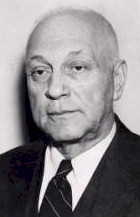
Peter Dimianovich Ouspensky, also known as Piotr Dimianovich Ouspenskii (4 March 1878 – 2 October 1947) was a Russian mystic philosopher. He was a student and expositor of the teachings of G. I. Gurdjieff.