Link Copied!
Olufunmilayo Olopade Quotes (1957-)
Actor, Director, King
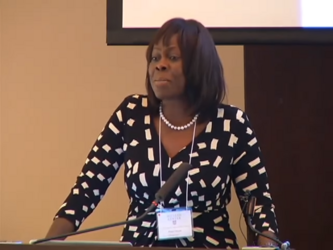
About Olufunmilayo Olopade
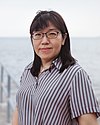
Olufunmilayo Olopade (born 1957) is a Nigerian hematology oncologist, Associate Dean for Global Health and Walter L. Palmer Distinguished Service Professor in Medicine and Human Genetics at the University of Chicago. She also serves as director of the University of Chicago Hospital's Cancer Risk Clinic.
Best Olufunmilayo Olopade Quotes
Shortest
Earliest
Explore our curated collection of the most famous and impactful Olufunmilayo Olopade quotes.
“The more compelled I became to figure it out.”
“The more compelling horror stories I heard from my patients.”
“The estrogen receptor negative tumors are estrogen independent.”
“Tumors that are estrogen-receptor positive depend on estrogen to grow.”
“medical school in Nigeria, we were always taught that prevention was better than a cure.”

“Right now, most women in the world are diagnosed with breast cancer at an advanced stage.”

“To kill them you have to use chemotherapy, which has all the side effects and may not always work.”

“By disseminating such information in front of the community of oncologists, we were given the opportunity to change practice”
“We need to accelerate prevention that can be adopted in low-resource settings or adopted in this country as a way to help low-income women care for themselves.”
“These cancers may be more common among African-American women, but our discovery was really that there are genetic risk factors for breast cancer in all populations.”
“To develop a personalized way to identify every woman at high risk, whether African-American or Jewish or Italian or Ukrainian, so that they could go in and have their doctor develop a personalized approach for them.”

“There have been very few studies of women across different populations, so that’s why everyone has focused on my work,. But there are women all over the world Indian women, Hispanic women who develop triple-negative breast cancer, and most of these women didn’t know they were at risk for it.”
“Triple-negative breast cancer is not the majority of breast cancer. But if we have drugs that can target the genetic abnormalities in these tumors, and we are able to rapidly conduct global clinical trials, not only can we get studies done quickly, but we can also make it possible for women all over the world to participate in the cures of tomorrow.”
“We’ve been very interested in familial breast cancer and the contribution of genes like BRCA1 and BRCA2 that predispose families to breast cancer. We’re very interested in looking at the genetic basis of breast cancer in young women. As a result of that investigation, we’re hoping to develop better tools and better methods to manage triple-negative breast cancer, because that’s what we see to be over-represented in young African American women and women with BRCA1 mutations.”
“One of the things that our hospital is doing is engaging community health workers and engaging community participants to participate in what I call population risk and health management that no health system can afford to spend so much money waiting for patients to get sick, and then bring them into the hospital. We have got to be in the community. I'm hoping that what we are going to be doing as part of our rollout in our comprehensive cancer center is to work with our hospital, to work with Brenda Battle. Brenda Battle is [now the senior vice president, Community Health Transformation, Chief Diversity, Equity & Inclusion Officer at UChicago Medicine]. She is part of a specialized program of research excellence in breast cancer health disparities.”

“When I learned that more than 30,000 women in California had joined, and that only 48 Black women in California—or African American women—had joined, that's when I said to Laura [Laura Esserman, MD, MBA, co-investigator and professor at UCSF], “This is unacceptable. You have to come to Chicago, and then we have to open this up nationwide so that an and then we have to open this up nationwide so that any woman who is going to get a mammogram can join.” For me, what I wanted to do is to bring it to the South Side of Chicago in a predominantly African American community, and we wanted to make sure that everyone in our community has a chance to join WISDOM if they wish to. We have found that when you ask women to participate, and they learn about the study, they sign up. And that's what I have learned since 2016. And the reason why women don't sign up for studies is because we didn't ask them, or we didn't make it easy for them to join. So I'm really looking forward to finding out with 100,000 women what's the safest and best factors to use to screen for breast cancer.”
About Olufunmilayo Olopade
Olufunmilayo Olopade (born 1957) is a Nigerian hematology oncologist, Associate Dean for Global Health and Walter L. Palmer Distinguished Service Professor in Medicine and Human Genetics at the University of Chicago. She also serves as director of the University of Chicago Hospital's Cancer Risk Clinic.