Link Copied!
Novalis Quotes (1772-1801)
Philosopher, Author, Poet
















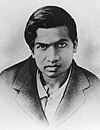
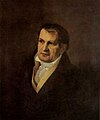
About Novalis
Baron Georg Philipp Friedrich von Hardenberg (2 May 1772 – 25 March 1801) was an author, philosopher and poet of early German Romanticism. He is most commonly known by the pseudonym Novalis (denoting a "clearer of new land" — derived from a tradition of his ancestors, who had called themselves de Novali).
Best Novalis Quotes
Shortest
Earliest
Explore our curated collection of the most famous and impactful Novalis quotes.
“''Das höchste Leben ist Mathematik.”
“Reine Mathematik ist Religion.”

“The poem of the understanding is philosophy.”

“Fate and temperament are the names of a concept.”

“To get to know a truth properly, one must polemicize it.”


“Fate and temperament are two words for one and the same concept.”
“The true Poet is all-knowing; he is an actual world in miniature.”

“Only the most perfect human being can design the most perfect philosophy.”

“Philosophie ist eigentlich Heimweh - Trieb überall zu Hause zu sein.”

“We are on a mission: we are called to the cultivation of the earth.”
“A character is a completely fashioned will. (vollkommen gebildeter Wille'').”
“Philosophy ... bears witness to the deepest love of reflection, to absolute delight in wisdom.”
“Nothing is more indispensable to true religiosity than a mediator that links us with divinity.”
“Nature is an Æolian Harp, a musical instrument; whose tones again are keys to higher strings in us.”

“Die Liebe wirkt magisch.
Sie ist der Endzweck
der Weltgeschichte,
das Amen des Universums.”
Sie ist der Endzweck
der Weltgeschichte,
das Amen des Universums.”
“To become properly acquainted with a truth, we must first have disbelieved it, and disputed against it.”
“Many counterrevolutionary books have been written in favor of the Revolution. But Burke has written a revolutionary book against the Revolution.”

“Philosophy can bake no bread; but she can procure for us God, Freedom, Immortality. Which, then, is more practical, Philosophy or Economy?”
“The division of Philosopher and Poet is only apparent, and to the disadvantage of both. It is a sign of disease, and of a sickly constitution.”
“Die Möglichkeit aller Philosophie ... dass sich die Intelligenz durch Selbstberührung eine Selbstgesezmäßige Bewegung - d.i. eine eigne Form der Tätigkeit gibt.”
“If our Bodily Life is a burning, our Spiritual Life is a being burnt, a Combustion (or, is precisely the inverse the case?); Death, therefore, perhaps a Change of Capacity.”

“Unser Leben ist kein Traum, aber es soll und wird vielleicht einer werden.
• Variant: "Our life is no dream; but it ought to become one, and perhaps will."”
• Variant: "Our life is no dream; but it ought to become one, and perhaps will."”
“The world must be romanticized. In this way the originary meaning may be found again.
• Variant translation: Romanticize the world.”
• Variant translation: Romanticize the world.”

“Everywhere we seek the Absolute, and always we find only things.
• Fragment No. 1; Variant: We seek the absolute everywhere and only ever find things.”
• Fragment No. 1; Variant: We seek the absolute everywhere and only ever find things.”
“The best thing about the sciences is their philosophical ingredient, like life for an organic body. If one dephilosophizes the sciences, what remains left? Earth, air, and water.”
“Man has ever expressed some symbolical Philosophy of his Being in his Works and Conduct; he announces himself and his Gospel of Nature; he is the Messiah of Nature.”

“Sleep is for the inhabitants of Planets only. In another time, Man will sleep and wake continually at once. The greater part of our Body, of our Humanity itself, yet sleeps a deep sleep.”
“What is Nature? An encyclopedical, systematic Index or Plan of our Spirit. Why will we content us with the mere catalogue of our Treasures? Let us contemplate them ourselves, and in all ways elaborate and use them.”
“If the world is a precipitation of human nature, so to speak, then the divine world is a sublimation of the same. Both occur in one act. No precipitation without sublimation. What goes lost there in agility, is won here.”
“The first Man is the first Spirit-seer; all appears to him as Spirit. What are children, but first men? The fresh gaze of the Child is richer in significance than the forecasting of the most indubitable Seer.”

“The art of writing books is not yet invented. But it is at the point of being invented. Fragments of this nature are literary seeds. There may be many an infertile grain among them: nevertheless, if only some come up!”
“No explanation is required for Holy Writing. Whoso speaks truly is full of eternal life, and wonderfully related to genuine mysteries does his Writing appear to us, for it is a Concord from the Symphony of the Universe.”
“To romanticize the world is to make us aware of the magic, mystery and wonder of the world; it is to educate the senses to see the ordinary as extraordinary, the familiar as strange, the mundane as sacred, the finite as infinite.”
“I was still blind, but twinkling stars did dance
Throughout my being's limitless expanse,
Nothing had yet drawn close, only at distant stages
I found myself, a mere suggestion sensed in past and future ages.”
Throughout my being's limitless expanse,
Nothing had yet drawn close, only at distant stages
I found myself, a mere suggestion sensed in past and future ages.”
“There is, properly speaking, no Misfortune in the world. Happiness and Misfortune stand in continual balance. Every Misfortune is, as it were, the obstruction of a stream, which, after overcoming this obstruction, but bursts through with the greater force.”
“Before abstraction everything is one, but one like chaos; after abstraction everything is united again, but this union is a free binding of autonomous, self-determined beings. Out of a mob a society has developed, chaos has been transformed into a manifold world.”
“The normal present connects the past and the future through limitation. Contiguity results, crystallization by means of solidification. There also exists, however, a spiritual present that identifies past and future through dissolution, and this mixture is the element, the atmosphere of the poet.”

“The true philosophical Act is annihilation of self (Selbsttodtung); this is the real beginning of all Philosophy; all requisites for being a Disciple of Philosophy point hither. This Act alone corresponds to all the conditions and characteristics of transcendental conduct.”
“There are ideal series of events which run parallel with the real ones. They rarely coincide. Men and circumstances generally modify the ideal train of events, so that it seems imperfect, and its consequences are equally imperfect. Thus with the Reformation; instead of Protestantism came Lutheranism.”
“Surely this voice meant our Teacher; for it is he that can collect the indications which lie scattered on all sides. A singular light kindles in his looks, when at length the high Rune lies before us, and he watches in our eyes whether the star has yet risen upon us, which is to make the Figure visible and intelligible.”
“Morality must be the heart of our existence, if it is to be what it wants to be for us. ... The highest form of philosophy is ethics. Thus all philosophy begins with “I am.” The highest statement of cognition must be an expression of that fact which is the means and ground for all cognition, namely, the goal of the I.”
“Imagination places the future world for us either above or below or in reincarnation. We dream of travels throughout the universe: is not the universe within us? We do not know the depths of our spirit. The mysterious path leads within. In us, or nowhere, lies eternity with its worlds, the past and the future.”

“Blood will stream over Europe until the nations become aware of the frightful madness which drives them in circles. And then, struck by celestial music and made gentle, they approach their former altars all together, hear about the works of peace, and hold a great celebration of peace with fervent tears before the smoking altars.”

“Nature too remains, so far as we have yet come, ever a frightful Machine of Death: everywhere monstrous revolution, inexplicable vortices of movement; a kingdom of Devouring, of the maddest tyranny; a baleful Immense: the few light-points disclose but a so much the more appalling Night, and terrors of all sorts must palsy every observer.”
“There is but one Temple in the World; and that is the Body of Man. Nothing is holier than this high form. Bending before men is a reverence done to this Revelation in the Flesh. We touch Heaven, when we lay our hand on a human body.
• Variant translation: There is but one temple in the Universe and that is the Body of Man.”
• Variant translation: There is but one temple in the Universe and that is the Body of Man.”

“Wahrhafte Anarchie ist das Zeugungselement der Religion. Aus der Vernichtung alles Positiven hebt sie ihr glorreiches Haupt als neue Weltstifterin empor...
• Variant translation: True anarchy is the generative element of religion. Out of the annihilation of every positive element she lifts her gloriously radiant countenance as the founder of a new world.”
• Variant translation: True anarchy is the generative element of religion. Out of the annihilation of every positive element she lifts her gloriously radiant countenance as the founder of a new world.”
“Denotation by means of sounds and markings is a remarkable abstraction. Three letters designate God for me; several lines a million things. How easy becomes the manipulation of the universe here, how evident the concentration of the intellectual world! Language is the dynamics of the spiritual realm. One word of command moves armies; the word Liberty entire nations.”
“It depends only on the weakness of our organs and of our self-excitement (Selbstberuhrung), that we do not see ourselves in a Fairy-world. All Fabulous Tales (Mahrchen) are merely dreams of that home world, which is everywhere and nowhere. The higher powers in us, which one day as Genies, shall fulfil our will, are, for the present, Muses, which refresh us on our toilsome course with sweet remembrances.”
“Most observers of the French Revolution, especially the clever and noble ones, have explained it as a life-threatening and contagious illness. They have remained standing with the symptoms and have interpreted these in manifold and contrary ways. Some have regarded it as a merely local ill. The most ingenious opponents have pressed for castration. They well noticed that this alleged illness is nothing other than the crisis of beginning puberty.”
“The ideal of Morality has no more dangerous rival than the ideal of highest Strength, of most powerful life; which also has been named (very falsely as it was there meant) the ideal of poetic greatness. It is the maximum of the savage; and has, in these times, gained, precisely among the greatest weaklings, very many proselytes. By this ideal, man becomes a Beast-Spirit, a Mixture; whose brutal wit has, for weaklings, a brutal power of attraction.”
“Goethe is an altogether practical Poet. He is in his works what the English are in their wares: highly simple, neat, convenient and durable. He has done in German Literature what Wedgwood did in English Manufacture. He has, like the English, a natural turn for Economy, and a noble Taste acquired by Understanding. Both these are very compatible, and have a near affinity in the chemical sense.”
“Tools arm the man. One can well say that man is capable of bringing forth a world; he lacks only the necessary apparatus, the corresponding armature of his sensory tools. The beginning is there. Thus the principle of a warship lies in the idea of the shipbuilder, who is able to incorporate this thought by making himself into a gigantic machine, as it were, through a mass of men and appropriate tools and materials. Thus the idea of a moment often required monstrous organs, monstrous masses of materials, and man is therefore a potential, if not an actual creator.”

“Not wise does it seem to attempt comprehending and understanding a Human World without full perfected Humanity. No talent must sleep; and if all are not alike active, all must be alert, and not oppressed and enervated. As we see a future Painter in the boy who fills every wall with sketches and variedly adds colour to figure; so we see a future Philosopher in him who restlessly traces and questions all natural things, pays heed to all, brings together whatever is remarkable, and rejoices when he has become master and possessor of a new phenomenon, of a new power and piece of knowledge.”

“Self-alienation is the source of all degradation as well as, on the contrary, the basis of all true elevation. The first step will be a look inward, an isolating contemplation of our self. Whoever remains standing here proceeds only halfway. The second step must be an active look outward, an autonomous, determined observation of the outer world.
• Fragment No. 24 Variant translation: The first step is to look within, the discriminating contemplation of the self. He who remains at this point only half develops. The second step must be a telling look without, independent, sustained contemplation of the external world.”
• Fragment No. 24 Variant translation: The first step is to look within, the discriminating contemplation of the self. He who remains at this point only half develops. The second step must be a telling look without, independent, sustained contemplation of the external world.”
“No one, of a surety, wanders farther from the mark than he who fancies to himself that he already understands this marvellous Kingdom, and can, in few words, fathom its constitution, and everywhere find the right path. To no one, who has broken off, and made himself an Island, will insight rise of itself, nor even without toilsome effort. Only to children, or childlike men, who know not what they do, can this happen. Long, unwearied intercourse, free and wise Contemplation, attention to faint tokens and indications; an inward poet-life, practised senses, a simple and devout spirit: these are the essential requisites of a true Friend of Nature; without these no one can attain his wish.”
“Now to Some it appears not at all worth while to follow out the endless divisions of Nature; and moreover a dangerous undertaking, without fruit and issue. As we can never reach, say they, the absolutely smallest grain of material bodies, never find their simplest compartments, since all magnitude loses itself, forwards and backwards, in infinitude; so likewise is it with the species of bodies and powers; here too one comes on new species, new combinations, new appearances, even to infinitude. These seem only to stop, continue they, when our diligence tires; and so it is spending precious time with idle contemplations and tedious enumerations; and this becomes at last a true delirium, a real vertigo over the horrid Deep”
“When we speak of the aim and Art observable in Shakespeare's works, we must not forget that Art belongs to Nature; that it is, so to speak, self-viewing, self-imitating, self-fashioning Nature. The Art of a well-developed genius is far different from the Artfulness of the Understanding, of the merely reasoning mind. Shakspeare was no calculator, no learned thinker; he was a mighty, many-gifted soul, whose feelings and works, like products of Nature, bear the stamp of the same spirit; and in which the last and deepest of observers will still find new harmonies with the infinite structure of the Universe; concurrences with later ideas, affinities with the higher powers and senses of man. They are emblematic, have many meanings, are simple and inexhaustible, like products of Nature; and nothing more unsuitable could be said of them than that they are works of Art, in that narrow mechanical acceptation of the word.”
“I. The Pupil. — Men travel in manifold paths: whoso traces and compares these, will find strange Figures come to light; Figures which seem as if they belonged to that great Cipher-writing which one meets with everywhere, on wings of birds, shells of eggs, in clouds, in the snow, in crystals, in forms of rocks, in freezing waters, in the interior and exterior of mountains, of plants, animals, men, in the lights of the sky, in plates of glass and pitch when touched and struck on, in the filings round the magnet, and the singular conjunctures of Chance. In such Figures one anticipates the key to that wondrous Writing, the grammar of it; but this Anticipation will not fix itself into shape, and appears as if, after all, it would not become such a key for us. An Alcahest seems poured out over the senses of men. Only for a moment will their wishes, their thoughts thicken into form. Thus do their Anticipations arise; but after short whiles, all is again swimming vaguely before them, even as it did.”
“Common Logic is the Grammar of the higher Speech, that is, of Thought; it examines merely the relations of ideas to one another, the Mechanics of Thought, the pure Physiology of ideas. Now logical ideas stand related to one another, like words without thoughts. Logic occupies itself with the mere dead Body of the Science of Thinking. — Metaphysics, again, is the Dynamics of Thought; treats of the primary Powers of Thought; occupies itself with the mere Soul of the Science of Thinking. Metaphysical ideas stand related to one another, like thoughts without words. Men often wondered at the stubborn Incompletibility of these two Sciences; each followed its own business by itself; there was a want everywhere, nothing would suit rightly with either. From the very first, attempts were made to unite them, as everything about them indicated relationship; but every attempt failed; the one or the other Science still suffered in these attempts, and lost its essential character. We had to abide by metaphysical Logic, and logical Metaphysic, but neither of them was as it should be.”
“Over his own heart and his own thoughts he watched attentively. He knew not whither his longing was carrying him. As he grew up, he wandered far and wide; viewed other lands, other seas, new atmospheres, new rocks, unknown plants, animals, men; descended into caverns, saw how in courses and varying strata the edifice of the Earth was completed, and fashioned clay into strange figures of rocks. By and by, he came to find everywhere objects already known, but wonderfully mingled, united; and thus often extraordinary things came to shape in him. He soon became aware of combinations in all, of conjunctures, concurrences. Erelong, he no more saw anything alone. — In great variegated images, the perceptions of his senses crowded round him; he heard, saw, touched and thought at once. He rejoiced to bring strangers together. Now the stars were men, now men were stars, the stones animals, the clouds plants; he sported with powers and appearances; he knew where and how this and that was to be found, to be brought into action; and so himself struck over the strings, for tones and touches of his own.”
“Wilhelm Meister's Apprenticeship may be called throughout prosaic and modern. The Romantic sinks to ruin, the Poesy of Nature, the Wonderful. The Book treats merely of common worldly things: Nature and Mysticism are altogether forgotten. It is a poetised civic and household History; the Marvellous is expressly treated therein as imagination and enthusiasm. Artistic Atheism is the spirit of the Book. ... It is properly a Candide, directed against Poetry: the Book is highly unpoetical in respect of spirit, poetical as the dress and body of it are.
• Ralph Waldo Emerson in "Goethe; or, the Writer" writes of this passage, and quotes a slightly different translation: The ardent and holy Novalis characterized the book as "thoroughly modern and prosaic; the romantic is completely levelled in it; so is the poetry of nature; the wonderful. The book treats only of the ordinary affairs of men: it is a poeticized civic and domestic story. The wonderful in it is expressly treated as fiction and enthusiastic dreaming:" — and yet, what is also characteristic, Novalis soon returned to this book, and it remained his favorite reading to the end of his life.”
• Ralph Waldo Emerson in "Goethe; or, the Writer" writes of this passage, and quotes a slightly different translation: The ardent and holy Novalis characterized the book as "thoroughly modern and prosaic; the romantic is completely levelled in it; so is the poetry of nature; the wonderful. The book treats only of the ordinary affairs of men: it is a poeticized civic and domestic story. The wonderful in it is expressly treated as fiction and enthusiastic dreaming:" — and yet, what is also characteristic, Novalis soon returned to this book, and it remained his favorite reading to the end of his life.”
“If on the one hand the Scholastics and Alchemists seem to be utterly at variance, and the Eclectics on the other hand quite at one, yet, strictly examined, it is altogether the reverse. The former, in essentials, are indirectly of one opinion; namely, as regards the non-dependence, and infinite character of Meditation, they both set out from the Absolute: whilst the Eclectic and limited sort are essentially at variance; and agree only in what is deduced. The former are infinite but uniform, the latter bounded but multiform; the former have genius, the latter talent; those have Ideas, these have knacks (Handgriffe); those are heads without hands, these are hands without heads. The third stage is for the Artist, who can be at once implement and genius. He finds that that primitive Separation in the absolute Philosophical Activities' (between the Scholastic, and the "rude, intuitive Poet") 'is a deeper-lying Separation in his own Nature; which Separation indicates, by its existence as such, the possibility of being adjusted, of being joined: he finds that, heterogeneous as these Activities are, there is yet a faculty in him of passing from the one to the other, of changing his polarity at will. He discovers in them, therefore, necessary members of his spirit; he observes that both must be united in some common Principle. He infers that Eclecticism is nothing but the imperfect defective employment of this principle.”

“The waking man looks without fear at this offspring of his lawless Imagination; for he knows that they are but vain Spectres of his weakness. He feels himself lord of the world: his me hovers victorious over the Abyss; and will through Eternities hover aloft above that endless Vicissitude. Harmony is what his spirit strives to promulgate, to extend. He will even to infinitude grow more and more harmonious with himself and with his Creation; and at every step behold the all-efficiency of a high moral Order in the Universe, and what is purest of his Me come forth into brighter and brighter clearness. This significance of the World is Reason; for her sake is the World here; and when it is grown to be the arena of a childlike, expanding Reason, it will one day become the divine Image of her Activity, the scene of a genuine Church. Till then let man honour Nature as the Emblem of his own Spirit; the Emblem ennobling itself, along with him, to unlimited degrees. Let him, therefore, who would arrive at knowledge of Nature, train his moral sense, let him act and conceive in accordance with the noble Essence of his Soul; and as if of herself Nature will become open to him. Moral Action is that great and only Experiment, in which all riddles of the most manifold appearances explain themselves. Whoso understands it, and in rigid sequence of Thought can lay it open, is forever master of Nature.”
“The rude, discursive Thinker is the Scholastic (Schoolman Logician). The true Scholastic is a mystical Subtlist; out of logical Atoms he builds his Universe; he annihilates all living Nature, to put an Artifice of Thoughts (Gedankenkunststuck, literally Conjuror's-trick of Thoughts) in its room. His aim is an infinite Automaton. Opposite to him is the rude, intuitive Poet: this is a mystical Macrologist: he hates rules and fixed form; a wild, violent life reigns instead of it in Nature; all is animate, no law; wilfulness and wonder everywhere. He is merely dynamical. Thus does the Philosophic Spirit arise at first, in altogether separate masses. In the second stage of culture these masses begin to come in contact, multifariously enough; and, as in the union of infinite Extremes, the Finite, the Limited arises, so here also arise "Eclectic Philosophers" without number; the time of misunderstanding begins. The most limited is, in this stage, the most important, the purest Philosopher of the second stage. This class occupies itself wholly with the actual, present world, in the strictest sense. The Philosophers of the first class look down with contempt on those of the second; say, they are a little of everything, and so nothing; hold their views as the results of weakness, as Inconsequentism. On the contrary, the second class, in their turn, pity the first; lay the blame on their visionary enthusiasm, which they say is absurd, even to insanity.”
“What has passed with him since then he does not disclose to us. He tells us that we ourselves, led on by him and our own desire, will discover what has passed with him. Many of us have withdrawn from him. They returned to their parents, and learned trades. Some have been sent out by him, we know not whither; he selected them. Of these, some have been but a short time there, others longer. One was still a child; scarcely was he come, when our Teacher was for passing him any more instruction. This child had large dark eyes with azure ground, his skin shone like lilies, and his locks like light little clouds when it is growing evening. His voice pierced through all our hearts; willingly would we have given him our flowers, stones, pens, all we had. He smiled with an infinite earnestness; and we had a strange delight beside him. One day he will come again, said our Teacher, and then our lessons end. — Along with him he sent one, for whom we had often been sorry. Always sad he looked; he had been long years here; nothing would succeed with him; when we sought crystals or flowers, he seldom found. He saw dimly at a distance; to lay down variegated rows skilfully he had no power. He was so apt to break everything. Yet none had such eagerness, such pleasure in hearing and listening. At last, — it was before that Child came into our circle, — he all at once grew cheerful and expert. One day he had gone out sad; he did not return, and the night came on. We were very anxious for him; suddenly, as the morning dawned, we heard his voice in a neighbouring grove. He was singing a high, joyful song; we were all surprised; the Teacher looked to the East, such a look as I shall never see in him again. The singer soon came forth to us, and brought, with unspeakable blessedness on his face, a simple-looking little stone, of singular shape. The Teacher took it in his hand, and kissed him long; then looked at us with wet eyes, and laid this little stone on an empty space, which lay in the midst of other stones, just where, like radii, many rows of them met together.”
Novalis Quotes by Topic
Find exactly what you are looking for by browsing this categorized list of Novalis quotes by topic.
Novalis on King 3 quotes
“The king is a higher man to whom an earthly fate is given. This poetry imposes itself on a person necessarily. It alone satisfies a higher longing in his nature.”
Novalis on Dreams 2 quotes
View all 2 quotes on Dreams →Novalis on Love 2 quotes
View all 2 quotes on Love →Novalis on Novel 2 quotes
View all 2 quotes on Novel →Novalis on Philosophy 2 quotes
“Philosophy can bake no bread; but she can procure for us God, Freedom, Immortality. Which, then, is more practical, Philosophy or Economy?”
What Novalis Said About Others
Discover personal opinions Novalis shared regarding contemporaries.
Novalis on Baruch Spinoza
“[Spinoza] — A God-intoxicated man. [Original in German: Ein Gottbetrunkener Mensch.]”

Novalis on Queen
“It is true that the queen does not have a political sphere of action, but she has a large domestic sphere of action. Her excellence befits her for the education of her sex, the supervision of children in their first years, in the household manners, the provisions to the poor and the sick (particularly of those of her sex), the tasteful decoration of the house, the arrangement of family celebrations, and the establishment of the courtly activity according to law.”
Novalis on William Shakespeare
“When we speak of the aim and Art observable in Shakespeare's works, we must not forget that Art belongs to Nature; that it is, so to speak, self-viewing, self-imitating, self-fashioning Nature. The Art of a well-developed genius is far different from the Artfulness of the Understanding, of the merely reasoning mind. Shakspeare was no calculator, no learned thinker; he was a mighty, many-gifted soul, whose feelings and works, like products of Nature, bear the stamp of the same spirit; and in which the last and deepest of observers will still find new harmonies with the infinite structure of the Universe; concurrences with later ideas, affinities with the higher powers and senses of man. They are emblematic, have many meanings, are simple and inexhaustible, like products of Nature; and nothing more unsuitable could be said of them than that they are works of Art, in that narrow mechanical acceptation of the word.”

Quotes About Novalis
Gain deeper perspective through quotes about Novalis from others.
Graham Brown in "Novalis' Spiral Path" on Novalis
“Novalis has been, and remains, one of the most vital influences in German literature; the modern mystics: Maeterlinck, Herman Hesse and Rilke (often considered the greatest poet of the twentieth century) admit a great debt to him. ... Novalis expresses himself in a unique, personal style, almost as if he has discovered language by himself. ... Novalis himself wrote that he felt it necessary to develop a symbolic philosophical language for the purpose of protecting his deepest insights from those incapable of respecting them. In this he has not been alone — if we look at the words of the Sufis we often find mystical concepts veiled in poetic terms. ... The principle mode of concealment is the use of imagery. Images are used to veil meaning, but for those who share Novalis' love of symbolic imagery and subtle metaphor his language is a veil that enhances, rather than conceals, the beauty of his art. This use of concrete, palpable images overcame, to some extent, what he described as the “poverty of words”; and avoided the use of philosophical terms to express abstract concepts. In some instances spiritual qualities are personified as characters, human or divine, as they are in Hindu mythology... Novalis is known as the originator of the central symbol of the German Romanticism, The Blue Flower; he shared in the movement's deification of Nature, the demand for the Absolute, the idea of spiritual rebirth. ... Novalis, like other poets of the period, wanted to return to the sense of the Sacred found in the humbler Medieval tradition with its great mystics such as Hildegard von Bingen and Meister Eckhart.”
Thomas Carlyle on Novalis 3 quotes
“Novalis is a figure of such importance in German Literature, that no student of it can pass him by without attention.”

Ralph Waldo Emerson describing Novalis on Novalis
Bruce Haywood on Novalis
“For Novalis the poetic in the world was the only genuine reality, even as the poetic spirit in man was the proof of man's divine origin. All of his poetry is concerned ultimately with revealing and celebrating the poetic spirit.”
Ludwig Tieck on Novalis 2 quotes
“In this season, Novalis lived only to his sorrow; it was natural for him to regard the visible and the invisible world as one; and to distinguish Life and Death only by his longing for the latter. At the same time too, Life became for him a glorified Life; and his whole being melted away as into a bright, conscious vision of a higher Existence. ... He remained many weeks in Thuringia; and came back comforted and truly purified, to his engagements; which he pursued more zealously than ever, though he now regarded himself as a stranger on the earth.”
About Novalis
Baron Georg Philipp Friedrich von Hardenberg (2 May 1772 – 25 March 1801) was an author, philosopher and poet of early German Romanticism. He is most commonly known by the pseudonym Novalis (denoting a "clearer of new land" — derived from a tradition of his ancestors, who had called themselves de Novali).