Link Copied!
Nikolai Bukharin Quotes (1888-1938)
Revolutionary


About Nikolai Bukharin
Nikolai Bukharin (9 October 1888 {27 September O.S.} – 15 March 1938) was a Bolshevik revolutionary and theorist. Initially a Left Bolshevik, Bukharin became a leading proponent of the New Economic Policy re-introducing some market institutions. He later allied with Joseph Stalin after the death of Vladimir Lenin and supported his doctrine of "socialism in one country" and purge of Leon Trotsky. However, he was removed from government after opposing Stalinist policies such as collectivization and the end of the NEP in 1929. He was reelected to the Central Committee in 1934, but then was executed on charges of treason during the Great Purge.
Best Nikolai Bukharin Quotes
Shortest
Earliest
Explore our curated collection of the most famous and impactful Nikolai Bukharin quotes.
“In our system of universal military training, barrack life must be reduced to a minimum, so that ultimately the Red barracks may completely disappear.”
“The great majority of crimes committed in bourgeois society are either direct infringements of property rights or are indirectly connected with property.”

“The political commissars are the representatives of the class will of the proletariat in the army; they are mandated by the party and the military centres.”
“The foundations of a Communist society are laid by the organization of industry, and first of all by purposeful unification of industry under state control.”

“In all grades of army life, the proletariat is in control through the instrumentality of the communist commissars, who both at the front and at the rear are mainly drawn from among the workers.”
“The proletarian army must be exclusively composed of persons belonging to the working class, of persons who do not expoloit labour and who are directly interested in the victory of the workers' revolution.”
“The Russian bourgeoisie raised the hunt against the Jews, not only in the hope of diverting the anger of the exploited workers, but also in the hope of freeing themselves from competitors in commerce and industry.”

“We see now that infringement of freedom is necessary with regard to the opponents of the revolution. At a time of revolution we cannot allow freedom for the enemies of the people and of the revolution. That is a surely clear, irrefutable conclusion.”
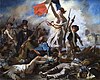
“In the sanguinary struggle with capitalism, the working class cannot refrain from inflicting the last extremity of punishment upon its declared enemies. While the civil war continues, the abolition of the death penalty is impossible.”

“In the Russian Soviet Republic, in which all workers can express their will through the soviets, the workers and peasants have for the last two years been electing communists to the various executive organs.”
“History moves in contradictions. The skeleton of historic existence, the economic structure of society, also develops in contradictions. Forms eternally follow forms. Everything has only a passing being. The dynamic force of life creates the new over and over again — such is the law inherent in reality.”
“It is true that these courts will gradually change in character. As the state dies out, they will tend to become simply organs for the expression of public opinion. They will assume the character of courts of arbitration. Their decisions will no longer be enforced by physical means and will have a purely moral significance.”
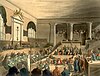
“In the mater of education as in all other matters the Communist Party is not merely faced by constructive tasks. In the educational system bequeathed to it by capitalist society, it must hasten to destroy everything which has made of the school an instrument of capitalist rule.”
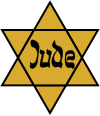
“One of the worst forms of national enmity is antisemitism, that is to say, racial hostility towards the Jews, who belong to Semitic stock (of which the Arabs forms another great branch). The Tsarist autocracy raised the hunt against the Jews in the hope of averting the workers' and peasants' revolution.”
“But to everything in this world there comes an end; there even comes an end to the torments suffered in those intermediate states of transition when the last secret tear of one's soul is bitterly swallowed, and the crisis passes, resolving itself into some new sort of phase, which even as it comes into existence is fated in turn to pass away, to disappear in the eternal changing of the times and seasons.”
“The Red Army has been created by the workers for the struggle with the White Army of capital. The Red Army issued out the civil war; it will disappear when a complete victory has been gained in the war, when class has been abolished when the dictatorship of the proletariat has lapsed.”

“During this era when the old society is being destroyed and the new society is being upbuilded, the popular courts have a gigantic task to perform. The process of change has been so rapid that soviet legislation has not been able to keep pace with it. The laws of the bourgeois landlord system have been annulled; but the laws of the proletarian State have as yet merely been outlined, and will never be committed to paper in their entirety.”

“Our ultimate aim is to bring about the existence of a state of society in which all persons who for one reason or another have lost the capacity for work, all those who are unable to work, shall have assured support. We must ensure that old people shall enjoy a peaceful old age in which they will be provided with all the comforts of life; that children shall have everything suitable to their requirements; that invalids and cripples shall be able to live in the circumstances most appropriate to their condition; that those who are wearied and overworked shall be placed in curative surroundings, where they will receive all the care that used to be given to the wealthy bourgeois who were ailing; that no one shall any longer be perpetually harassed with anticipation of hard times. ”
“Fascist ‘order’ is the ‘order’ of military, political and economic barracks; it is the military capitalist system of a state of ‘emergency’. This expresses itself in a number of most important facts: in the tendency towards state capitalism; in the ‘common national’, ‘corporate’, etc, dictatorship, with the suppression of a number of internal contradictions; in the establishment of various ‘mono’ systems – ‘mono-nation’, ‘mono-party’, ‘mono-state’ (’totalitarian state’), etc; in the organisation of mass human reserves – petty-bourgeois and, in part, working class; in a whole ‘incorporated’ ideology, attuned to the basic interests of finance capital; and, finally, in the creation of a material and ideological war base.The so-called Fascist ‘national revolutions’, with their anti-capitalist slogans, are really in essence but a speedy reorganisation of the bourgeois ranks, eliminating parliamentary changes and the system of competing parties, introducing uniform military discipline all along the line, and organising mass reserves.”

Nikolai Bukharin Quotes by Topic
Find exactly what you are looking for by browsing this categorized list of Nikolai Bukharin quotes by topic.
Nikolai Bukharin on Dictatorship of the proletariat
“We see now that infringement of freedom is necessary with regard to the opponents of the revolution. At a time of revolution we cannot allow freedom for the enemies of the people and of the revolution. That is a surely clear, irrefutable conclusion.”

Nikolai Bukharin on World economy
“History moves in contradictions. The skeleton of historic existence, the economic structure of society, also develops in contradictions. Forms eternally follow forms. Everything has only a passing being. The dynamic force of life creates the new over and over again — such is the law inherent in reality.”

What Nikolai Bukharin Said About Others
Discover personal opinions Nikolai Bukharin shared regarding contemporaries.
Nikolai Bukharin on Joseph Stalin
“'Stalin is a Genghis Khan, an unscrupulous intriguer, who sacrifices everything else to the preservation of power ... He changes his theories according to whom he needs to get rid of next.'”

Quotes About Nikolai Bukharin
Gain deeper perspective through quotes about Nikolai Bukharin from others.
Jeremy Black on Nikolai Bukharin
“Military industry was encouraged by an ideology of hostility to foreign states and influences that characterised even Communist moderates. The extent to which Stalin’s rise to power was supported by a military high command concerned by the efforts of the fiscally conservative Communist Right, such as Nicolay Bukharin (also an opponent of collectivisation), to resist the rise in military spending was also relevant. All these factors together contributed to and interacted with an extensive development of Soviet military industry. Stalin was eager to back the industrialisation necessary for large-scale mechanisation of the army. He regarded powerful military forces as a way to defend the Revolution against the allegedly implacably hostile capitalist states, especially Britain and Japan. Moreover, his support for Socialism in one state was not inherently pacific, as he used the idea of international crisis to press for an extension of state dominance, notably with the war scare of 1927, which he did not try to defuse. Bukharin, a prominent member of the Politburo in 1924–9, was arrested in 1937. After a show-trial, he was shot in 1938.”
Masha Gessen on Nikolai Bukharin
“Sociology was not exactly banned in the Soviet Union, but the name of the discipline had been reduced to something like a curse word. Lenin himself had inaugurated it as a Soviet insult. The problem with sociology was much the same as with psychoanalysis: the field of study refused to be a “science” that could be used to create a new society of new men. A year before the Philosophers’ Ship sailed, one of Lenin’s closest allies, Nikolai Bukharin, published The Theory of Historical Materialism, an attempt at a sort of Marxist textbook of everything, written in a folksy language intended for the proletariat. Three things that Bukharin did in this textbook proved deadly for Soviet sociology: he included new ideas that he believed advanced Marxist theory, he subtitled it A Popular Textbook of Marxist Sociology, and he proclaimed the supreme importance of sociology among the social sciences because it “examines not some one aspect of public life but all of public life in all its complexity.” Lenin hated the book, and the word “sociology” took the brunt of his rage. He underlined it throughout the book and supplied a small variety of comments in the margins: “Haha!” “Eclectic!” “Help!” and the like. In another eight years, when Bukharin was deposed in a Party power struggle, Stalin recalled Lenin’s skepticism by describing Bukharin’s work as possessed of “the hypertrophied pretentiousness of a half-baked theoretician.” Bukharin was eventually executed. Much earlier, sociology had had to go into hiding.”

Vladimir Lenin on Nikolai Bukharin
“Speaking of the young C.C. members, I wish to say a few words about Bukharin and Pyatakov. They are, in my opinion, the most outstanding figures (among the youngest ones), and the following must be borne in mind about them: Bukharin is not only a most valuable and major theorist of the Party; he is also rightly considered the favourite of the whole Party, but his theoretical views can be classified as fully Marxist only with great reserve, for there is something scholastic about him (he has never made a study of the dialectics, and, I think, never fully understood it).”

Source on Nikolai Bukharin
“An atmosphere of extreme tension reigned during this period; it was necessary to act without mercy. I think that it was justified. If Tukhachevsky, Yakir, Rykov and Zinoviev had started up their opposition in wartime, there would have been an extremely difficult struggle; the number of victims would have been colossal. Colossal. The two sides would have been condemned to disaster. They had links that went right up to Hitler. That far. Trotsky had similar links, without doubt. Hitler was an adventurist, as was Trotsky, they had traits in common. And the rightists, Bukharin and Rykov, had links with them. And, of course, many of the military leaders.”
Stanley G. Payne. on Nikolai Bukharin
“At the Twelfth Party Congress in Moscow in 1923, Nikolia Bukharin stressed that the Nazi Party had ‘inherited Bolshevik political culture exactly as Italian Fascism had done.’ On June 20, 1923, Karl Radek gave a speech before the Comintern Executive Committee proposing a common front with the Nazis in Germany.”
Robert Service on Nikolai Bukharin
“There have been communist leaders – and not just ones whose parties failed to come to power – who moderated their zeal for full communisation. They have included individuals who in their private lives would not deliberately hurt a fly. One such was Bukharin, animal lover, mountain walker and painter. But kindly Bukharin did not abjure dictatorship and terror in principle, and he condoned most of the violence perpetrated by the Bolsheviks in the early years of the Soviet state.”
About Nikolai Bukharin
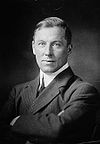
Nikolai Bukharin (9 October 1888 {27 September O.S.} – 15 March 1938) was a Bolshevik revolutionary and theorist. Initially a Left Bolshevik, Bukharin became a leading proponent of the New Economic Policy re-introducing some market institutions. He later allied with Joseph Stalin after the death of Vladimir Lenin and supported his doctrine of "socialism in one country" and purge of Leon Trotsky. However, he was removed from government after opposing Stalinist policies such as collectivization and the end of the NEP in 1929. He was reelected to the Central Committee in 1934, but then was executed on charges of treason during the Great Purge.