Link Copied!
Nikita Khrushchev Quotes (1894-1971)
Leader








About Nikita Khrushchev
Nikita Sergeyevich Khrushchyov (17 April 1894 – 11 September 1971) served as the First Secretary of the Communist Party of the Soviet Union from 1953 to 1964 and as chairman of the country's Council of Ministers from 1958 to 1964. During his rule, Khrushchev stunned the communist world with his denunciation of Stalin's crimes, and embarked on a policy of de-Stalinization with his key ally Anastas Mikoyan. He sponsored the early Soviet space program, and made some reforms to domestic policy. After some false starts, and a narrowly avoided nuclear war over Cuba, he conducted successful negotiations with the United States to reduce Cold War tensions. His proclivity toward recklessness led the Kremlin leadership to strip him of power, replacing him with Leonid Brezhnev as First Secretary and Alexei Kosygin as Premier.
Best Nikita Khrushchev Quotes
Shortest
Earliest
Explore our curated collection of the most famous and impactful Nikita Khrushchev quotes.
“Mr. President, call the toady of American imperialism to order.”
“Comrades! We must abolish the cult of the individual decisively, once and for all.”

“If you start throwing hedgehogs under me, I shall throw a couple of porcupines under you.”


“Don't you know how to paint? My grandson will paint it better! What is this? Are you men or damned pederasts? How can you paint like that? Do you have a conscience?”

“When it is a question of fighting against imperialism we can state with conviction that we are all Stalinists. We can take pride that we have taken part in the fight for the advance of our great cause against our enemies. From that point of view I am proud that we are Stalinists.”
“I happened to read recently a remark by the American nuclear physicist W. Davidson, who noted that the explosion of one hydrogen bomb releases a greater amount of energy than all the explosions set off by all countries in all wars known in the entire history of mankind. And he, apparently, is right.”
“Concerning Stalin's merits, an entirely sufficient number of books, pamphlets and studies had already been written in his lifetime. The role of Stalin in the preparation and execution of the socialist revolution, in the Civil War, and in the fight for the construction of socialism in our country, is universally known.”

“They say that the Soviet delegates smile. That smile is genuine. It is not artificial. We wish to live in peace, tranquility. But if anyone believes that our smiles involve abandonment of the teaching of Marx, Engels and Lenin he deceives himself poorly. Those who wait for that must wait until a shrimp learns to whistle.”

“We must affirm that the part had fought a serious fight against the Trotskyistes, rightists and bourgeois nationalists, and that it disarmed ideologically all the enemies of Leninism. This ideological fight was carried on successfully, as a result of which the party became strengthened and tempered. Here Stalin played a positive role.”
“Stalin acted not through persuasion, explanation and patient cooperation with people, but by imposing his concepts and demanding absolute submission to his opinion. Whoever opposed this concept or tried to prove his viewpoint and the correctness of his position was doomed to removal from the leading collective and to subsequent moral and physical annihilation.”

“When we analyze the practice of Stalin in regard to the direction of the party and the country, when we pause to consider everything which Stalin perpetrated, we must be convinced that Lenin's fear were justified. The negative characteristics of Stalin, which, in Lenin's time, were only incipient, transformed themselves during the last years into a grave abuse of power by Stalin, which caused untold harm.”
“The thought sometimes -- the unpleasant thought sometimes creeps up on me here as to whether perhaps Khrushchev was not invited here to enable you to sort of rub him in your sauce and to show the might and the strength of the United States so as to make him sort of … so as to make him shaky at the knees. If that is so, then if I came -- if it took me about 12 hours to get here, I guess it'll just -- it'll take no more than about 10½ hours to fly back.”
“A man emaciated by a grave illness is at first treated by doctors gradually. Food is administered to him in small doses. If more is administered to the patient, it might kill him. And so we want to begin disarmament not with a full dose, although we are prepared even for a full dose. I have said already that the Western powers greatly distrust us. We, too, do not trust them in everything. And so, in order not to destroy a thing which is of great and vital importance to mankind, disarmament, we suggest to begin not with a cardinal but with a gradual solution to disarmament problems.”
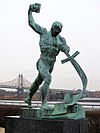
“I remember President Kennedy once stated... that the United States had the nuclear missile capacity to wipe out the Soviet Union two times over, while the Soviet Union had enough atomic weapons to wipe out the United States only once... When journalists asked me to comment... I said jokingly, "Yes, I know what Kennedy claims, and he's quite right. But I'm not complaining... We're satisfied to be able to finish off the United States first time round. Once is quite enough. What good does it do to annihilate a country twice? We're not a bloodthirsty people."”
“When the fascist armies had actually invaded Soviet territory and military operations began, Moscow issued the order that the German fire was not to be returned. Why? It was because Stalin, despite evident facts, thought that the war had not yet started, that this was only a provocative action on the part of several undisciplined sections of the German Army, and that reaction might serve as a reason for the Germans to begin the war.”

“We have come to this town where lives the cream of American art.… But just now I was told that I could not go to Disneyland. I asked "Why not? What is it? Do you have rocket-launching pads there?" I do not know. Just listen to what reason I was told: "We," which means the American authorities, "cannot guarantee your security if you go there." What is it? Is there an epidemic of cholera there or something? Or have gangsters taken over the place that can destroy me? Then what must I do? Commit suicide? … For me, this situation is inconceivable. I cannot find words to explain this to my people.”
“We and you ought not now to pull on the ends of the rope in which you have tied the knot of war, because the more the two of us pull, the tighter that knot will be tied. And a moment may come when that knot will be tied so tight that even he who tied it will not have the strength to untie it, and then it will be necessary to cut that knot, and what that would mean is not for me to explain to you, because you yourself understand perfectly of what terrible forces our countries dispose. Consequently, if there is no intention to tighten that knot and thereby to doom the world to the catastrophe of thermonuclear war, then let us not only relax the forces pulling on the ends of the rope, let us take measures to untie that knot. We are ready for this.”
“Stalin originated the concept of 'enemy of the people'. This term automatically rendered it unnecessary that the ideological errors of a man or men engaged in a controversy be proven; this term made possible the usage of the most cruel repression, violating all norms of revolutionary legality, against anyone who in any way disagreed with Stalin, against those who were only suspected of hostile intent, against those who had bad reputations. This concept 'enemy of the people' actually eliminated the possibility of any kind of ideological fight or the making of one's views known on this or that issue, even those of a practical character. In the main, and in actuality, the only proof of guilt used, against all norms of current legal science, was the 'confession' of the accused himself.”
Nikita Khrushchev Quotes by Topic
Find exactly what you are looking for by browsing this categorized list of Nikita Khrushchev quotes by topic.
Nikita Khrushchev on Soviet Union 4 quotes
“My arms are up to my elbows in blood. That is the most terrible thing that lies in my soul.”

Nikita Khrushchev on Russia
Nikita Khrushchev on Winning
Nikita Khrushchev on Porcupine
“If you start throwing hedgehogs under me, I shall throw a couple of porcupines under you.”

Nikita Khrushchev on Weather
Nikita Khrushchev on NATO
Nikita Khrushchev on Contradiction
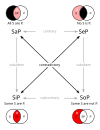
“Do you think when two representatives holding diametrically opposing views get together and shake hands, the contradictions between our systems will simply melt away? What kind of a daydream is that?”
Nikita Khrushchev on Socialism
“The socialist economy has become so strong, so vigorous that from the summits we have reached we can issue an open challenge of peaceful economic competition to the most powerful capitalist country—the United States of America.”

Nikita Khrushchev on Communism
Nikita Khrushchev on Anti-Americanism
Nikita Khrushchev on Nuclear weapons
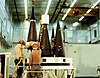
“I happened to read recently a remark by the American nuclear physicist W. Davidson, who noted that the explosion of one hydrogen bomb releases a greater amount of energy than all the explosions set off by all countries in all wars known in the entire history of mankind. And he, apparently, is right.”
Nikita Khrushchev on Capitalism
“I worked at a factory owned by Germans, at coal pits owned by Frenchmen, and at a chemical plant owned by Belgians. There I discovered something about capitalists. They are all alike, whatever the nationality. All they wanted from me was the most work for the least money that kept me alive. So I became a communist.”

Nikita Khrushchev on Marxism–Leninism
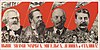
“They say that the Soviet delegates smile. That smile is genuine. It is not artificial. We wish to live in peace, tranquility. But if anyone believes that our smiles involve abandonment of the teaching of Marx, Engels and Lenin he deceives himself poorly. Those who wait for that must wait until a shrimp learns to whistle.”
Nikita Khrushchev on Cuban Missile Crisis
“My letter to Castro concluded an episode of world history in which, bringing the world to the brink of atomic war, we won a Socialist Cuba. It's very consoling for me personally to know that our side acted correctly and that we did a great revolutionary deed by not letting American imperialism intimidate us. The Caribbean crisis was a triumph of Soviet foreign policy and a personal triumph in my own career as a statesman and as a member of the collective leadership. We achieved, I would say, a spectacular success without having to fire a single shot!”
What Nikita Khrushchev Said About Others
Discover personal opinions Nikita Khrushchev shared regarding contemporaries.
Nikita Khrushchev on Politicians
Nikita Khrushchev on Mao Zedong
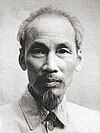
Nikita Khrushchev on Ho Chí Minh
“I have met many people in the course of my political career, but none has made such a particular impression on me. Believers often talk of the Apostles. Well, through his way of living and his influence of his peers, Ho Chi Minh was exactly comparable to these 'holy apostles'.”
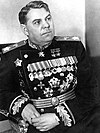
Nikita Khrushchev on Aleksandr Vasilevsky
“It was my view that the catastrophe. . . . could have been avoided if Vasilevsky had taken the position he should have. He could have taken a different position. . . . but he didn't do that, and as a result, in my view, he had a hand in the destruction of thousands of Red Army fighters in the Kharkov campaign.”
Nikita Khrushchev on French people
“I worked at a factory owned by Germans, at coal pits owned by Frenchmen, and at a chemical plant owned by Belgians. There I discovered something about capitalists. They are all alike, whatever the nationality. All they wanted from me was the most work for the least money that kept me alive. So I became a communist.”

Nikita Khrushchev on Germans
“I worked at a factory owned by Germans, at coal pits owned by Frenchmen, and at a chemical plant owned by Belgians. There I discovered something about capitalists. They are all alike, whatever the nationality. All they wanted from me was the most work for the least money that kept me alive. So I became a communist.”

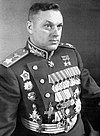
Nikita Khrushchev on Konstantin Rokossovsky
“The policy of large-scale repression against military cadres led also to undermined military discipline, because for several years officers of all ranks and even soldiers in Party and Komsomol cells were taught to “unmask” their superiors as hidden enemies.
It is natural that this caused a negative influence on the state of military discipline in the initial stage of the war.
And, as you know, we had before the war excellent military cadres which were unquestionably loyal to the Party and to the Fatherland. Suffice it to say that those of them who managed to survive, despite severe tortures to which they were subjected in the prisons, have from the first war days shown themselves real patriots and heroically fought for the glory of the Fatherland. I have here in mind such [generals] as: [Konstantin] Rokossovsky..."”
Nikita Khrushchev on Joseph Stalin
“The negative characteristics of Stalin, which, in Lenin's time, were only incipient, transformed themselves during the last years into a grave abuse of power by Stalin, which caused untold harm to our party. We have to consider seriously and analyse correctly this matter in order that we may preclude any possibility of a repetition in any form whatever of what took place during the life of Stalin, who absolutely did not tolerate collegiality in leadership and in work, and who practiced brutal violence, not only toward everything which opposed him, but also toward that which seemed, to his capricious and despotic character, contrary to his concepts. Stalin acted not through persuasion, explanation and patient cooperation with people, but by imposing his concepts and demanding absolute submission to his opinion. Whoever opposed these concepts or tried to prove his viewpoint and the correctness of his position was doomed to removal from the leadership collective and to subsequent moral and physical annihilation. This was especially true during the period following the 17th party congress, when many prominent party leaders and rank-and-file party workers, honest and dedicated to the cause of communism, fell victim to Stalin's despotism.”

Quotes About Nikita Khrushchev
Gain deeper perspective through quotes about Nikita Khrushchev from others.
Carole C. Fink on Nikita Khrushchev 2 quotes
“Khrushchev was overthrown in October 1964 by a politburo disgruntled by his brinkmanship over Suez, Berlin, and Cuba and also opposed to his erratic search for coexistence with the United States. During his nine-year rule, Khrushchev had attempted to achieve the impossible: while striving to dismantle the repressive elements of Stalinism, he had used Stalinist measures to crush popular revolutions in Eastern Europe; while seeking to unify global communism, he had created a powerful rival in Mao’s China; while seeking to revive Marxist-Leninist revolutionary impulses in the Third World, he had not only raised Washington’s hackles but also embraced nationalist leaders who imprisoned their left-wing opposition; and while seeking détente with the United States and the end of NATO, his inflammatory language and nuclear threats had underscored the need for a united West. Despite their differences in age and temperament, Kennedy and Khrushchev were both hardened Cold Warriors who only dimly recognized the radical changes in the world landscape that were beginning to reduce the Superpowers’ control. Their successors, less experienced in diplomacy and more intent on domestic reforms, would create a dangerous pause in the Superpowers’ post-Berlin, post- Cuba search for détente.”
Source on Nikita Khrushchev
“Our only "crime" is that in Bucharest we did not agree that a fraternal communist party like the Chinese Communist Party should be unjustly condemned; our only "crime" is that we had the courage to oppose openly, at an international communist meeting (and not in the marketplace) the unjust action of Comrade Khrushchev, our only "crime" is that we are a small Party of a small and poor country which, according to Comrade Khrushchev, should merely applaud and approve but express no opinion of its own. But this is neither Marxist nor acceptable. Marxism-Leninism has granted us the right to have our say and we will not give up this right for any one, neither on account of political and economic pressure nor on account of the threats and epithets that they might hurl at us. On this occasion we would like to ask Comrade Khrushchev why he did not make such a statement to us instead of to a representative of a third party. Or does Comrade Khrushchev think that the Party of Labor of Albania has no views of its own but has made common cause with the Communist Party of China in an unprincipled manner, and therefore, on matters pertaining to our Party, one can talk with the Chinese comrades? No, Comrade Khrushchev, you continue to blunder and hold very wrong opinions about our Party. The Party of Labor of Albania has its own views and will answer for them both to its own people as well as to the international communist and workers' movement.”
Enver Hoxha on Nikita Khrushchev
“It is not we who behave like the Yugoslavs but you, comrade Khrushchev, who are using methods alien to Marxism-Leninism against our Party. You consider Albania as a market commodity which can be gained by one or lost by another. There was a time when Albania was considered a medium of exchange, when others thought it depended on them whether Albania should or should not exist, but that time came to an end with the triumph of the ideas of Marxism-Leninism in our country. You were repeating the same thing when you decided that you had "lost" Albania or that some one else had "won" it, when you decided that Albania is no longer a socialist country, as it turns out from the letter you handed to us on November 8, in which our country is not mentioned as a socialist country.”

Muhammad Reza Pahlavi on Nikita Khrushchev
“Nikita Khruschev was a difficult man to deal with, often very hard, always determined. But his peasant side which made him alternatively good-natured and cunning, also made him likeable.”
Josip Broz Tito on Nikita Khrushchev
“Comrade Khrushchev often repeats that Socialism cannot be built with American wheat. I think it can be done by anyone who knows how to do it, while a person who doesn't know how to do it cannot build Socialism even with his own wheat. Khrushchev says we live on charity received from the imperialist countries … What moral right have those who attack us to rebuke us about American aid or credits when Khruschev himself has just tried to conclude an economic agreement with America?”
John Charles Daly on Nikita Khrushchev
“He's a charming fellow between sentences.”
Hastings Ismay on Nikita Khrushchev
“The peoples of all our democracies are hungry for peace and security. For 20 years some of us have lived either at war or under the shadow of war. They yearn for some alleviation of the exertions and sacrifices that have been demanded of them. They hear the argument put forward that the development of nuclear weapons has rendered conventional forces obsolete and unnecessary, and that it is a waste of money and effort to continue to maintain them. They are asked by some to believe that the hydrogen bomb has rendered war impossible because it is so deadly that both sides would be annihilated. There is therefore a danger that the free peoples may be lulled into a sense of false security, and that they will succumb to the temptation to relax their efforts which are still essential, if peace is to be preserved, and if our freedom and way of life are to be safeguarded. We must therefore be very careful not to be misled by specious and wholly untenable arguments, or read more into the smiles of the Kremlin than the facts of the case warrant. After all, even Mr. Krushev has himself warned us against wishful thinking. Here is what he said at a Kremlin banquet as recently as a fortnight ago: "The West say that the Soviet leaders smile, but that their actions do not match their smiles. But I assure them that the smiles are sincere. They are not artificial. We wish to live in peace. But if anyone thinks that our smiles mean that we abandon the teachings of Marx and Lenin" (i.e. that the ultimate purpose of Soviet policy is world revolution),"or abandon our Communist road, then they are fooling themselves". In the circumstances I submit that our course is plain. If we are to achieve a lasting relaxation of tension between East and West, and with it practical measures for peace, we can only do so by maintaining our unity and continuing to build up our collective strength.”

President John F. Kennedy on Nikita Khrushchev
“And lastly, Chairman Khrushchev has compared the United States to a worn-out runner living on its past performance, and stated that the Soviet Union would out-produce the United States by 1970. Without wishing to trade hyperbole with the Chairman, I do suggest that he reminds me of the tiger hunter who has picked a place on the wall to hang the tiger's skin long before he his caught the tiger. This tiger has other ideas.”
Robert McNamara on Nikita Khrushchev
“In Thompson's mind was this thought: Khrushchev's gotten himself in a hell of a fix. He would then think to himself, "My God, if I can get out of this with a deal that I can say to the Russian people: 'Kennedy was going to destroy Castro and I prevented it.'" Thompson, knowing Khrushchev as he did, thought Khrushchev will accept that. And Thompson was right.”
Richard Pipes on Nikita Khrushchev
“Khrushchev relaxed somewhat the dead dictator’s regime without changing its basic institutions or laws: one-party rule remained in place, as did the ubiquitous secret police and censorship. Nevertheless, life for Soviet citizens eased considerably. Millions of concentration-camp inmates regained their freedom. Many victims of repression were rehabilitated, which did not benefit them but brought relief to their families. Limited contacts with foreign nationals were permitted once again. More visitors from abroad received entry visas, and more Soviet citizens could travel outside the USSR. The jamming of foreign short-wave broadcasts continued as before, but it was not foolproof, so that the Soviet public could obtain a more realistic picture of life abroad as well as at home. The effect was to open people’s eyes.”
Ronald Powaski on Nikita Khrushchev 6 quotes
“Nikita Krushchev's eagerness to challenge U.S. interests around the world contributed to the spread of the Cold War in the Middle East, East Asia, Latin America, and even Africa. Krushchev's aggressiveness was motivated not only by a desire to take advantage of an opportunity to expand Soviet influence but also by the perceived Soviet need to fend off a growing challenge by China for leadership of the communist movement. Krushchev's willingness to engage the United States in a nuclear arms race was motivated primarily by his realization that the Soviet Union, despite the continuing development of its nuclear arsenal, was still vulnerable to an American nuclear strike. He undoubtedly believed that the best defense is a good offense and that a forward policy would conceal Soviet nuclear weakness while serving to pressure the West to resolve issues, such as Berlin, to the satisfaction of the Soviet Union. Krushchev's aggressiveness also made Soviet-American reconciliation impossible during the 1950s.”
Ronald Reagan on Nikita Khrushchev
“Let’s set the record straight. There is no argument over the choice between peace and war, but there is only one guaranteed way you can have peace—and you can have it in the next second—surrender. Admittedly there is a risk in any course we follow other than this, but every lesson in history tells us that the greater risk lies in appeasement, and this is the specter our well-meaning liberal friends refuse to face—that their policy of accommodation is appeasement, and it gives no choice between peace and war, only between fight and surrender. If we continue to accommodate, continue to back and retreat, eventually we have to face the final demand—the ultimatum. And what then? When Nikita Khrushchev has told his people he knows what our answer will be? He has told them that we are retreating under the pressure of the Cold War, and someday when the time comes to deliver the ultimatum, our surrender will be voluntary because by that time we will have weakened from within spiritually, morally, and economically. He believes this because from our side he has heard voices pleading for “peace at any price” or “better Red than dead,” or as one commentator put it, he would rather “live on his knees than die on his feet.” And therein lies the road to war, because those voices don’t speak for the rest of us.”

Robert Service on Nikita Khrushchev
“Both Khrushchëv and his successor Brezhnev asserted that communism around the world outdid the West’s advanced capitalist countries in freedom and welfare. They ignored the point that elections were pointless when a single candidate from one party alone was allowed to stand in them; they glossed over the detention of political, intellectual and religious dissenters in the Gulag. But Soviet leaders were frequently thought to score better on other matters. There was no unemployment in the USSR. Citizens were guaranteed shelter, heating, fuel, schooling, public transport and healthcare at little or no cost. Tourists to the Soviet Union reported that muggings were rare and graffiti scrawls practically unknown; and neon-light advertisements were nowhere to be seen. What is more, Soviet spokesmen castigated racism, imperialism and nationalism. The USSR was a multinational state. Its spokesmen insisted that it had eliminated the iniquities of imperialism, nationalism and racism. Although the European empires dissolved themselves in the 1950s and 1960s, the former colonies continued to face difficulties of economic dependency and under-development. Soviet Azerbaijan was compared favourably with ex-British Nigeria, ex-French Algeria and ex-Dutch Malaysia.”
Debra L. Schultz on Nikita Khrushchev
“in January 1961, she (Carol Ruth Silver) saw Soviet premier Nikita Khrushchev bang his shoe on the table during his famous address declaring the Soviet Union's support for national liberation struggles in Cuba and Vietnam. Witnessing Khrushchev's historic challenge to U.S. hegemony in international affairs broadened Silver's thinking.”
Odd Arne Westad on Nikita Khrushchev 2 quotes
“Even so, the new leadership, among whom Nikita Khrushchev slowly emerged as the head, went ahead with gradually setting free many of those imprisoned in the GULag. While labor camps would continue to exist right up to the end of the Soviet Union, Khrushchev removed them as a key part of the country’s economy, which under Stalin had been completely dependent on prison labor. Hundreds of thousands of prisoners—political protesters, petty thieves, foreign soldiers, those who belonged to the “wrong” nationality, and those many who had no idea why they had been arrested—started to emerge from the camps, and struggled to get home or find a new place in society. These are the people the Russian Nobel laureate Aleksandr Solzhenitsyn immortalized in One Day in the Life of Ivan Denisovich and the process Ilya Ehrenburg called “The Thaw.” But Khrushchev himself later admitted that the new leaders “were scared—really scared. We were afraid that the thaw might unleash a flood, which we wouldn’t be able to control and which would drown us.””
Disputed Quotes
Quotes attributed to Nikita Khrushchev that are questionable.
“We will take America without firing a shot. We do not have to invade the U.S. We will destroy you from within.”
Misattributed Quotes
Quotes mistakenly credited to Nikita Khrushchev
About Nikita Khrushchev
Nikita Sergeyevich Khrushchyov (17 April 1894 – 11 September 1971) served as the First Secretary of the Communist Party of the Soviet Union from 1953 to 1964 and as chairman of the country's Council of Ministers from 1958 to 1964. During his rule, Khrushchev stunned the communist world with his denunciation of Stalin's crimes, and embarked on a policy of de-Stalinization with his key ally Anastas Mikoyan. He sponsored the early Soviet space program, and made some reforms to domestic policy. After some false starts, and a narrowly avoided nuclear war over Cuba, he conducted successful negotiations with the United States to reduce Cold War tensions. His proclivity toward recklessness led the Kremlin leadership to strip him of power, replacing him with Leonid Brezhnev as First Secretary and Alexei Kosygin as Premier.