Link Copied!
Nicomachus Quotes (60-120)
Leader, Mathematician

About Nicomachus
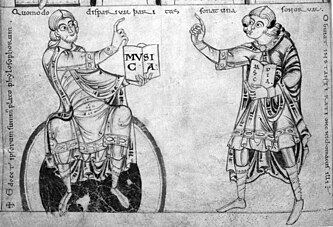
Nicomachus, or Nicomachus of Gerasa, (Greek: Νικόμαχος; c. 60 – c. 120 CE) was an important ancient Greek mathematician best known for Introduction to Arithmetic and Manual of Harmonics. He was born in Gerasa, in the Roman province of Syria (now Jerash, Jordan). Although a Neopythagorean who wrote about the mystical properties of numbers, Nicomachus was strongly influenced by Aristotle.
Best Nicomachus Quotes
Shortest
Earliest
Explore our curated collection of the most famous and impactful Nicomachus quotes.
“Everything that is harmoniously constituted is knit together out of opposites...
Book I, Chapter VII”
“The even is that which can be divided into two equal parts without a unit intervening in the middle; and the odd is that which cannot...
Book I, Chapter VIII”

“Scientific number, being set over such things as these, should be harmoniously constituted, in accordance with itself; not by any other but by itself.”
“If geometry exists, arithmetic must also needs be implied... But on the contrary 3, 4, and the rest might be 5 without the figures existing to which they give names. Hence arithmetic abolishes geometry along with itself, but is not abolished by it, and while it is implied by geometry, it does not itself imply geometry.
Book I, Chapter V”
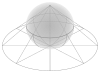
“Some... agreeing with Philolaus, believe that the proportion is called harmonic because it attends upon all geometric harmony, and they say that 'geometric harmony' is the cube because it is harmonized in all three dimensions, being the product of a number thrice multiplied together. For in every cube this proportion is mirrored; there are in every cube 12 sides, 8 angles and 6 faces; hence 8, the [harmonic] mean between 6 and 12, is according to harmonic proportion...”
“Since of quantity, one kind is viewed by itself, having no relation to anything else, as 'even,' 'odd,' 'perfect,' and the like, and the other is relative to something else, and is conceived of together with its relationship to another thing, like' double,' , greater,' 'smaller,' 'half,' 'one and one-half times,' 'one and one-third times,' and so forth, it is clear that two scientific methods will lay hold of and deal with the whole investigation of quantity: arithmetic, [with] absolute quantity; and music, [with] relative quantity.”

“All that has by nature, with systematic method, been arranged in the universe, seems both in part and as a whole to have been determined and ordered in accordance with number, by the forethought and the mind of him that created all things; for the pattern was fixed, like a preliminary sketch, by the domination of number preëxistent in the mind of the world-creating God, number conceptual only and immaterial in every way, but at the same time the true and the eternal essence, so that '''with reference to it, as to an artistic plan, should be created all these things: time, motion, the heavens, the stars, all sorts of revolutions.”
“The ancients, who under the leadership of Pythagoras first made science systematic, defined philosophy as the love of wisdom... [Οἱ παλαιοὶ καὶ πρώτοι μεθοδεύσαντες ἐπιστήμην κατάρξαντος Πυθαγόρου ὡρίζοντο φιλοσοφίαν εἶναι φιλίαν σοφίας...] This 'wisdom' he defined as the knowledge, or science, of the truth in real things, conceiving 'science' to be a steadfast and firm apprehension of the underlying substance. and 'real things' to be those which continue uniformly and the same in the universe and never depart even briefly from their existence; these real things would be things immaterial...”

“More evidently still astronomy attains through arithmetic the investigations that pertain to it, not alone because it is later than geometry in origin—for motion naturally comes after rest—nor because the motions of the stars have a perfectly melodious harmony, but also because risings, settings, progressions, retrogressions, increases, and all sorts of phases are governed by numerical cycles and quantities. So then we have rightly undertaken first the systematic treatment of this, as the science naturally prior, more honorable, and more venerable, and, as it were, mother and nurse of the rest; and here we will take our start for the sake of clearness.
Book I, Chapter VI”
“To quote the words of Timaeus, in Plato, "What is that which always is, and has no birth, and what is that which is always becoming but never is? The one is apprehended by the mental processes, with reasoning, and is ever the same; the other can be guessed at by opinion in company with unreasoning sense, a thing which becomes and passes away, but never really is."
Therefore, if we crave for the goal which is worthy and fitting for man, namely happiness of life—and this is accomplished by philosophy alone and nothing else, and philosophy means... for us desire for wisdom, and wisdom the science of the truth of things... it is reasonable and most necessary to distinguish and systematize the accidental qualities of things.”
Therefore, if we crave for the goal which is worthy and fitting for man, namely happiness of life—and this is accomplished by philosophy alone and nothing else, and philosophy means... for us desire for wisdom, and wisdom the science of the truth of things... it is reasonable and most necessary to distinguish and systematize the accidental qualities of things.”
“Bodily, material things are... continuously involved in continuous flow and change—in imitation of the nature and peculiar quality of that eternal matter and substance which has been from the beginning... The bodiless things, however, of which we conceive in connection with or together with matter, such as qualities, quantities, configurations, largeness, smallness, equality, relations, actualities, dispositions, places, times, all those things... whereby the qualities in each body are comprehended—all these are of themselves immovable and unchangeable, but accidentally they share in and partake of the affections of the body to which they belong. Now it is with such things that 'wisdom' is particularly concerned, but accidentally also with... bodies.
Book I, Chapter II”
“And once more is this true in the case of music; not only because the absolute is prior to the relative, as 'great' to 'greater' and 'rich' to 'richer' and 'man' to 'father,' but also because the musical harmonies, diatessaron, diapente, and diapason, are named for numbers; similarly all of their harmonic ratios are arithmetical ones, for the diatessaron [ perfect fourth] is the ratio of 4 : 3, the diapente [ perfect fifth] that of 3 : 2, and the diapason [perfect octave] the double ratio [2 : 1]; and the most perfect, the di-diapason [ fifteenth], is the quadruple ratio [4 : 1].”
“In Plato's Republic, when the interlocutor of Socrates appears to bring certain plausible reasons to bear upon the mathematical sciences, to show that they are useful to human life, arithmetic for reckoning, distributions, contributions, exchanges, and partnerships, geometry for sieges, the founding of cities and sanctuaries, and the partition of land, music for festivals, entertainment, and the worship of the gods, and the doctrine of the spheres, or astronomy, for farming, navigation and other undertakings, revealing beforehand the proper procedure and suitable season, Socrates, reproaching him says: "You amuse me, because you seem to fear that these are useless studies that I recommend; but that is very difficult, nay, impossible. For the eye of the soul, blinded and buried by other pursuits, is rekindled and aroused again by these and these alone, and it is better that this be saved than thousands of bodily eyes, for by it alone is the truth of the universe beheld."
Book I, Chapter IV”

“Things... are some of them continuous...which are properly and peculiarly called 'magnitudes'; others are discontinuous, in a side-by-side arrangement, and, as it were, in heaps, which are called 'multitudes,'''' a flock, for instance, a people, a heap, a chorus, and the like.
Wisdom, then, must be considered to be the knowledge of these two forms. Since, however, all multitude and magnitude are by their own nature of necessity infinite—for multitude starts from a definite root and never ceases increasing; and magnitude, when division beginning with a limited whole is carried on, cannot bring the dividing process to an end... and since sciences are always sciences of limited things, and never of infinites, it is accordingly evident that a science dealing with magnitude... or with multitude... could never be formulated.... A science, however, would arise to deal with something separated from each of them''', with quantity, set off from multitude, and size, set off from magnitude. Book I, Chapter III”
Wisdom, then, must be considered to be the knowledge of these two forms. Since, however, all multitude and magnitude are by their own nature of necessity infinite—for multitude starts from a definite root and never ceases increasing; and magnitude, when division beginning with a limited whole is carried on, cannot bring the dividing process to an end... and since sciences are always sciences of limited things, and never of infinites, it is accordingly evident that a science dealing with magnitude... or with multitude... could never be formulated.... A science, however, would arise to deal with something separated from each of them''', with quantity, set off from multitude, and size, set off from magnitude. Book I, Chapter III”

“Plato, too, at the end of the thirteenth book of the Laws, to which some give the title The Philosopher... adds: "Every diagram, system of numbers, every scheme of harmony, and every law of the movement of the stars, ought to appear one to him who studies rightly; and what we say will properly appear if one studies all things looking to one principle, for there will be seen to be one bond for all these things, and if anyone attempts philosophy in any other way he must call on Fortune to assist him. For there is never a path without these... The one who has attained all these things in the way I describe, him I for my part call wisest, and this I maintain through thick and thin." For it is clear that these studies are like ladders and bridges that carry our minds from things apprehended by sense and opinion to those comprehended by the mind and understanding, and from those material, physical things, our foster-brethren known to us from childhood, to the things with which we are unacquainted, foreign to our senses, but in their immateriality and eternity more akin to our souls, and above all to the reason which is in our souls.”
“Without the aid of these, then, it is not possible to deal accurately with the forms of being nor to discover the truth in things, knowledge of which is wisdom, and evidently not even to philosophize properly, for "just as painting contributes to the menial arts toward correctness of theory, so in truth lines, numbers, harmonic intervals, and the revolutions of circles bear aid to the learning of the doctrines of wisdom," says the Pythagorean Androcydes. Likewise Archytas of Tarentum, at the beginning of... On Harmony, says... in about these words: "It seems to me that they do well to study mathematics, and it is not at all strange that they have correct knowledge about each thing, what it is. For if they knew rightly the nature of the whole, they were also likely to see well what is the nature of the parts. About geometry, indeed, and arithmetic and astronomy, they have handed down to us a clear understanding, and not least also about music. For these seem to be sister sciences; for they deal with sister subjects, the first two forms of being."”

Nicomachus Quotes by Topic
Find exactly what you are looking for by browsing this categorized list of Nicomachus quotes by topic.

Quotes About Nicomachus
Gain deeper perspective through quotes about Nicomachus from others.
W. W. Rouse Ball on Nicomachus
“A Jew, Nicomachus, of Gerasa, published an Arithmetic, which, or rather a Latin translation of it) remained for a thousand years a standard authority on the subject. Geometrical demonstrations are here abandoned, and the work is a mere classification of the results then known, with numerical illustrations: the evidence of the truth of the propositions enunciated, for I cannot call them proofs, being in general an induction from numerical instances. The object of the book is the study of the properties of numbers, and particularly of their ratios. Nicomachus commences with the usual distinctions between even, odd, prime, and perfect numbers; he next discusses fractions in a somewhat clumsy manner; he then turns to polygonal and to solid numbers; and finally treats of ratio, proportion, and progressions. Arithmetic of this kind is usually termed Boethian, and the work of Boethius on it was a recognised text-book in the middle ages.”
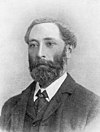
Eric Temple Bell on Nicomachus
“The sixth century [BC] was the time, and Greece the place, for human beings to reject once and for all the pernicious number mysticism of the East. Instead, Pythagoras and his followers eagerly accepted it as the celestial revelation of a higher mathematical harmony. Adding vast masses of sheer numerological nonsense of their own to an already enormous bulk, they transmitted this ancient superstition to the golden age of Greek thought, which passed it on to the first century A.D. to the decadent arithmologist Nicomachus. He, enriching his already opulent legacy with a wealth of original rubbish, left it to be sifted by the Roman Boethius, the dim mathematical light of the Middle Ages, thereby darkening the mind of Christian Europe with the venerated nonsense, and encouraging the gemaria of the Talmudists to flourish like a weed.”
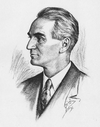
Dirk Jan Struik on Nicomachus 2 quotes
“"Arithmetic Introduction" is the most complete exposition extant of Pythagorean arithmetic. It deals in great part with the same subjects as the arithmetical books of Euclid's "Elements," but where Euclid represents numbers by straight lines, Nicomachus uses arithmetical notation with ordinary language when undetermined numbers are expressed. His treatment of polygonal numbers and pyramidal numbers was of influence on medieval arithmetic, especially through Boetius.”
Bartel Leendert van der Waerden on Nicomachus
“Neo-Pythagoreans, like Nicomachus of Gerasa... and Iamblichus... revel in... number mysticism. ...The purpose of the layman's Introduction to Arithmetic... is to explain in a manner intelligible to every one, the wonderful and divine properties of numbers. In a very entertaining way he tells about triangular numbers... square, rectangular and polygonal numbers... gnomic numbers and spatial numbers, about ratios and the distinction between multiple and epimoric.”
Source on Nicomachus 5 quotes
“His native place was Gerasa probably the modern Jerash about 56 miles northeast of Jerusalem. Two treatises bear the name of Nicomachus, the Introductionis arithmeticæ libri duo and the Enchiridion harmonikon. ...A third treatise called Theologoumena arithmetica is anonymous but is probably the work of Nicomachus.”
Part I on Nicomachus 5 quotes
“The philosophical arithmetic of the Greeks, αριθμητική, of which the arithmetic of Nicomachus is a specimen, corresponds in a measure to our number theory; the subject was designed for mature students as a preparation for the study of philosophy, and was not at all intended for children. Arithmetica is... the study of that which is implied in number.”
About Nicomachus
Nicomachus, or Nicomachus of Gerasa, (Greek: Νικόμαχος; c. 60 – c. 120 CE) was an important ancient Greek mathematician best known for Introduction to Arithmetic and Manual of Harmonics. He was born in Gerasa, in the Roman province of Syria (now Jerash, Jordan). Although a Neopythagorean who wrote about the mystical properties of numbers, Nicomachus was strongly influenced by Aristotle.