Link Copied!
Narada Maha Thera Quotes (1898-1983)
King


About Narada Maha Thera
Narada Mahathera Sinhalese: නාරද මහා ස්ථවිරයන් වහන්සේ, born Sumanapala Perera (14 July 1898 – 2 October 1983) was a Theravadan Buddhist monk.
Best Narada Maha Thera Quotes
Shortest
Earliest
Explore our curated collection of the most famous and impactful Narada Maha Thera quotes.
“From a metaphysical standpoint Nibbana is deliverance from suffering. From a psychological standpoint Nibbana is the eradication of egoism. From an ethical standpoint Nibbana is the destruction of lust, hatred and ignorance.”
“It is not within the power of a Buddha to wash away the impurities of others. One could neither purify nor defile another.
The Buddha, as Teacher, instructs us, but we ourselves are directly responsible for our purification.”
The Buddha, as Teacher, instructs us, but we ourselves are directly responsible for our purification.”
“Right Thoughts lead to Right Speech, the third factor. This includes abstinence from falsehood, slandering, harsh words, and frivolous talk … Right Speech must be followed by Right Action which comprises abstinence from killing, stealing and sexual misconduct.”

“Although a Buddhist seeks refuge in the Buddha, he does not make any self-surrender. Nor does a Buddhist sacrifice his freedom of thought by becoming a follower of the Buddha. He can exercise his own free will and develop his knowledge even to the extent of becoming a Buddha himself.”
“Buddhism cannot, therefore, strictly be called a religion because it is neither a system of faith and worship, nor "the outward act or form by which men indicate their recognition of the existence of a God or gods having power over their own destiny to whom obedience, service, and honor are due."”

“Ordinarily the enjoyment of sensual pleasures is the highest and only happiness of the average man. There is no doubt a kind of momentary happiness in the anticipation, gratification and retrospection of such fleeting material pleasures, but they are illusive and temporary. According to the Buddha non-attachment is a greater bliss.”

“Buddhism is much more than an ordinary moral teaching. Morality is only the preliminary stage on the Path of Purity, and is a means to an end, but not an end in itself. Conduct, though essential, is itself insufficient to gain one's emancipation. It should be coupled with wisdom or knowledge (pañña). The base of Buddhism is morality, and wisdom is its apex.”
“The non-aggressive, moral and philosophical system expounded by the Buddha, which demands no blind faith from its adherents, expounds no dogmatic creeds, encourages no superstitious rites and ceremonies, but advocates a golden mean that guides a disciple through pure living and pure thinking to the gain of supreme wisdom and deliverance from all evil, is called the Dhamma and is popularly known as Buddhism.”
“The Pali word Nibbana is formed of Ni and Vana. Ni is a negative particle and Vana means lusting or craving. "It is called Nibbana, in that it is a departure from the craving which is called Vana, lusting." Literally, Nibbana means non-attachment.
It may also be defined as the extinction of lust, hatred and ignorance, "The whole world is in flames," says the Buddha. "By what fire is it kindled? By the fire of lust, hatred and ignorance, by the fire of birth, old age, death, pain, lamentation, sorrow, grief and despair it is kindled." …”
It may also be defined as the extinction of lust, hatred and ignorance, "The whole world is in flames," says the Buddha. "By what fire is it kindled? By the fire of lust, hatred and ignorance, by the fire of birth, old age, death, pain, lamentation, sorrow, grief and despair it is kindled." …”

“Old age and death are possible in and with a psychophysical organism. Such an organism must be born; therefore it pre-supposes birth. But birth is the inevitable result of past deeds or Kamma. Kamma is conditioned by grasping which is due to craving. Such craving can appear only where feeling exists. Feeling is the outcome of contact between the senses and objects. Therefore it presupposes organs of senses which cannot exist without mind and body. Where there is a mind there is consciousness. It is the result of past good and evil. The acquisition of good and evil is due to ignorance of things as they truly are.”
“Aldous Huxley writes: "Alone of all the great world religions Buddhism made its way without persecution censorship or inquisition."
Lord Russell remarks: "Of the great religions of history, I prefer Buddhism, especially in its earliest forms; because it has had the smallest element of persecution."
In the name of Buddhism no altar was reddened with the blood of a Hypatia, no Bruno was burnt alive.
Buddhism appeals more to the intellect than to the emotion. It is concerned more with the character of the devotees than with their numerical strength.”
“It is neither a religion in the sense in which that word is commonly understood, for it is not "a system of faith and worship owing any allegiance to a supernatural being."
Buddhism does not demand blind faith from its adherents. Here mere belief is dethroned and is substituted by confidence based on knowledge, which, in Pali, is known as Saddha. The confidence placed by a follower on the Buddha is like that of a sick person in a noted physician, or a student in his teacher. A Buddhist seeks refuge in the Buddha because it was He who discovered the Path of Deliverance.
• Variant:”

“Buddhism does not totally deny the existence of a personality in an empirical sense. It only attempts to show that it does not exist in an ultimate sense. The Buddhist philosophical term for an individual is Santana, i.e., a flux or a continuity. It includes the mental and physical elements as well. The Kammic force of each individual binds the elements together. This uninterrupted flux or continuity of psycho-physical phenomenon, which is conditioned by Kamma, and not limited only to the present life, but having its source in the beginningless past and its continuation in the future — is the Buddhist substitute for the permanent ego or the immortal soul of other religions.”
“We are faced with a totally ill-balanced world. We perceive the inequalities and manifold destinies of men and the numerous grades of beings that exist in the universe. We see one born into a condition of affluence, endowed with fine mental, moral and physical qualities and another into a condition of abject poverty and wretchedness. Here is a man virtuous and holy, but, contrary to his expectation, ill-luck is ever ready to greet him. The wicked world runs counter to his ambitions and desires. He is poor and miserable in spite of his honest dealings and piety. There is another vicious and foolish, but accounted to be fortune's darling. He is rewarded with all forms of favors, despite his shortcomings and evil modes of life.”

“It should be mentioned that any external supernatural agency plays no part whatever in the moulding of the character of a Buddhist. In Buddhism there is no one to reward or punish. Pain or happiness are the inevitable results of one's actions. The question of incurring the pleasure or displeasure of a God does not enter the mind of a Buddhist. Neither hope of reward nor fear of punishment acts as an incentive to him to do good or to refrain from evil. A Buddhist is aware of future consequences, but he refrains from evil because it retards, does good because it aids progress to Enlightenment (Bodhi). There are also some who do good because it is good, refrain from evil because it is bad.”

“Furthermore, it must be mentioned that there are not petitional or intercessory prayers in Buddhism. However much we may pray to the Buddha we cannot be saved. The Buddha does not grant favors to those who pray to Him. Instead of petitional prayers there is meditation that leads to self-control, purification and enlightenment. Meditation is neither a silent reverie nor keeping the mind blank. It is an active striving. It serves as a tonic both to the heart and the mind. The Buddha not only speaks of the futility of offering prayers but also disparages a slave mentality. A Buddhist should not pray to be saved, but should rely on himself and win his freedom.”
“Clear vision of right understanding leads to clear thinking. The second factor of the Noble Eight-fold Path is therefore, Right Thoughts (samma-sankappa), which serves the double purpose of eliminating evil thoughts and developing pure thoughts.Right Thoughts, in this particular connection, are three fold. They consist of:
i. Nekkhamma — Renunciation of worldly pleasures or the virtue of selflessness, which is opposed to attachment, selfishness, and possessiveness;
ii. Avyapada — Loving-kindness, goodwill, or benevolence, which is opposed to hatred, ill-will, or aversion; and
iii. Avihimsa — Harmlessness or compassion, which is opposed to cruelty and callousness.”
“As long as this Kammic force exists there is re-birth, for beings are merely the visible manifestation of this invisible Kammic force. Death is nothing but the temporary end of this temporary phenomenon. It is not the complete annihilation of this so-called being. The organic life has ceased, but the Kammic force which hitherto actuated it has not been destroyed. As the Kammic force remains entirely undisturbed by the disintegration of the fleeting body, the passing away of the present dying thought-moment only conditions a fresh consciousness in another birth.
It is Kamma, rooted in ignorance and craving, that conditions rebirth. Past Kamma conditions the present birth; and present Kamma, in combination with past Kamma, conditions the future.”
It is Kamma, rooted in ignorance and craving, that conditions rebirth. Past Kamma conditions the present birth; and present Kamma, in combination with past Kamma, conditions the future.”

“The Buddha Dhamma is not based on the fear of the unknown, but is founded on the bedrock of facts which can be tested by ourselves and verified by experience. Buddhism is, therefore rational and intensely practical.
Such a rational and practical system cannot contain mysteries or esoteric doctrines. Blind faith, therefore, is foreign to Buddhism. Where there is no blind faith there cannot be any coercion or persecution or fanaticism. To the unique credit of Buddhism it must be said that throughout its peaceful march of 2500 years no drop of blood was shed in the name of the Buddha, no mighty monarch wielded his powerful sword to propagate the Dhamma, and no conversion was made either by force or by repulsive methods. Yet, the Buddha was the first and the greatest missionary that lived on earth.”
Such a rational and practical system cannot contain mysteries or esoteric doctrines. Blind faith, therefore, is foreign to Buddhism. Where there is no blind faith there cannot be any coercion or persecution or fanaticism. To the unique credit of Buddhism it must be said that throughout its peaceful march of 2500 years no drop of blood was shed in the name of the Buddha, no mighty monarch wielded his powerful sword to propagate the Dhamma, and no conversion was made either by force or by repulsive methods. Yet, the Buddha was the first and the greatest missionary that lived on earth.”
“Buddhism is not confined to any country or any particular nation. It is universal. It is not nationalism which, in other words, is another form of caste system founded on a wider basis. Buddhism, if it be permitted to say so, is supernationalism.
To a Buddhist there is no far or near, no enemy or foreigner, no renegade or untouchable, since universal love realized through understanding has established the brotherhood of all living beings. A real Buddhist is a citizen of the world. He regards the whole world as his motherland and all as his brothers and sisters.
Buddhism is, therefore, unique, mainly owing to its tolerance, non-aggressiveness, rationality, practicability, efficacy and universality. It is the noblest of all unifying influences and the only lever that can uplift the world.”
“ Right Understanding, which is the key-note of Buddhism, is explained as the knowledge of the four Noble Truths. To understand rightly means to understand things as they really are and not as they appear to be. This refers primarily to a correct understanding of oneself, because, as the Rohitassa Sutta states, "Dependent on this one-fathom long body with its consciousness" are all the four Truths. In the practice of the Noble Eightfold Path, Right Understanding stands at the beginning as well as at its end. A minimum degree of Right Understanding is necessary at the very beginning because it gives the right motivations to the other seven factors of the Path and gives to them correct direction. At the culmination of the practice, Right Understanding has matured into perfect Insight Wisdom (vipassana-pañña), leading directly to the Stages of Sainthood.”
“ Paticca means because of, or dependent upon: Samuppada "arising or origination." Paticca Samuppada, therefore, literally means — "Dependent Arising" or "Dependent Origination."
It must be borne in mind that Paticca Samuppada is only a discourse on the process of birth and death and not a theory of the ultimate origin of life. It deals with the cause of rebirth and suffering, but it does not in the least attempt to show the evolution of the world from primordial matter.
Ignorance (Avijja) is the first link or cause of the wheel of life. It clouds all right understanding.
Dependent on ignorance of the Four Noble Truths arise activities (Sankhara) — both moral and immoral. The activities whether good or bad rooted in ignorance which must necessarily have their due effects, only tend to prolong life's wandering. Nevertheless, good actions are essential to get rid of the ills of life.”

“Here we find a juxtaposition of such fleeting mental states of consciousness opposed to a superposition of such states as some appear to believe. No state once gone ever recurs nor is identical with what goes before. But we worldlings, veiled by the web of illusion, mistake this apparent continuity to be something eternal and go to the extent of introducing an unchanging soul, an Atta, the supposed doer and receptacle of all actions to this ever-changing consciousness.
"The so-called being is like a flash of lightning that is resolved into a succession of sparks that follow upon one another with such rapidity that the human retina cannot perceive them separately, nor can the uninstructed conceive of such succession of separate sparks." As the wheel of a cart rests on the ground at one point, so does the being live only for one thought-moment. It is always in the present, and is ever slipping into the irrevocable past. What we shall become is determined by this present thought-moment.”
"The so-called being is like a flash of lightning that is resolved into a succession of sparks that follow upon one another with such rapidity that the human retina cannot perceive them separately, nor can the uninstructed conceive of such succession of separate sparks." As the wheel of a cart rests on the ground at one point, so does the being live only for one thought-moment. It is always in the present, and is ever slipping into the irrevocable past. What we shall become is determined by this present thought-moment.”

“Buddhism is saturated with this spirit of free enquiry and complete tolerance. It is the teaching of the open mind and the sympathetic heart, which, lighting and warming the whole universe with its twin rays of wisdom and compassion, sheds its genial glow on every being struggling in the ocean of birth and death.
The Buddha was so tolerant that He did not even exercise His power to give commandments to His lay followers. Instead of using the imperative, He said: "It behooves you to do this — It behooves you not to do this." He commands not but does exhort.
This tolerance the Buddha extended to men, women and all living beings.
It was the Buddha who first attempted to abolish slavery and vehemently protested against the degrading caste system which was firmly rooted in the soil of India. In the Word of the Buddha it is not by mere birth one becomes an outcast or a noble, but by one's actions. Caste or colour does not preclude one from becoming a Buddhist or from entering the Order. Fishermen, scavengers, courtesans, together with warriors and Brahmins, were freely admitted to the Order and enjoyed equal privileges and were also given positions of rank.”
Narada Maha Thera Quotes by Topic
Find exactly what you are looking for by browsing this categorized list of Narada Maha Thera quotes by topic.
Narada Maha Thera on Purity in Buddhism 4 quotes
View all 4 quotes on Purity in Buddhism →Narada Maha Thera on Ritual purification 2 quotes
“The Buddhas point out the path, and it is left for us to follow that path to obtain our purification.”
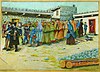
Narada Maha Thera on Faith
“Buddhism does not demand blind faith from its adherents. Here mere belief is dethroned and is substituted by confidence based on knowledge, which, in Pali, is known as Saddha. The confidence placed by a follower on the Buddha is like that of a sick person in a noted physician, or a student in his teacher.”

Narada Maha Thera on Prayer
“There are not petitional or intercessory prayers in Buddhism. However much we may pray to the Buddha we cannot be saved. The Buddha does not grant favors to those who pray to Him. Instead of petitional prayers there is meditation that leads to self-control, purification and enlightenment. Meditation is neither a silent reverie nor keeping the mind blank. It is an active striving. It serves as a tonic both to the heart and the mind. The Buddha not only speaks of the futility of offering prayers but also disparages a slave mentality. A Buddhist should not pray to be saved, but should rely on himself and win his freedom.”
About Narada Maha Thera
Narada Mahathera Sinhalese: නාරද මහා ස්ථවිරයන් වහන්සේ, born Sumanapala Perera (14 July 1898 – 2 October 1983) was a Theravadan Buddhist monk.