Link Copied!
Mozi Quotes (-470--391)
Philosopher

About Mozi
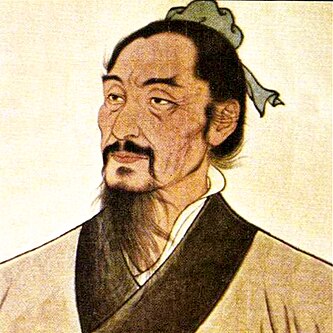
Mozi (墨子; Mòzǐ, also Mo Tzu, latinized as Micius; originally named 墨翟 Mo Di) (c. 470 BC – c. 391 BC) was a Chinese philosopher during the Hundred Schools of Thought era in the early Warring States Period. He founded the school of Mohism and argued strongly against Confucianism and Daoism. Mohism was actively developed and practiced in many states, but fell out of favour when the legalist Qin Dynasty came to power. During that period many Mohist classics were destroyed when Qin Shihuang carried out the burning of books and burying of scholars, and the importance of Mohism further declined when Confucianism became the dominant school of thought during the Han Dynasty.
Best Mozi Quotes
Shortest
Earliest
Explore our curated collection of the most famous and impactful Mozi quotes.
“To accomplish anything whatsoever one must have standards. None have yet accomplished anything without them.”
“The virtuous who are prosperous must be exalted, and the virtuous who are not prosperous must be exalted too.”

“What is the purpose of houses? It is to protect us from the wind and cold of winter, the heat and rain of summer, and to keep out robbers and thieves. Once these ends have been secured, that is all. Whatever does not contribute to these ends should be eliminated.[6]”
“If we should classify one by one all those who hate others and injure others, should we find them to be universal in love or partial? Of course we should say they are partial. Now, since partiality against one another is the cause of the major calamities in the empire, then partiality is wrong.”
“If the rulers sincerely desire the empire to be wealthy and dislike to have it poor, desire to have it orderly and dislike to have it chaotic, they should bring about universal love and mutual aid. This is the way of the sage-kings and the way to order for the world, and it should not be neglected.”
“The words of malicious slander should not be allowed to enter the ear. A defensive voice should not be allowed to come out of the mouth. The want to gravely injure people should not be allowed to exist in the heart. If this is accomplished, though there be people who cynically expose others, they would be without people who would align with them.”
“When nobody in the world loves any other, naturally the strong will overpower the weak, the many will oppress the few, the wealthy will mock the poor, the honoured will disdain the humble, the cunning will deceive the simple. Therefore all the calamities, strifes, complaints, and hatred in the world have arisen out of want of mutual love. Therefore the benevolent disapproved of this want.”

“The purpose of the magnanimous is to be found in procuring benefits for the world and eliminating its calamities. … Mutual attacks among states, mutual usurpation among houses, mutual injuries among individuals; the lack of grace and loyalty between ruler and ruled, the lack of affection and filial piety between father and son, the lack of harmony between elder and younger brothers — these are the major calamities in the world.”
“Now, as to universal love and mutual aid, they are beneficial and easy beyond a doubt. It seems to me that the only trouble is that there is no superior who encourages it. If there is a superior who encourages it, promoting it with rewards and commendations, threatening its reverse with punishments, I feel people will tend toward universal love and mutual aid like fire tending upward and water downwards — it will be unpreventable in the world.”
“If every one in the world will love universally; states not attacking one another; houses not disturbing one another; thieves and robbers becoming extinct; emperor and ministers, fathers and sons, all being affectionate and filial -- if all this comes to pass the world will be orderly. Therefore, how can the wise man who has charge of governing the empire fail to restrain hate and encourage love? So, when there is universal love in the world it will be orderly, and when there is mutual hate in the world it will be disorderly.”
“The image (shadow) being inverted depends on there being an aperture at the cross-over and the image (shadow) being distant. The explanation lies in the aperture.
The image (shadow): The light reaches the person shining like an arrow. The lowest [light] that reaches the person is the highest [in the image] and the highest [light] that reaches the person is the lowest [in the image]. The feet conceal the lowest light and therefore become the image (shadow) at the top. The head conceals the highest light and therefore becomes the image (shadow) at the bottom.”
The image (shadow): The light reaches the person shining like an arrow. The lowest [light] that reaches the person is the highest [in the image] and the highest [light] that reaches the person is the lowest [in the image]. The feet conceal the lowest light and therefore become the image (shadow) at the top. The head conceals the highest light and therefore becomes the image (shadow) at the bottom.”

“The murder of one person is called unrighteous and incurs one death penalty. Following this argument, the murder of ten persons will be ten times as unrighteous and there should be ten death penalties; the murder of a hundred persons will be a hundred times as unrighteous and there should be a hundred death penalties. All the gentlemen of the world know that they should condemn these things, calling them unrighteous. But when it comes to the great unrighteousness of attacking states, they do not know that they should condemn it. On the contrary, they applaud it, calling it righteous.”
“Universal love is really the way of the sage-kings. It is what gives peace to the rulers and sustenance to the people. The gentleman would do well to understand and practise universal love; then he would be gracious as a ruler, loyal as a minister, affectionate as a father, filial as a son, courteous as an elder brother, and respectful as a younger brother. So, if the gentleman desires to be a gracious ruler, a loyal minister, an affectionate father, a filial son, a courteous elder brother, and a respectful younger brother, universal love must be practised. It is the way of the sage-kings and the great blessing of the people.”

“When we try to develop and procure benefits for the world with universal love as our standard, then attentive ears and keen eyes will respond in service to one another, then limbs will be strengthened to work for one another, and those who know the Tao will untiringly instruct others. Thus the old and those who have neither wife nor children will have the support and supply to spend their old age with, and the young and weak and orphans will have the care and admonition to grow up in. When universal love is adopted as the standard, then such are the consequent benefits. It is incomprehensible, then, why people should object to universal love when they hear it.”
“When feudal lords love one another there will be no more war; when heads of houses love one another there will be no more mutual usurpation; when individuals love one another there will be no more mutual injury. When ruler and ruled love each other they will be gracious and loyal; when father and son love each other they will be affectionate and filial; when older and younger brothers love each other they will be harmonious. When all the people in the world love one another, then the strong will not overpower the weak, the many will not oppress the few, the wealthy will not mock the poor, the honoured will not disdain the humble, and the cunning will not deceive the simple. And it is all due to mutual love that calamities, strife, complaints, and hatred are prevented from arising. Therefore the benevolent exalt it.”
“All states in the world, large or small, are cities of Heaven, and all people, young or old, honourable or humble, are its subjects; for they all graze oxen and sheep, feed dogs and pigs, and prepare clean wine and cakes to sacrifice to Heaven. Does this not mean that Heaven claims all and accepts offerings from all? Since Heaven does claim all and accepts offerings from all, what then can make us say that it does not desire men to love and benefit one another? Hence those who love and benefit others Heaven will bless. Those who hate and harm others Heaven will curse, for it is said that he who murders the innocent will be visited by misfortune. How else can we explain the fact that men, murdering each other, will be cursed by Heaven? Thus we are certain that Heaven desires to have men love and benefit one another and abominates to have them hate and harm one another”

“When we come to think about the several benefits in regard to their cause, how have they arisen? Have they arisen out of hate of others and injuring others? Of course we should say no. We should say they have arisen out of love of others and benefiting others. If we should classify one by one all those who love others and benefit others, should we find them to be partial or universal? Of course we should say they are universal. Now, since universal love is the cause of the major benefits in the world, therefore Mozi proclaims universal love is right. And, as has already been said, the interest of the magnanimous lies in procuring benefits for the world and eliminating its calamities. Now that we have found out the consequences of universal love to be the major benefits of the world and the consequences of partiality to be the major calamities in the world; this is the reason why Mozi said partiality is wrong and universality is right.”
“If one does not preserve the learned in a state he will be injuring the state; if one is not zealous (to recommend) the virtuous upon seeing one, he will be neglecting the ruler. Enthusiasm is to be shown only to the virtuous, and plans for the country are only to be shared with the learned. Few are those, who, neglecting the virtuous and slighting the learned, could still maintain the existence of their countries.
• Variant translation: To enter upon rulership of a country but not preserve its scholars will result in the downfall of the country. To see the worthy but not hasten to them will make the country's ruler less able to perform his duties. To the unworthy is due no attention. The ignorant should remain without inclusion in the state's affairs. To impede the virtuous and neglect the scholarly and still maintain the survival of the state has yet to be, indeed.”
• Variant translation: To enter upon rulership of a country but not preserve its scholars will result in the downfall of the country. To see the worthy but not hasten to them will make the country's ruler less able to perform his duties. To the unworthy is due no attention. The ignorant should remain without inclusion in the state's affairs. To impede the virtuous and neglect the scholarly and still maintain the survival of the state has yet to be, indeed.”

Mozi Quotes by Topic
Find exactly what you are looking for by browsing this categorized list of Mozi quotes by topic.
Mozi on Benevolence 3 quotes
“All the calamities, strifes, complaints, and hatred in the world have arisen out of want of mutual love. Therefore the benevolent disapproved of this want.”

Mozi on Love 3 quotes
“Now, as to universal love and mutual aid, they are beneficial and easy beyond a doubt. It seems to me that the only trouble is that there is no superior who encourages it. If there is a superior who encourages it, promoting it with rewards and commendations, threatening its reverse with punishments, I feel people will tend toward universal love and mutual aid like fire tending upward and water downwards — it will be unpreventable in the world.”
Mozi on Criticism
Mozi on House
“What is the purpose of houses? It is to protect us from the wind and cold of winter, the heat and rain of summer, and to keep out robbers and thieves. Once these ends have been secured, that is all. Whatever does not contribute to these ends should be eliminated.”

Mozi on Hatred
“If we should classify one by one all those who hate others and injure others, should we find them to be universal in love or partial? Of course we should say they are partial. Now, since partiality against one another is the cause of the major calamities in the empire, then partiality is wrong.”
Mozi on Injury
“If we should classify one by one all those who hate others and injure others, should we find them to be universal in love or partial? Of course we should say they are partial. Now, since partiality against one another is the cause of the major calamities in the empire, then partiality is wrong.”

Mozi on Photography
“The image (shadow) being inverted depends on there being an aperture at the cross-over and the image (shadow) being distant. The explanation lies in the aperture. The image (shadow): The light reaches the person shining like an arrow. The lowest [light] that reaches the person is the highest [in the image] and the highest [light] that reaches the person is the lowest [in the image]. The feet conceal the lowest light and therefore become the image (shadow) at the top. The head conceals the highest light and therefore becomes the image (shadow) at the bottom.”

Mozi on Capital punishment
“The murder of one person is called unrighteous and incurs one death penalty. Following this argument, the murder of ten persons will be ten times as unrighteous and there should be ten death penalties; the murder of a hundred persons will be a hundred times as unrighteous and there should be a hundred death penalties. All the gentlemen of the world know that they should condemn these things, calling them unrighteous. But when it comes to the great unrighteousness of attacking states, they do not know that they should condemn it. On the contrary, they applaud it, calling it righteous.”

Mozi on Homicide
“The murder of one person is called unrighteous and incurs one death penalty. Following this argument, the murder of ten persons will be ten times as unrighteous and there should be ten death penalties; the murder of a hundred persons will be a hundred times as unrighteous and there should be a hundred death penalties. All the gentlemen of the world know that they should condemn these things, calling them unrighteous. But when it comes to the great unrighteousness of attacking states, they do not know that they should condemn it. On the contrary, they applaud it, calling it righteous.”
Quotes About Mozi
Gain deeper perspective through quotes about Mozi from others.
David Wong on Mozi
“The Mozi is quite explicit in its consequentialism. (..) One standard is of usefulness. In applying this standard, one assesses the viability of a belief or theory according to the beneficial or harmful consequences of acting on it. (...) we are told to care for others as we care for ourselves, to view others as we view ourselves, or to be for others as we are for ourselves.”
Lin Yutang on Mozi
“Motse, or Mo Ti, is the only indigenous religious teacher China has produced. ... Among all Chinese philosophers, he comes closest to the Christian teachings, for he alone taught universal love as the basis of society and of peace, [and] showed that Heaven loved the people equally... He enunciated the clearest teachings "against offensive wars," and even developed in great detail the technique of defensive warfare. He also developed a system of logical method... But what is more, Motse's teachings were a stern call to action... Mencius referred to him as one who "would wear his head and his heels off to benefit the world." He taught and practised altruism, frugality and the hard life... His influence grew so great that for two centuries after Confucius, the Motseanists became the rivals of Confucianists... Why [the Motsean School's] influence suddenly stopped completely remains a matter of speculation.”

About Mozi
Mozi (墨子; Mòzǐ, also Mo Tzu, latinized as Micius; originally named 墨翟 Mo Di) (c. 470 BC – c. 391 BC) was a Chinese philosopher during the Hundred Schools of Thought era in the early Warring States Period. He founded the school of Mohism and argued strongly against Confucianism and Daoism. Mohism was actively developed and practiced in many states, but fell out of favour when the legalist Qin Dynasty came to power. During that period many Mohist classics were destroyed when Qin Shihuang carried out the burning of books and burying of scholars, and the importance of Mohism further declined when Confucianism became the dominant school of thought during the Han Dynasty.