Link Copied!
Mircea Eliade Quotes (1907-1986)
Philosopher, Writer
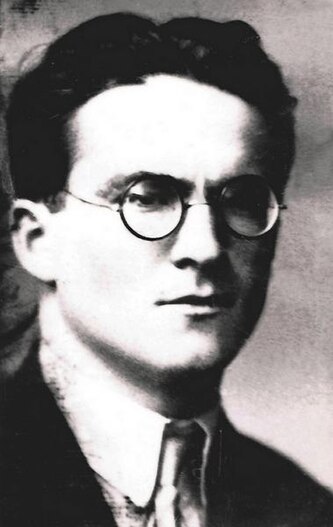
About Mircea Eliade
Mircea Eliade (13 March 1907 {O.S. 28 February} – 22 April 1986) was a Romanian historian of religion, fiction writer, philosopher, and professor at the University of Chicago. His most enduring and influential contribution to religious studies was possibly his theory of Eternal Return, which holds that myths and rituals do not simply record or imitate hierophanies, but, at least to the minds of the religious, actually participate in them.
Best Mircea Eliade Quotes
Shortest
Earliest
Explore our curated collection of the most famous and impactful Mircea Eliade quotes.
“The way towards 'wisdom' or towards 'freedom' is the way towards your inner being. This is the simplest definition of metaphysics.”

“The crude product of nature, the object fashioned by the industry of man, acquire their reality, their identity, only to the extent of their participation in a transcendent reality.”

“To believe that I could, at twenty-three, sacrifice history and culture for "the Absolute" was further proof that I had not understood India. My vocation was culture, not sainthood.”

“It would be frightening to think that in all the cosmos, which is so harmonious, so complete and equal to itself, that only human life is happening randomly, that only one's destiny lacks meaning.”
“In imitating the exemplary acts of a god or of a mythic hero, or simply by recounting their adventures, the man of an archaic society detaches himself from profane time and magically re-enters the Great Time, the sacred time.”
“Psychoanalysis justifies its importance by asserting that it forces you to look to and accept reality. But what sort of reality? A reality conditioned by the materialistic and scientific ideology of psychoanalysis, that is, a historical product...”
“The psychological and parapsychological experience of the East in general, and of yoga in particular, is unchallengeably more extensive and more organized than the experience on which the Western theories of the structure of the psyche have been erected.”

“In virtue of this, the artisan is a connoisseur of secrets, a magician; thus all crafts include some kind off initiation and are handed down by an occult tradition. He who 'makes' real things is he who knows the secret of making them.”
“It is not without fear and trembling that a historian of religion approaches the problem of myth. This is not only because of that preliminary embarrassing question: what is intended by myth? It is also because the answers given depend for the most part on the documents selected.”
“ The great cosmic illusion is a hierophany.... One is devoured by Time, not because one lives in Time, but because one believes in its reality, and therefore forgets or despises eternity. ”

“The history of religions reaches down and makes contact with that which is essentially human: the relation of man to the sacred. The history of religions can play an extremely important role in the crisis we are living through. The crises of modern man are to a large extent religious ones, insofar as they are an awakening of his awareness to an absence of meaning.”

“A religious phenomenon will only be recognized as such if it is grasped at its own level, that is to say, if it is studied as something religious. To try to grasp the essence of such phenomenon by means of physiology, psychology, sociology, economics, linguistics, art or any other study is false; it misses the one unique and irreducible element in it — the element of the sacred.”

“When the sacred manifests itself in any hierophany, there is not only a break in the homogeneity of space; there is also a revelation of an absolute reality, opposed to the nonreality of the vast surrounding expanse. The manifestation of the sacred ontologically founds the world. In the homogenous and infinite expanse, in which no point of reference is possible and hence no orientation can be established, the hierophany reveals an absolute fixed point, a center.”
“Whereas "false stories" can be told anywhere and at any time, myths must not be recited except during a period of sacred time (usually in autumn or winter, and only at night).... This custom has survived even among peoples who have passed beyond the archaic stage of culture. Among the Turco-Mongols and the Tibetans the epic songs of the Gesar cycle can be recited only at night and in winter.”

“The History of Religions is destined to play an important role in contemporary cultural life. This is not only because an understanding of exotic and archaic religions will significantly assist in a cultural dialogue with the representatives of such religions. It is more especially because … the history of religions will inevitably attain to a deeper knowledge of man. It is on the basis of such knowledge that a new humanism, on a world-wide scale, could develop.”

“In Dhaka, Muslims have started riots with the complicity of the police. They attacked the houses of the Hindus, raped the women and slaughtered all those who resisted. They burned down whole neighbourhoods under the eyes of the policemen. These only intervened when a Hindu grabbed a weapon to defend himself. In that case, they entered the house, seized the weapons and arrested the men. The Muslims were armed; they on their part did have that right. All attempts by Congress to brng them to peace have failed.”
“The interpretations of Freud are more and more successful because they are among the myths accessible to modern man. The myth of the murdered father, among others, reconstituted and interpreted in Totem and Taboo. It would be impossible to ferret out a single example of slaying the father in primitive religions or mythologies. This myth was created by Freud. And what is more interesting: the intellectual élite accept it (is it because they understand it? Or because it is "true" for modern man?)”
“In archaic and traditional societies, the surrounding world is conceived as a microcosm. At the limits of this closed world begins the domain of the unknown, of the formless. On this side there is ordered — because of inhabited and organized — space; on the other, outside this familiar space, there is the unknown and dangerous region of the demons, the ghosts, and the dead and foreigners — in a world, chaos or death or night. This image of an inhabited microcosm, surrounded by desert regions as a chaos or a kingdom of the dead, has survived even in highly evolved civilizations such as those of China, Mesopotamia and Egypt.”

“It is only through the discovery of History — more precisely by the awakening of the historical consciousness in Judaeo-Christianity and its propagation by Hegel and his successors — it is only through the radical assimilation of the new mode of being represented by human existence in the world that myth could be left behind. But we hesitate to say that mythical thought has been abolished. As we shall soon see, it managed to survive, though radically changed (if not perfectly camouflaged). And the astonishing fact is that, more than anywhere else it survives in historiography!”
“It is above all the valorizing of the present that requires emphasizing. The simple fact of existing, of living in time, can comprise a religious dimension. This dimension is not always obvious, since sacrality is in a sense camouflaged in the immediate, in the "natural" and the everyday. The joy of life discovered by the Greeks is not a profane type of enjoyment: it reveals the bliss of existing, of sharing — even fugitively — in the spontaneity of life and the majesty of the world. Like so many others before and after them, the Greeks learned that the surest way to escape from time is to exploit the wealth, at first sight impossible to suspect, of the lived instant.”

“These thirty years, and more, that I've spent among exotic, barbaric, indomitable gods and goddesses, nourished on myths, obsessed by symbols, nursed and bewitched by so many images which have come down to me from those submerged worlds, today seem to me to be the stages of a long initiation. Each one of these divine figures, each of these myths or symbols, is connected to a danger that was confronted and overcome. How many times I was almost lost, gone astray in this labyrinth where I risked being killed... These were not only bits of knowledge acquired slowly and leisurely in books, but so many encounters, confrontations, and temptations. I realize perfectly well now all the dangers I skirted during this long quest, and, in the first place, the risk of forgetting that I had a goal... that I wanted to reach a "center".”

“The hearer of myth, regardless of his level of culture, when he is listening to a myth, forgets, as it were, his particular situation and is projected into another world, into another universe which is no longer his poor little universe of every day. . . . The myths are true because they are sacred, because they tell him about sacred beings and events. Consequently, in reciting or listening to a myth, one resumes contact with the sacred and with reality, and in so doing one transcends the profane condition, the "historical situation." In other words one goes beyond the temporal condition and the dull self-sufficiency which is the lot of every human being simply because every human being is "ignorant" — in the sense that he is identifying himself, and Reality, with his own particular situation. And ignorance is, first of all, this false identification of Reality with what each one of us appears to be or to possess. ”
“Exegetes and theologians today are in agreement that the Hebrew Bible does not contain a doctrine of the Trinity, even though it was customary in past dogmatic tracts on the Trinity to cite texts like Genesis 1:26, "Let us make humanity in our image, after our likeness" (see also Gn. 3:22, 11:7; Is. 6:23) as proof of plurality in God. Although the Hebrew Bible depicts God as the father of Israel and employs personifications of God such as Word (davar), Spirit (ruah), Wisdom (hokhmah), and Presence (shekhinah), it would go beyond the intention and spirit of the Old Testament to correlate these notions with later trinitarian doctrine. Further, exegetes and theologians agree that the New Testament also does not contain an explicit doctrine of the Trinity. God the Father is source of all that is (Pantokrator) and also the father of Jesus Christ; "Father" is not a title for the first person of the Trinity but a synonym for God. Early liturgical and creedal formulas speak of God as "Father of our Lord Jesus Christ"; praise is to be rendered to God through Christ (see opening greetings in Paul and deutero-Paul).”
Mircea Eliade Quotes by Topic
Find exactly what you are looking for by browsing this categorized list of Mircea Eliade quotes by topic.
Mircea Eliade on Yoga 2 quotes
“Yoga, is a ’science’ of achieving the transformation of finite man into the infinite One, has to be recognized as something intrinsically Indian or, as ’a specific dimension of the Indian mind.’”

Mircea Eliade on Kairos 2 quotes
“In imitating the exemplary acts of a god or of a mythic hero, or simply by recounting their adventures, the man of an archaic society detaches himself from profane time and magically re-enters the Great Time, the sacred time.”
Mircea Eliade on Mythology 2 quotes
“Whereas "false stories" can be told anywhere and at any time, myths must not be recited except during a period of sacred time (usually in autumn or winter, and only at night).... This custom has survived even among peoples who have passed beyond the archaic stage of culture.”

Mircea Eliade on Significance
“Myths reveal that the World, man, and life have a supernatural origin and history, and that this history is significant, precious, and exemplary.”

Mircea Eliade on Vocation
“To believe that I could, at twenty-three, sacrifice history and culture for "the Absolute" was further proof that I had not understood India. My vocation was culture, not sainthood.”
Mircea Eliade on Magic (supernatural)
“In imitating the exemplary acts of a god or of a mythic hero, or simply by recounting their adventures, the man of an archaic society detaches himself from profane time and magically re-enters the Great Time, the sacred time.”
Mircea Eliade on Adventure
“In imitating the exemplary acts of a god or of a mythic hero, or simply by recounting their adventures, the man of an archaic society detaches himself from profane time and magically re-enters the Great Time, the sacred time.”
Mircea Eliade on Time
“In imitating the exemplary acts of a god or of a mythic hero, or simply by recounting their adventures, the man of an archaic society detaches himself from profane time and magically re-enters the Great Time, the sacred time.”

Mircea Eliade on Psychoanalysis
“Psychoanalysis justifies its importance by asserting that it forces you to look to and accept reality. But what sort of reality? A reality conditioned by the materialistic and scientific ideology of psychoanalysis, that is, a historical product...”

Mircea Eliade on History
“While a modern man, though regarding himself as the result of the course of Universal History, does not feel obliged to know the whole of it, the man of the archaic societies is not only obliged to remember mythical history but also to re-enact a large part of it periodically. It is here that we find the greatest difference between the man of the archaic societies and modern man: the irreversibility of events, which is the characteristic trait of History for the latter, is not a fact to the former.”
Mircea Eliade on Human rights in Bangladesh
“In Dhaka, Muslims have started riots with the complicity of the police. They attacked the houses of the Hindus, raped the women and slaughtered all those who resisted. They burned down whole neighbourhoods under the eyes of the policemen. These only intervened when a Hindu grabbed a weapon to defend himself. In that case, they entered the house, seized the weapons and arrested the men. The Muslims were armed; they on their part did have that right. All attempts by Congress to brng them to peace have failed.”

Mircea Eliade on Dhaka
“In Dhaka, Muslims have started riots with the complicity of the police. They attacked the houses of the Hindus, raped the women and slaughtered all those who resisted. They burned down whole neighbourhoods under the eyes of the policemen. These only intervened when a Hindu grabbed a weapon to defend himself. In that case, they entered the house, seized the weapons and arrested the men. The Muslims were armed; they on their part did have that right. All attempts by Congress to brng them to peace have failed.”

Mircea Eliade on Religious violence in India
“In Dhaka, Muslims have started riots with the complicity of the police. They attacked the houses of the Hindus, raped the women and slaughtered all those who resisted. They burned down whole neighbourhoods under the eyes of the policemen. These only intervened when a Hindu grabbed a weapon to defend himself. In that case, they entered the house, seized the weapons and arrested the men. The Muslims were armed; they on their part did have that right. All attempts by Congress to bring them to peace have failed.”

Mircea Eliade on Marxism
““Marx enriched the venerable myth by a whole Judaeo-Christian messianic ideology: on the one hand, the prophetic role and soteriological function that he attributes to the proletariat; on the other, the final battle between Good and Evil, which is easily comparable to the apocalyptic battle between Christ and Antichrist, followed by the total victory of the former. It is even significant that Marx takes over for his own purpose the Judaeo-Christian eschatological hope of an absolute end to history;…”[38]”

Mircea Eliade on Worldliness
“The worldly man lives in society, marries, establishes a family; Yoga prescribes absolute solitude and chastity. The worldly man is “possessed” by his own life; the yogin refuses to “let himself live”; to continual movement, he opposes his static posture, the immobility of āsana; to agitated, unrhythmical, changing respiration, he opposes prānāyāma, and even dreams of holding his breath indefinitely; to the chaotic flux of psychomental life, he replies by “fixing thought on a single point,” the first step to that final withdrawal from the phenomenal world which he will obtain through pratyāhāra. All of the yogic techniques invite to one and the same gesture—to do exactly the opposite of what human nature forces one to do. From solitude and chastity to samyama, there is no solution of continuity. The orientation always remains the same—to react against the “normal,” “secular,” and finally “human” inclination.”

What Mircea Eliade Said About Others
Discover personal opinions Mircea Eliade shared regarding contemporaries.
Mircea Eliade on René Guénon
“Carl Schmitt believes René Guénon is the most interesting person of our time. (I don’t believe this always, but often I do. Although I consider Aurobindo Ghose more “perfected.”)”

Quotes About Mircea Eliade
Gain deeper perspective through quotes about Mircea Eliade from others.
Philip H. Ashby on Mircea Eliade
“Mircea Eliade is preeminent as the scholarly prophet of a "new humanism" that it is hoped will bring man back to the "sacred" Eliade believes pre-modern man to have discerned in "being." … Eliade in his many writings is reminding us of past man's vision of life amidst the sacred that present man must regain if there is to be future man... Eliade the novelist and man of letters and Eliade the scholar and writer of learned tomes are not two men, but one who through his combination of sensitive, empathetic scholarship, and aesthetic appreciation and insight recognized the ultimate nature of the sacrality of being, and the terror of man when the sense of that sacrality is lost.”
Roger Corless on Mircea Eliade
“The breadth and depth of Eliade's learning, which astonished all who met him, his reverence toward the tradition he studied, and his intense, infectious enthusiasm, were an assurance that, if anyone could find what was religious about religion(s), he could. I believe the record shows that he could not. As a result, we now know a great deal more about religion(s) and we can ask totally new questions about it/them.”
Wendy Doniger on Mircea Eliade
“Like Freud and Jung and Rudolf Otto, all of whom contributed deep strands to his work, Eliade argued boldly for universals where he might more safely have argued for widely prevalent patterns. Yet many of the patterns that he identified in religions that spanned the entire globe and the whole of human history — a span that no one has ever known as well as he did — inspired an entire generation of both scholars and amateurs of the study of religion, and they still prove useful as starting points for the comparative study of religion and still hold water even after the challenges posed by new data to which Eliade did not have access. His concept of hierophany, the sudden irruption of the sacred in the profane world, sacred time opening to the transcendent, resulting in radical discontinuities, has proved a far more widely applicable and heuristic term than the older, narrower term "theophany," denoting the manifestation of a god. And his argument that religious forms, particularly myths, are usefully studied in popular culture as well as in the great scriptures is a postmodern idea that he formulated long before postmodernism. He taught us that myths (and, to a great extent, rituals) retold and reenacted in the present transport the worshipper back to the world of origins, the world of events that took place in illo tempore, "in that time"; this basic idea of what he called (after Nietzsche) "the eternal return" has become a truism in the study of religion and does, I think, apply to many mythologies, though not, as Eliade claimed, to all. His ideas about the alternation and interaction of cosmos and chaos, and cyclical/mythical time and linear/historical time, the sacred and the profane, are similarly fruitful starting points for many, if not all, cultures. Above all, his insistence that it is possible to find meaningful synchronic patterns of symbolism in addition to the phenomena that are unique to each time and place — this is the foundation on which the entire field of comparative religion still stands, and Eliade laid the cornerstone.”
Allan W. Larsen on Mircea Eliade
“Eliade's interest is neither in the concept of profane experience nor in the derived concept of the sacred, but rather in the way these two are actually experienced. It is the phenomenological method that claims to describe these experiences of the sacred and the profane... When Eliade defines myth as a "true story" he is giving us a phenomenological description. For the people for whom the myth is a true story, it is not a figment of the imagination or merely a subjective belief but the perceived reality in which they live out their lives. What constitute's one's life, is the world fraught with meaning and value. It is the living perception of people. That and that alone is what is meant by phenomena.”
Robert Temple on Mircea Eliade
“Mircea Eliade was motivated at all times by a deep concern for the future of Western civilisation, which he saw as threatened by possible extinction. He believed it essential that we recognise and acknowledge the archaic and the Eastern contributions to man's spiritual history while there is still time to do so with good grace. Otherwise, by maintaining an attitude of contempt or superiority towards the rest of the world — past and present — we would bring disaster on ourselves and the world as a whole. Eliade's whole life was devoted to trying to save the world's culture by introducing it to itself. … His disciples are legion, and to a large extent he actually created both the academic subject itself and the institutional movement which led to the founding of all the departments and professorships which now abound in the history of religions. But during his entire career one great mystery remained: what did Eliade himself believe? In Ordeal by Labyrinth he admits that he never wished to distract his readers or his students with his own personal opinions, despite his ability to appear to act as an advocate for each religion in turn as he surveyed it. Perhaps this was Eliade's finest and most fitting gift of all: the complete obliteration of his private self in the pursuit of his higher aims. How ironic it is, then, that as a result we will never be able to forget him.”
Misattributed Quotes
Quotes mistakenly credited to Mircea Eliade
About Mircea Eliade
Mircea Eliade (13 March 1907 {O.S. 28 February} – 22 April 1986) was a Romanian historian of religion, fiction writer, philosopher, and professor at the University of Chicago. His most enduring and influential contribution to religious studies was possibly his theory of Eternal Return, which holds that myths and rituals do not simply record or imitate hierophanies, but, at least to the minds of the religious, actually participate in them.