Link Copied!
Michelangelo Antonioni Quotes (1912-2007)
Director
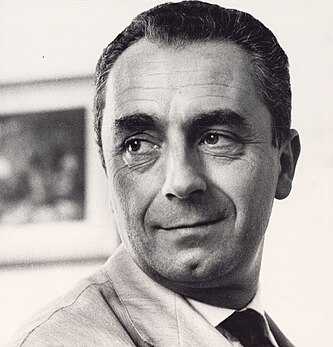
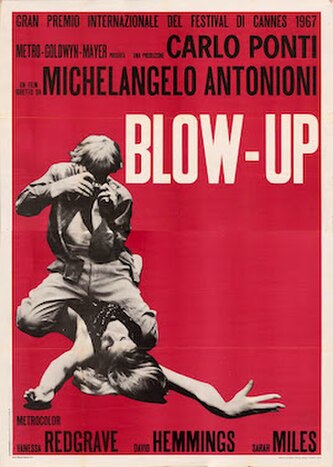

About Michelangelo Antonioni
Michelangelo Antonioni (29 September 1912 – 30 July 2007) was an Italian modernist film director whose films are widely considered among the most influential in film aesthetics.
Best Michelangelo Antonioni Quotes
Shortest
Earliest
Explore our curated collection of the most famous and impactful Michelangelo Antonioni quotes.
“People are always misquoting me.”

“My characters are ambiguous. Call them that. I don't mind. I am ambiguous myself. Who isn't?”
“The greatest danger for those working in the cinema is the extraordinary possibility it offers for lying.”
“I am not a theoretician of the cinema. If you ask me what directing is, the first answer that comes into my head is: I don't know.”
“I always want to tell stories. But they must be stories that evolve, like our own lives. Perhaps what I seek is a new kind of story.”
“Modern life is very difficult for people who are unprepared. But this new environment will eventually facilitate more realistic relationships between people.”
“When we find ourselves up against practical obstacles that can't be overcome, we must go forward. You either make the film as you can or don't make it at all.”
“I have always imposed my wishes on the cameraman. Moreover, I have always picked them at the outset of their careers and, to a certain extent, have formed them myself.”
“I would like to make clear that I speak only of sensations. I am neither a sociologist nor a politician. All I can do is imagine for myself what the future will be like.”
“I don't want what I am saying to sound like a prophecy or anything like an analysis of modern society .... these are only feelings I have, and I am the least speculative man on earth.”

“My work is like digging, it's archaeological research among the arid materials of our times. That's how I understand my first films, and that's what I'm still doing...”
“You mustn't ask me to explain everything I do. I can't. That's that. How can I say why at a certain moment I needed this. How can I explain why I needed a confusion of colors?”
“I've always said that the actor is only an element of the image, rarely the most important. The actor is important with his dialogue, with the landscape, with a gesture — but the actor in himself is nothing.”

“One doesn't enter groups of people simply because one wants or needs to. One has an infinite number of opportunities that occur for no particular reason. Sometimes you feel a sudden unexpected pleasure at being where you find yourself.”

“I want my characters to suggest the background in themselves, even when it is not visible. I want them to be so powerfully realized that we cannot imagine them apart from their physical and social context even when we see them in empty space.”
“A director is a man, therefore he has ideas; he is also an artist, therefore he has imagination. Whether they are good or bad, it seems to me that I have an abundance of stories to tell. And the things I see, the things that happen to me, continually renew the supply.”

“Don't regard my characters as symbols of a determined society. See them as something that sparks a reaction within you so that they become a personal experience. The critic is a spectator and an artist insofar as he transforms the work into a personal thing of his own.”
“I think people talk too much; that's the truth of the matter. I do. I don't believe in words. People use too many words and usually wrongly. I am sure that in the distant future people will talk much less and in a more essential way. If people talk a lot less, they will be happier. Don't ask me why.”
“The photographer in Blow-Up, who is not a philosopher, wants to see things closer up. But it so happens that, by enlarging too far, the object itself decomposes and disappears. Hence there's a moment in which we grasp reality, but then the moment passes. This was in part the meaning of Blow-Up.”

“We know that under the image revealed there is another which is truer to reality and under this image still another and yet again still another under this last one, right down to the true image of that reality, absolute, mysterious, which no one will ever see or perhaps right down to the decomposition of any image, of any reality.”

“Sometimes I pick up a magazine and read a piece of film criticism — to the end only if I like it. I don't like those which are too free with praise because their reasons seem wrong and that annoys me. Critics who attack me do so for such contradictory reasons that they confuse me, and I am afraid that if I am influenced by one, I will sin according to the standards of the other.”
Michelangelo Antonioni Quotes by Topic
Find exactly what you are looking for by browsing this categorized list of Michelangelo Antonioni quotes by topic.
Michelangelo Antonioni on Blow-Up
“The photographer in Blow-Up, who is not a philosopher, wants to see things closer up. But it so happens that, by enlarging too far, the object itself decomposes and disappears. Hence there's a moment in which we grasp reality, but then the moment passes. This was in part the meaning of Blow-Up.”

Michelangelo Antonioni on University of Bologna
“I didn't like university life much at Bologna. The subjects I studied - economics and business administration - didn't interest me. I wanted to make films. I was glad when I was graduated. Yet it's odd; on graduation day, I was overcome with a terrible sadness. I realized that my youth was over and now the struggle had begun.”

Quotes About Michelangelo Antonioni
Gain deeper perspective through quotes about Michelangelo Antonioni from others.
James Brown on Michelangelo Antonioni
“The films of Michelangelo Antonioni are aesthetically complex – critically stimulating though elusive in meaning. They are ambiguous works that pose difficult questions and resist simple conclusions. Classical narrative causalities are dissolved in favour of expressive abstraction. Displaced dramatic action leads to the creation of a stasis occupied by vague feelings, moods and ideas. Confronted with hesitancy, the spectator is compelled to respond imaginatively and independent of the film. The frustration of this experience reflects that felt in the lives of Antonioni's characters: unable to solve their own personal mysteries they often disappear, leave, submit or die. The idea of abandonment is central to Antonioni's formal structuring of people, objects, and ideas. He evades presences and emphasises related absences. His films are as enigmatic as life: they show that the systematic organisation of reality is a process of individual mediation disturbed by a profound inability to act with certainty.”
Roger Ebert on Michelangelo Antonioni
“Michelangelo Antonioni's Blow-Up opened in America two months before I became a film critic, and colored my first years on the job with its lingering influence. … Over three days recently, I revisited Blow-Up in a shot-by-shot analysis. Freed from the hype and fashion, it emerges as a great film, if not the one we thought we were seeing at the time. … Whether there was a murder isn't the point. The film is about a character mired in ennui and distaste, who is roused by his photographs into something approaching passion. As Thomas moves between his darkroom and the blowups, we recognize the bliss of an artist lost in what behaviorists call the Process; he is not thinking now about money, ambition or his own nasty personality defects, but is lost in his craft. His mind, hands and imagination work in rhythmic sync. He is happy. Later, all his gains are taken back.... '''''Blow-Up'' audaciously involves us in a plot that promises the solution to a mystery, and leaves us lacking even its players.'''”

About Michelangelo Antonioni
Michelangelo Antonioni (29 September 1912 – 30 July 2007) was an Italian modernist film director whose films are widely considered among the most influential in film aesthetics.